
Federal Courts Strike Down Administration's Overhaul of Public Service Loan Forgiveness
Two federal judges have blocked a controversial rule that would have allowed the Education Department to disqualify certain nonprofit employers from the PSLF program. The rulings preserve the existing pathway to debt relief for millions of public service workers.
By Hui Lin

Share this story
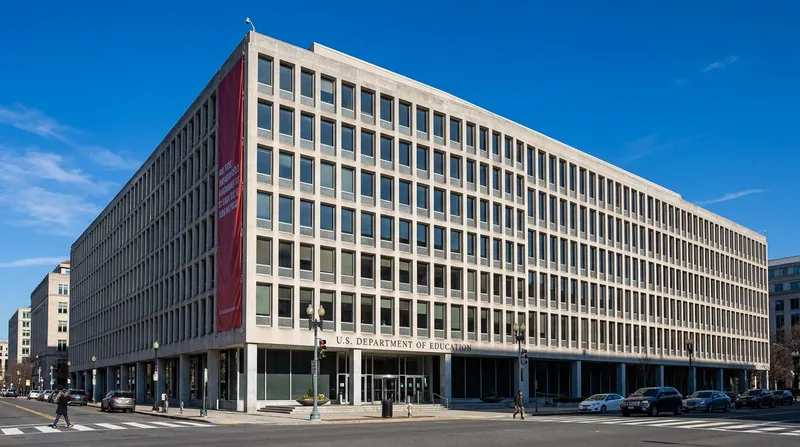
Millions of teachers, public defenders, and nonprofit workers received an eleventh-hour reprieve on June 30, 2026, when two federal judges struck down a sweeping overhaul of the Public Service Loan Forgiveness (PSLF) program. The rulings, issued just hours before the new regulations were scheduled to take effect on July 1, blocked a Trump administration policy that would have allowed the Department of Education to disqualify certain nonprofit employers based on their organizational missions.
For borrowers who rely on the program to clear their educational debt after a decade of public service, the decisions preserve the established pathway to financial relief and remove a looming layer of administrative uncertainty.
The legal battle centered on a rule finalized in October 2025, which stemmed from Executive Order 14235. Under the administration's directive, the Department of Education was granted the authority to exclude otherwise-qualifying 501(c)(3) organizations if the Secretary of Education determined they engaged in a "substantial illegal purpose." The administration defined this category broadly, targeting organizations involved in activities it opposed, such as supporting undocumented immigrants, providing gender-affirming care for minors, or implementing certain diversity initiatives.[1]
Proponents of the overhaul argued that the federal government has a responsibility to ensure that taxpayer-funded loan forgiveness does not subsidize activist organizations whose operations conflict with national policy priorities. The administration maintained that the PSLF program had strayed from its original intent, misdirecting public funds toward groups that, in its view, harmed American values. By adding the new attestation requirements, the Department of Education sought to create a mechanism for vetting the ideological and operational alignment of participating employers.[1]
However, a broad coalition of state attorneys general, civil rights groups, and higher education advocates immediately challenged the rule, arguing it weaponized the student loan system for political retribution. They contended that the policy would force borrowers to choose between their mission-driven careers and their financial futures, effectively destabilizing the talent pipeline for legal aid clinics, public health organizations, and community services.
The federal judiciary ultimately agreed with the plaintiffs, delivering a dual blow to the administration's regulatory framework. In the District of Columbia, the court ruled on strict statutory grounds, finding that the Department of Education had exceeded its authority under the Higher Education Act. The judge noted that Congress explicitly mandated loan cancellation for borrowers employed by qualifying 501(c)(3) organizations, using mandatory "shall cancel" language that leaves no room for the Secretary of Education to pick and choose among legally recognized nonprofits.[2]
Meanwhile, a federal judge in Massachusetts took the legal reasoning a step further, striking down the rule on constitutional grounds. Judge Myong J. Joun ruled that the policy violated the First Amendment by conditioning a vital public benefit on an organization's speech, advocacy, and viewpoints. The Massachusetts court also found the rule to be arbitrary and capricious under the Administrative Procedure Act, noting that the government failed to identify a rational, real-world problem that justified upending the established PSLF criteria.[1]
The immediate consequence of these rulings is a nationwide vacatur of the new regulations, meaning the restrictions cannot be enforced against anyone, anywhere. For the more than one million borrowers who have already received debt relief under PSLF—and the millions more currently tracking their progress—the eligibility framework remains entirely unchanged. Government and nonprofit employees can continue to have their remaining federal student loan balances forgiven after making 120 qualifying monthly payments.[1]
The digital infrastructure supporting the PSLF program has already reflected the legal victory. On July 1, the StudentAid.gov portal updated its banner to inform borrowers that the scheduled changes would not take effect. The Education Department's digital PSLF Help Tool, which borrowers use to generate and submit their employment certification forms, will continue to process applications under the traditional rules. The complex new software layer that would have required employers to attest they were not engaged in "illegal activities" has been scrapped.
This technological continuity is a significant relief for both borrowers and the human resources departments tasked with verifying their employment. In recent years, the digitization of the PSLF process has transformed a notoriously bureaucratic system into a streamlined, user-friendly platform. Adding a subjective, politically charged attestation requirement would have introduced severe friction into the digital workflow, potentially causing widespread processing delays and erroneous denials.[2]
Legal analysts note that the rulings also reinforce a critical boundary between congressional legislation and executive rulemaking. By affirming that the Department of Education cannot unilaterally rewrite the statutory criteria for loan forgiveness, the courts have insulated the PSLF program from the shifting political winds of different presidential administrations. This stability is essential for the program to function as intended: as a long-term recruitment and retention tool for the public sector.[2]
The American Bar Association, which supported the legal challenge, emphasized that predictable statutory definitions are vital for maintaining access to justice. Without the promise of loan forgiveness, the crushing weight of modern educational debt would prevent many new graduates from accepting lower-paying positions in under-resourced communities. Public defenders, district attorneys, and legal aid lawyers rely heavily on the PSLF program to make their careers financially viable.
Despite the decisive nature of the district court rulings, the legal saga is likely not over. The Department of Justice is expected to appeal the decisions, setting the stage for a protracted appellate battle that could eventually reach the Supreme Court. However, because the lower courts vacated the rule in its entirety, the administration cannot enforce the restrictions while the appeals process plays out.
For now, student loan experts are advising borrowers to proceed with business as usual. Public service workers should continue to submit their employment certification forms annually using the digital PSLF Help Tool. By maintaining an updated digital paper trail, borrowers can lock in their qualifying payment counts and protect themselves against any future administrative turbulence.
Ultimately, the preservation of the PSLF program in its current form highlights the enduring importance of public service in the American workforce. As the cost of higher education continues to rise, the guarantee of eventual debt relief remains one of the few reliable mechanisms for ensuring that the nation's schools, hospitals, and community organizations can attract the dedicated professionals they need to function.
Key points
- Two federal judges struck down a Trump administration rule that would have restricted employer eligibility for the PSLF program.
- The blocked rule would have allowed the government to disqualify nonprofits deemed to have a 'substantial illegal purpose.'
- Courts ruled the policy exceeded statutory authority and violated First Amendment protections against viewpoint discrimination.
- The nationwide vacatur ensures the PSLF eligibility framework and digital certification process remain unchanged for millions of borrowers.
What we don’t know
- Whether the Department of Justice will seek an emergency stay of the rulings from a higher appellate court.
- How the ongoing litigation will affect the long-term timeline for borrowers who are nearing their 120th qualifying payment.
- If the administration will attempt to introduce a narrower version of the employer restrictions through a different regulatory mechanism.
How we got here
March 2025
President Trump signs Executive Order 14235, directing the Education Department to restrict PSLF eligibility for certain organizations.
October 2025
The Department of Education publishes the final rule, introducing the 'substantial illegal purpose' standard for employers.
November 2025
A coalition of states, civil rights groups, and nonprofits file lawsuits challenging the rule's legality.
June 30, 2026
Two federal judges strike down the rule nationwide, just hours before it was scheduled to take effect.
- Public Service & Legal Advocates
- Argue that the rule would have destabilized the nonprofit workforce and punished public servants for their employers' missions.
- Borrower & Financial Navigators
- Focus on the practical impact of the rulings on individual borrowers and the continuity of the loan forgiveness process.
- Policy & Institutional Watchdogs
- Focus on the statutory limits of executive power and the administrative friction the rule would have caused.
Perspectives this story doesn't cover
- Individual borrowers whose forgiveness applications were stalled during the litigation
- State-level loan servicers managing the digital transition
Sources
Source coverage
2 outlets
3 viewpoints surfaced


- [1]The GuardianPolicy & Institutional Watchdogs
US judge recuses herself in Georgia election case after having sex with officer in chambers
Read on The Guardian → - [2]National Association of Independent Colleges and UniversitiesPolicy & Institutional Watchdogs
Federal Courts Vacate PSLF Rule
Read on National Association of Independent Colleges and Universities →
More in Education
See all →Civil Rights Policy
Education Department Eliminates 'Disparate Impact' Standard, Altering Civil Rights Enforcement for School Policies and EdTech
6 sources
Higher Ed Policy
New Federal Rule Strips Loan Access From College Degrees Failing Earnings Benchmarks
2 sources

Literacy Tech
Webcam Eye Tracking Uses AI to Screen K-12 Students for Dyslexia in Minutes
4 sources

Virtual Labs
Virtual Science Labs Improve STEM Learning Through Risk-Free Repetition
3 sources

Comments
Every angle. Every day.
Get Education stories with full source coverage and perspective breakdowns, free every day.