
FDA Approves Dual-Targeted Therapy for HER2-Positive Gastric Cancer First-Line Treatment
The FDA has approved the bispecific antibody zanidatamab as a new first-line treatment for advanced HER2-positive gastric cancer, extending median survival by more than seven months compared to the previous standard of care.

In short
- The FDA has approved zanidatamab (Ziihera) as a first-line treatment for advanced HER2-positive gastric and esophageal cancers.
- The drug is a bispecific antibody that binds to two distinct sites on the HER2 receptor, offering a more potent blockade than traditional therapies.
- In a Phase 3 trial, the zanidatamab regimen extended median overall survival to 26.4 months, compared to 19.2 months with the previous standard of care.
For more than a decade, patients diagnosed with advanced HER2-positive gastric cancer have relied on a single foundational therapy: trastuzumab. While effective at slowing the disease, survival rates eventually plateaued, leaving oncologists searching for a more potent way to shut down these aggressive tumors.[4]
That long-standing clinical ceiling has now been broken. The U.S. Food and Drug Administration has officially approved zanidatamab-hrii, marketed as Ziihera, as a new first-line treatment for adults with unresectable, locally advanced, or metastatic HER2-positive gastric and esophageal adenocarcinomas.[1][2]
The regulatory green light marks a fundamental shift in gastrointestinal oncology. By introducing a structurally novel drug that outperforms the old standard, the FDA has provided a highly effective new option for patients at the very start of their treatment journey, rather than waiting for older therapies to fail.[1][4]
To understand why this approval matters, it helps to look at the mechanics of the disease. HER2 is a specific protein that promotes the rapid growth of cancer cells; when tumors overexpress it, they tend to spread aggressively and require targeted intervention to halt their progression.[4]
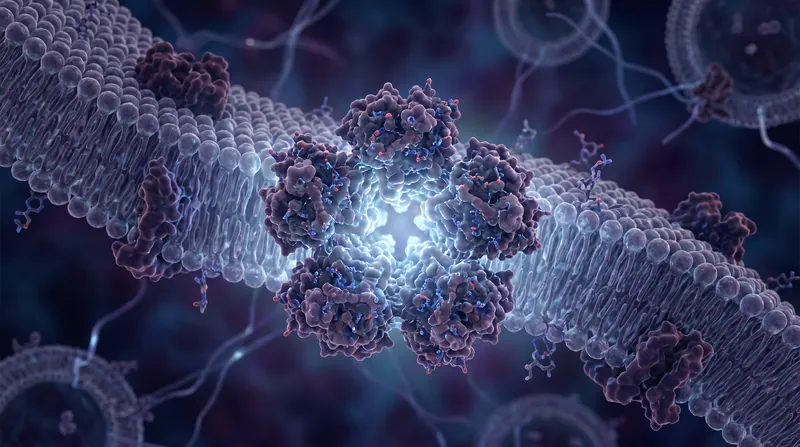
Traditional targeted therapies like trastuzumab are monoclonal antibodies, meaning they are designed to bind to a single specific site on the HER2 protein to block its growth signals. Zanidatamab, however, belongs to a newer class of drugs known as bispecific antibodies.[1][3]
This structural difference is the key to its enhanced efficacy. Zanidatamab is engineered to bind to two distinct, non-overlapping sites on the HER2 receptor simultaneously. This dual-grip mechanism forces the receptors to cluster together, which rapidly removes them from the surface of the cancer cell and triggers a stronger immune response against the tumor.[3][4]
The clinical evidence supporting this mechanism comes from the Phase 3 HERIZON-GEA-01 trial, a massive global study that randomized 914 previously untreated patients to evaluate the new drug's real-world impact.[1][3]
The trial compared the traditional standard of care—trastuzumab combined with chemotherapy—against a new regimen featuring zanidatamab, chemotherapy, and the immunotherapy drug tislelizumab. The results were definitive and practice-changing.[2][3]
Patients receiving the zanidatamab triplet therapy achieved a median overall survival of 26.4 months. This represents a clinically meaningful improvement over the 19.2 months seen in the trastuzumab group, offering patients significantly more time.[1][3]
Furthermore, the time patients lived without their disease worsening—a metric known as progression-free survival—extended to 12.4 months with the new regimen, compared to just 8.1 months for those on the older standard.[1][3]
The FDA's authorization is notably flexible, approving two distinct regimens. Oncologists can prescribe zanidatamab alongside chemotherapy alone, or as a triplet therapy that includes tislelizumab, a PD-1 inhibitor that helps the immune system detect and destroy cancer cells.[2]
This dual-pathway approval allows physicians to tailor the intensity of the treatment to the individual patient. For those who can tolerate it, the triplet offers maximum efficacy, while the doublet provides a strong alternative for patients who might struggle with compounded side effects.[4]
To ensure the drug reaches the right patients, the FDA simultaneously approved two companion diagnostic tests. These specialized laboratory assays accurately measure HER2 expression levels in tumor tissue, confirming whether a patient meets the specific threshold required to benefit from the therapy.[2]
Despite the clear survival advantages, the transition to this new standard of care carries practical uncertainties. Combining a bispecific antibody, an immunotherapy, and traditional chemotherapy creates a complex toxicity profile that requires rigorous monitoring by care teams.[3][4]
Researchers and community oncologists will now need to determine how best to manage these side effects in real-world settings, outside the tightly controlled environment of a clinical trial, to ensure patients maintain a high quality of life during treatment.[4]
Jargon, explained
- Bispecific antibody
- An engineered protein that can bind to two different targets or two different sites on the same target simultaneously.
- HER2
- A protein that promotes the growth of cancer cells; tumors with high levels of this protein are called HER2-positive.
- Progression-free survival
- The length of time during and after treatment that a patient lives with the disease without it getting worse.
- PD-1 inhibitor
- A type of immunotherapy that blocks a specific protein on immune cells, helping them to recognize and attack cancer.
- Companion diagnostic
- A medical test used to determine if a specific therapy is appropriate for a specific patient.
Common questions
What is zanidatamab?
Zanidatamab, marketed as Ziihera, is a newly approved bispecific antibody that targets the HER2 protein on cancer cells, used to treat advanced gastric and esophageal cancers.
How is this different from older treatments like Herceptin?
While older drugs bind to a single site on the HER2 protein, zanidatamab binds to two distinct sites simultaneously, which removes the protein from the cell surface more effectively.
Who is eligible for this new therapy?
The drug is approved for adults with previously untreated, unresectable, or metastatic gastric, gastroesophageal junction, or esophageal adenocarcinoma that tests positive for HER2.
Does this treatment cure gastric cancer?
No, it is not a cure for advanced disease, but clinical trials show it significantly extends both progression-free and overall survival compared to previous standards.
Competing readings
Clinical Oncologists
Medical professionals focused on the shift in frontline treatment standards.
For oncologists treating gastrointestinal cancers, the approval of zanidatamab represents the most significant leap forward in over a decade. Trastuzumab has been the undisputed standard of care since 2010, but its efficacy had reached a plateau. Clinicians emphasize that the seven-month improvement in median overall survival seen with the new triplet regimen is a practice-changing milestone. They also value the FDA's flexible approval, which allows them to omit the immunotherapy component for patients who may not tolerate the full triplet, ensuring the treatment can be tailored to individual fitness levels.
Regulatory Authorities
Agencies focused on clinical trial data, safety profiles, and diagnostic accuracy.
The FDA's decision was driven by the definitive survival data from the HERIZON-GEA-01 trial, but regulators also placed a strong emphasis on precise patient selection. By simultaneously approving two specific companion diagnostic tests, the agency ensured that only patients with confirmed high levels of HER2 expression will receive the drug. Regulators also highlighted the need for careful monitoring of the triplet regimen's safety profile, noting that the combination of a bispecific antibody, immunotherapy, and chemotherapy carries a higher risk of immune-mediated adverse events and severe diarrhea.
Medical Analysts
Industry observers tracking the evolution of bispecific antibody platforms.
From an analytical perspective, zanidatamab's success validates the immense potential of bispecific antibodies in solid tumors. While monoclonal antibodies have dominated targeted oncology for years, the ability to engineer a single molecule that binds to two distinct receptor sites simultaneously proves that older targets like HER2 can be exploited more efficiently. Analysts are now closely watching ongoing trials that aim to move the drug into early-stage gastric cancer and other HER2-expressing malignancies, potentially unlocking a massive new frontier for bispecific platforms.
- Clinical Oncologists
- Medical professionals focused on the shift in frontline treatment standards.
- Regulatory Authorities
- Agencies focused on clinical trial data, safety profiles, and diagnostic accuracy.
- Medical Analysts
- Industry observers tracking the evolution of bispecific antibody platforms.
Perspectives this story doesn't cover
- Patient Advocacy Groups
- Health Insurance Providers
Sources
Source coverage
4 outlets
3 viewpoints surfaced




- [1]OncLiveClinical Oncologists
Zanidatamab Is FDA Approved As a New Frontline Standard in HER2+ Gastric Cancer
Read on OncLive → - [2]U.S. Food and Drug AdministrationRegulatory Authorities
FDA approves zanidatamab-hrii and tislelizumab-jsgr for HER2-positive gastric, gastroesophageal junction, or esophageal adenocarcinoma
Read on U.S. Food and Drug Administration → - [3]New England Journal of MedicineClinical Oncologists
Zanidatamab with and without tislelizumab in HER2-positive gastroesophageal cancer
Read on New England Journal of Medicine → - [4]Factlen Editorial TeamMedical Analysts
Synthesis by Factlen editorial team
Read on Factlen Editorial Team →
More in Health
See all →Lung Cancer
Novel Targeted Therapy Zidesamtinib Achieves 94% Response Rate in Pivotal Trial for ROS1-Positive Lung Cancer
5 sources

Gut-Brain Axis
How Dopamine Dysregulation in the Enteric Nervous System Links ADHD to Chronic Gastrointestinal Disorders
4 sources

NSAID Pharmacology
How COX-1 and COX-2 Enzyme Selectivity Dictates the Pain Relief and Heart Risks of NSAIDs
10 sources

Chronic Pain
The Evidence-Based Guide: Comparing Non-Pharmacological Treatments for Chronic Low Back Pain
10 sources

Comments
Every angle. Every day.
Get Health stories with full source coverage and perspective breakdowns, free every day.