
Explaining the Fediverse: How the Open Social Web Finally Became Usable
Driven by protocol integrations from platforms like Threads and a growing demand for data ownership, the decentralized 'Fediverse' has matured from a niche tech experiment into a viable alternative to traditional social media.
By Factlen Editorial Team
- Decentralization Advocates
- Argue that user sovereignty, data ownership, and protocol-level interoperability are essential for a healthy internet.
- Mainstream Tech Integrators
- View ActivityPub as a necessary feature to retain users and build interoperable ecosystems without losing market dominance.
- Web3 Proponents
- Focus on on-chain social graphs, tokenized incentives, and aggregators bridging different protocols.
- Open Standards Bodies
- Focus on the technical specifications and protocol definitions that enable cross-platform communication.
What's not represented
- · Everyday users who prioritize convenience and algorithmic discovery over data ownership.
- · Advertisers and brands struggling to navigate a decentralized ecosystem without targeted ad tools.
Why this matters
For over a decade, users have been locked into corporate social media platforms that control their data and dictate what they see. The rise of the Fediverse means you can finally own your digital identity, port your followers between apps, and escape algorithmic manipulation without losing touch with your network.
Key points
- The Fediverse is a network of independent social media servers that communicate using the open ActivityPub protocol.
- Users can interact across entirely different platforms, meaning a Mastodon user can follow and reply to a Threads user.
- Decentralized architecture allows users to own their social graph and migrate between servers without losing their followers.
- Moderation is handled at the community level, allowing servers to block toxic instances without relying on a central corporate authority.
The era of the walled garden is beginning to crack. For over a decade, the social internet was defined by massive, centralized platforms that locked users into proprietary ecosystems, trading free access for behavioral data and algorithmic control. But in 2026, a fundamental rewiring of how we communicate online has reached a tipping point.[6]
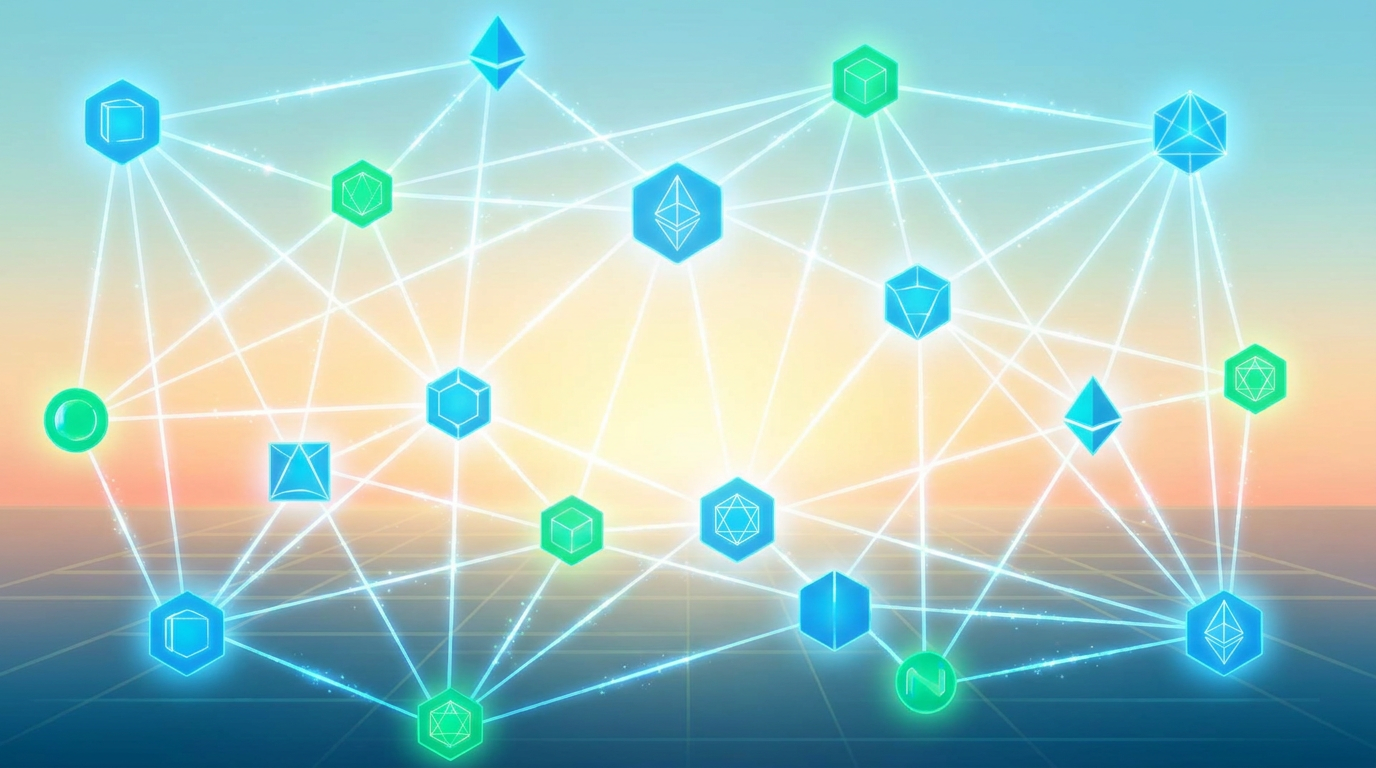
This shift is being driven by the "Fediverse"—a portmanteau of "federated" and "universe." Unlike traditional social media, the Fediverse is not a single app or a corporate entity. It is a sprawling network of independent, interconnected servers that all speak the same underlying technical language, allowing users on entirely different platforms to interact seamlessly.[1][3]
To understand the mechanism, consider how email works. A user with a Gmail account can easily send a message to a colleague using Microsoft Outlook or a custom company server. They do not need to be on the same platform to communicate because both systems use standard email protocols. The Fediverse applies this exact logic to social media posts, likes, and follows.[6]
The engine powering this interoperability is ActivityPub. Published as an official web standard by the World Wide Web Consortium (W3C) in 2018, ActivityPub provides a universal protocol for decentralized social networking. It dictates how messages are formatted and delivered between different servers, effectively turning the social graph into a public utility rather than a corporate asset.[3]

For years, ActivityPub was the domain of tech enthusiasts and open-source advocates, primarily utilized by platforms like Mastodon, a decentralized microblogging alternative. However, the landscape shifted dramatically when mainstream tech giants began adopting the standard.[3][4]
The most significant catalyst has been Meta's Threads. By 2026, the platform, which boasts over 400 million users, has deepened its integration with the Fediverse. Threads users can now opt-in to have their posts visible on Mastodon and other federated platforms, and vice versa. This bridge between a corporate behemoth and the open web has validated the protocol on a global scale.[4]
This interoperability extends far beyond text updates. Because ActivityPub is flexible, it supports various content types. A user on Mastodon can follow a photographer on Pixelfed (an image-sharing platform), comment on a video hosted on PeerTube, and subscribe to a podcast on Castopod—all from a single account.[3][6]
The appeal of this model goes beyond mere convenience; it strikes at the heart of digital sovereignty. In the traditional model, users are essentially digital sharecroppers. If a platform changes its algorithm, introduces aggressive advertising, or shuts down entirely, users lose their audience and their digital history.[1]
The appeal of this model goes beyond mere convenience; it strikes at the heart of digital sovereignty.
On the Fediverse, users retain ownership of their social graph. If a user is unhappy with how their specific server (known as an "instance") is being run, they can migrate their account to a different server while taking their followers with them. While the technical execution of this migration process is still being refined, the foundational architecture prevents absolute vendor lock-in.[3][5]

This decentralized architecture also fundamentally changes how content moderation works. Centralized platforms struggle to enforce a single set of global rules across billions of users, often resulting in automated moderation that is simultaneously too strict and too lenient.[1][6]
In the Fediverse, moderation is handled at the instance level. A server dedicated to a specific hobby, profession, or local community sets its own rules. If one server becomes a haven for spam or toxicity, other servers can simply "defederate" from it, cutting off communication. The bad actors are isolated, while the rest of the network remains healthy.[6]
The push for decentralization is also gaining traction in the Web3 and cryptocurrency spaces. Industry leaders like Ethereum co-founder Vitalik Buterin have championed a return to decentralized social media in 2026, pointing to the rise of "SocialFi" and blockchain-based protocols like Farcaster and Lens.[5]
These Web3 platforms take decentralization a step further by storing social relationships on-chain or via distributed networks, ensuring absolute censorship resistance. To manage this fragmented landscape, users are increasingly turning to multi-client aggregators like Firefly, which pull feeds from Farcaster, Lens, Bluesky, and ActivityPub into a single interface.[5]
The momentum behind open social networks has also caught the attention of policymakers. In Europe, organizations like the Social Web Foundation are actively lobbying the European Union to support open-source Fediverse technologies. They argue that decentralized platforms are crucial for digital sovereignty, protecting citizens from the algorithmic manipulation of foreign tech monopolies.[2]

Despite the optimism, the Fediverse still faces significant hurdles. Onboarding remains friction-heavy for non-technical users, who must choose a server before they can even create an account. Furthermore, the lack of a centralized advertising model means that server administrators often rely on crowdfunding or out-of-pocket expenses to keep the lights on.[1][6]
Yet, the steady growth of the network suggests these friction points are not dealbreakers. Mastodon alone has grown to support millions of active accounts across thousands of independent servers. Every time a centralized platform makes an unpopular policy change or increases its ad load, the Fediverse sees a new wave of adoption.[6]
How we got here
2016
Mastodon launches as an open-source, decentralized alternative to Twitter.
2018
The World Wide Web Consortium (W3C) publishes ActivityPub as an official web standard.
2022
Major policy changes at centralized platforms trigger the first massive wave of migration to the Fediverse.
2024
Meta launches Threads and announces plans to integrate the ActivityPub protocol.
2026
Threads deepens its federation, and Web3 aggregators bridge multiple decentralized protocols into unified feeds.
Viewpoints in depth
Decentralization Advocates
Argue that user sovereignty and data ownership are essential for a healthy internet.
This camp views the Fediverse not just as a software alternative, but as a democratic imperative. Organizations like the Social Web Foundation argue that citizens should not rely on foreign tech monopolies for their digital public square. By championing open-source software and instance-level moderation, they believe the internet can return to its decentralized roots, protecting users from surveillance capitalism and algorithmic manipulation.
Mainstream Tech Integrators
View ActivityPub as a necessary feature to retain users and build interoperable ecosystems.
For massive platforms like Meta's Threads, integrating with the Fediverse is a strategic move. As users become increasingly wary of walled gardens, offering data portability and cross-platform communication is a powerful retention tool. This camp believes that the future of social media involves massive corporate hubs acting as the primary on-ramps to the open web, blending the convenience of centralized apps with the reach of decentralized protocols.
Web3 Proponents
Focus on on-chain social graphs and tokenized incentives.
Figures like Vitalik Buterin and the broader cryptocurrency community see the Fediverse as just one piece of the 'SocialFi' puzzle. They advocate for protocols like Lens and Farcaster, where social relationships are stored immutably on a blockchain rather than on a specific server. For this camp, true digital sovereignty requires cryptographic proof of ownership, and they rely on multi-client aggregators to bridge the gap between ActivityPub and Web3 networks.
What we don't know
- Whether mainstream users will tolerate the initial friction of choosing a server during the sign-up process.
- How independent server administrators will sustainably fund hosting costs as user bases scale into the millions.
- If Meta's Threads will eventually embrace full, unrestricted two-way federation or maintain a partially walled garden.
Key terms
- Fediverse
- A portmanteau of 'federated' and 'universe,' referring to the interconnected network of independent social media servers.
- ActivityPub
- The underlying technical protocol and web standard that allows different servers in the Fediverse to communicate.
- Instance
- An independent server running Fediverse software, hosting its own community and setting its own moderation rules.
- Interoperability
- The ability of different computer systems or software to exchange and make use of information seamlessly.
- Social Graph
- The map of your digital relationships, including who you follow and who follows you.
Frequently asked
What is ActivityPub?
It is an open, decentralized social networking protocol published by the W3C that allows different social media platforms to talk to each other.
Can I talk to Instagram users from Mastodon?
You can interact with users on Meta's Threads app if they have opted into Fediverse sharing, but native Instagram integration is not yet supported.
Who owns my data on the Fediverse?
You do. Because the network is decentralized, you can download your data and migrate your social graph to a different server if you choose.
How is moderation handled without a central company?
Moderation is handled at the server (instance) level. Each community sets its own rules, and servers can block or 'defederate' from other servers that allow spam or abuse.
Sources
Source coverage
6 outlets
4 viewpoints surfaced






[1]TrustGridDecentralization Advocates
Decentralized Social Media Platforms as a Strategic Alternative
Read on TrustGrid →[2]Social Web FoundationDecentralization Advocates
The Fediverse and European Digital Sovereignty
Read on Social Web Foundation →[3]WikipediaOpen Standards Bodies
ActivityPub
Read on Wikipedia →[4]PostEverywhereMainstream Tech Integrators
Threads ActivityPub integration 2026
Read on PostEverywhere →[5]KuCoinWeb3 Proponents
Vitalik's Vision: The Full Return of Decentralized Social Media in 2026
Read on KuCoin →[6]Factlen Editorial TeamDecentralization Advocates
Synthesis by Factlen editorial team
Read on Factlen Editorial Team →

Every angle. Every day.
Get technology stories with full source coverage and perspective breakdowns delivered to your inbox.