
ESA Launches EasyMotion-2 Experiment to Test Electrical Muscle Stimulation for Astronauts
French astronaut Sophie Adenot has begun testing an electro-myostimulation suit aboard the International Space Station to combat microgravity-induced muscle loss. The experiment aims to determine if targeted electrical impulses can reduce the two-and-a-half hours of daily exercise currently required for spaceflight.

For astronauts aboard the International Space Station, surviving microgravity is a part-time job. Without the constant resistance of Earth's gravity, crew members must spend up to two and a half hours every day running on treadmills and lifting weights just to prevent their bones and muscles from wasting away. But as space agencies look toward multi-year missions to Mars, that immense time cost is becoming a critical bottleneck.[1][3]
This week, the European Space Agency (ESA) and the German Space Agency (DLR) launched a potential solution: the EasyMotion-2 experiment. French astronaut Sophie Adenot has begun testing a specialized electro-myostimulation (EMS) suit during her daily workouts aboard the ISS. By delivering mild electrical impulses directly to her muscles while she exercises, the suit forces stronger contractions, theoretically amplifying the benefits of a shorter workout.[1][2][3][5]
The hardware itself, adapted from commercially available fitness technology, was qualified for spaceflight by the German aerospace company OHB System AG. The suit features dry electrodes integrated directly into the fabric, which are controlled via a tablet app to target specific muscle groups like the back, thighs, and shoulders. Adenot wears the suit while jogging on the station's COLBERT treadmill and using its resistance-training machine.[1][2][3][4][5][6]
To measure the suit's effectiveness, researchers from Charité – Universitätsmedizin Berlin are tracking Adenot's muscle tone and stiffness using a handheld digital device called the MyotonPRO. These in-orbit readings will be compared against baseline MRI scans taken before her launch, as well as data from previous astronauts who trained without the electrical assistance.[1][2][3]
The underlying science of neuromuscular electrical stimulation is not new. On Earth, physical therapists have long used targeted electrical pulses to help rehabilitate patients recovering from spinal cord injuries, severe trauma, or prolonged bed rest. However, translating that clinical success into a reliable, space-rated countermeasure requires proving that the artificial stimulus can genuinely replace the mechanical load of gravity.[1][2][3]
An earlier proof-of-concept test, conducted by German astronaut Matthias Maurer in 2022, showed promising initial results. EasyMotion-2 marks the transition from that early technology demonstration to rigorous scientific validation. The research team plans to expand the trial to include at least eight ISS crew members over the coming years to build a robust statistical case.[2][3][5][6]
If successful, the implications for space exploration are profound. A mission to Mars is expected to last roughly two years, with astronauts needing to operate independently upon arrival. Reducing the daily exercise requirement by even an hour would free up massive amounts of crew time, while also shrinking the footprint and weight of the exercise equipment required on future spacecraft.[1][2][3]
The findings will also translate directly back to Earth. The accelerated muscle atrophy astronauts experience in microgravity closely mirrors sarcopenia—the age-related muscle loss that affects millions of older adults. By learning how to efficiently preserve muscle mass in the extreme environment of space, researchers hope to refine EMS therapies for elderly patients and individuals with reduced mobility, offering a practical tool for maintaining functional independence.[1][3]
Viewpoints in depth
Aerospace Medicine Researchers
Scientists focused on the physiological barriers to deep-space exploration.
For researchers at Charité and the DLR, the current 2.5-hour daily exercise regimen is a brute-force solution that simply won't scale for a Mars mission. They argue that deep-space exploration requires a more elegant, time-efficient countermeasure. By using EMS to artificially recreate the constant resistance of Earth's gravity, they hope to preserve astronaut health while freeing up critical hours for scientific research and spacecraft maintenance.
Clinical Therapists
Medical professionals looking at terrestrial applications for aging and rehabilitation.
Terrestrial clinicians view the ISS as an accelerated laboratory for human aging. Because microgravity induces muscle atrophy at a much faster rate than normal aging, the EasyMotion-2 trial provides a unique environment to test interventions for sarcopenia. If the EMS suit proves effective at maintaining muscle tone without heavy mechanical loads, therapists believe the same technology could revolutionize treatments for elderly patients, bedridden individuals, and those recovering from severe trauma.
Aerospace Engineers
Hardware specialists focused on qualifying commercial technology for spaceflight.
For the engineering teams at OHB System AG, the challenge lies in adapting commercial fitness gear for the unforgiving environment of the ISS. They emphasize that an EMS suit in space must meet extreme safety tolerances—ensuring that electrical impulses do not interfere with the station's life-support systems or communications hardware. Their focus is on proving that the suit and its diagnostic tools can operate reliably over multi-year deployments.
Key points
- French ESA astronaut Sophie Adenot is testing the EasyMotion-2 electro-myostimulation suit on the ISS.
- The suit delivers mild electrical impulses to specific muscle groups during routine exercise.
- Researchers aim to determine if EMS can reduce the 2.5 hours of daily exercise currently required in space.
- The trial is conducted by Charité – Universitätsmedizin Berlin and the German Space Agency.
How we got here
2022
German ESA astronaut Matthias Maurer conducts the first proof-of-concept test of the EasyMotion system during the Cosmic Kiss mission.
July 2026
French ESA astronaut Sophie Adenot begins testing the EasyMotion-2 suit on the ISS.
August 25, 2026
OHB System AG formally announces the qualification of the EasyMotion-2 suits for scientific validation in space.
- Aerospace Medicine Researchers
- Focused on finding time-efficient countermeasures for deep-space exploration.
- Clinical Therapists
- Focused on translating spaceflight data into treatments for terrestrial muscle loss.
- Aerospace Engineers
- Focused on the technical challenges of qualifying commercial EMS hardware for microgravity.
Perspectives this story doesn't cover
- Commercial EMS Manufacturers
- Elderly Patient Advocacy Groups
Sources
Source coverage
6 outlets
3 viewpoints surfaced






- [1]European Space AgencyAerospace Medicine Researchers
EasyMotion-2: Electrical muscle stimulation in space
Read on European Space Agency → - [2]OHB System AGAerospace Engineers
Fighting Muscle Loss in Space: OHB Qualifies EMS Suit for ISS Research
Read on OHB System AG → - [3]Charité – Universitätsmedizin BerlinAerospace Medicine Researchers
Fighting muscle loss in space with EasyMotion-2
Read on Charité – Universitätsmedizin Berlin → - [4]NASAClinical Therapists
Week Ends With Spacewalk Preps and Space Exercise Research
Read on NASA → - [5]European SpaceflightAerospace Engineers
ESA Astronaut Completes Third Test of EuroSuit Prototype Aboard ISS
Read on European Spaceflight → - [6]TradingView NewsAerospace Engineers
Fighting Muscle Loss in Space: OHB Qualifies EMS Suit for ISS Research
Read on TradingView News →
More in Fitness
See all →Wearable Tech
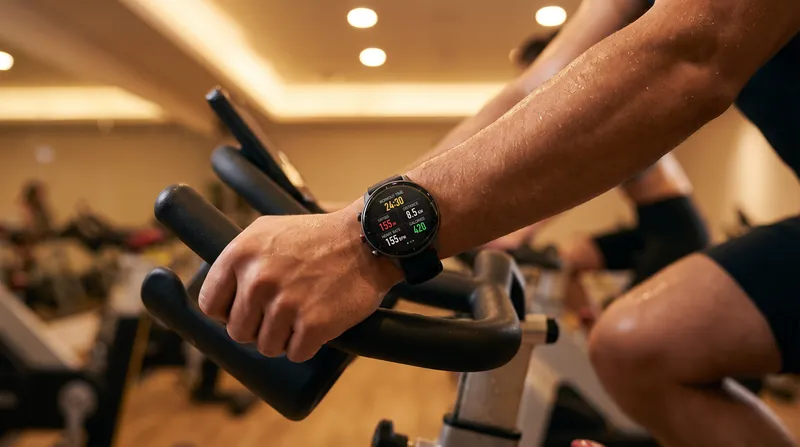
Amazfit Firmware Update Adds FTMS Smart Trainer Support and On-Watch HYROX Analysis
4 sources
Stretch-Shortening Cycle
Why Tendons Only Stiffen When Ground Contact Drops Below 250 Milliseconds
4 sources

Combat Readiness
Pentagon Codifies Sex-Neutral Fitness Standards Across All Military Branches
5 sources
Metabolic Science
Pterostilbene's PPAR-Delta Stabilization: How a Blueberry Compound Forces Skeletal Muscle to Break Down Fat
6 sources

Comments
Every angle. Every day.
Get Fitness stories with full source coverage and perspective breakdowns, free every day.