
EIA Forecasts 99% of New US Electric Capacity in 2026 Will Be Renewables and Battery Storage
The U.S. Energy Information Administration projects that solar, wind, and battery storage will account for over 99% of all net new electrical generating capacity added to the grid in 2026. Fossil fuel additions will be almost entirely offset by coal plant retirements, marking a definitive shift in national power infrastructure.
By Marina Lopez

A persistent narrative surrounding the U.S. power grid suggests that surging electricity demand—driven by artificial intelligence data centers, new manufacturing facilities, and widespread electrification—is forcing a massive resurgence in fossil fuel infrastructure. The assumption is that intermittent renewables cannot scale fast enough to meet the new baseload requirements, necessitating a wave of new natural gas plants.
However, newly analyzed data from the U.S. Energy Information Administration (EIA) reveals a starkly different reality. According to the agency's latest projections, 99.2% of all net new electrical generating capacity added to the U.S. grid in 2026 will come from solar, wind, and battery storage.[1][3]
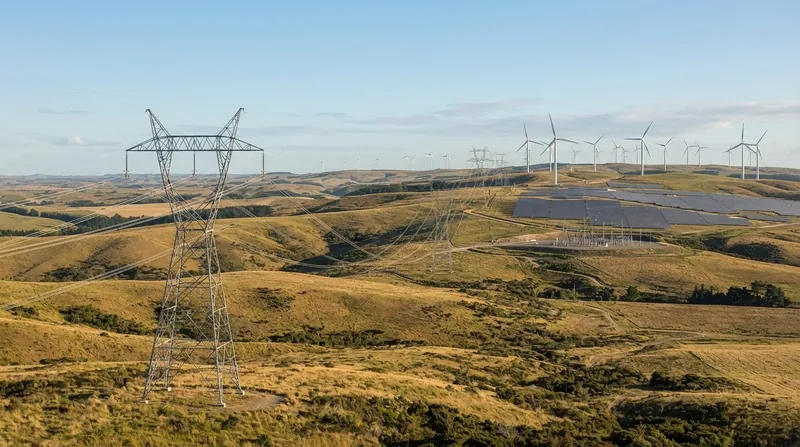
The sheer volume of the projected additions marks a structural transformation in how the nation powers its economy. The EIA forecasts that utility-scale renewables and battery storage will increase by nearly 69.6 gigawatts (GW) over the next twelve months. Solar power leads the expansion, with an anticipated 43.4 GW to 44.4 GW of new utility-scale capacity coming online by the end of 2026. When combined with an estimated 6 GW of small-scale, distributed solar installations, the total solar deployment represents an approximate 60% increase over the record-setting additions of 2025.[1][2][4][5]
While developers are indeed building new natural gas facilities to help balance the grid, those additions are being almost entirely offset by the ongoing retirement of legacy fossil fuel assets. The EIA projects that natural gas capacity will see a gross increase of roughly 4 GW in 2026.
However, this will be counterbalanced by the scheduled decommissioning of approximately 3.4 GW of aging coal-fired capacity, alongside minor reductions in petroleum-based generation. As a result, the net capacity growth for all fossil fuels combined will be negligible, leaving renewables and storage to account for virtually all net grid expansion.[2][3][5][6]
The critical enabler of this renewable surge is the rapid maturation and deployment of utility-scale battery storage. Historically, the intermittent nature of wind and solar generation limited their ability to serve as direct replacements for dispatchable fossil fuels. That dynamic is shifting as battery capacity scales exponentially.
Following a 58% growth rate in 2025 that added nearly 15.8 GW to the grid, the EIA anticipates another 24.3 GW of battery storage will enter commercial operation in 2026. This storage capacity allows grid operators to capture surplus solar generation during midday peaks and discharge it during evening demand spikes, effectively smoothing the delivery curve.[4][5]
Wind energy, while growing at a more measured pace than solar, remains the foundational pillar of the U.S. renewable portfolio. During the first eleven months of 2025, wind turbines generated 10.1% of total U.S. electricity, maintaining its position as the largest single source of renewable power.
The EIA projects wind capacity will expand by an additional 11.8 GW to 12.8 GW in 2026, encompassing both onshore developments and newly commissioned offshore projects. Together, wind and solar are now producing substantially more electricity than the nation's coal fleet and have surpassed the output of nuclear power plants.[1][2][4][5]
This shift in capacity additions is fundamentally altering the broader U.S. generation mix. By the end of 2025, the combination of all renewable sources—including wind, solar, hydropower, biomass, and geothermal—accounted for nearly 26% of total domestic electricity production. If the 2026 deployment pipeline materializes as projected, total installed renewable capacity will approach 509 GW by November of that year. At that scale, the aggregate capacity of renewable resources will nearly equal the installed capacity of the entire U.S. natural gas fleet, which currently stands at approximately 514 GW.[2][3][5][6]
The momentum behind this transition is largely insulated from short-term political cycles, driven instead by structural market forces and compelling project economics. Utility planners and independent power producers are gravitating toward solar and storage because they currently offer the lowest levelized cost of energy for new generation in most regional markets. Furthermore, the accelerated timeline for deploying solar and battery facilities—often requiring fewer years from permitting to commercial operation than large-scale thermal plants—makes them highly attractive to utilities racing to accommodate sudden spikes in regional load growth.[4]
Treating these capacity additions as isolated projects obscures their cumulative impact on the national energy system. As the grid becomes overwhelmingly reliant on zero-marginal-cost generation, wholesale electricity markets will increasingly experience periods of negative pricing during peak solar hours.
This economic signal is already incentivizing the next wave of infrastructure development, particularly the co-location of energy-intensive industrial processes—such as green hydrogen production and data center operations—directly adjacent to major renewable hubs. To sustain this trajectory beyond 2026, the focus must now shift toward expanding high-voltage transmission lines and implementing grid-enhancing technologies to ensure this new clean capacity can reliably reach the demand centers that need it most.[4]
Key points
- Solar, wind, and battery storage will account for 99.2% of net new U.S. electrical capacity in 2026.
- Utility-scale renewables and storage are projected to add nearly 69.6 GW to the grid over the next year.
- New natural gas capacity of roughly 4 GW will be almost entirely offset by 3.4 GW of coal plant retirements.
- Battery storage is experiencing explosive growth, with over 24 GW of new capacity expected to come online in 2026.
- Clean Energy Advocates
- View the 2026 projections as proof that the economic transition to zero-carbon energy is unstoppable.
- Grid Reliability Planners
- Emphasize the need for dispatchable resources and massive battery deployment to balance intermittent solar and wind.
- Energy Market Analysts
- Focus on the investment trends, cost curves, and the structural shift in wholesale power markets.
Perspectives this story doesn't cover
- Fossil Fuel Industry Representatives
- Local Communities
Sources
Source coverage
7 outlets
3 viewpoints surfaced







- [1]Windtech InternationalEnergy Market Analysts
EIA foresees 99% of net new generating capacity in 2026 coming from renewables & batteries
Read on Windtech International → - [2]SolarQuarterClean Energy Advocates
Nearly all net new power generation capacity added in the United States in 2026 is expected to come from solar, wind and battery storage
Read on SolarQuarter → - [3]Renewables NowClean Energy Advocates
EIA foresees 99% of net new generating capacity in 2026 coming from renewables & batteries
Read on Renewables Now → - [4]Open SentimentEnergy Market Analysts
EIA Projects Renewables and Batteries to Dominate 2026 U.S. Energy Growth
Read on Open Sentiment → - [5]ElectrekClean Energy Advocates
Solar, wind, and battery storage are projected to add 62% more generating capacity in 2026
Read on Electrek → - [6]EnergyCentralGrid Reliability Planners
EIA Foresees 99% of Net New Generating Capacity in 2026 Coming from Renewables & Batteries
Read on EnergyCentral → - [7]U.S. Energy Information AdministrationGrid Reliability Planners
Preliminary Monthly Electric Generator Inventory
Read on U.S. Energy Information Administration →
More in Energy
See all →Energy Trading
Spark and Dark Spreads: How Thermal Generators Calculate Power Margins
7 sources

Global Fuel Markets
China Suspends October Fuel Exports to Rebuild Domestic Stockpiles, Tightening Global Diesel Market
6 sources
LNG Pricing
The S-Curve and J-Curve That Define the Price Relationship Between Oil-Indexed and Hub-Indexed LNG Contracts
6 sources

Capacity Markets
The Net Cost of New Entry and Value of Lost Load That Anchor Capacity Markets
6 sources
Comments
Every angle. Every day.
Get Energy stories with full source coverage and perspective breakdowns, free every day.