
Congress Debates Suspending Federal Gas Tax for Summer Road Trips Amid High Fuel Costs
With national gas prices averaging $4.53 per gallon, lawmakers are weighing a temporary suspension of the 18.4-cent federal gas tax. However, economists warn the holiday could drain infrastructure funds while offering drivers only modest savings at the pump.
By Factlen Editorial Team
- Consumer Relief Advocates
- Lawmakers focused on immediate financial relief for drivers facing inflation and high summer travel costs.
- Fiscal & Infrastructure Realists
- Policy analysts concerned about the long-term solvency of the Highway Trust Fund.
- Economic Skeptics
- Economists who argue that tax cuts are often absorbed by retailers rather than passed to consumers.
- State-Level Policymakers
- Governors and state legislatures enacting localized tax suspensions while managing budget shortfalls.
What's not represented
- · Independent Gas Station Owners
- · Environmental Advocates
Why this matters
Fuel costs directly impact household budgets, especially during the peak summer travel season. Understanding how gas taxes work helps consumers anticipate actual savings at the pump and grasp the trade-offs between immediate financial relief and long-term infrastructure funding.
Key points
- Bipartisan lawmakers are proposing a suspension of the 18.4-cent federal gas tax through October.
- Economists estimate consumers would only see about 13.25 cents of savings per gallon.
- A four-month suspension would cost the federal government an estimated $11.5 billion in lost revenue.
- The tax is the primary funding source for the Highway Trust Fund, which pays for road maintenance.
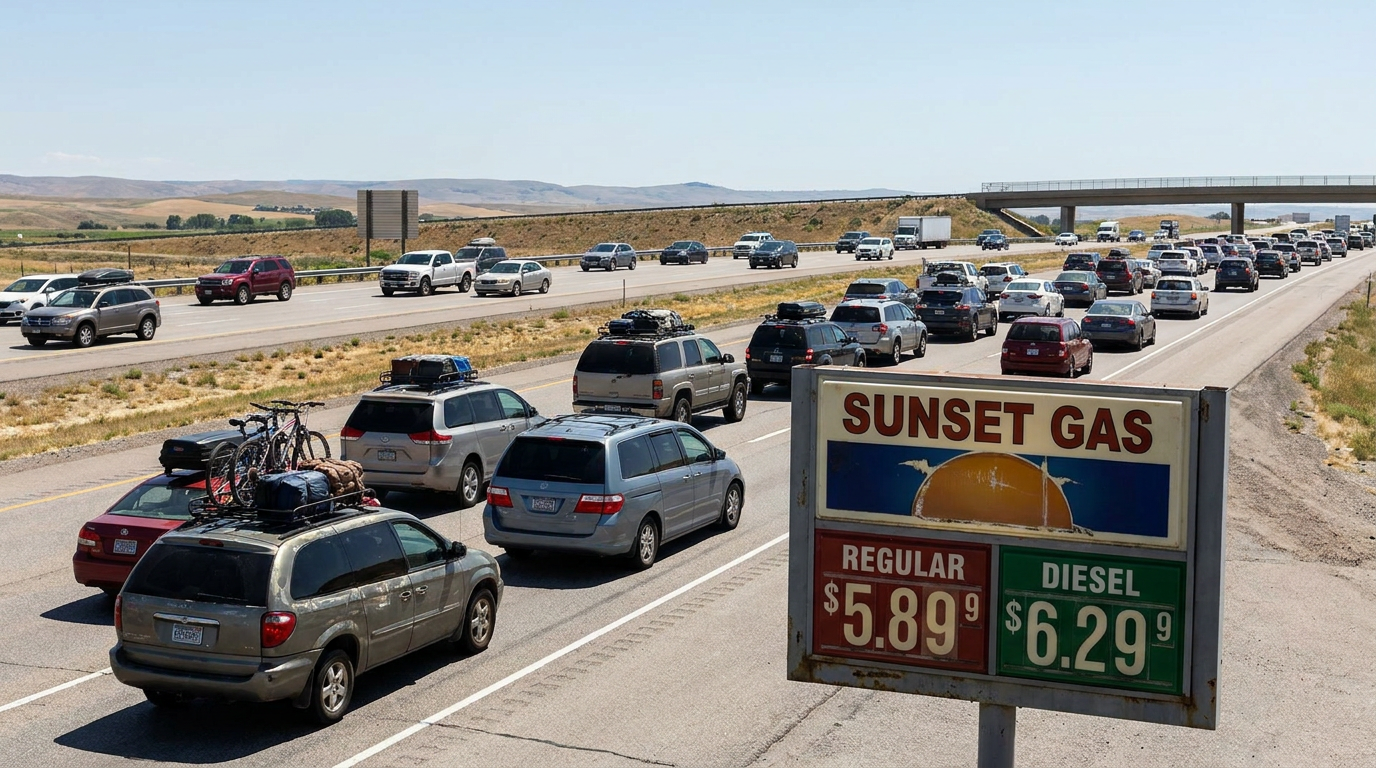
Summer 2026 is seeing record road-trip volume, but drivers are facing a significant financial hurdle: average national gas prices have surged to $4.53 per gallon.
The catalyst for this spike is largely geopolitical. The ongoing conflict in Iran and the subsequent closure of the Strait of Hormuz—a critical global shipping chokepoint—have driven crude oil prices up, squeezing American consumers at the pump just as the summer travel season begins.
In response, a rare bipartisan push has emerged in Washington to suspend the federal gas tax. President Donald Trump has endorsed a "gas tax holiday," while Democratic Senators Mark Kelly and Richard Blumenthal, alongside Republican Senator Josh Hawley, have introduced legislation to pause the levy through October.[2]
To understand the debate, it is essential to understand the mechanics of the tax itself. The federal gas tax is currently set at 18.4 cents per gallon for regular gasoline and 24.4 cents for diesel.[1][2]

This levy acts as a fixed excise tax, meaning it does not fluctuate with the price of crude oil. Whether gas costs $2 or $5 a gallon, the federal government collects the exact same 18.4 cents on every gallon sold, a rate that has remained unchanged since 1993.[2]
While Congress debates the federal tax, several states have already taken localized action. Georgia Governor Brian Kemp recently signed a 60-day suspension of the state's gas tax, a move designed to save consumers roughly 33 cents per gallon on gasoline and 37 cents on diesel.
Similarly, Indiana Governor Mike Braun declared an energy emergency to suspend both the state's 7% sales tax on gasoline and its 36-cent excise tax, saving Hoosier drivers up to 62.5 cents per gallon during the suspension period.
However, the core economic question surrounding a federal suspension remains: If the government pauses its 18.4-cent tax, will drivers actually see pump prices drop by exactly 18.4 cents? Economists warn the answer is likely no.[1]
The Penn Wharton Budget Model estimates that drivers would only pocket about 13.25 cents of the 18.4-cent tax cut. For diesel, the savings would be roughly 14.64 cents of the 24.4-cent tax.[1]

The Penn Wharton Budget Model estimates that drivers would only pocket about 13.25 cents of the 18.4-cent tax cut.
The reason lies in supply and demand dynamics. Retailers and fuel suppliers hold significant pricing power. In a constrained market, gas stations often absorb a portion of the tax cut to widen their own profit margins rather than passing the full savings directly to the consumer.[1]
Furthermore, a tax holiday could inadvertently stimulate demand. Lowering the price at the pump encourages more driving during the peak summer vacation season, which could strain an already tight fuel supply and push base prices back up.
Beyond consumer savings, there is a massive infrastructure trade-off. The federal gas tax is not just a general revenue stream; it is the primary funding mechanism for the Highway Trust Fund, which pays for interstate maintenance and mass transit projects.
Suspending the tax from June through October would cost the federal government an estimated $11.5 billion in lost revenue. The Bipartisan Policy Center warns this would blow a significant hole in a fund that is already facing long-term insolvency.[1]

Nearly 40% of U.S. roadways are currently in need of repair. Critics of the tax holiday argue that starving the Highway Trust Fund during peak summer construction season will only delay critical maintenance, ultimately costing drivers more in vehicle wear and tear.
To address this, the proposed Gas Prices Relief Act includes provisions to backfill the Highway Trust Fund using general Treasury funds, ensuring that infrastructure projects are not halted.
Indiana has taken a similar approach at the state level, with the state budget director transferring money from the State Highway Fund to keep local governments and municipal road projects whole during the tax suspension.

Ultimately, the U.S. Energy Information Administration notes that crude oil accounts for 51% of the total price of gasoline, while refining, distribution, and marketing make up the rest.
Because crude oil is priced on a global market, domestic tax adjustments can only offer marginal relief against international supply shocks. Until the geopolitical tensions in the Middle East resolve, baseline fuel costs for the American road trip will remain elevated.
How we got here
1932
The federal gas tax is created to help fund government operations and infrastructure.
1993
The federal gas tax is set to its current rate of 18.4 cents per gallon.
March 2026
Geopolitical conflict in the Middle East drives crude oil prices up, pushing U.S. gas prices higher.
May 2026
Bipartisan lawmakers and the White House propose a temporary suspension of the federal gas tax through October.
Viewpoints in depth
Consumer Relief Advocates
Lawmakers focused on immediate financial relief for drivers facing inflation and high summer travel costs.
Proponents of the gas tax holiday argue that American households are bearing the brunt of geopolitical conflicts through no fault of their own. By suspending the 18.4-cent federal levy, they aim to provide immediate, tangible relief at the pump during the peak summer driving season. This camp emphasizes that even modest savings can make a significant difference for lower-income drivers and small businesses reliant on transportation, arguing that the federal government can backfill infrastructure funds from general revenues.
Fiscal & Infrastructure Realists
Policy analysts concerned about the long-term solvency of the Highway Trust Fund.
This perspective highlights the structural deficit of the Highway Trust Fund, which relies almost entirely on the federal gas tax to maintain the nation's interstate system and mass transit. Suspending the tax for just four months would drain an estimated $11.5 billion from the fund. Realists argue that starving infrastructure budgets during the peak summer construction season will delay critical road repairs, ultimately costing drivers more in vehicle maintenance due to crumbling roadways.
Economic Skeptics
Economists who argue that tax cuts are often absorbed by retailers rather than passed to consumers.
Economic analysts point out that gas stations and fuel suppliers hold significant pricing power. When a tax is suspended, retailers often keep prices artificially high to widen their profit margins, meaning consumers only see a fraction of the intended savings. Furthermore, skeptics note that lowering the price of gas stimulates demand; if more people take summer road trips in response to a tax holiday, the increased demand against a constrained global oil supply will simply drive base prices back up.
State-Level Policymakers
Governors and state legislatures enacting localized tax suspensions while managing budget shortfalls.
Frustrated by federal gridlock, several state governments have taken matters into their own hands by suspending state-level fuel and sales taxes. However, these policymakers face the immediate challenge of balancing their budgets. To prevent local infrastructure projects from stalling, states like Indiana have had to execute complex budget transfers, moving general state funds to reimburse local municipalities for the lost gas tax revenue.
What we don't know
- Whether the proposed Gas Prices Relief Act can secure enough votes to pass through a divided Congress.
- Exactly how much of the 18.4-cent tax cut fuel retailers would actually pass on to consumers at the pump.
- How long the geopolitical disruptions in the Strait of Hormuz will continue to constrain global crude oil supplies.
Key terms
- Federal Excise Tax
- A legislated tax on specific goods or services at purchase, such as the fixed 18.4 cents per gallon collected on gasoline.
- Highway Trust Fund
- A federal transportation fund financed primarily by fuel taxes, used to build and maintain the U.S. interstate system and mass transit.
- Pricing Power
- The ability of a company or retailer to maintain or raise prices without losing demand, often allowing them to absorb tax cuts rather than passing savings to consumers.
- Strait of Hormuz
- A crucial shipping chokepoint in the Middle East; its closure due to geopolitical conflict has significantly constrained global oil supplies.
Frequently asked
How much is the federal gas tax?
The federal government taxes gasoline at 18.4 cents per gallon and diesel at 24.4 cents per gallon. This rate has remained unchanged since 1993.
Will suspending the tax lower prices by exactly 18.4 cents?
Likely not. Economists estimate consumers would see about 13.25 cents in savings, as retailers often absorb a portion of the tax cut to increase their profit margins.
What does the federal gas tax pay for?
The revenue primarily finances the Highway Trust Fund, which pays for interstate highway maintenance, bridge repairs, and mass transit projects across the country.
Have any states suspended their gas taxes?
Yes. Several states, including Georgia and Indiana, have temporarily suspended their state-level fuel and sales taxes to provide localized relief to drivers.
Sources
Source coverage
2 outlets
4 viewpoints surfaced


[1]MorningstarFiscal & Infrastructure Realists
Here's how Trump could suspend the gas tax - and how much you might save at the pump
Read on Morningstar →[2]First Coast NewsConsumer Relief Advocates
President Trump open to temporary federal gas tax suspension as prices soar
Read on First Coast News →
Every angle. Every day.
Get automotive stories with full source coverage and perspective breakdowns delivered to your inbox.