
Chinese AI Lab DeepSeek Secures Record $7.4 Billion Mega-Round
The open-source AI pioneer has officially closed a 50 billion yuan financing round, reaching a $50 billion valuation as it prepares for a potential initial public offering.
By Bo Feng
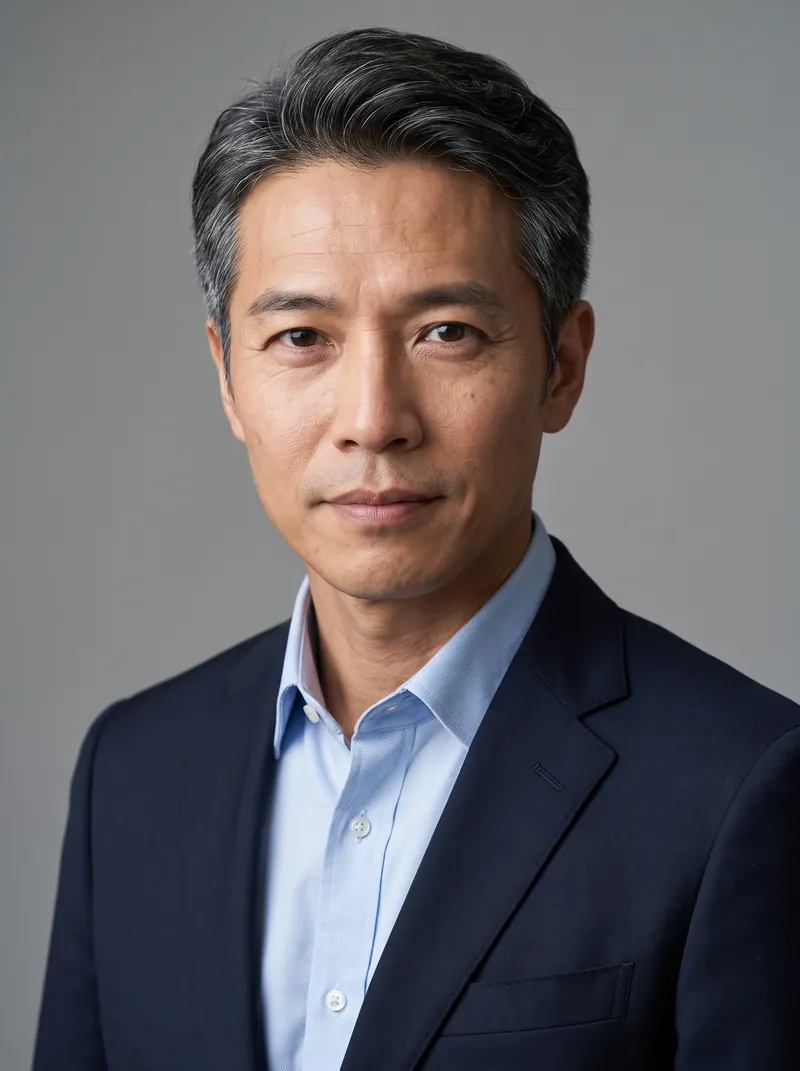
DeepSeek, the Hangzhou-based artificial intelligence laboratory that disrupted the global tech sector with its highly efficient open-source models, has officially closed its first external funding round. The company secured more than 50 billion yuan—approximately $7.4 billion—catapulting its valuation past the $50 billion mark and cementing its status as China's most valuable AI startup.[1][3]
The landmark financing deal, which was recently finalized in corporate registry filings, marks a significant shift for a company that had previously relied entirely on internal capital. Founded in 2023 by the quantitative hedge fund High-Flyer Quant, DeepSeek built its reputation as a pure research lab before releasing models that rivaled the performance of industry leaders like OpenAI and Meta.[1][4]
The structure of the mega-round is highly unusual for the venture capital industry, reflecting founder and CEO Liang Wenfeng's determination to maintain absolute control over the company's direction. According to financial disclosures, the vast majority of investors were required to channel their capital into a limited partnership managed directly by Liang, rather than purchasing equity in DeepSeek directly.[1][3]
Under these strict terms, participating investors—which reportedly include industrial heavyweights like Tencent, JD.com, and battery manufacturer CATL—receive no voting rights. Furthermore, they are subject to a stringent five-year lock-up period during which they cannot sell their shares, a mandate that underscores DeepSeek's focus on long-term research over short-term liquidity.[1][3]
There is, however, one notable exception to this restrictive framework. China's state-backed National Artificial Intelligence Industry Investment Fund was permitted to invest directly into the company. This direct investment grants the state fund voting rights and exempts it from the five-year lock-up, highlighting the strategic national importance Beijing places on DeepSeek's foundational models.[1][3]
DeepSeek's rise to global prominence accelerated in early 2025 and continued into 2026 with the release of its V4 model, currently the largest open-weights AI model available. The company achieved this by utilizing highly optimized training techniques that require significantly fewer high-end semiconductors, proving that top-tier AI performance can be achieved without relying entirely on massive clusters of the newest Nvidia chips.[3][4]
This cost-efficiency has allowed DeepSeek to aggressively undercut its American competitors on pricing. The company recently made a 75 percent discount on its V4 Pro model permanent, rendering it roughly 11 times cheaper for input processing and 35 times cheaper for output generation compared to OpenAI's flagship models.[3]
Despite the successful close of the $7.4 billion round, DeepSeek's immediate financial roadmap has hit a temporary speed bump. In late July, the company paused discussions for a second, $1.5 billion follow-on funding round that would have valued the firm at over $70 billion.[2][5]
The suspension reportedly stems from the unauthorized leak of internal comments made by Liang during the initial fundraising process. Unverified transcripts circulating on social media allegedly captured the CEO expressing frustration over the persistent gap in AI sophistication between the U.S. and China, as well as the industry's ongoing reliance on Nvidia hardware.[2][6]
Rather than proceed under the shadow of the leaked transcripts, DeepSeek opted to verbally inform prospective backers that it would delay signing new investment agreements. The company is expected to revamp its fundraising strategy and could resume the follow-on round later this year once the public scrutiny subsides.[5][6]
Looking ahead, the $7.4 billion capital injection will be deployed to aggressively expand DeepSeek's data center footprint and computing infrastructure. As the company scales its hardware capabilities to train the next generation of foundational models, it is also laying the groundwork for a highly anticipated initial public offering.[4][5]
Financial advisors are reportedly already in discussions with the firm regarding a domestic IPO in mainland China. With preparations underway, DeepSeek could file its prospectus as early as late 2026, setting the stage for what would likely be one of the most significant technology listings of the decade.[4][6]
Viewpoints in depth
DeepSeek's Leadership
Focusing on long-term research independence and cost-efficient model training.
Founder Liang Wenfeng has structured DeepSeek to insulate its core research from short-term market pressures. By enforcing a five-year lock-up on investor capital and retaining absolute voting control, the leadership team aims to prioritize fundamental breakthroughs in open-source AI over immediate commercial monetization. Their engineering philosophy centers on algorithmic efficiency, proving that world-class models can be trained without relying on the largest, most expensive hardware clusters.
Global Open-Source Advocates
Viewing DeepSeek as a crucial counterbalance to closed-ecosystem tech giants.
The global developer community has largely championed DeepSeek's rise, seeing its high-performing, open-weights models as a necessary democratizing force in artificial intelligence. By permanently slashing API costs and releasing models that rival proprietary systems from OpenAI and Anthropic, advocates argue that DeepSeek is lowering the barrier to entry for startups and researchers worldwide, preventing a monopolistic concentration of AI capabilities.
Institutional Investors
Balancing the massive potential upside against unusual governance risks.
Venture capitalists and industrial backers are navigating a complex risk-reward calculus. While the opportunity to back China's most valuable AI startup is highly attractive, the unprecedented deal structure—stripping them of voting rights and locking up capital for half a decade—requires immense trust in Liang's vision. The recent pause of the second funding round following leaked internal comments has further highlighted the volatility and unique governance challenges inherent in the company's structure.
Key points
- DeepSeek officially closed its first external funding round, raising roughly $7.4 billion.
- The mega-round values the Hangzhou-based AI laboratory at over $50 billion.
- Investors face a strict five-year lock-up period and receive no voting rights, ensuring founder control.
- China's state-backed National AI Fund was the sole investor granted direct equity and voting power.
What we don’t know
- When DeepSeek will officially resume its paused $1.5 billion follow-on funding round.
- The exact timeline and target exchange for the company's anticipated initial public offering.
- How the direct involvement of China's state-backed AI fund will impact DeepSeek's international expansion and regulatory scrutiny abroad.
How we got here
2023
DeepSeek is founded as an AI research unit by quantitative hedge fund High-Flyer Quant.
Early 2025
The company gains global attention with the release of highly efficient open-source AI models.
April 2026
DeepSeek releases V4, the largest open-weights model to date, and slashes API pricing.
June 2026
The company officially closes its $7.4 billion first external funding round.
July 2026
DeepSeek pauses a second, $1.5 billion funding round following the leak of internal executive comments.
- DeepSeek Leadership
- Prioritizes long-term research independence and cost-efficient model training over short-term investor demands.
- Institutional Investors
- Eager to capitalize on China's leading AI firm but cautious of the restrictive governance and recent public relations volatility.
- Geopolitical Analysts
- Views the state-backed investment and DeepSeek's hardware efficiency as critical components of China's drive for technological self-reliance.
Perspectives this story doesn't cover
- U.S. hardware manufacturers whose chips DeepSeek is attempting to bypass.
- International regulators monitoring data access and state-backed AI development.
Sources
Source coverage
6 outlets
3 viewpoints surfaced






- [1]ForbesDeepSeek Leadership
DeepSeek Secures Over $7.4 Billion In First Funding Round
Read on Forbes → - [2]The Japan TimesGeopolitical Analysts
DeepSeek said to have told backers of funding pause after viral posts
Read on The Japan Times → - [3]The DecoderDeepSeek Leadership
Chinese AI startup DeepSeek takes outside money for the first time at a $50 billion valuation
Read on The Decoder → - [4]Investing.comInstitutional Investors
DeepSeek halts follow-on funding weeks after record $7 bln round
Read on Investing.com → - [5]TipRanksInstitutional Investors
DeepSeek Puts Second Funding Round on Ice
Read on TipRanks → - [6]GuruFocusInstitutional Investors
DeepSeek Halts Funding Round Amid Controversy Surrounding AI Comments
Read on GuruFocus →
More in Business
See all →AI Infrastructure
Ecolab Acquires AI Cooling Firm CoolIT Systems for $4.75 Billion at 29x Premium
6 sources

AI Infrastructure
Nvidia Invests $1 Billion in AI Startup Poolside Alongside $6 Billion Software Licensing Deal
3 sources
AI Infrastructure
Valar Atomics Secures $1 Billion Series B to Scale Nuclear Power for AI Data Centers
4 sources
AI Infrastructure
AI Inference Chip Startup Etched Secures $700M at $21 Billion Valuation to Scale Compute Clusters
8 sources

Comments
Every angle. Every day.
Get Business stories with full source coverage and perspective breakdowns, free every day.