
China Begins Addressing $190 Billion 'Ticking Time Bomb' of Expiring Non-Residential Leases
Shanghai and Guangzhou have introduced the first concrete guidelines for renewing commercial land leases, offering a path forward for properties nearing the end of their state-granted tenures.
By Dev Anand
China is finally answering the most expensive question in its commercial real estate market. After years of uncertainty, local governments in Shanghai and Guangzhou have released official guidelines detailing how property owners can renew expiring land leases for office towers, shopping malls, and industrial sites. For a commercial landlord staring down the end of a 40-year term, the new rules transform a looming existential threat into a calculable business expense.[2][3]
The stakes are massive, rooted in the foundational mechanics of Chinese real estate. Because all urban land is state-owned, developers and investors purchase land use rights rather than the dirt itself. The first generation of these commercial leases, granted during the rapid market expansions of the early 1990s, are now approaching their expiration dates. Until now, no one knew exactly what would happen when the clock hit zero.[3][6]
The ambiguity had essentially placed a hard expiration date on billions of dollars in real estate. According to estimates from Cushman & Wakefield, more than 1 trillion yuan ($190 billion) worth of non-residential property currently sits on land with 20 years or less remaining on its lease. As those terms dwindle, the uncertainty has acted as a ticking time bomb, systematically eroding asset values and freezing the market.[1][2][5]
For actual buyers and sellers, the lack of clarity had made doing business nearly impossible. Local insurers and developers have increasingly required land terms to extend beyond two decades before they will even consider a transaction. Similarly, banks have grown hesitant to extend or refinance loans on buildings with less than a decade left on their land tenure, leaving current owners trapped with depreciating, illiquid assets.[2][4]
Major developers have felt the squeeze directly on their balance sheets. Companies like Parkview Group and New World Development have struggled to offload premium assets—including a Beijing shopping center and a Shanghai office tower—because potential buyers demanded steep discounts to offset the lease expiration risk. Without a guarantee that they could keep the building, buyers simply walked away.[1][4][5]
The new guidelines from Shanghai and Guangzhou offer a concrete, financially viable off-ramp. Both cities have proposed that lease extension costs be set at roughly 70 percent of a benchmark land price. Crucially for property owners, this benchmark is calculated based on the raw land value, entirely excluding the added value of the structures, renovations, and businesses built on top of it.[3][4]
This pricing structure means that extending a lease will likely represent only a fraction of a project's total cost. It is a significant relief for investors who feared they might have to surrender their properties entirely or pay exorbitant, market-rate fees to retain them. The land still belongs to the state, but the cost of keeping a business running on it is no longer a guess.[3][4]
The policy shift also signals a broader transition in how Chinese municipalities view commercial development. Rather than treating lease expirations as an opportunity to reclaim prime real estate, cities like Shanghai are prioritizing sustained capital investment. By offering a clear path to renewal, the city is rewarding actual investment and ensuring that commercial districts remain productive.[3]
While the current rules apply locally, they are widely viewed by the industry as pilot programs for a desperately needed national framework. The central government in Beijing acknowledged the issue earlier this year, pledging to refine laws governing the renewal of industrial and commercial land-use rights in a steady and lawful manner.[2][4]
For the global funds, local businesses, and developers holding significant mainland exposure, the emerging clarity provides a critical foundation for future planning. As other cities look to Shanghai and Guangzhou as reference points, the resolution of the lease expiry issue removes a massive structural risk, paving the way for stalled investments to finally move forward.[1][3]
Viewpoints in depth
Commercial Property Investors
Investors view the new guidelines as a necessary relief that restores asset valuations.
For regional and international property funds, the lack of a renewal mechanism had essentially rendered aging assets untradable. Investors argue that the 70 percent benchmark rate—calculated on raw land rather than improved value—provides a workable financial model that prevents their portfolios from depreciating to zero. They are now pushing for these local pilot programs to be codified into a uniform national law to ensure consistency across all tier-one and tier-two cities.
Local Municipal Governments
City officials are balancing the need to retain investor confidence with the state's ultimate ownership of land.
Municipalities like Shanghai and Guangzhou recognize that pulling land back upon lease expiration would trigger a catastrophic flight of capital. By offering a structured, paid renewal path, local governments maintain the state's foundational land-ownership principles while generating a new, predictable revenue stream from extension fees. This approach allows them to keep commercial districts productive and avoid the economic fallout of abandoned or seized properties.
Key points
- Shanghai and Guangzhou have released official guidelines for renewing expiring commercial land leases.
- More than $190 billion worth of non-residential property in China has 20 years or less remaining on its lease.
- Renewal costs are proposed at roughly 70 percent of a benchmark raw land price, excluding building value.
- The clarity aims to unfreeze a commercial real estate market where uncertainty had stalled asset sales and refinancing.
How we got here
Early 1990s
China establishes its modern urban land system, granting 40- and 50-year leases for commercial and industrial properties.
Early 2026
Beijing acknowledges the looming lease expiration issue, pledging to refine laws governing the renewal of commercial land-use rights.
August 2026
Shanghai and Guangzhou circulate official guidelines detailing the procedure and cost structure for renewing expiring non-residential leases.
- Commercial Real Estate Developers
- Focused on the immediate unblocking of stalled asset sales and refinancing options.
- Market Analysts and Valuers
- Focused on how the regulatory clarity will halt the depreciation of aging property portfolios.
- Legal and Policy Observers
- Focused on the transition from local pilot guidelines to a standardized national framework.
Perspectives this story doesn't cover
- Small-to-medium enterprise (SME) tenants who may face rent increases if landlords pass on the costs of lease renewals.
- Domestic Chinese banks that hold the debt on these properties and must now adjust their collateral valuation models.
Sources
Source coverage
6 outlets
3 viewpoints surfaced






- [1]The Straits TimesCommercial Real Estate Developers
China races to solve $190 billion property threat as leases end
Read on The Straits Times → - [2]Brief AsiaMarket Analysts and Valuers
Shanghai and Guangzhou Move to Clarify Commercial Lease Extensions
Read on Brief Asia → - [3]Briefs.coMarket Analysts and Valuers
Shanghai Sets Terms for Renewing Commercial Land Leases
Read on Briefs.co → - [4]Sri Lanka GuardianLegal and Policy Observers
Shanghai and Guangzhou are clarifying rules for expiring commercial land leases
Read on Sri Lanka Guardian → - [5]China Money NetworkCommercial Real Estate Developers
China Confronts Looming Property Crisis Due to Expired Leases
Read on China Money Network → - [6]South China Morning PostLegal and Policy Observers
Will their holders renew? As China's initial group of industrial leases lapses
Read on South China Morning Post →
More in Real Estate
See all →Commercial Real Estate
Rising Treasury Yields Stall Global Commercial Real Estate Recovery as Transaction Volumes Drop
5 sources
Logistics Infrastructure
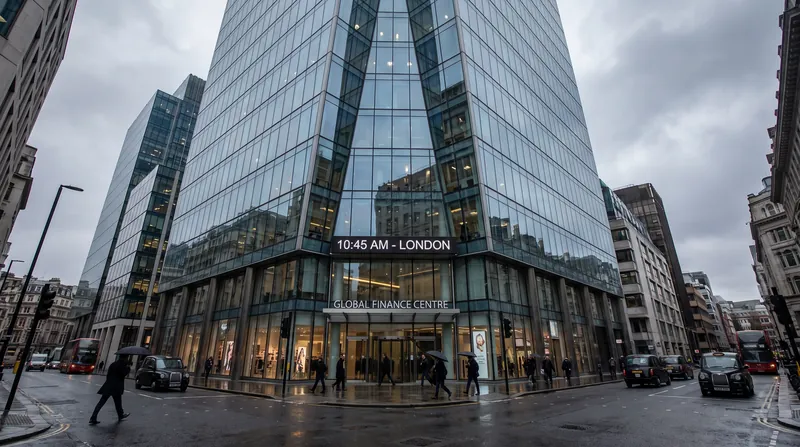
ESR Kendall Square Sells Pyeongtaek Logistics Park to Samsung SRA for $253 Million
3 sources
Branded Residences
Why Buyers Are Paying a 30 Percent Premium for Branded Residences
8 sources
Capital Markets
Global Real Estate Investment Rebounds 13% in Q2 as Investors Prioritize Selective Deals
4 sources
Comments
Every angle. Every day.
Get Real Estate stories with full source coverage and perspective breakdowns, free every day.