
The Mechanics of the 'Bargain Hunt': How International Capital is Navigating China's Commercial Real Estate Slump
With commercial property prices in major Chinese cities down up to 40% from their peaks, international investors are deploying new strategies to acquire distressed assets. Recent regulatory reforms and a surge in judicial auctions have opened a rare window for foreign capital, though significant structural risks remain.
By Noor Saidi

- Value Investors
- View the 30-40% price drop in tier-one Chinese commercial real estate as a rare, strategic entry point to acquire high-yield assets.
- Risk-Averse Institutions
- Prioritize exit visibility and geopolitical stability, seeking to reduce exposure to China despite the discounted valuations.
- Regulatory & Legal Advisors
- Focus on the mechanics of capital deployment, emphasizing that success depends entirely on navigating WFOE structures and SAFE compliance.
Perspectives this story doesn't cover
- Domestic Chinese commercial tenants facing changing lease terms under new foreign ownership
- Local municipal governments relying on commercial land sales for revenue
What’s at stake
The influx of foreign capital into China's distressed real estate market provides a crucial floor for asset prices, potentially stabilizing a sector that has dragged down the world's second-largest economy for years. For global markets, it signals a shift from panic-selling to calculated, yield-driven investment in the region.
For years, the narrative surrounding China's real estate sector has been defined by developer defaults, stalled projects, and a prolonged structural crisis. But beneath the headline-grabbing struggles of the residential market, a quiet recalibration is taking place in the commercial sector.[4]
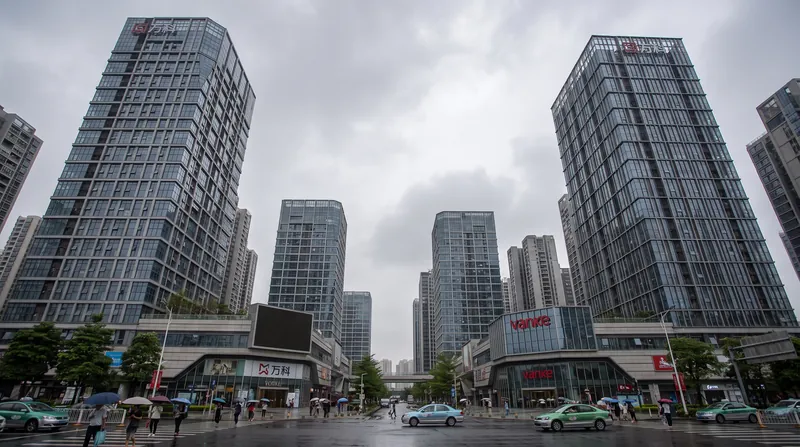
Across major tier-one cities like Shanghai and Beijing, prime commercial properties—ranging from office towers to logistics hubs—have seen their valuations plummet by 30% to 40% from their pre-crisis peaks. This dramatic repricing has triggered a new phase in the market cycle: the arrival of international bargain hunters.
The shift is already visible in transaction data. In the first half of 2026, the number of commercial property deals in Shanghai jumped 77% year-over-year, with total transaction value rising 18% to 27.4 billion yuan (approximately $4.05 billion).
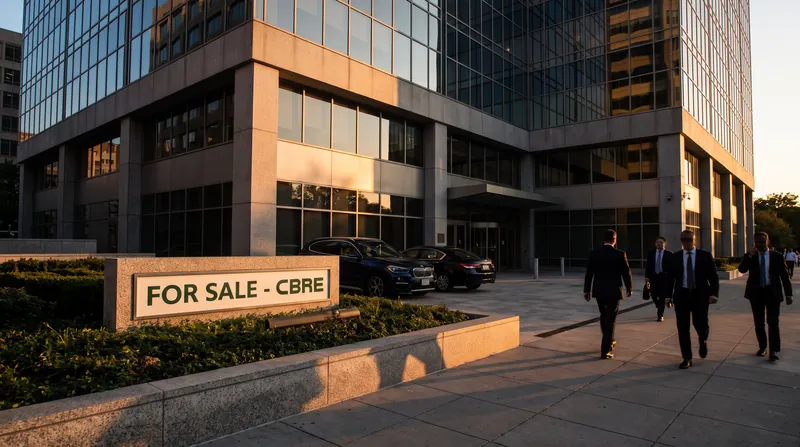
"We believe there is limited room for further price declines," noted Candice Wang, head of capital markets for eastern China at CBRE, in a recent market assessment. "Consequently, we think a strategic opportunity to enter the market is offered to investors this year."
The math driving this renewed interest is rooted in yield spreads. With Chinese government bond yields hovering below 1.85%, the average yield on property-backed Chinese Real Estate Investment Trusts (C-REITs) sits at an attractive 4%. For institutional capital seeking stable returns, that premium is increasingly difficult to ignore.
However, acquiring commercial real estate in China as a foreign entity is not as simple as wiring funds and signing a deed. The mechanism requires navigating a strict regulatory framework designed to control capital flows and limit speculative buying.[3]
To purchase commercial assets, international investors typically must establish a Wholly Foreign-Owned Enterprise (WFOE). A WFOE is a Chinese limited liability company entirely capitalized by foreign investors, which legally permits the entity to acquire commercial and industrial real estate within its registered business scope.[3]
To purchase commercial assets, international investors typically must establish a Wholly Foreign-Owned Enterprise (WFOE).
Historically, the WFOE route was bottlenecked by stringent foreign exchange controls. But in September 2025, China's State Administration of Foreign Exchange (SAFE) implemented reforms that expanded capital account flexibility, significantly streamlining the process of converting foreign currency into renminbi for approved real estate investments.[3][4]
Armed with WFOE structures and smoother capital pathways, foreign buyers are not just targeting traditional office space. The focus has broadened to "new economy" assets. Logistics facilities, cold-chain storage, and affordable long-term rental housing are currently drawing the heaviest international interest, driven by China's booming e-commerce sector and demographic shifts.[1]
A significant portion of these acquisitions is flowing through the distressed asset pipeline. As the property sector stabilizes, auctioneers are processing record volumes of foreclosed and non-performing assets. These judicial auctions offer steep discounts, allowing foreign capital to acquire high-quality, centrally located assets that rarely hit the open market during boom times.
Yet, the bargain hunt is not universal. While some investors are rushing in, others are actively heading for the exits. Global investment giants like KKR and AEW Capital Management have reportedly been seeking buyers for portions of their legacy Chinese property portfolios.[2]
This divergence highlights the deep uncertainty still present in the market. Institutions looking to sell are increasingly cautious about currency risk, sluggish rental growth, and "exit visibility"—the ability to eventually liquidate the asset and repatriate the profits without regulatory friction.[2]
For those staying or entering, the operational playbook has fundamentally changed. The era of foreign managers acting purely as passive providers of global capital is over.
Today, successful international investors are transitioning into local operating partners. They are bringing sector-specific expertise—particularly in ESG compliance and asset management—and partnering with domestic capital to physically improve the properties they acquire.[1]
This influx of targeted, operational capital serves a vital macroeconomic function. By clearing distressed inventory and setting a price floor for commercial assets, international investors are helping to absorb the overhang that has weighed on China's broader economy.[4]
The recovery remains highly uneven, heavily concentrated in tier-one cities while secondary markets continue to languish. But for the first time in half a decade, the conversation in China's commercial real estate market has shifted from how far prices will fall, to who will own the assets when the dust settles.[4]
Key takeaways
- Commercial property prices in major Chinese cities have fallen 30% to 40% from their peaks.
- Shanghai saw a 77% year-over-year jump in commercial real estate transactions in the first half of 2026.
- Foreign investors are using WFOE structures to acquire distressed assets and new economy facilities like logistics hubs.
- The trend is driven by attractive yield spreads, with property C-REITs offering roughly 4% compared to sub-1.85% government bonds.
- Despite the influx of new capital, some legacy global investment firms are attempting to sell their Chinese portfolios.
Sources
Source coverage
4 outlets
3 viewpoints surfaced



- [1]Cushman & WakefieldValue Investors
Greater China Real Estate Market Outlook 2026
Read on Cushman & Wakefield → - [2]BloombergRisk-Averse Institutions
KKR and AEW Reportedly Seek Buyers for China Property Assets
Read on Bloomberg → - [3]CnBusinessHubRegulatory & Legal Advisors
Foreign Investment in China Real Estate: 2026 Guide
Read on CnBusinessHub → - [4]Factlen Editorial TeamRegulatory & Legal Advisors
Synthesis by Factlen editorial team
Read on Factlen Editorial Team →
Comments
More in Real Estate
See all →Private Markets
Blackstone Launches Perpetual Private Markets Fund for Non-US Investors
7 sources
Housing Bubble Risk
Zurich and Tokyo Top UBS Global Real Estate Bubble Index as Miami's Risk Eases
6 sources

Property Law
How the Public Faith of the Land Register Establishes Property Title in Civil Law Systems
7 sources

REIT Liquidation
DWS to Liquidate RREEF Property Trust Following Redemption Pressures
7 sources
Every angle. Every day.
Get Real Estate stories with full source coverage and perspective breakdowns delivered to your inbox.