
Canada Refuses to Release Data Backing Up 4% NATO Defense Spending Claim
The Canadian government is facing intense criticism from financial watchdogs after refusing to provide data backing up Prime Minister Mark Carney's claim that the country is on track to spend 4 percent of its GDP on defense by 2030. Economists warn that the lack of a public fiscal roadmap for the massive military buildup represents a severe failure of transparency.
By Factlen Editorial Team
- Fiscal Watchdogs
- Contends that the lack of a detailed financial roadmap represents a severe transparency failure, making it impossible to verify the affordability of the commitments.
- Federal Government
- Argues that the fiscal framework already provisions for the target and that withholding specific line items protects ongoing procurement negotiations.
- Economic Analysts
- Warns that reaching the defense targets will require massive new expenditures that could strain the federal deficit or necessitate tax increases.
What's not represented
- · International Defense Contractors
- · Canadian Taxpayers
Why this matters
Canada's pledge to drastically increase defense spending represents a monumental shift in national priorities that will cost tens of billions of dollars annually. Without a transparent financial roadmap, taxpayers are left in the dark about whether this historic military buildup will be funded through higher taxes, deep cuts to social programs, or a surging national deficit.
Key points
- Prime Minister Mark Carney claims Canada will reach 4 percent of GDP in defense spending by 2030.
- The finance minister's office has refused to release the fiscal data to back up this assertion.
- The Parliamentary Budget Officer estimates the ramp-up will require $33.5 billion in additional annual spending.
- Economists warn the lack of a public financial roadmap represents a severe failure of government transparency.
- Officials argue that detailing the budget could compromise ongoing negotiations for major military procurements.
Prime Minister Mark Carney’s assertion that Canada is on track to spend 4 percent of its gross domestic product on defense by 2030 has triggered a fierce domestic debate over fiscal transparency. The commitment, which would represent one of the largest military buildups in modern Canadian history, is designed to align Ottawa with increasingly stringent NATO expectations. Yet, as the government prepares for the upcoming NATO summit in Turkey, financial watchdogs and economic experts are raising alarms over a glaring absence of public data to support the prime minister’s claims.
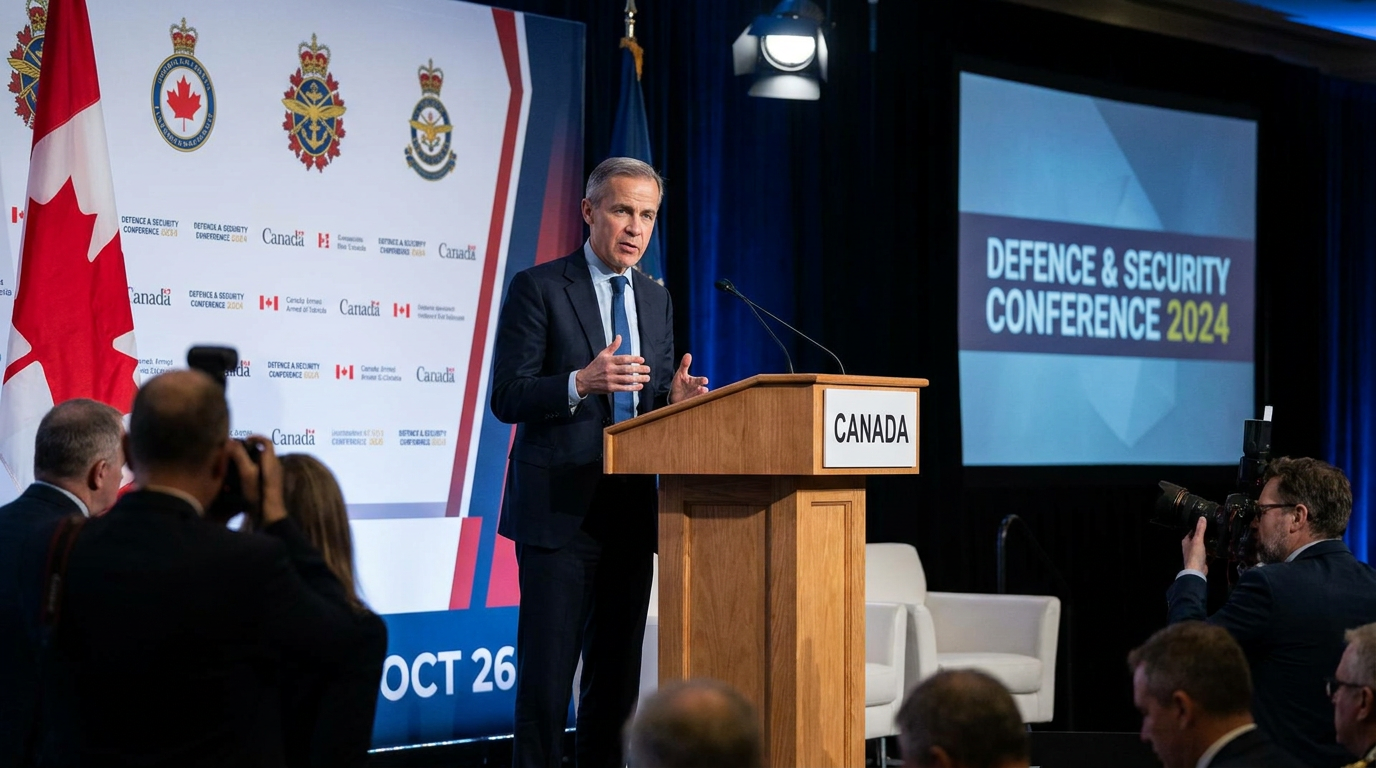
The controversy centers on remarks Carney made at the CANSEC defense conference in May, where he stated that Canada’s fiscal framework has already provisioned the necessary funds to achieve the 4 percent target by the end of the decade. He further noted that the country is en route to hitting a newly established NATO target of 5 percent by 2035. These figures represent a monumental shift for a nation that has historically allowed its defense spending to languish between 1.2 and 1.4 percent of GDP.
Despite the magnitude of the pledge, the federal government has tightly guarded the underlying math. When journalists and independent analysts requested the data from the finance minister’s office to verify the prime minister’s statements, the requests were denied. Officials stated they were not in a position to "scoop forthcoming announcements," leaving the public without a clear understanding of how the government plans to finance the massive expansion.
The financial implications of the 4 percent target are staggering. According to an analysis of the Spring Economic Statement, Canada would need to allocate an estimated $163 billion annually by 2030 to meet Carney’s commitment. To put that figure into perspective, the required annual increase of roughly $34.9 billion over current baseline projections exceeds the entire yearly budget for the Canada Child Benefit.

The Office of the Parliamentary Budget Officer (PBO), an independent watchdog tasked with providing objective financial analysis to lawmakers, has repeatedly attempted to pierce the veil of secrecy. The PBO has sent multiple formal requests to the Department of National Defence seeking detailed projections regarding the NATO targets. As of early July, those requests have gone unanswered, leaving the agency to rely on its own independent modeling.
In a comprehensive February report, the PBO attempted to quantify the fiscal impact of the government’s promises. The agency estimated that merely increasing "core" defense spending to 3.5 percent of GDP by 2035 would require an average of $33.5 billion per year in additional cash expenditures over the next decade. The report warned that without corresponding revenue increases or spending cuts elsewhere, this trajectory would add $63 billion to the budgetary deficit by the 2035-36 fiscal year.
The NATO 5 percent pledge is structurally divided into two components: 3.5 percent dedicated to traditional military capabilities and 1.5 percent allocated for critical defense infrastructure. This latter category includes dual-use assets such as northern ports, transportation networks, and cyber resilience initiatives. During his CANSEC address, Carney claimed that Canada is already meeting the 1.5 percent infrastructure threshold—another assertion that the finance ministry has declined to substantiate with itemized figures.
This latter category includes dual-use assets such as northern ports, transportation networks, and cyber resilience initiatives.
The refusal to release the data has drawn sharp rebukes from some of Canada’s most respected economic voices. Don Drummond, a former associate deputy finance minister and current public policy professor at Queen's University, characterized the situation as the most severe lack of transparency he has witnessed in his 49-year career as an economist. Drummond noted that while the government is adept at making sweeping announcements, the refusal to simply "show us the number" undermines the credibility of the entire fiscal plan.
Kevin Page, Canada’s first parliamentary budget officer and the current president of the Institute of Fiscal Studies and Democracy, has echoed these concerns. Page has publicly called on the prime minister to present a detailed fiscal roadmap, describing the current situation as an "enormous transparency gap." He argues that Canadians deserve to know how the government intends to finance such a massive undertaking, especially given the country's history of falling short on international defense commitments.[1]

The opacity surrounding the defense budget is also creating unease within the broader financial sector. Economic analysts from major institutions have pointed out that absorbing tens of billions in new defense spending will inevitably apply downward pressure on the federal deficit. With the government already navigating a complex economic environment marked by weak growth and persistent inflation, the sudden injection of military expenditures complicates the fiscal outlook.[2]
Economists warn that the math simply cannot be ignored indefinitely. If the government intends to follow through on the 4 percent and 5 percent targets without blowing out the deficit, it will eventually have to make difficult political choices. These could include raising taxes, reallocating funds from other popular social programs, or accepting a structurally higher debt burden that could constrain future economic flexibility.[2]
In defense of the government's approach, Carney and his cabinet have argued that premature disclosure of specific line items could jeopardize ongoing procurement negotiations. The Canadian Armed Forces are currently in the market for several big-ticket items, including a new fleet of submarines and advanced early warning aircraft. Officials contend that broadcasting exactly how much money has been set aside for these projects would weaken Canada's bargaining position with international defense contractors.
Furthermore, the prime minister has emphasized that the nature of modern warfare is evolving rapidly, pointing to the proliferation of drone and artificial intelligence technologies in conflicts like the war in Ukraine. By maintaining flexibility in the fiscal framework, the government argues it can adapt its spending to acquire the most effective and relevant capabilities, rather than locking into rigid, long-term procurement plans that may quickly become obsolete.

However, this rationale has done little to placate international allies. The lack of a concrete financial plan has reportedly frustrated defense officials in the United States, who have privately questioned the credibility of Canada's commitments. As Washington pushes for greater burden-sharing within the North American Aerospace Defense Command (NORAD) and NATO, Ottawa's reliance on broad assurances rather than hard numbers has become a point of diplomatic friction.
As the prime minister heads to the NATO leaders' summit, the tension between ambitious geopolitical pledges and domestic fiscal accountability remains stark. While the promise of a revitalized, well-funded military plays well on the international stage, the refusal to open the books at home leaves a lingering question: whether Canada’s historic defense buildup is a fully costed reality, or a strategic aspiration waiting for a budget.
How we got here
2014
NATO members, including Canada, commit to a baseline target of spending 2 percent of GDP on defense.
2025
At the NATO Summit in The Hague, allies agree to a new, more ambitious target of 5 percent of GDP by 2035.
February 2026
The Parliamentary Budget Officer releases a report estimating the massive fiscal implications of meeting the new 5 percent NATO pledge.
May 2026
Prime Minister Mark Carney claims at the CANSEC conference that Canada's fiscal framework has already provisioned for 4 percent of GDP by 2030.
July 2026
The finance minister's office refuses to provide data backing up the prime minister's claims, sparking intense criticism from economists and watchdogs.
Viewpoints in depth
The Federal Government's View
Detailed budget disclosures would compromise national security procurements.
Federal officials maintain that the fiscal framework has already accounted for the historic ramp-up in defense spending, even if the line items are not public. The government argues that broadcasting exact budget allocations for upcoming mega-projects—such as new submarine fleets or advanced aerospace systems—would severely weaken Canada's negotiating leverage with global defense contractors. Furthermore, officials emphasize that modern warfare is evolving rapidly, and maintaining a degree of fiscal flexibility allows the military to adapt its procurement strategy to emerging threats rather than being locked into rigid, decade-long spending schedules.
Fiscal Watchdogs' View
The lack of a public financial roadmap is a fundamental failure of transparency.
Independent budget officers and transparency advocates argue that a commitment of this magnitude cannot simply be taken on faith. They point out that adding tens of billions of dollars in annual expenditures fundamentally alters the nation's fiscal trajectory. By refusing to release the underlying data or respond to formal inquiries from the Parliamentary Budget Officer, watchdogs argue the government is shielding its math from necessary democratic scrutiny. They contend that taxpayers have a right to know how the state plans to finance a $163 billion annual defense budget without triggering a fiscal crisis.
Economic Analysts' View
The sheer scale of the required spending will inevitably force difficult fiscal trade-offs.
Economists evaluating the 4 percent and 5 percent NATO targets warn that the math presents a daunting challenge for the federal treasury. Analysts note that absorbing an additional $33.5 billion in annual core defense spending will place immense pressure on a budget already constrained by weak economic growth and existing deficits. From this perspective, the government's reluctance to publish the numbers likely stems from the politically unpalatable reality of the required trade-offs: achieving these defense goals will eventually necessitate raising taxes, cutting other public services, or accepting a structurally higher national debt.
What we don't know
- Whether the government plans to raise taxes or cut services to fund the defense buildup.
- The exact timeline for when major procurement contracts will be finalized and announced.
- How international allies will respond if Canada fails to meet the 4 percent target by 2030.
Key terms
- Core defence spending
- Traditional military expenditures, including personnel, equipment, and operations, which NATO expects to reach 3.5 percent of GDP.
- Critical defence infrastructure
- Investments in dual-use assets like ports, roads, and cyber resilience that contribute to national security, making up the remaining 1.5 percent of Canada's NATO pledge.
- Parliamentary Budget Officer (PBO)
- An independent officer of the Canadian Parliament responsible for providing objective economic and financial analysis to lawmakers.
- Fiscal framework
- The government's long-term financial plan, outlining projected revenues, expenditures, and deficit levels over a multi-year horizon.
Frequently asked
What exactly did the prime minister promise regarding defense spending?
Prime Minister Mark Carney announced that Canada is on track to spend 4 percent of its GDP on defense by 2030, and will meet a new NATO target of 5 percent by 2035.
Why are financial watchdogs criticizing the government?
The finance minister's office has refused to release the data or fiscal roadmap proving that these funds have actually been provisioned, leading experts to call it an 'enormous transparency gap.'
How much will it cost to meet these new NATO targets?
The Parliamentary Budget Officer estimates that reaching just the 3.5 percent 'core' defense target will require an average of $33.5 billion in additional annual spending over the next decade.
Why is the government keeping the budget details secret?
Officials argue that revealing specific budget line items prematurely could compromise Canada's negotiating position with international defense contractors for major purchases like submarines and aircraft.
Sources
Source coverage
2 outlets
3 viewpoints surfaced


[1]BNN BloombergFiscal Watchdogs
Spring economic update reveals transparency gap on defence: Kevin Page
Read on BNN Bloomberg →[2]BMO EconomicsEconomic Analysts
The Defence Deficit
Read on BMO Economics →
Every angle. Every day.
Get world stories with full source coverage and perspective breakdowns delivered to your inbox.