
California Becomes First State to Regulate Embodied Carbon in Building Code, Forcing Material Overhaul
As of January 2026, California has halved the size threshold for its pioneering CALGreen building code, requiring commercial projects and schools over 50,000 square feet to drastically cut the carbon emissions tied to their physical construction materials.

For decades, the commercial construction industry has relied heavily on standard concrete and steel for their cheap predictability, durability, and structural strength. But those same foundational materials are responsible for a massive chunk of global greenhouse gas emissions, creating a persistent clash between developers trying to build cost-effectively and environmental advocates demanding climate accountability.
Until recently, the carbon locked inside a building's walls and foundations was largely ignored by regulators, who instead focused entirely on 'operational carbon'—the energy used to keep the lights on and the air conditioning running. That regulatory blind spot allowed the most carbon-intensive manufacturing processes to continue unchecked.[5]
Now, California is forcing a resolution that is actively rewiring the construction material supply chain. As of January 1, 2026, the state's pioneering CALGreen building code has officially halved its size threshold for mandatory embodied carbon tracking and reduction.
The updated rules dictate that any commercial project or school over 50,000 square feet must drastically cut the emissions tied to its physical building materials. This expands a first-in-the-nation mandate that previously only applied to massive 100,000-square-foot developments, bringing thousands of mid-sized office parks, retail centers, and educational facilities under strict environmental oversight.[1][2]
Unlike operational carbon, 'embodied carbon' refers to the greenhouse gases emitted during the extraction, manufacturing, transportation, and installation of the building materials themselves. For a local property owner or developer breaking ground on a new project this year, this means standard concrete pours and traditional steel framing are no longer automatic choices. Project teams must now account for the environmental cost of every beam and foundation slab before a single shovel hits the dirt, fundamentally altering the early stages of architectural design and material procurement.[2][6]
To secure a building permit under the 2026 code, project teams must prove compliance through one of three strict pathways. Developers can choose to reuse at least 45 percent of an existing structure's primary elements and enclosure, which heavily incentivizes adaptive reuse over demolition. Alternatively, they can conduct a whole-building life-cycle assessment demonstrating a 10 percent emissions reduction against a baseline model. The third option allows builders to use materials that meet stringent Global Warming Potential (GWP) limits, forcing them to meticulously select low-carbon products from vetted suppliers.[3][4]
This mandate is triggering a rapid overhaul of how building materials are sourced, manufactured, and sold across the West Coast. Concrete, which is notoriously carbon-intensive due to the high heat required for cement production, is facing the strictest scrutiny. Suppliers are now required to provide Environmental Product Declarations (EPDs)—essentially detailed nutrition labels for carbon emissions—to prove their specific mixes comply with the new state limits. This has sparked a race among manufacturers to develop innovative concrete blends that utilize fly ash, slag, or carbon-capture technologies without sacrificing structural integrity.[4][6]
For the actual buyer, owner, or tenant, the shift is largely invisible to the naked eye but fundamentally changes the building's environmental footprint and long-term value. A new school or mid-rise commercial complex built in 2026 might feature the exact same aesthetic design as one built a decade ago, but its structural frame now relies on low-carbon concrete mixes, recycled steel, and sustainably sourced insulation. This invisible upgrade ensures that the property is insulated against future regulatory penalties while appealing to a growing class of environmentally conscious commercial tenants.[1]
While some developers initially expressed concern over the upfront costs of sourcing specialized materials and hiring sustainability consultants to run complex life-cycle assessments, industry advocates note that the market has rapidly adjusted to the new reality. Compliant alternatives are becoming widely available, driving down the 'green premium' that once plagued sustainable construction projects.
Furthermore, the long-term value of a certified low-carbon building often translates to higher lease rates, better financing terms, and easier approvals from local planning commissions. Real estate investors are increasingly viewing embodied carbon compliance not as a regulatory burden, but as a necessary step in future-proofing their portfolios against climate risk.[3][4]
Although the current mandate specifically targets commercial real estate and schools, the residential market is already feeling the downstream effects of the policy shift. As major suppliers overhaul their manufacturing processes to meet the 50,000-square-foot commercial standard, those same low-carbon materials are increasingly making their way into single-family home construction and smaller multifamily developments.
Viewpoints in depth
The Environmental Imperative
Why advocates argue that targeting embodied carbon is essential for meeting climate goals.
For years, the green building movement focused almost entirely on operational efficiency—ensuring that buildings used less electricity and water once occupied. However, environmental advocates point out that this approach ignores the massive carbon debt incurred before the doors even open. Because it can take decades for a highly efficient building to offset the emissions generated by its initial construction, targeting the embodied carbon in concrete and steel is viewed as the only way to make an immediate, meaningful dent in global emissions.
The Developer's Calculus
How property owners and builders are navigating the new costs and compliance pathways.
From the perspective of commercial developers and architectural firms, the expanded CALGreen mandate introduces a new layer of complexity to project planning. Teams must now weigh the costs of conducting whole-building life-cycle assessments against the logistical challenges of sourcing certified low-carbon materials. While there is initial friction in adapting to these requirements, many firms are finding that the regulations ultimately drive better design decisions, encouraging adaptive reuse of existing structures and future-proofing portfolios against increasingly stringent environmental laws.
The Supply Chain Shift
How material manufacturers are racing to innovate and capture market share.
The regulatory shift is sending shockwaves through the heavy manufacturing sector. Concrete and steel suppliers are no longer competing solely on price and delivery speed; they must now compete on carbon efficiency. This has sparked a wave of innovation, with manufacturers investing heavily in alternative cement blends, carbon-capture technologies, and rigorous environmental product declarations (EPDs). Industry observers note that as these low-carbon materials scale up to meet commercial demand, they will inevitably become the standard for residential construction as well.
Key points
- California has officially lowered the threshold for its mandatory embodied carbon building regulations to 50,000 square feet.
- The expanded CALGreen code requires developers to drastically cut emissions tied to physical building materials like concrete and steel.
- Project teams must comply by reusing existing structures, conducting life-cycle assessments, or sourcing certified low-carbon materials.
- The mandate is forcing material suppliers to provide Environmental Product Declarations (EPDs) to prove their products meet state limits.
How we got here
August 2023
The California Building Standards Commission unanimously approves amendments to CALGreen to limit embodied carbon emissions.
July 2024
The initial mandate takes effect, applying embodied carbon regulations to commercial buildings over 100,000 square feet.
January 2026
The size threshold drops significantly, expanding the mandate to commercial projects and schools 50,000 square feet or larger.
- Green Building Advocates
- Argue that embodied carbon is the most critical frontier in climate policy, as building materials account for a massive share of global emissions.
- Architecture & Engineering Firms
- Focus on the practicalities of implementation, helping developers navigate the new compliance pathways and source low-carbon materials.
- Industry Observers
- Analyze the broader economic and supply chain impacts as the construction industry adapts to the new regulatory baseline.
Perspectives this story doesn't cover
- Small-scale residential builders
- Demolition contractors
Sources
Source coverage
6 outlets
3 viewpoints surfaced






- [1]USGBC CaliforniaGreen Building Advocates
California Buildings Must Limit “embodied carbon.” Here's What That Means
Read on USGBC California → - [2]AIA CaliforniaGreen Building Advocates
CALGreen Mandatory Measures for Embodied Carbon Reduction
Read on AIA California → - [3]Thornton TomasettiArchitecture & Engineering Firms
CALGreen Sustainable Construction
Read on Thornton Tomasetti → - [4]LPA Design StudiosArchitecture & Engineering Firms
New California regulations require commercial and school projects to meet embodied carbon construction standards
Read on LPA Design Studios → - [5]MarketplaceIndustry Observers
California buildings must limit 'embodied carbon.' Here's what that means
Read on Marketplace → - [6]3C-RENGreen Building Advocates
Embodied Carbon and CALGreen Compliance
Read on 3C-REN →
More in Home
See all →Building Codes
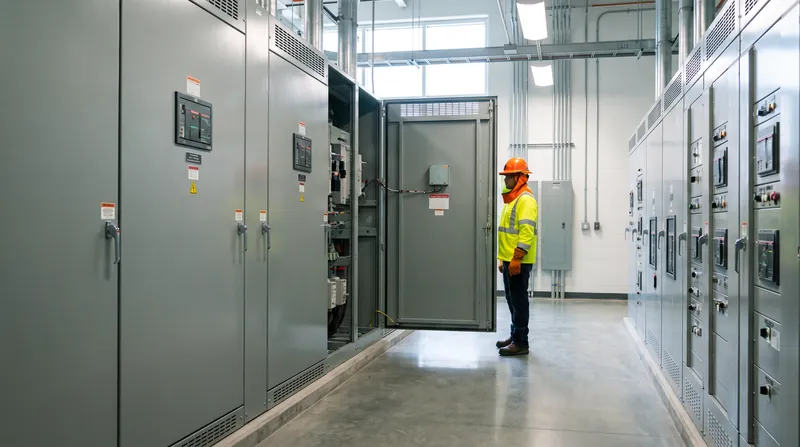
New IBC Tornado Load Requirements Mandate Structural Redesign for Schools and Hospitals
4 sources
Robotic Construction
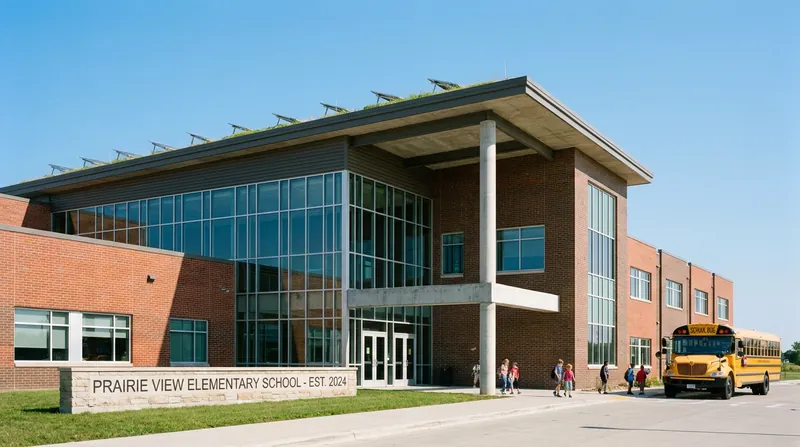
World's Largest 3D-Printed Township Advances, Proving Scalability of Robotic Construction
7 sources
Building Codes
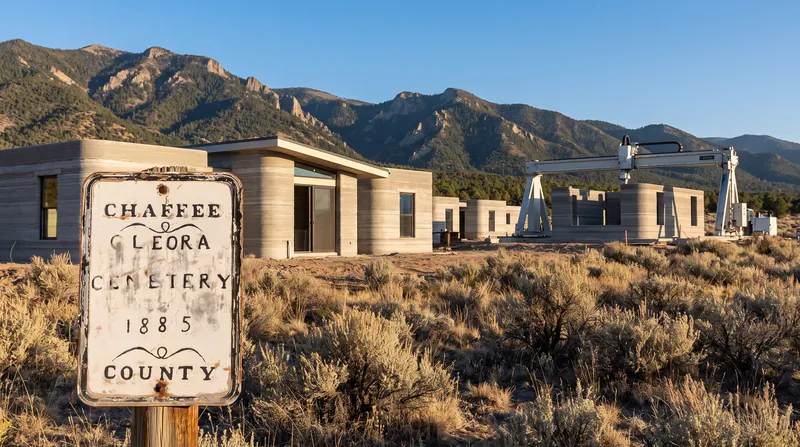
The 2021 IECC Explainer: The Math Behind the Federal Energy Code Mandate for New Homes
4 sources
Tornado Resilience
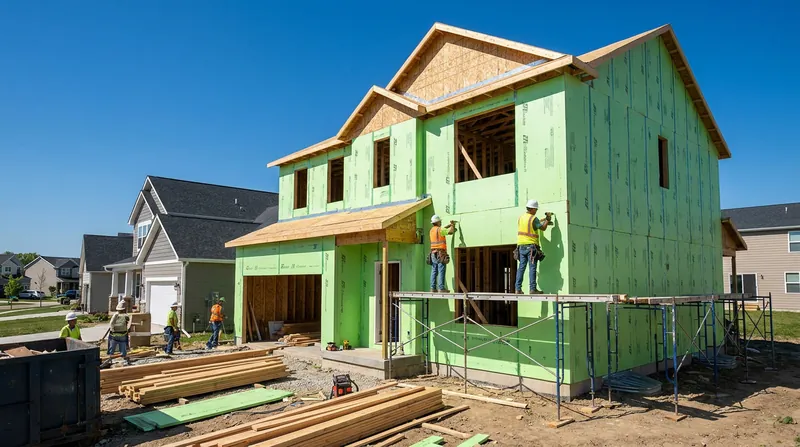
National Building Code Adds First-Ever Tornado Load Requirements for Critical Infrastructure
6 sources
Comments
Every angle. Every day.
Get Home stories with full source coverage and perspective breakdowns, free every day.