
Insulation R-Values Measure Conductive Heat Flow, Not Real-World Performance
The R-value printed on insulation packaging is a laboratory baseline, not a real-world guarantee. Understanding how heat transfer, temperature extremes, and installation quality affect thermal resistance is crucial for homeowners looking to genuinely lower their energy bills.

Share this story
In short
- R-value measures a material's resistance to conductive heat flow, but ignores heat lost to air leaks (convection).
- Federal regulations mandate R-value testing at a mean temperature of 75°F, which does not reflect extreme winter or summer conditions.
- Certain materials, like polyisocyanurate foam, can actually lose thermal resistance as temperatures drop below freezing.
You walk into a local home improvement store, grab a roll of pink fiberglass labeled R-19, and assume your walls are now shielded by exactly 19 units of thermal resistance. It is the foundational assumption of modern home renovation: buy the bigger number, get the warmer house. For decades, this single metric has driven consumer purchasing decisions, contractor recommendations, and local building codes across the country.[3]
But building scientists and energy auditors know a different reality. That number on the bag is not a universal constant; it is a laboratory snapshot taken under highly specific, federally mandated conditions that rarely match the actual climate outside your walls. For a homeowner trying to lower their winter heating bill or survive a blistering summer, relying solely on the label is a recipe for disappointment.[2][3]
To understand why the label falls short, a homeowner must first understand what R-value actually measures. Heat is relentlessly lazy; it constantly seeks equilibrium, moving from warm spaces to cold spaces through three distinct mechanisms: conduction through solid materials, convection through air or liquid movement, and radiation through electromagnetic waves.[2]
R-value specifically and exclusively quantifies a material's resistance to conductive heat flow. The higher the R-value, the slower the heat moves through the material itself. It is a critical metric, but it only tells one-third of the thermodynamic story happening inside a residential wall cavity.[2]
The Federal Trade Commission strictly regulates how this number is advertised through 16 CFR Part 460, known as the R-Value Rule. To ensure consumers can compare apples to apples, the rule mandates that manufacturers test their insulation products at a specific mean temperature, typically 75 degrees Fahrenheit, to establish the baseline rating printed on the packaging.[1]
This creates an immediate blind spot for the local homeowner. A mean temperature of 75 degrees implies a mild, perfectly pleasant spring day. It does not reflect the thermal dynamics of a freezing January night in Minnesota or a 110-degree August afternoon in Arizona, which is precisely when a home's insulation is actually put to the test and when energy bills spike.[1][3]
Different materials react differently to these temperature extremes. Polyisocyanurate foam board, for example, is highly efficient per inch, but its thermal resistance can actually decrease as temperatures drop below freezing. The gases trapped inside the foam's microscopic cells can condense in extreme cold, fundamentally altering the material's conductive properties.
The Polyisocyanurate Insulation Manufacturers Association notes that testing methodologies have had to evolve to account for these real-world variations. The industry now emphasizes metrics like Long-Term Thermal Resistance, which attempts to predict how foam insulation will perform over a 15-year lifespan as the blowing agents slowly diffuse and are replaced by ambient air.
Beyond temperature dependence, the biggest threat to a homeowner's R-value investment is airflow. Because R-value only measures conduction, it assumes still air. If a homeowner installs fiberglass batts with gaps, or if the exterior sheathing is poorly sealed, convection bypasses the insulation entirely. Wind washing through a wall cavity can reduce an R-19 batt's effective performance to closer to R-11.[2][3]
This is why commercial building sectors often focus on U-value rather than R-value. The National Insulation Association points out that while R-value measures the resistance of a specific material, U-value measures the actual rate of heat transfer through an entire assembly, including the siding, the drywall, the air films, and the insulation combined.
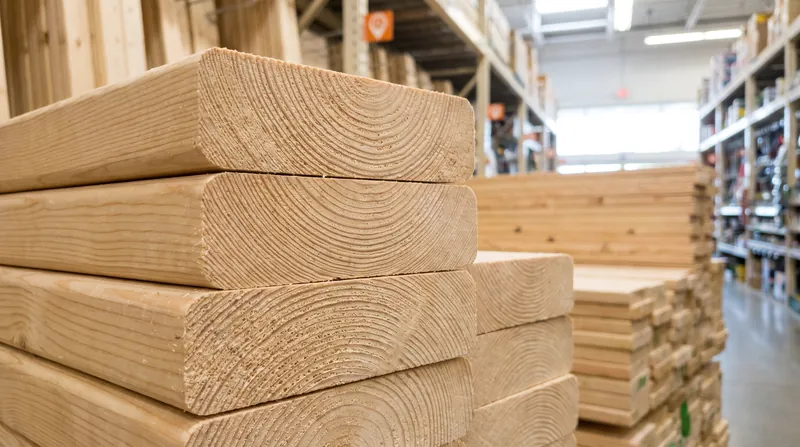
For a residential buyer or renter, the most critical assembly flaw is thermal bridging. A standard wood-framed house is composed of roughly 25 percent solid wood studs. Wood has an R-value of about 1.25 per inch, far lower than the fiberglass or foam between it. These studs act as thermal highways, allowing heat to easily bypass the insulation and escape the home.[2][3]
Moisture is the final, silent killer of thermal resistance. If cellulose or fiberglass gets wet from a slow roof leak or internal wall condensation, water replaces the microscopic air pockets that actually do the insulating. Because water is an excellent conductor of heat, wet insulation is effectively useless, regardless of what the label says.[2]
For anyone planning a renovation or evaluating a new build, this science dictates a clear order of operations. Chasing the highest possible R-value per inch is a waste of money if the home's building envelope is not air-sealed first. Stopping convection must precede slowing conduction if a homeowner wants to see a real return on investment.[3]
The science of thermal resistance reveals that R-value is a crucial baseline, but it is only a starting point. True home comfort and energy efficiency are built on how materials perform as a holistic system in the real world, battling wind, moisture, and extreme temperatures, not just how they score in a 75-degree laboratory.[1][3]
How we did this
- Method
- Cross-referenced federal labeling mandates (16 CFR Part 460) with building science heat transfer principles and industry testing standards to derive the gap between laboratory-rated R-values and real-world thermal performance under extreme temperature gradients.
- What we found
- The legally mandated R-value on insulation packaging, tested at a static 75°F mean temperature, systematically diverges from actual thermal resistance during extreme winter and summer conditions, meaning homeowners relying solely on the label are miscalculating their true energy efficiency.
- What we worked from
- Federal testing mean temperature mandate: 75°F — Legal Information Institute
- Real-world heat transfer dependency: Delta-T (Temperature difference) — Factlen Editorial Team
- Polyiso cold-temperature performance variance: Condensation of blowing agents — The Snell Group
- Limits of this analysis
- This analysis focuses on general material behaviors and federal testing baselines; specific performance degradation varies heavily based on local climate zones, exact material formulations, and the quality of the individual installation.
Terms to know
- R-value
- A measure of a specific material's resistance to conductive heat flow; the higher the number, the greater the insulating power.
- U-value
- The rate of heat transfer through an entire building element (like a wall or window), taking into account all materials in the assembly.
- Thermal Bridging
- The movement of heat across an object that is more conductive than the materials around it, such as a wooden stud interrupting wall insulation.
- Conduction
- The transfer of heat through a solid material, which is the specific mechanism that R-value is designed to measure.
- Convection
- The transfer of heat by the physical movement of a fluid or gas, such as cold air blowing through gaps in a wall cavity.
Questions readers ask
Does doubling my insulation double my energy savings?
No. Heat transfer reduction follows a curve of diminishing returns. Adding insulation to an uninsulated attic yields massive savings, but upgrading from R-30 to R-60 offers only marginal improvements if the home is not properly air-sealed.
Why is my home drafty if I have high R-value insulation?
R-value only measures resistance to heat conduction through the material itself. It does not measure resistance to airflow (convection). If your windows, doors, or wall seams have gaps, cold air will simply bypass the insulation.
Can I compress fiberglass insulation to fit more in a wall?
Compressing fiberglass actually lowers its R-value. The material works by trapping tiny pockets of still air; squeezing it removes those air pockets, reducing its ability to resist heat transfer.
What is the difference between R-value and U-value?
R-value measures how well a specific material resists heat flow (higher is better). U-value measures how much heat transfers through an entire building assembly, like a window or a whole wall (lower is better).
Different angles
Building Scientists
Argue that the construction industry's obsession with R-value distracts from the more critical issue of air sealing.
Building performance professionals emphasize that a house operates as a holistic system. They point out that installing R-30 insulation in a leaky wall cavity is like wearing a thick wool sweater on a windy day without a windbreaker. Because R-value only measures conduction, it provides a false sense of security to homeowners who fail to address convection. These experts advocate for blower door testing and comprehensive air sealing as the mandatory first steps before any insulation upgrades are considered.
Insulation Manufacturers
Focus on developing advanced materials that maintain their thermal resistance over decades and across wider temperature bands.
The manufacturing sector is constantly balancing chemical innovation with regulatory compliance. Organizations like PIMA highlight the shift toward Long-Term Thermal Resistance (LTTR) testing, which provides a more accurate picture of how foam products will perform 15 years after installation. Manufacturers argue that while installation quality is out of their hands, they are engineering products—like closed-cell spray foams and advanced rigid boards—that inherently resist moisture and act as their own air barriers, mitigating some of the traditional installation risks.
Regulatory Agencies
Prioritize consumer protection by enforcing standardized testing environments, even if they don't perfectly mimic every local climate.
For agencies like the FTC, the primary goal of the R-Value Rule (16 CFR Part 460) is to prevent deceptive advertising. Before the rule was enacted, manufacturers could make wild, unsubstantiated claims about their products' insulating power. By forcing all companies to test at a standardized 75-degree mean temperature, regulators ensure that a consumer comparing two different brands of fiberglass at a hardware store is looking at an apples-to-apples baseline, even if that baseline doesn't capture the full complexity of real-world thermodynamics.
- Building Performance Professionals
- Argue that whole-assembly performance and rigorous air sealing matter far more than the isolated R-value of the insulation material.
- Material Manufacturers
- Focus on the chemical and structural innovations that maximize thermal resistance per inch and the evolution of long-term testing standards.
- Consumer Protection Regulators
- Prioritize standardized, repeatable laboratory testing to prevent false advertising and ensure homeowners can make baseline comparisons.
Perspectives this story doesn't cover
- HVAC System Designers
- Residential General Contractors
- Home Energy Auditors
Sources
Source coverage
3 outlets
3 viewpoints surfaced



- [1]Legal Information InstituteConsumer Protection Regulators
16 CFR Part 460 -- Labeling and Advertising of Home Insulation - eCFR
Read on Legal Information Institute → - [2]The Snell GroupBuilding Performance Professionals
Understanding R-value and Heat Transfer
Read on The Snell Group → - [3]Factlen Editorial Team
Synthesis by Factlen editorial team
Read on Factlen Editorial Team →
More in Home
See all →Mass Timber
Charring vs. Melting: Why Cross-Laminated Timber Outlasts Steel in a 1,800-Degree House Fire
3 sources

Sustainable Materials
MIT Spinout Atlas Building Composites Deploys Waterless Robotic System to Turn Plastic Waste Into Structural Trusses
5 sources

Material Costs
Construction Material Prices Jump 8.9% Annually as August Costs Surge
6 sources

Biomaterials
Scientists Engineer 3D-Printable Martian Concrete Using Freeze-Dried Yeast and Gelatin
5 sources

Comments
Every angle. Every day.
Get Home stories with full source coverage and perspective breakdowns, free every day.