
Austin City Council Votes to Separate 911 Dispatch From Police Department
The Austin City Council has approved the creation of an independent Office of Joint Emergency Communications, beginning the process of removing 911 call-taking from police oversight. The move follows intense community debate over emergency response times and the handling of mental health crises.
By Paige Carter

The Austin City Council has voted to fundamentally change how the city handles emergency calls, approving a plan to move 911 dispatch out of the police department. The council allocated $1.4 million in the fiscal year 2026-2027 budget to establish an independent, civilian-led Office of Joint Emergency Communications. The move redirects roughly $675,000 from the Austin Police Department's proposed budget to fund the transition, marking an administrative first step that will eventually shift management of all civilian call-takers.[1][2]
The structural overhaul aims to consolidate 911 and 311 operations currently split across the Austin Police Department, the Austin Fire Department, and Austin-Travis County Emergency Medical Services. By placing these functions under a single civilian manager, the city intends to streamline responses across overlapping jurisdictions. Council Member Krista Laine, who co-sponsored the amendment, noted that the current fragmented system causes delayed emergency responses in outlying districts where boundaries blur, costing critical time during life-threatening events.[1][3]
The push to separate dispatch from police control accelerated following the July 24 fatal police shooting of 17-year-old Anthoneil Williams II. Officers responded to a 911 call—later traced to Williams' own phone—reporting a young man brandishing a firearm in a neighborhood park. When police arrived, they ordered Williams to keep his hands up. According to the department, Williams reached toward his waistband and extended his hands as if pointing a weapon, prompting three officers to open fire. Investigators recovered no firearm, only a water bottle tucked into the teenager's waistband.[6][8]
Austin Police Chief Lisa Davis characterized the incident as a potential "suicide by police," though the investigation remains active and the officers are on administrative leave. The shooting galvanized public safety advocates, who argued that an armed police response is the wrong tool for a behavioral health crisis. "Dispatch is destiny," Robin Schneider of Undoing White Supremacy Austin stated during a budget town hall, emphasizing that a civilian-led 911 center could more effectively route mental health calls directly to medical professionals.[4][6]
Despite the 6-2 council vote in favor of the new office, city management and public safety chiefs actively opposed the restructuring. City Manager T.C. Broadnax issued a memo warning that moving civilian call-takers into a separate department will not inherently reduce emergency response times, which depend on the availability of field personnel. Broadnax recommended maintaining the current system with operational enhancements, aligning with the preliminary findings of a study by consulting firm Mission Critical Partners.[2][3]
Chief Davis defended the current dispatch system, telling the council that the Austin 911 center ranks in the top 0.5% of call centers nationally for response times. According to department data, nearly 98% of calls to the Austin Police Department in 2026 were answered within 15 seconds, a sharp recovery from a severe staffing shortage in 2022. Davis questioned the necessity of the overhaul, asking the council what specific operational problems the new civilian department was meant to fix.[2][3]
The decision to fund the new office by reallocating money from the police department drew immediate criticism from the Austin Police Association. Union President Michael Bullock argued that taking $675,000 from the department—including $425,000 previously earmarked for recruiting—undermines efforts to fill ongoing officer vacancies. Bullock warned that ignoring the advice of city management and public safety leaders will likely degrade the city's emergency response capabilities.[1][3]
The creation of the Office of Joint Emergency Communications is part of a broader $6.6 billion municipal budget that takes effect on October 1, 2026. The spending plan includes a 5% operating increase for the police department, bringing its budget to $551.9 million to cover existing labor contract obligations. The budget also restores $4.7 million in social service grants and allocates $13.8 million for housing vouchers and homelessness prevention programs, balancing the public safety restructuring with targeted community investments.[4][5][7]
Moving forward, the city manager is required to hire a civilian senior executive to lead the new communications office and must report back to the council quarterly on the transition's progress. While the initial $1.4 million funds nine staff positions and technology upgrades, the full separation of 911 dispatch from police oversight requires navigating complex legal and administrative hurdles. For now, Austin residents will continue to dial 911 as usual, while the city begins the long process of untangling its emergency communications network.[1][5]
Where opinion splits
Public Safety Advocates
Argue that police-led dispatch defaults to armed responses for behavioral health crises.
Advocacy groups contend that housing 911 operations within the police department inherently treats health and welfare calls through a criminal lens. They point to the fatal shooting of Anthoneil Williams II as a tragic consequence of dispatching armed officers to a mental health crisis, arguing that a civilian-led system would more effectively route these calls to medical professionals and social workers.
City Management and Police Leadership
Maintain that the current 911 system is highly efficient and that response delays are caused by a lack of field personnel.
City administrators and police officials argue that moving civilian call-takers into a separate department will not solve the root cause of delayed emergency responses, which they attribute to shortages of police officers, firefighters, and EMS personnel. They highlight recent data showing the Austin 911 center ranks in the top 0.5% nationally for response times, suggesting that structural reorganization adds unnecessary complexity without improving field outcomes.
Austin Police Association
Contends that reallocating police recruiting funds to a new dispatch office undermines efforts to solve the city's officer shortage.
The police union strongly opposes the financial mechanics of the transition, specifically the decision to shift $675,000 from the police department's budget to fund the new civilian office. Union leadership argues that taking money away from recruiting efforts directly harms the department's ability to fill ongoing vacancies, ultimately degrading the city's overall public safety capabilities.
Key points
- The Austin City Council approved $1.4 million to establish a civilian-led Office of Joint Emergency Communications.
- The move begins the process of separating 911 and 311 dispatch operations from the Austin Police Department.
- Advocates pushed for the change following the fatal police shooting of 17-year-old Anthoneil Williams II.
- City management and police leadership opposed the restructuring, citing strong current response times.
How we got here
July 24, 2026
Austin police fatally shoot 17-year-old Anthoneil Williams II after responding to a 911 call.
August 5, 2026
Advocates rally at a budget town hall, demanding 911 dispatch be separated from the police department.
August 12, 2026
The Austin City Council votes 6-2 to create the Office of Joint Emergency Communications.
October 1, 2026
The city's $6.6 billion municipal budget goes into effect, officially funding the new office.
- Public Safety Advocates
- Argue that police-led dispatch defaults to armed responses for behavioral health crises.
- City Management and Police Leadership
- Maintain that the current 911 system is highly efficient and that response delays are caused by a lack of field personnel.
- Austin Police Association
- Contends that reallocating police recruiting funds to a new dispatch office undermines efforts to solve the city's officer shortage.
Perspectives this story doesn't cover
- 911 Dispatchers
- Mental Health Crisis Clinicians
Sources
Source coverage
8 outlets
3 viewpoints surfaced








- [1]KVUEAustin Police Association
Austin City Council approves funding for new Joint Emergency Communications Office
Read on KVUE → - [2]The Austin ChronicleCity Management and Police Leadership
Austin City Council Finalizes FY 2026-27 Budget
Read on The Austin Chronicle → - [3]Community ImpactAustin Police Association
Austin City Council adopts $6.6B budget
Read on Community Impact → - [4]Austin Free PressPublic Safety Advocates
'Dispatch is destiny': Austin leaders dial 911 on funding for mental health response
Read on Austin Free Press → - [5]City of AustinCity Management and Police Leadership
Austin City Council Approves $6.6 Billion Budget for Fiscal Year 2026-2027
Read on City of Austin → - [6]FOX 7 AustinAustin Police Association
Friends protest APD after teen was killed in shooting
Read on FOX 7 Austin → - [7]Avow TexasPublic Safety Advocates
Austin City Council Votes for 2026-2027 Budget
Read on Avow Texas → - [8]National Police Accountability ProjectPublic Safety Advocates
Demanding Accountability for Anthoneil Williams, Killed by Austin Police
Read on National Police Accountability Project →

More in Community
See all →Tenant Protections
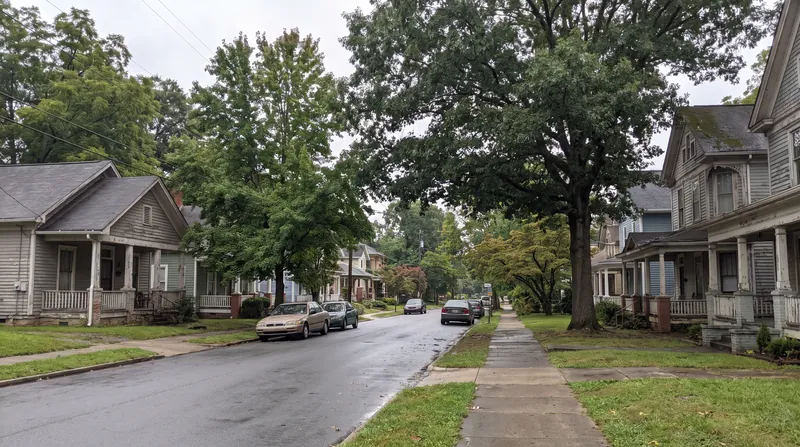
Asheville Bars Landlords From Collecting Rent on Unsafe Housing
4 sources
Labor Organizing
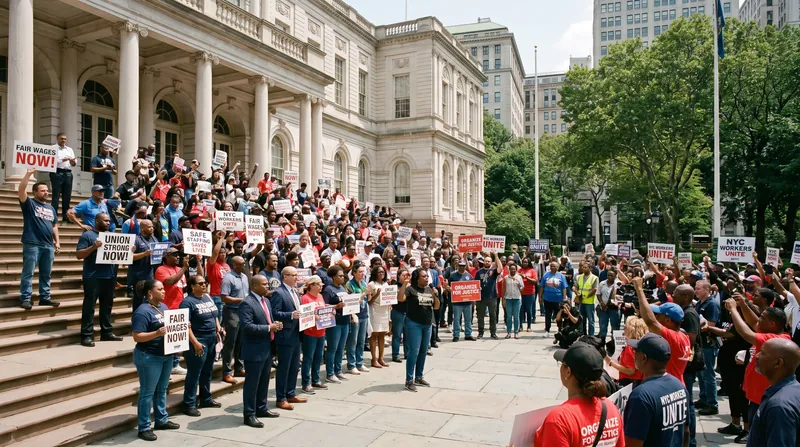
New York City Launches First-in-Nation Office of Worker Power to Aid Private-Sector Organizing
6 sources
Municipal Finance
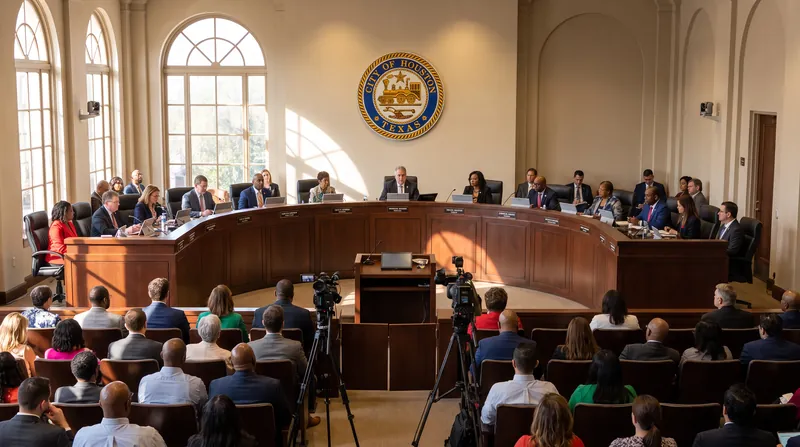
Houston and The Woodlands Finalize $50 Million Agreement to Permanently Block Annexation
2 sources
Municipal Labor
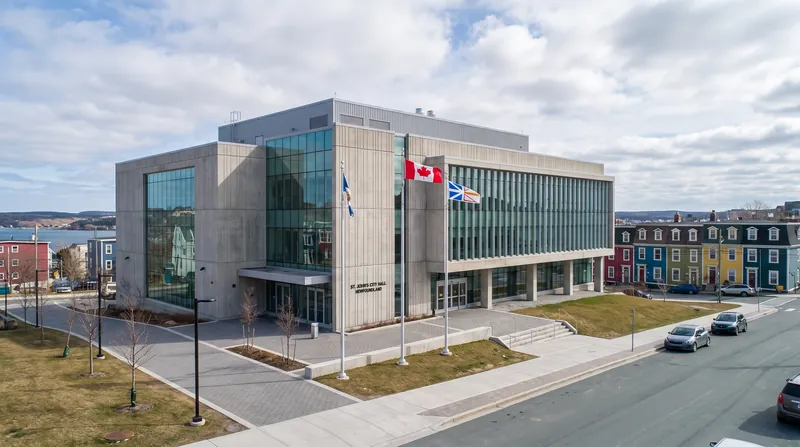
St. John's City Council Ratifies Four-Year CUPE Contract Despite Taxpayer Concerns
3 sources
Comments
Every angle. Every day.
Get Community stories with full source coverage and perspective breakdowns, free every day.