
Artists Win Landmark Discovery Ruling Forcing AI Giants to Disclose Training Data
A federal judge has ordered major generative AI companies to hand over their proprietary training datasets to plaintiffs, piercing the industry's 'black box' and granting visual artists a crucial victory in their ongoing copyright lawsuit.
By Tara Reddy
On Thursday, a federal judge in the Northern District of California handed a monumental victory to visual creators, ordering generative AI giants including Midjourney and Stability AI to fully disclose the exact datasets and internal scraping logs used to train their flagship image models.
The landmark discovery ruling pierces the so-called 'black box' of artificial intelligence development, compelling some of the world's most highly valued tech companies to hand over the native files and proprietary data structures that power their systems. For an industry that has long shielded its ingestion practices behind claims of corporate secrecy, the order represents a seismic shift in legal accountability.[1][2]
The decision marks a critical turning point in Andersen v. Stability AI, a sprawling class-action copyright lawsuit spearheaded by prominent illustrators Sarah Andersen, Kelly McKernan, and Karla Ortiz. Since initially filing the suit in early 2023, the plaintiffs have consistently argued that generative AI platforms are built on the unauthorized, wholesale ingestion of billions of copyrighted artworks.
They contend that the software does not simply learn from public data, but actively misappropriates the specific creative labor of human artists to build a commercial product that directly undercuts their livelihoods. The case has since expanded to represent thousands of visual creators who found their distinct styles replicated by machine learning algorithms.[3]
Until now, proving that claim has been an exhausting forensic guessing game. AI developers have fiercely guarded their training pipelines, arguing that their datasets are proprietary trade secrets and that extracting specific ingestion logs would be technically unfeasible.
When artists found AI-generated images that bore an uncanny resemblance to their own portfolios, they could only point to the output as circumstantial evidence. Without access to the underlying code and the exact list of images the model was fed, plaintiffs struggled to definitively prove that their specific copyrighted works were the source material.[4]
The court's order effectively dismantles that defense. The judge ruled that the plaintiffs cannot fairly argue their case without direct access to the underlying evidence, ordering the companies to produce the complete, native datasets to the plaintiffs' legal and technical teams.
This includes not only the massive open-source repositories like the 5.8-billion-image LAION-5B database, but also the highly guarded, proprietary additions and fine-tuning datasets that companies like Midjourney use to polish their final models. The ruling asserts that the need for transparency in a copyright dispute outweighs the developers' desire for corporate secrecy.[3]
To understand the profound stakes of this disclosure, it is necessary to understand exactly how these generative systems are built. Modern image generators rely on a sophisticated machine learning architecture known as latent diffusion. In this process, an algorithm is fed billions of text-and-image pairs, gradually learning to associate specific words with visual concepts by adding and removing digital noise. Over months of continuous processing, the model learns the mathematical relationships that define everything from the shape of a human hand to the specific brushstrokes of a famous oil painter.[2]
The artists' central legal claim is that this ingestion process is not merely passive learning, but an act of mass mechanical reproduction that violates federal law. They argue that the AI models essentially function as unauthorized derivative works, compressing billions of copyrighted images into a mathematical latent space. Because the models are commercial products sold via monthly subscriptions, the plaintiffs argue that the tech companies are directly monetizing stolen labor, creating a synthetic competitor that can instantly generate artwork in the exact style of the humans it was trained on.
With the discovery gates now forced open, the plaintiffs' forensic experts will gain unprecedented, direct access to the servers and native files of the AI developers. This raw evidence will allow them to trace the exact lineage of the training data.
Experts will be looking for proof that specific artists' portfolios were deliberately over-sampled, or weighted heavily during the fine-tuning phase, to allow the model to perfectly mimic their unique, recognizable styles. If the logs reveal internal communications directing engineers to scrape specific copyrighted galleries, it could prove devastating to the defense.[1][4]
The tech companies, however, maintain that their training methods are legally sound and fundamentally misunderstood by the plaintiffs. In their defense filings, Midjourney and Stability AI argue that their models learn abstract concepts rather than memorizing exact pixels. They insist that the training process is akin to a human art student walking through a museum—studying millions of paintings to understand color theory and composition, but never actually copying a specific canvas. From their perspective, the final model contains no actual images, only mathematical weights.[2][3]
To shield this practice, the developers rely heavily on the doctrine of 'fair use,' a crucial provision in US copyright law that permits the unlicensed use of copyrighted material if the new use is highly transformative and does not harm the original creator's market. The AI companies argue that turning billions of disparate images into a versatile, general-purpose creative tool is the very definition of transformative use. They warn that a ruling against them would effectively outlaw machine learning in the United States, ceding the technological future to international rivals.
Furthermore, the companies warned the court that forcing the handover of their complete datasets exposes them to severe, potentially catastrophic cybersecurity risks. They argued that transferring massive, proprietary data structures—the core intellectual property that gives their platforms a competitive edge in a multi-billion-dollar market—could allow foreign competitors or malicious actors to reverse-engineer their flagship products.
The developers pleaded that the sheer logistical burden of securely transferring petabytes of sensitive data was an unreasonable demand for a civil lawsuit, and that the risk of a devastating data leak far outweighed the plaintiffs' need for discovery.[4]
Acknowledging these valid security concerns, the court placed the disclosed data under an exceptionally strict protective order. The datasets will not be made public; instead, they will be housed on highly secure, air-gapped servers. Access will be strictly limited to the plaintiffs' lead attorneys and a small team of vetted, independent technical experts. These experts will be permitted to run forensic queries and analyze the code, but they are legally barred from copying the models or sharing the underlying trade secrets with anyone outside the immediate confines of the litigation.[1]
This ruling builds on a growing legal momentum for content creators across the broader artificial intelligence landscape. In early 2025, a similar discovery order in the Tremblay v. OpenAI lawsuit forced the disclosure of the massive text datasets used to train ChatGPT.
Later that same year, the AI startup Anthropic agreed to a historic $1.5 billion settlement after discovery revealed the company had used shadow libraries of pirated books to train its Claude chatbot. Across the board, courts are increasingly rejecting the argument that AI training data is too complex or proprietary to be scrutinized.[3]
However, this is the first time the multi-billion-parameter visual models have been forced open in such a comprehensive manner. The forensic evidence unearthed in this discovery phase will serve as the factual bedrock for the upcoming summary judgment motions, where both sides will ask the judge to rule on the core legal questions. If the case is not resolved or settled during that phase, the evidence will be presented to a jury in a landmark trial currently scheduled for April 2027.[2]
The ultimate uncertainty now lies in what the raw data will actually reveal. If the internal logs and scraping scripts show that developers actively sought out and targeted specific artists' websites to intentionally replicate their styles, it could severely undermine the companies' fair use defense by proving bad faith. Conversely, if the data proves the models only absorbed broad statistical patterns without disproportionately targeting individual creators, the tech industry's legal standing could be significantly solidified, proving their 'art student' analogy correct.[4]
Regardless of the trial's ultimate outcome, the discovery ruling itself is already being celebrated as a massive, paradigm-shifting win for the 'Data Dignity' movement. This growing global coalition of creators, ethicists, and technologists advocates for a future where human labor is respected and compensated. They are demanding transparent licensing frameworks, collective bargaining rights, and strictly opt-in consent models for all future AI training, arguing that the era of 'move fast and break things' must end when it comes to human creativity.
By forcing the AI giants to open their books and reveal their exact ingestion practices, the federal court has fundamentally shifted the balance of power in the digital age. Artists are no longer fighting a theoretical, uphill battle against an opaque algorithm; they now have the concrete legal tools to demand accountability. As the forensic teams begin their deep dive into the code, the creative industry is one step closer to establishing an ethical, sustainable framework for the future of artificial intelligence.[1]
Key points
- A federal judge ordered generative AI companies to disclose their complete training datasets to plaintiffs in a major copyright lawsuit.
- The ruling pierces the industry's 'black box,' rejecting arguments that the data is too proprietary or burdensome to share.
- Plaintiffs will use the data to trace whether specific artists' portfolios were deliberately targeted to train the models.
- The disclosed data will be kept under a strict protective order to prevent trade secrets from leaking to competitors.
What we don’t know
- It remains unclear exactly what the internal scraping logs will reveal about the developers' intent and targeting practices.
- We do not yet know how the court will ultimately rule on the 'fair use' defense once the forensic evidence is presented.
- It is uncertain if this discovery order will force the AI companies to settle before the 2027 trial begins.
How we got here
Jan 2023
Sarah Andersen and other artists file a class-action copyright lawsuit against Stability AI and Midjourney.
Aug 2024
A federal judge denies the AI companies' motion to dismiss, allowing the core copyright infringement claims to proceed.
Jan 2025
A separate ruling in Tremblay v. OpenAI forces the disclosure of text-based training datasets.
Jun 2026
The court orders generative image AI companies to fully disclose their visual training datasets and internal logs.
Apr 2027
The scheduled start date for the jury trial in the Andersen v. Stability AI case.
- Visual Artists & Creators
- Argue that AI models are built on mass copyright infringement and demand transparency and compensation.
- Generative AI Developers
- Maintain that training on public data is fair use and warn that forced disclosure threatens trade secrets and innovation.
- Legal & Copyright Scholars
- Focus on how this discovery evidence will test the boundaries of the fair use doctrine in the digital age.
Perspectives this story doesn't cover
- Open-source AI researchers
- Commercial brands using AI-generated art
Sources
Source coverage
4 outlets
3 viewpoints surfaced




- [1]ReutersLegal & Copyright Scholars
Federal judge orders AI image generators to disclose training data in copyright suit
Read on Reuters → - [2]WIREDGenerative AI Developers
How to Opt Out of Google Search’s New AI Data Training Feature
Read on WIRED → - [3]Bloomberg LawLegal & Copyright Scholars
Stability AI, Midjourney Ordered to Produce Training Data to Artists
Read on Bloomberg Law → - [4]The VergeGenerative AI Developers
Congress wants to ban AI companies from selling your health data
Read on The Verge →
More in Culture
See all →Oil Painting Techniques
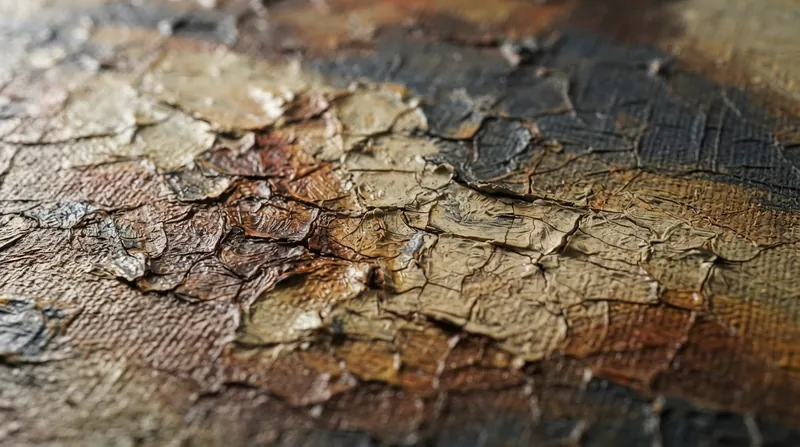
Differential Oxidative Shrinkage Tears Rigid Surface Layers: Why Oil Painters Apply Fat Over Lean
3 sources
Music Theory
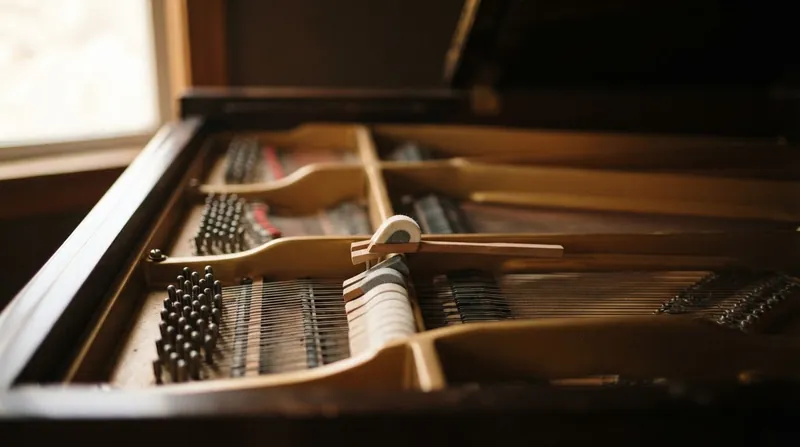
Twelve Pure Fifths Exceed Seven Octaves by 23.46 Cents: Why Keyboard Instruments Cannot Be Tuned Purely
2 sources
Cultural Property
The 1970 UNESCO Convention: The Legal Threshold That Determines the Illicit Transfer of Cultural Property
7 sources
Cultural Heritage
Greek PM Rejects British Museum's Loan Model as Parthenon Marbles Talks Collapse
6 sources
Comments
Every angle. Every day.
Get Culture stories with full source coverage and perspective breakdowns, free every day.