
Aptera's $44 Million Launch Design Deal Highlights the EV Startup Manufacturing Trade-Off
Solar EV startup Aptera has partnered with Shanghai's Launch Design to reach production by late 2026, trading domestic vertical integration for Chinese contract manufacturing to preserve capital.

Share this story
Forty-four million dollars is roughly the cost of a single mid-sized stamping press at a traditional automotive plant. For Aptera Motors, it is the price of an entire manufacturing program. The California-based solar electric vehicle startup has signed a $44 million agreement with Shanghai's Launch Design to build its first production vehicles, trading the capital-intensive path of domestic vertical integration for the speed of Chinese contract manufacturing.[1][3]
The deal, announced in late August 2026, covers tooling, testing, pilot production, and high-volume manufacturing preparations. Aptera will pay two-thirds of the approved program costs in cash, while Launch Design will accept up to $15 million in warrants to buy Aptera stock. The partnership targets the assembly of the first 40 customer vehicles in the fourth quarter of 2026, with subassemblies shipped from China for final assembly in Carlsbad, California.[3]
Aptera's move highlights the central dilemma for modern hardware startups: how to survive the "valley of death" between prototype and production. The company held just $10.1 million in cash at the end of June 2026 and faces a going-concern warning. Building a domestic factory from scratch to produce its three-wheeled, 44-kilowatt-hour Launch Edition would require hundreds of millions of dollars the company does not have.[2][3]
Instead, Aptera is renting industrialization. Launch Design employs more than 3,000 staff and has engineered over 400 vehicle models for global automakers. By tapping into Launch's established supplier network, Aptera co-CEO Steve Fambro noted the company has already reduced its projected bill of materials, betting that a globally sourced model can succeed where other EV startups have struggled.[1][3]
The vehicle itself has cleared major technical and regulatory hurdles. In June 2026, the Environmental Protection Agency issued a Certificate of Conformity for the 2026 Launch Edition, confirming it meets federal emissions standards. "Getting our EPA Certificate of Conformity means our vehicle has satisfied important federal regulatory and emissions requirements for the U.S. market," Fambro stated. "Our validation vehicles are on the ground, and we are using them to support the remaining work toward potential customer deliveries."
The core technology has also been validated. In August, the German testing firm TÜV Rheinland verified that the vehicle's integrated solar panels generate 4.23 to 4.75 kWh of energy per day—enough to add 42 to 47 miles of range purely from sunlight. "When American innovation turns sunlight into miles, independent testing helps turn that promise into confidence," said Jonathan Kotrba, VP of Products at TÜV Rheinland.
Yet, as the bankruptcies of European solar EV startups Lightyear and Sono Motors demonstrated, the failure point for solar cars is rarely the photovoltaic technology; it is the manufacturing scale. Aptera estimates it will need $40 million to $45 million to fund low-volume production, and another $140 million to $160 million to reach an annual output of 20,000 vehicles.
This capital reality forces a choice between two distinct manufacturing models. On one side is the vertically integrated, domestic-first approach championed by early Tesla and Rivian, which maximizes control and qualifies for federal subsidies but requires massive upfront capital. On the other is the asset-light, globally sourced model Aptera is pursuing, which preserves cash but introduces supply chain complexity and tariff exposure.[1]
The trade-offs between these two paths dictate not just how a vehicle is built, but whether a startup survives long enough to build it. The asset-light approach fits well when a company has a highly differentiated product—like a 0.13 drag coefficient solar autocycle—but lacks the billions required for a ground-up factory. It does not fit when a manufacturer relies on federal tax credits tied to domestic sourcing, or when geopolitical tariffs threaten to erase the unit-cost advantages of overseas assembly.[1][2]
Perspectives explored
The Asset-Light Global Sourcing Model
Contracting manufacturing and supply chain operations to established overseas partners to minimize upfront capital expenditure.
FOR: Drastically reduces the capital required to reach initial production. Aptera is securing tooling, testing, and pilot production for just $44 million—a fraction of the billions required for a ground-up facility. It also accelerates timelines by leveraging existing engineering teams; Launch Design has over 3,000 employees and experience with 400 vehicle models. AGAINST: Exposes the company to geopolitical risks, shipping logistics, and import tariffs. It also disqualifies the vehicle from domestic-content tax credits, which can make the final retail price less competitive. EVIDENCE: Aptera's $10.1 million cash balance in mid-2026 made vertical integration impossible. By trading equity (up to $15 million in warrants) and limited cash, the company secured a Q4 2026 production target that would otherwise be unfundable.
The Vertically Integrated Domestic Model
Building proprietary manufacturing facilities and localizing the supply chain to maintain total control over production.
FOR: Maximizes control over intellectual property, quality assurance, and production ramps. It insulates the company from international shipping bottlenecks and tariff fluctuations, while ensuring eligibility for federal incentives like the $7,500 EV tax credit under the Inflation Reduction Act. AGAINST: Requires massive, often dilutive capital raises before a single vehicle is sold. The cash burn associated with building a factory can bankrupt a company if consumer demand softens or production hits early snags. EVIDENCE: European solar EV startups Lightyear and Sono Motors both collapsed attempting to industrialize their vehicles. Aptera itself estimates it would need $140 million to $160 million just to scale to 20,000 vehicles annually—capital that is increasingly scarce for pre-revenue hardware startups in a high-interest-rate environment.
Key points
- Aptera Motors signed a $44 million manufacturing agreement with Shanghai's Launch Design to build its solar electric vehicle.
- The partnership covers tooling, testing, and pilot production, targeting the assembly of 40 initial vehicles in the fourth quarter of 2026.
- Independent testing by TÜV Rheinland verified the vehicle's solar panels generate enough energy for up to 47 miles of daily driving.
- The asset-light strategy preserves Aptera's limited cash reserves but exposes the company to international supply chain risks and tariffs.
Open questions
- Whether the $44 million partnership will be sufficient to reach full high-volume manufacturing beyond the initial 40 vehicles.
- How potential changes to U.S. import tariffs on Chinese automotive components might affect Aptera's unit economics.
- Asset-Light Pragmatists
- Argue that surviving the capital-intensive prototype phase requires leveraging established overseas manufacturing networks.
- Domestic Integration Advocates
- Prioritize supply chain control, domestic job creation, and eligibility for federal tax incentives despite the higher upfront costs.
- Technical Skeptics
- Focus on the historical failure rate of solar EVs and the difficulty of scaling production regardless of the manufacturing partner.
Perspectives this story doesn't cover
- Traditional automakers with existing domestic factory capacity
- U.S. trade regulators monitoring automotive component imports
Sources
Source coverage
3 outlets
3 viewpoints surfaced



- [1]BloombergAsset-Light Pragmatists
Aptera's Plan to Beat EV Costs
Read on Bloomberg → - [2]Washington PostDomestic Integration Advocates
Test-driving a car coated in solar panels gave me a preview of a future without gas pumps
Read on Washington Post → - [3]Electric Cars ReportAsset-Light Pragmatists
Aptera Secures $44 Million Production Partnership as Solar EV Targets Late 2026 Start
Read on Electric Cars Report →

More in Business
See all →Enterprise Data
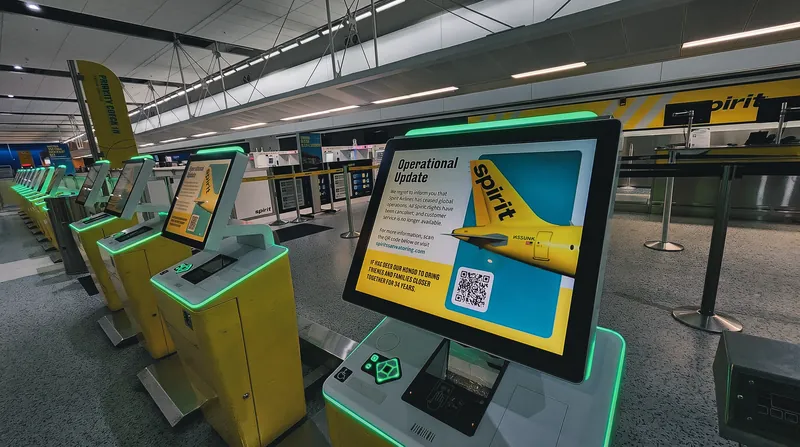
Google Under Fire for Using Bankrupt Airline's Internal Data to Train AI Models
6 sources
Banking Consolidation
BPCE Completes $7.2 Billion Novo Banco Acquisition, Largest Cross-Border Eurozone Banking Deal in a Decade
6 sources

AI Infrastructure
Nvidia, OpenAI, and SoftBank Finalize Deal for Massive Ohio AI Data Center Project
6 sources
Federal Funding
New Law Creates $30M 'Strategic Breakthrough' Awards to Fund Small Business Tech Scale-Up
5 sources
Comments
Every angle. Every day.
Get Business stories with full source coverage and perspective breakdowns, free every day.