
Apple Taps Intel to Manufacture Custom Chips in Major U.S. Supply Chain Shift
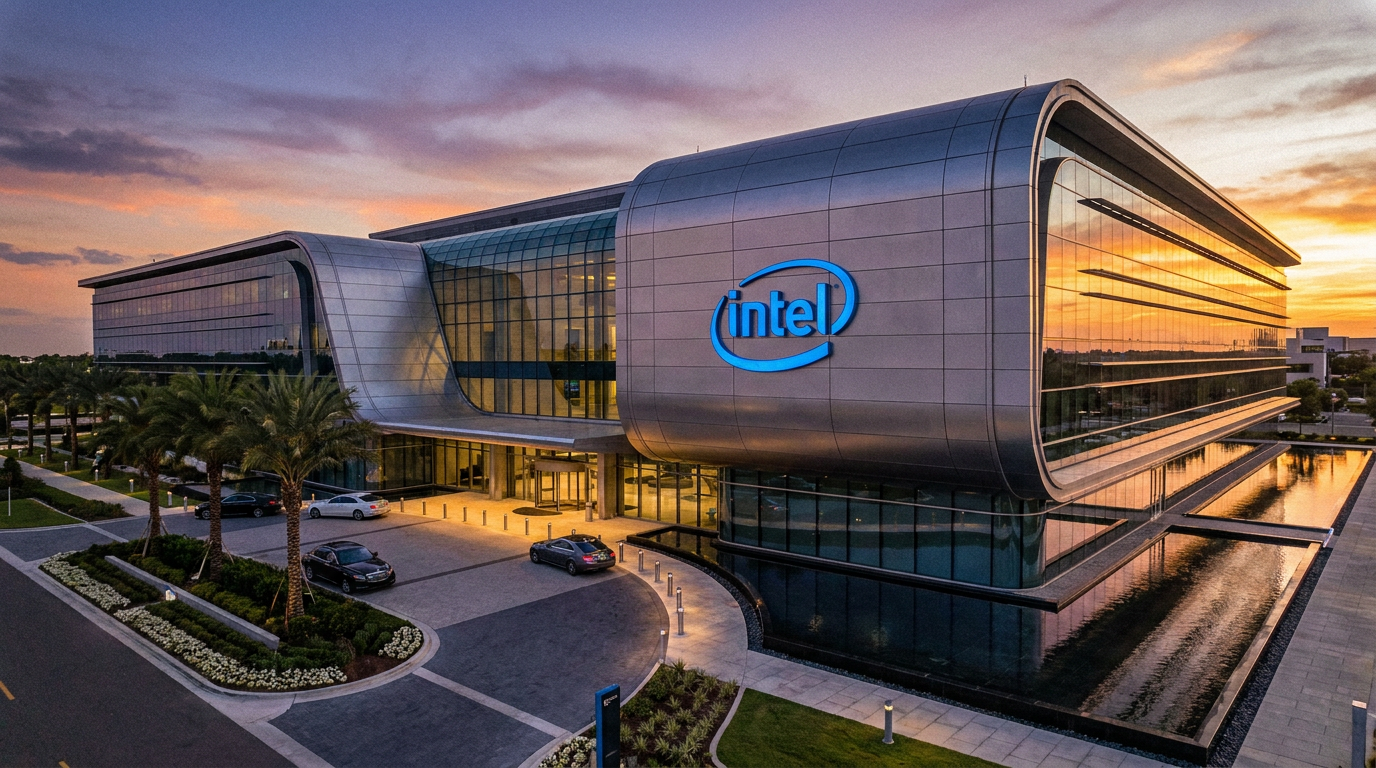
Apple has agreed to use Intel as a contract manufacturer for its custom-designed processors, reducing its exclusive reliance on Taiwan's TSMC. The multi-year deal marks a massive victory for Intel's turnaround efforts and aligns with U.S. pushes to onshore semiconductor production.
By Factlen Editorial Team
- Supply Chain Analysts
- Argue that Apple's reliance on TSMC is an unsustainable bottleneck in the AI era, making this deal a necessary insurance policy.
- Geopolitical Strategists
- View the partnership as a critical national security victory, ensuring that the most valuable US tech company has a domestic manufacturing base.
- Semiconductor Industry Watchers
- Remain cautiously optimistic but emphasize the immense technical challenge Intel faces in meeting Apple's notoriously strict yield and volume requirements.
What's not represented
- · Taiwanese government officials reacting to the potential loss of TSMC's monopoly.
- · Consumer electronics advocates concerned about potential price increases.
Why this matters
Apple's decision to manufacture chips with Intel marks a seismic shift in the global technology supply chain. By moving production to the United States, Apple is insulating its devices from geopolitical risks in Taiwan, while Intel secures a massive lifeline that could restore America's position as a semiconductor manufacturing powerhouse.
Key points
- Apple has agreed to use Intel as a foundry to manufacture its custom-designed chips in the United States.
- The deal marks a major shift, reducing Apple's exclusive reliance on Taiwan's TSMC for semiconductor production.
- Intel's stock surged 12 percent to a record high following the announcement.
- Analysts expect Intel to produce older or lower-end chips initially, with full-scale production beginning around mid-2027.
- The partnership aligns with U.S. government efforts to onshore chip manufacturing and de-risk the global supply chain.
On Thursday, a late-night social media post from U.S. President Donald Trump sent ripples through the global semiconductor industry, announcing that Apple has agreed to partner with Intel to manufacture its custom chips domestically.[1][2][4]
The market reacted violently to the news. Intel's stock surged as much as 12 percent in premarket trading, reaching a record high of $135.13, while Apple saw a modest 1.5 percent bump.[6]
For industry veterans, the partnership carries a deep sense of irony. Just six years ago, Apple famously divorced Intel, abandoning the chipmaker's processors in favor of its own in-house "Apple Silicon" for its Mac lineup.[4][5]
But this new deal represents a fundamentally different relationship. Intel will not be selling its own x86 processor designs to Apple. Instead, it will act as a "foundry"—a contract manufacturer that simply prints the physical chips based on Apple's proprietary ARM-based blueprints.[4]

In the semiconductor world, a foundry operates much like a commercial printing press. Companies like Apple and Nvidia are "fabless," meaning they design the architecture of the chip but lack the multibillion-dollar factories, or "fabs," required to build them.[4]
For years, Apple has relied almost exclusively on Taiwan Semiconductor Manufacturing Company (TSMC) to serve as its sole printing press. TSMC is the undisputed king of the foundry market, but its production lines are currently facing unprecedented strain.[4][5]
The generative AI boom has fundamentally altered the supply-and-demand calculus at TSMC. Companies training massive AI models are buying up every available advanced chip, leaving TSMC with less spare capacity for consumer-device silicon.[4]
The generative AI boom has fundamentally altered the supply-and-demand calculus at TSMC.
Apple CEO Tim Cook recently acknowledged this bottleneck, noting on an earnings call that iPhone 17 supply was constrained because the company could not secure enough A19 and A19 Pro chips from TSMC.[4]

Beyond pure capacity, the partnership is driven by a profound need to de-risk the global supply chain. Relying on a single manufacturer located on an island at the center of US-China geopolitical tensions represents a massive, existential vulnerability for Apple.[3][5]
The U.S. government has been aggressively pushing to onshore semiconductor manufacturing to mitigate this exact risk. Last year, the federal government converted $8.9 billion in unpaid CHIPS Act grants into a 10 percent equity stake in Intel, effectively making the company a quasi-national asset.[4]
Despite the blockbuster announcement, semiconductor analysts caution that Intel will not immediately be printing Apple's most advanced silicon. The forthcoming iPhone 18 Pro Max, which requires cutting-edge 2-nanometer designs, will almost certainly remain with TSMC.[3]
Instead, Intel is expected to handle production for older or lower-end processors. This could include legacy M-series chips for the iPad Pro and MacBook Air, or A-series processors for standard, non-Pro iPhone models.[3][4]

The timeline for this production shift remains a significant area of uncertainty. Intel has only recently entered limited-scale testing of its advanced 18A-P manufacturing process.[3]
Supply chain experts estimate that Intel will not reach full-scale, high-yield production for Apple until mid-2027 at the earliest. Apple's quality control and volume requirements are notoriously unforgiving, and Intel has a history of manufacturing delays.[3]
Still, landing Apple as a foundry customer is a monumental validation for Intel CEO Lip-Bu Tan. The company has struggled for years to attract external clients to its nascent foundry business, and securing the world's most demanding consumer electronics company could serve as a catalyst for future contracts.[6]

Ultimately, the Apple-Intel pact is less about immediate product upgrades and more about long-term survival. By locking in domestic chip capacity ahead of a multi-year hardware cycle, Apple is buying an insurance policy against global instability, while Intel secures the lifeline it needs to reclaim its manufacturing crown.[5]
How we got here
2020
Apple announces its transition away from Intel processors for Macs, moving to its own Apple Silicon.
August 2022
The U.S. passes the CHIPS and Science Act to subsidize domestic semiconductor manufacturing.
2025
The U.S. government converts unpaid CHIPS Act grants into a 10 percent equity stake in Intel.
May 2026
Reports emerge that Apple and Intel have begun limited test production of chips.
June 2026
President Trump publicly announces the Apple-Intel manufacturing partnership.
Mid-2027
Projected timeline for Intel to reach full-scale chip production for Apple.
Viewpoints in depth
Supply Chain Analysts
Argue that Apple's reliance on TSMC is an unsustainable bottleneck in the AI era, making this deal a necessary insurance policy.
Analysts point out that the generative AI boom has fundamentally changed the semiconductor landscape. With companies like Nvidia buying up every available advanced chip from TSMC to train AI models, consumer electronics companies are being squeezed out. By diversifying its manufacturing footprint to include Intel, Apple ensures it won't be caught short-handed during a multi-year, AI-driven hardware upgrade cycle.
Geopolitical Strategists
View the partnership as a critical national security victory, ensuring that the most valuable US tech company has a domestic manufacturing base.
For strategists focused on national security, relying on a single manufacturer located on an island at the center of US-China tensions is an existential risk. This deal, heavily incentivized by the U.S. government's CHIPS Act and its 10 percent equity stake in Intel, is seen as a crucial step in decoupling the American tech ecosystem from Asian manufacturing vulnerabilities.
Semiconductor Industry Watchers
Remain cautiously optimistic but emphasize the immense technical challenge Intel faces in meeting Apple's notoriously strict yield and volume requirements.
Industry veterans note that while the partnership is a massive public relations win for Intel CEO Lip-Bu Tan, execution remains a significant hurdle. Intel has a history of manufacturing delays, and Apple's quality control standards are unforgiving. Observers caution that Intel will likely start by producing older, less complex chips before it is trusted with Apple's flagship silicon.
What we don't know
- The exact financial terms and total volume of the manufacturing agreement.
- Whether Intel can consistently meet Apple's notoriously strict yield requirements without delays.
- Which specific future Apple devices will be the first to feature Intel-manufactured silicon.
Key terms
- Foundry
- A contract manufacturer that builds semiconductor chips designed by other companies, rather than designing its own.
- Fabless
- A company that designs microchips but outsources the actual physical manufacturing to a foundry.
- Apple Silicon
- Apple's proprietary, ARM-based processor architecture used in modern Macs, iPads, and iPhones.
- Node
- A measurement used to describe the generation of chip manufacturing technology; smaller numbers generally indicate faster, more power-efficient chips.
- Yield
- The percentage of functional, defect-free chips produced on a single silicon wafer.
Frequently asked
Will Intel chips make my iPhone slower?
No. Intel is not designing the chips; they are simply manufacturing Apple's custom designs. The performance will remain identical to chips produced by TSMC.
When will the first Intel-manufactured Apple devices launch?
Analysts expect full-scale production to begin in mid-2027, meaning devices with these chips likely won't hit shelves until late 2027 or 2028.
Is Apple completely leaving TSMC?
No. Apple will continue to use TSMC for its most advanced, cutting-edge processors, using Intel primarily to expand capacity for older or lower-end chips.
Why did the US government take a stake in Intel?
The government converted $8.9 billion in unpaid CHIPS Act grants into a 10 percent equity stake to ensure the survival and growth of domestic semiconductor manufacturing.
Sources
Source coverage
6 outlets
3 viewpoints surfaced






[1]NYTGeopolitical Strategists
Trump Says Apple to Buy Computer Chips from Intel
Read on NYT →[2]BloombergSemiconductor Industry Watchers
Trump Says Intel Inked Chip Deal With Apple
Read on Bloomberg →[3]AppleInsiderSupply Chain Analysts
Intel's stock has risen after Trump announced that the company will make chips for Apple
Read on AppleInsider →[4]MacRumorsGeopolitical Strategists
Apple Agrees to Work With Intel to Manufacture Chips in U.S.
Read on MacRumors →[5]Seeking AlphaSupply Chain Analysts
Apple expanding U.S. supply chain with Intel partnership, Wedbush says
Read on Seeking Alpha →[6]The Straits TimesSemiconductor Industry Watchers
Intel shares soar after Trump says it struck Apple chip deal
Read on The Straits Times →


Every angle. Every day.
Get technology stories with full source coverage and perspective breakdowns delivered to your inbox.