
A Revolutionary 'Immune Reset' Therapy is Putting Severe Lupus into Remission
In a major medical breakthrough, genetically modified CAR-T cells are effectively curing severe lupus by wiping out rogue immune cells and allowing the body to reboot its defenses. Early trial results suggest the one-time treatment could end the need for lifelong immunosuppressive drugs across multiple autoimmune diseases.
By Factlen Editorial Team
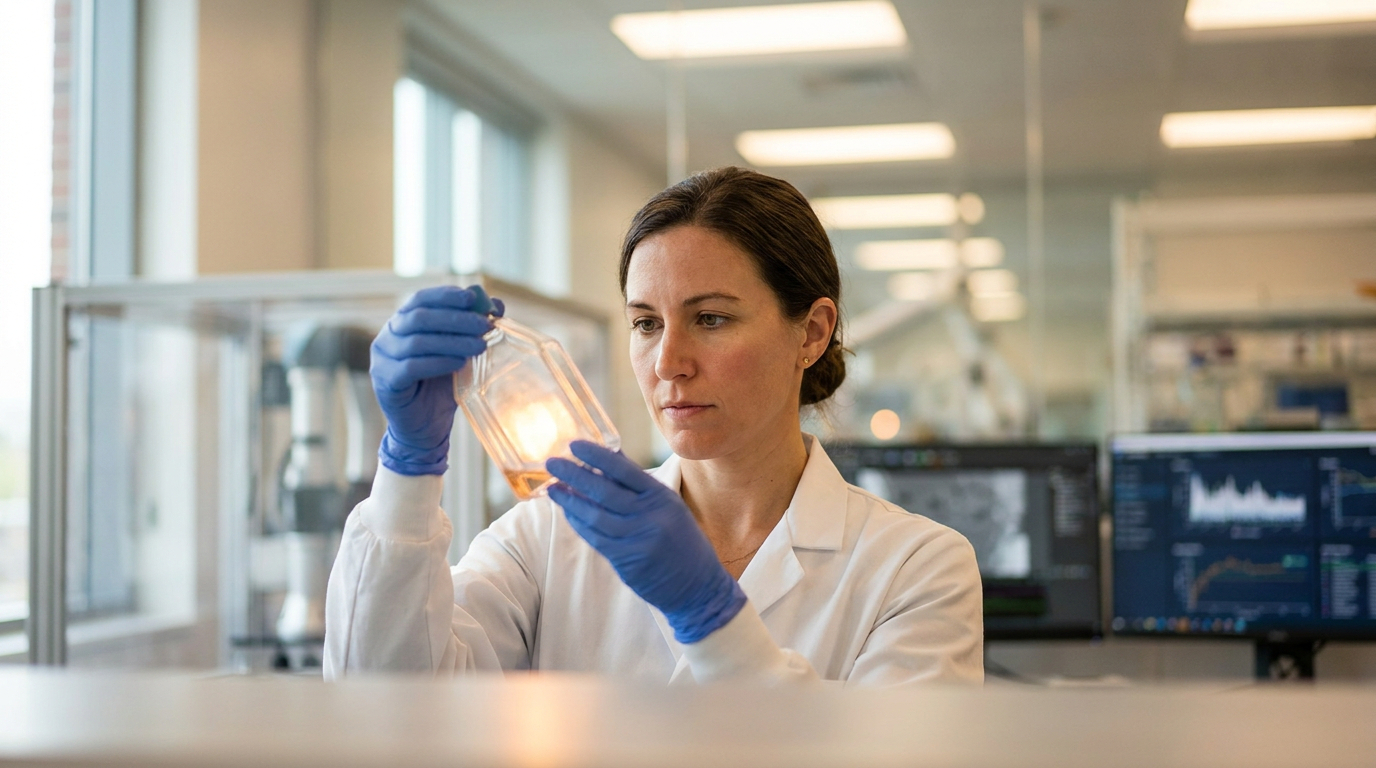
- Clinical Investigators
- Focus on the mechanism of CD19 depletion and the 'immune reset' paradigm shift.
- Patient Community
- Focus on the end of lifelong immunosuppression and dramatic quality-of-life restoration.
- Next-Gen Researchers
- Focus on expanding the therapy beyond lupus to other diseases and using mRNA or allogeneic approaches to scale it.
What's not represented
- · Health insurance providers evaluating the high cost of cellular therapies
- · Patients with mild-to-moderate lupus who do not qualify for severe-case trials
Why this matters
For decades, autoimmune diseases like lupus could only be managed with heavy, lifelong immunosuppressive drugs that left patients vulnerable to infection. This breakthrough proves that cellular engineering can effectively 'reboot' a malfunctioning immune system, offering the first real prospect of a permanent cure for millions suffering from chronic autoimmune conditions.
Key points
- A groundbreaking UK trial has successfully used CAR-T cell therapy to put severe lupus patients into drug-free remission.
- The treatment involves genetically modifying a patient's T cells to hunt down and destroy the rogue B cells causing the disease.
- Once the pathogenic cells are eradicated, healthy B cells repopulate, effectively 'resetting' the patient's immune system.
- Five out of six patients on the trial's lower dose achieved complete remission within months, stabilizing organ damage.
- Researchers are now exploring how to scale the therapy for other autoimmune conditions like multiple sclerosis and myasthenia gravis.
For three decades, Katie Tinkler lived with the debilitating reality of severe systemic lupus erythematosus, an autoimmune disease that caused her immune system to relentlessly attack her own body. She struggled to walk with her children, relied on a heavy regimen of immunosuppressive drugs, and watched as the disease threatened her kidneys. Today, she is off all lupus medication, skiing for the first time in a decade, and dancing at her daughter's wedding.[1][2]
Tinkler is one of the first patients in a groundbreaking UK clinical trial that is fundamentally rewriting the rules of rheumatology. By borrowing a cellular engineering technique originally developed to cure blood cancers, doctors have managed to induce deep, drug-free remission in patients with severe, treatment-resistant lupus.[1][3]
The results from the CARLYSLE study, led by University College London Hospitals (UCLH) and University College London, are being described by researchers as a paradigm shift. Out of the first six patients treated with a lower dose of the therapy, five achieved complete remission within months.[2][4]
"These findings are truly groundbreaking and offer fresh hope to people living with lupus," said Professor Karl Peggs, director of UCLH's biomedical research centre. "The possibility that CAR T-cell therapy could deliver an immune reset and potentially free patients from the cycle of chronic autoimmune disease marks a remarkable step forward."[2][3]

To understand why this is so revolutionary, one must look at how autoimmune diseases have traditionally been managed. Conditions like lupus are driven by rogue B cells—white blood cells that mistakenly produce autoantibodies which attack healthy tissues, leading to widespread inflammation, joint pain, and organ damage.[1][5]
For decades, the only way to treat this was blunt-force immunosuppression. Patients were given drugs that dampened their entire immune system, leaving them highly vulnerable to infections and tethered to daily medication. The new approach, known as Chimeric Antigen Receptor (CAR) T-cell therapy, is entirely different: it acts as a targeted smart-bomb.[2][5]
The process begins by extracting millions of a patient's own T cells—the "hunter-killers" of the immune system. In a laboratory, these cells are genetically modified to express a synthetic receptor designed to recognize CD19, a protein found on the surface of B cells.[4][5]
Once these engineered CAR-T cells are infused back into the patient's bloodstream, they hunt down and destroy the rogue B cells that are driving the disease. This targeted eradication creates a period of "B cell aplasia," effectively wiping the slate clean.[1][5]
The true magic of the therapy, however, happens months later. As the body naturally begins to produce new B cells from stem cells in the bone marrow, these fresh cells emerge healthy and naïve. They do not carry the autoreactive programming of their predecessors. The immune system has, in effect, been rebooted.[1][4]
The true magic of the therapy, however, happens months later.
The clinical improvements observed in the UCLH trial have been rapid and profound. Patients experienced swift reductions in disease activity and a normalization of laboratory markers. Crucially, for those suffering from lupus nephritis—a severe complication that damages the kidneys—the therapy stabilized or even improved kidney function.[2][4]

The UK trial builds on landmark early data from Germany, where Dr. Georg Schett and his team at Friedrich Alexander University first reported in 2022 that a handful of refractory lupus patients had achieved sustained remission after CAR-T therapy. The UCLH data confirms that those early miracles were not anomalies, but reproducible outcomes.[5]
The success in lupus is now triggering a gold rush across the broader field of immunology. Researchers are racing to apply the "immune reset" concept to a host of other debilitating autoimmune conditions, including multiple sclerosis, rheumatoid arthritis, and scleroderma.[1][7]
At the Norton Cancer Institute, the RESOLUTION trial is taking the concept a step further by testing an "allogeneic" CAR-T product. Rather than custom-engineering each patient's own cells—a process that is expensive and takes weeks—this approach uses T cells from healthy donors to create an "off-the-shelf" therapy.[7]
"Unlike traditional CAR T-cell therapy, which uses a patient's own cells, this allogeneic approach uses T cells from healthy donors," researchers at Norton explained. If successful, this could eliminate the need for harsh pre-treatment chemotherapy and make the therapy vastly more accessible.[7]
Meanwhile, at the UNC School of Medicine, scientists are experimenting with mRNA-based CAR-T therapy for myasthenia gravis. Instead of permanently altering the T cells' DNA, the mRNA temporarily programs the cells to hunt the autoimmune targets. This reduces the risk of long-term toxicities while still achieving deep remission, with 57% of trial patients reaching minimal symptom expression by month six.[6]

The field is also seeing success in highly complex cases. The Science Media Centre recently highlighted a case where a single patient suffering from three concurrent, life-threatening autoimmune diseases—autoimmune hemolytic anemia, immune thrombocytopenia, and antiphospholipid syndrome—achieved complete remission after a single CAR-T infusion.[8]
Despite the overwhelming optimism, researchers caution that the therapy is still in its early days. The long-term durability of the immune reset remains the biggest unanswered question. Will the newly generated B cells eventually "re-learn" their autoreactive behavior in five or ten years, or is the cure permanent?[3][5]
Furthermore, CAR-T therapy is intensive. Patients currently must undergo a short course of lymphodepleting chemotherapy to make room in their immune system for the engineered cells, a process that carries its own risks.[5]
To answer these questions, larger Phase II studies, such as the LUMINA trial in the UK, are now actively recruiting patients across multiple centers. They will track long-term safety and monitor whether the disease ever returns.[4]
How we got here
2022
German researchers report the first successful use of CAR-T therapy to induce remission in five patients with refractory lupus.
Late 2025
The UK's CARLYSLE study treats its first cohort of nine adults with severe, treatment-resistant lupus.
June 2026
UCLH announces that five of the first six patients on the lower dose have achieved complete remission, validating the 'immune reset' approach.
Ongoing
The larger Phase II LUMINA study begins recruiting patients across multiple UK centers to test long-term safety and durability.
Viewpoints in depth
The Clinical View
A paradigm shift from disease management to curative intent.
For decades, rheumatologists have relied on broad immunosuppressants that blunt the entire immune system, leaving patients vulnerable to infection while only managing—not curing—their autoimmune decline. Clinical investigators view CAR-T therapy as a fundamental paradigm shift because it acts as a targeted strike. By specifically hunting down CD19-positive B cells, the therapy eradicates the source of the pathogenic autoantibodies. The subsequent repopulation of naïve, healthy B cells represents a true 'immune reset,' offering the first real prospect of a one-time, curative treatment for systemic lupus erythematosus.
The Patient Experience
Escaping the cycle of chronic illness and lifelong medication.
For patients with severe, refractory lupus, the disease often dictates every aspect of life, from severe joint pain and chronic fatigue to the looming threat of kidney failure. The patient community views this breakthrough not just as a medical milestone, but as a restoration of freedom. Trial participants who previously struggled with basic mobility and relied on heavy daily drug regimens are now reporting complete symptom resolution. The ability to return to normal activities—like skiing or dancing—without the burden of lifelong immunosuppressive medication is described by many as miraculous.
The Next-Gen Frontier
Scaling the therapy and expanding to other autoimmune conditions.
While the initial success in lupus is historic, researchers focused on the next generation of cellular therapies are already looking ahead. Traditional autologous CAR-T therapy is expensive, time-consuming, and requires harsh pre-conditioning chemotherapy. Innovators are now testing 'allogeneic' (donor-derived) off-the-shelf cells and mRNA-based therapies that program T cells temporarily without permanently altering their DNA. These advancements aim to make the treatment safer, cheaper, and applicable to a vast array of other conditions, including multiple sclerosis, myasthenia gravis, and systemic sclerosis.
What we don't know
- It remains unclear if the 'immune reset' is permanent, or if the newly generated B cells will eventually become autoreactive again years down the line.
- The long-term safety profile of using engineered T cells for non-cancer conditions is still being studied in larger Phase II trials.
- It is not yet known how health systems will scale and fund these highly personalized, expensive cellular therapies for broader autoimmune populations.
Key terms
- CAR-T Cell Therapy
- A treatment where a patient's own immune cells are extracted, genetically engineered to attack specific targets, and infused back into the body.
- B Cells
- A type of white blood cell that produces antibodies; in lupus, rogue B cells mistakenly produce autoantibodies that attack healthy tissue.
- CD19
- A specific protein found on the surface of B cells that the engineered CAR-T cells are programmed to seek out and destroy.
- Lupus Nephritis
- A severe complication of lupus where the autoimmune response causes dangerous inflammation and damage to the kidneys.
- Allogeneic Therapy
- A medical treatment that uses cells or tissues from a healthy donor rather than the patient's own body, allowing for 'off-the-shelf' availability.
Frequently asked
What is systemic lupus erythematosus?
Lupus is a chronic autoimmune disease where the immune system mistakenly produces autoantibodies that attack the body's own healthy tissues, causing inflammation, joint pain, and organ damage.
How does CAR-T therapy treat lupus?
The therapy extracts a patient's T cells and genetically modifies them to hunt down and destroy CD19-positive B cells, which are responsible for the disease. Once the rogue cells are gone, healthy B cells eventually grow back, effectively resetting the immune system.
Is this a permanent cure?
While early results show deep, drug-free remission lasting for over a year in some patients, researchers are still conducting long-term studies to determine if the rogue B cells will ever return.
Is this treatment widely available?
Not yet. CAR-T therapy for autoimmune diseases is currently experimental and only available through clinical trials for patients with severe, treatment-resistant conditions.
Sources
Source coverage
8 outlets
3 viewpoints surfaced








[1]BBCPatient Community
'I've never been this good' – revolutionary immune reset puts lupus in remission
Read on BBC →[2]The GuardianClinical Investigators
Lupus patients in England in remission after pioneering NHS trial of GM therapy
Read on The Guardian →[3]The IndependentPatient Community
'It's miraculous': Groundbreaking NHS immune therapy sees lupus patients go into remission
Read on The Independent →[4]University College London HospitalsClinical Investigators
CAR T-cell therapy transforms life of patient with severe lupus
Read on University College London Hospitals →[5]National Institutes of HealthClinical Investigators
Chimeric Antigen Receptor T Cell Therapy in Systemic Lupus Erythematosus: Mechanisms, Clinical Advances, and Future Directions
Read on National Institutes of Health →[6]UNC School of MedicineNext-Gen Researchers
CAR T Cell Therapy Poised to Transform Autoimmune Disease Treatment
Read on UNC School of Medicine →[7]Norton Cancer InstituteNext-Gen Researchers
CAR T-cell therapy for lupus, myositis and scleroderma: New clinical trial offers hope
Read on Norton Cancer Institute →[8]Science Media CentreNext-Gen Researchers
CAR-T therapy achieves remission in a patient with three autoimmune diseases
Read on Science Media Centre →

More in health
See all 122 stories →CAR-T Therapy
CAR-T Cell Therapy Puts Severe Lupus Into Remission in UK Trial
7 sources
Autoimmune Research
CAR-T Cell Therapy Induces Drug-Free Remission in Severe Lupus Patients
6 sources

Medical Breakthrough
Pioneering 'Immune Reset' Therapy Puts Severe Lupus Patients Into Remission
8 sources
Longevity Science
The Emerging Science of VO2 Max and Grip Strength as Primary Predictors of Men's Longevity
7 sources

Every angle. Every day.
Get health stories with full source coverage and perspective breakdowns delivered to your inbox.