
Why 'Mindful Friction' is Replacing Strict App Blockers in the Fight Against Doomscrolling
A new wave of digital wellness apps is abandoning strict screen time limits in favor of micro-delays, helping users break the autopilot habit of doomscrolling.
By Factlen Editorial Team

- Behavioral Psychologists
- Focus on the underlying emotional drivers of scrolling and why strict bans fail.
- Digital Wellness Developers
- Argue that reintroducing friction is necessary to counter manipulative app design.
- Industry Analysts
- View mindful friction as a rapidly growing consumer wellness category.
- Everyday Users
- Express frustration with easily bypassed built-in limits and rigid blockers.
What's not represented
- · Social Media Platform Designers
- · Teenagers and Adolescents
Why this matters
As screen time averages continue to climb, traditional methods of digital self-control are proving ineffective for most adults. Understanding how 'mindful friction' works empowers users to break the cycle of doomscrolling without having to completely disconnect from the digital world.
Key points
- Traditional app blockers and built-in screen time limits often fail because users easily bypass or delete them when willpower depletes.
- A new wave of digital wellness apps, led by tools like Mivo Scrolling, is shifting from strict bans to 'mindful friction.'
- These apps introduce a 5-to-10-second delay or prompt before opening a social feed, interrupting the brain's autopilot response.
- Psychologists note that doomscrolling is often a mood repair strategy for anxiety, making reflective pauses more effective than rigid lockouts.
- The goal of mindful friction is not to eliminate screen time entirely, but to ensure technology use remains an intentional, conscious choice.
The universal experience of doomscrolling is a modern trap. You open your phone to check a single message, and an hour vanishes into a blur of negative news, short-form video, and algorithmic feeds.[5]
For years, the technology industry's primary answer to this problem has been punitive. Operating systems introduced built-in screen time limits, while third-party developers built strict app blockers designed to lock users out of their own devices.[7]
But these traditional tools share a fatal flaw: they rely entirely on willpower. When a user hits a daily limit, the operating system typically offers an 'Ignore Limit' button that is just one tap away. When the urge to scroll is strong, users simply bypass the restriction or delete the blocking app entirely.[7]
Now, a new wave of digital wellness tools is abandoning the 'hard block' in favor of a psychological concept called 'mindful friction.'[4]

Leading this shift is Mivo Scrolling, a new application launched last month that takes a decidedly non-punitive approach to screen time management.[1]
Instead of locking users out of Instagram or TikTok when an arbitrary timer expires, Mivo intervenes at the exact moment of impulse—right when the user taps the social media app icon.[1][3]
Before the feed can load, Mivo intercepts the action with a friendly prompt, asking the user to identify why they are opening the app: are they bored, looking for a specific piece of information, or simply trying to relax?[3]
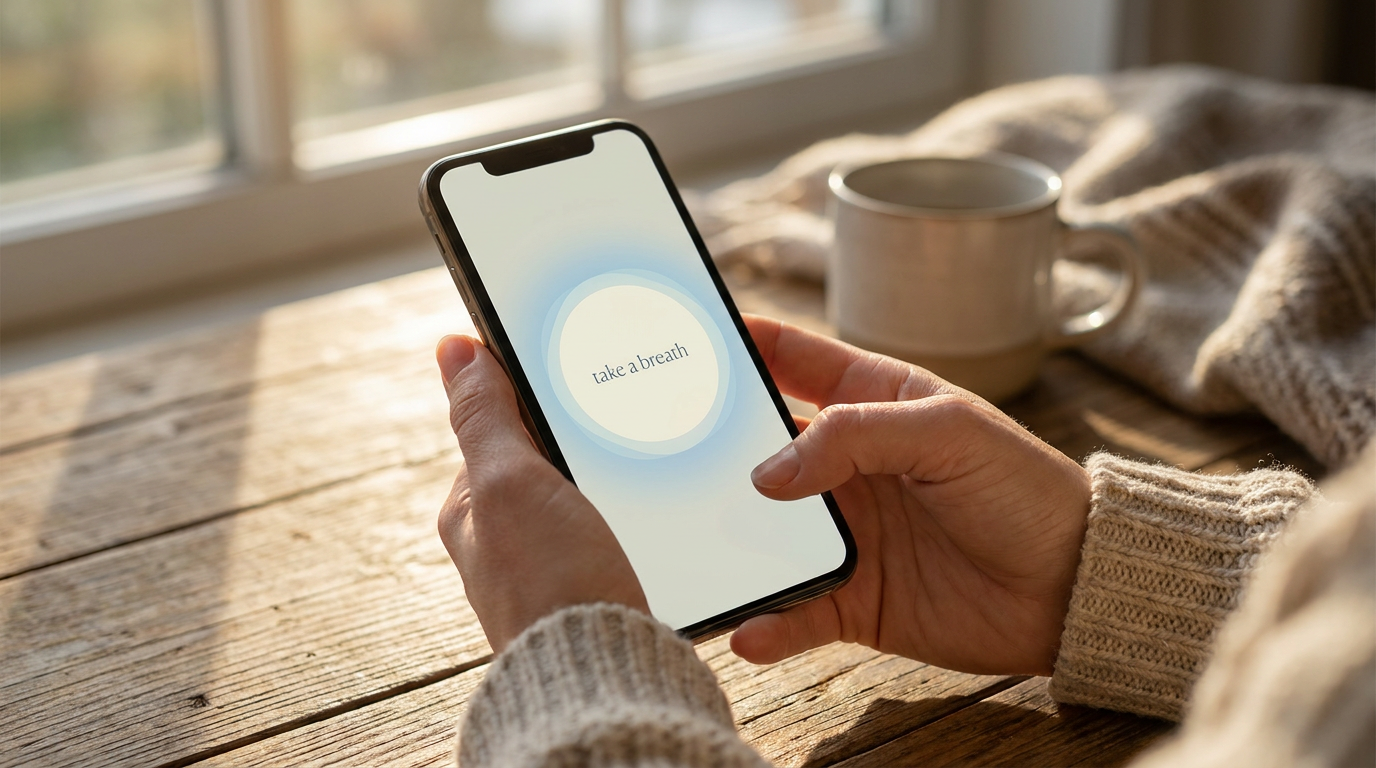
This brief pause—often lasting just five to ten seconds—is the core mechanism of mindful friction. It forces the brain out of autopilot and requires a conscious, intentional decision to proceed.[2][4]
This brief pause—often lasting just five to ten seconds—is the core mechanism of mindful friction.
The psychology behind this intervention is rooted in how modern social platforms are engineered. Apps are meticulously designed to eliminate all friction, minimizing the gap between a user's impulse and their content consumption.[4]

By artificially reintroducing a micro-delay, friction-based apps give the rational prefrontal cortex a crucial window to catch up with the brain's impulsive, dopamine-seeking reward system.[6]
Doomscrolling itself is driven by an evolutionary quirk. Human brains are wired to pay attention to potential threats, making emotionally charged, negative content highly magnetic to our fight-or-flight instincts.[5]
Clinical psychologists note that mindless scrolling is rarely about the content itself; it is often a short-term mood repair strategy used to avoid procrastination, anxiety, or the discomfort of boredom.[6]
Because the root cause is emotional, strict blockers often fail because they simply create frustration without offering a moment for reflection or addressing the underlying impulse.[6][7]

Mivo pairs its entry-friction with ongoing awareness features. Users can allocate specific time slots for social media, and the app provides gentle reminders every few minutes to check if the user is still getting value from their session.[3]
After the session concludes, the app asks users to rate whether the time spent felt useful or wasteful, gradually building a personalized data dashboard that reveals their digital habits.[3]
Mivo is not alone in this space. Apps like One Sec, Opal, and Pavlov are all part of a broader consumer wellness trend that is shifting toward in-the-moment awareness rather than retroactive guilt.[4]

Industry analysts note that this 'autonomy-centered' habit management is highly appealing to adults who want to reduce their screen time but still need access to social platforms for professional networking or messaging.[4]
How we got here
Early 2010s
Social media platforms widely adopt the 'infinite scroll' and auto-playing videos, eliminating natural stopping points to maximize user engagement.
2018
Apple and Google introduce built-in Screen Time and Digital Wellbeing tools, relying on daily time limits and hard cutoffs.
2022–2024
A wave of strict third-party app blockers gains popularity, though many users report a cycle of downloading and quickly deleting them due to frustration.
May 2026
Mivo Scrolling launches, highlighting a broader industry shift toward 'mindful friction' and autonomy-centered habit management.
Viewpoints in depth
Behavioral Psychologists
Focus on the underlying emotional drivers of scrolling and why strict bans fail.
Psychologists argue that doomscrolling is rarely about a genuine desire to consume content; rather, it serves as a short-term mood repair strategy. When faced with anxiety, procrastination, or boredom, the brain seeks a low-effort distraction. Because the root cause is emotional, hard blockers that simply lock an app often fail—they increase frustration without addressing the impulse. Friction-based tools succeed because they interrupt the automatic dopamine loop, giving the rational brain a moment to process the underlying emotion before acting.
Digital Wellness Developers
Argue that reintroducing friction is necessary to counter manipulative app design.
Developers in this space point out that modern social media platforms spend billions of dollars engineering interfaces that eliminate all friction. Infinite scroll, auto-playing videos, and algorithmic feeds are designed to minimize the gap between impulse and consumption. By artificially reintroducing a micro-delay—such as a five-second pause or a breathing prompt—these developers aim to give users their agency back, transforming a reflexive compulsion into a conscious choice.
Everyday Users
Express frustration with easily bypassed built-in limits and rigid blockers.
For many adults, built-in tools like Apple's Screen Time have proven ineffective because the 'Ignore Limit' button is always just one tap away. When willpower depletes late at night, users easily bypass their own rules. Conversely, strict third-party blockers are often deemed too rigid for modern life, where social apps are also used for messaging and networking. Users are increasingly gravitating toward friction apps because they offer a middle ground: they break the autopilot habit without permanently locking the user out of their digital life.
What we don't know
- Whether users will eventually build a psychological tolerance to friction prompts, leading them to bypass the delays on autopilot.
- How major social media platforms might alter their algorithms or interfaces if friction-based wellness apps achieve widespread, mainstream adoption.
Key terms
- Doomscrolling
- The compulsive consumption of negative news or distressing social media content, often done unconsciously and for extended periods.
- Mindful Friction
- The intentional introduction of a micro-delay or prompt into a digital interface to interrupt automatic behavior and encourage conscious decision-making.
- Autopilot Behavior
- Actions performed reflexively without conscious thought, such as automatically tapping a social media icon the moment a phone is unlocked.
- Hard Blocker
- A software tool that completely restricts access to specific apps or websites for a set period, offering no easy way to bypass the limit.
- Mood Repair Strategy
- A psychological term for a short-term action—like scrolling on a phone—taken to temporarily alleviate negative emotions like anxiety, boredom, or stress.
Frequently asked
What is mindful friction?
Mindful friction is a digital wellness technique that introduces a short delay—such as a 5-second pause or a prompt—before opening a distracting app, forcing the user to make a conscious choice rather than acting on autopilot.
How does Mivo differ from Apple's Screen Time?
While Screen Time sets daily time limits that users can easily bypass with an 'Ignore Limit' button, Mivo intervenes at the exact moment of impulse by asking users why they are opening the app, focusing on intention rather than strict bans.
Why do strict app blockers usually fail?
Strict blockers rely entirely on willpower. Because scrolling is often an emotional response to stress or boredom, simply locking an app creates frustration. Users frequently end up deleting the blocker or finding workarounds to access their feeds.
Does doomscrolling actually affect mental health?
Yes. Research links excessive consumption of negative news and algorithmic feeds to higher levels of psychological distress, anxiety, and sleep disruption, as it constantly triggers the brain's threat-detection systems.
Sources
Source coverage
7 outlets
4 viewpoints surfaced







[1]TechCrunchDigital Wellness Developers
Mivo’s new app takes a mindful approach to managing screen time
Read on TechCrunch →[2]NewsBytesDigital Wellness Developers
Mivo Scrolling promotes intentional social media use
Read on NewsBytes →[3]ZaminDigital Wellness Developers
Mivo Scrolling app with a fresh approach has entered the market
Read on Zamin →[4]TrendHunterIndustry Analysts
Intentional Digital Friction and Mindful Attention Design
Read on TrendHunter →[5]ReachLinkBehavioral Psychologists
The Psychology of Doomscrolling
Read on ReachLink →[6]Unpack PsychologyBehavioral Psychologists
The Psychology of App Blockers and Procrastination
Read on Unpack Psychology →[7]ScreenBuddyEveryday Users
Why Built-In Screen Time Fails Adults
Read on ScreenBuddy →
More in technology
See all 7 stories →Autonomous Trucking
The Evidence on Autonomous Trucks: Safety Data, Edge Cases, and the 2026 Regulatory Shift
8 sources

Digital Wellness
The End of App Blockers: How 'Mindful Friction' is Curing the Doomscroll
8 sources
AI Optimization
New AI Optimization Framework Beats Claude Code and Codex by 2.5x on Same Compute Budget
5 sources

AI Orchestration
How the New 'Arbor' Framework Upgrades AI Agents from Coders to Autonomous Researchers
5 sources

Every angle. Every day.
Get technology stories with full source coverage and perspective breakdowns delivered to your inbox.