
Vance Leads High-Stakes Iran Negotiations to Reopen Strait of Hormuz Amid White House Friction
Vice President JD Vance is spearheading diplomatic efforts with Iran to reopen the Strait of Hormuz, though mixed messaging from President Trump has complicated the fragile talks. Iranian officials have signaled a willingness to cooperate under a new regional security framework.
By Factlen Editorial Team
- Pragmatic Diplomats
- Argue that a phased, negotiated settlement is the only viable way to lower global oil prices and restore maritime stability.
- Maximum Pressure Advocates
- Believe the US should demand unconditional reopening of the strait and refuse any concessions that legitimize Iranian control.
- Iranian State Interests
- Maintain that the pre-war status quo is dead and demand a new security architecture that acknowledges their regional leverage.
- Energy Market Analysts
- Focus strictly on the economic fallout, viewing the political friction in Washington as a major risk factor for sustained inflation.
What's not represented
- · Gulf Arab States (Saudi Arabia, UAE)
- · European energy importers
Why this matters
The Strait of Hormuz is the world's most critical oil chokepoint. A successful negotiation would stabilize global energy markets and lower inflation, while a collapse in talks risks a prolonged blockade and a severe spike in gas prices for consumers worldwide.
Key points
- Vice President JD Vance is leading direct negotiations with Iran to reopen the Strait of Hormuz.
- Iranian officials say they are open to cooperation but demand a new regional security framework.
- President Trump has complicated the talks with public statements contradicting Vance's strategy.
- The maritime standoff has kept global Brent crude prices elevated above $128 a barrel.
- A diplomatic breakthrough could significantly lower global energy costs and inflation.
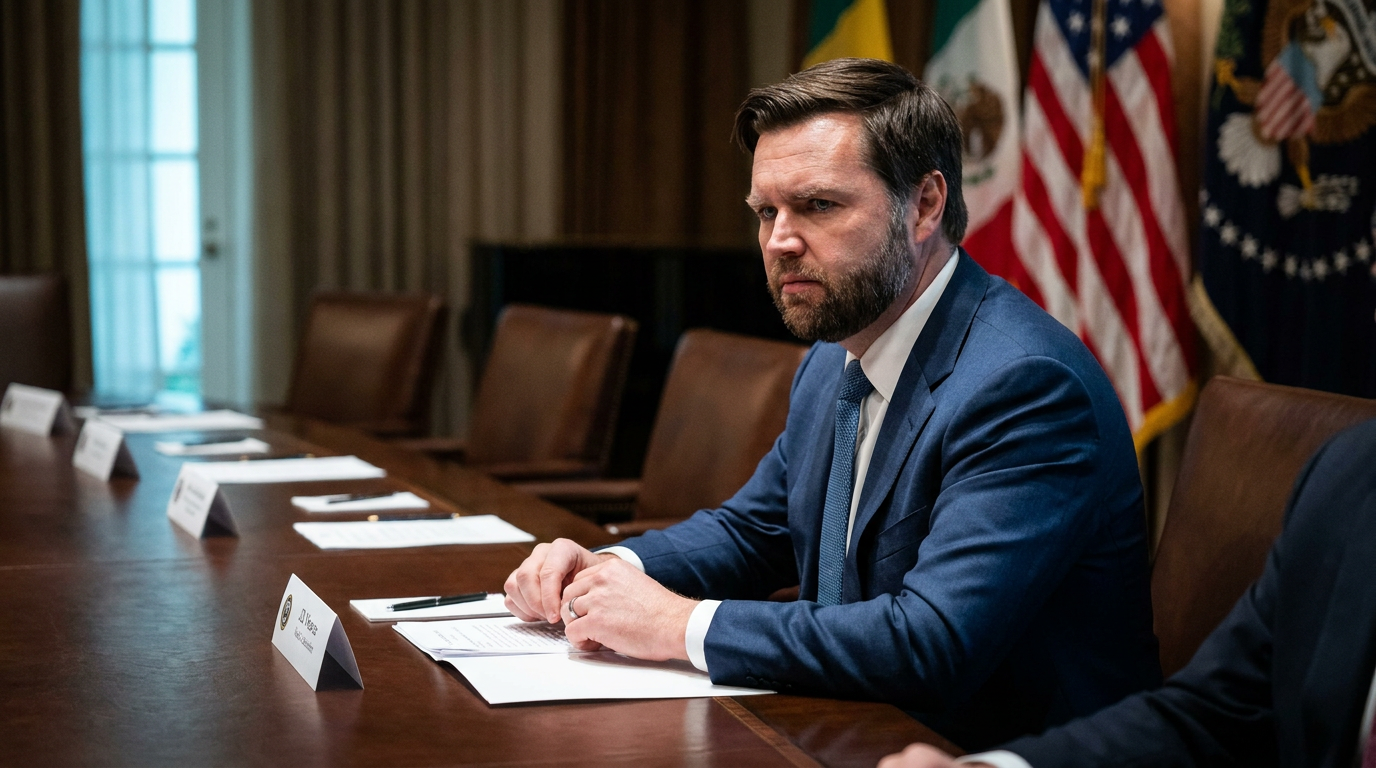
Vice President JD Vance is leading a critical diplomatic mission to negotiate the reopening of the Strait of Hormuz with Iranian officials, marking the most significant direct engagement between Washington and Tehran in years. The waterway, a vital artery for global energy supplies, has faced severe disruptions following recent regional conflicts, sending shockwaves through the global economy. Vance has been tasked with threading a delicate diplomatic needle: securing the safe passage of commercial vessels without conceding excessive regional leverage to Tehran.[1][5]
Iranian leadership has publicly signaled a willingness to negotiate an end to the maritime standoff, provided the terms reflect the new geopolitical reality. Iranian Parliament Speaker Mohammad Baqer Ghalibaf stated this week that the United States and Iran "can work together" to restore maritime traffic. However, he drew a firm line in the sand, emphasizing that the strategic waterway "will never return to the way it was before the war." This suggests Tehran is seeking a formalized role in overseeing Gulf transit, a demand that fundamentally challenges the pre-war status quo.[2][7]
The already complex negotiations are being heavily complicated by internal friction within the US administration. President Donald Trump has repeatedly interjected into the diplomatic process, creating disruptions in Vance's path. Through public statements and social media posts, the President has frequently contradicted the Vice President's negotiating positions, demanding immediate, unilateral concessions from Tehran and threatening further economic retaliation if the strait is not opened unconditionally.[1][6]

White House insiders describe a volatile dynamic that threatens to derail the talks. While some allies frame the situation as a deliberate "good cop, bad cop" strategy designed to keep Iranian negotiators off balance, diplomatic sources warn that the mixed messaging is eroding trust at the negotiating table. Vance is reportedly attempting to build a phased reopening framework, but the President's unpredictable rhetoric has left Iranian officials questioning whether the Vice President has the ultimate authority to sign off on a binding agreement.[3][6]
White House insiders describe a volatile dynamic that threatens to derail the talks.
The stakes for the global economy are immense, and markets are watching the diplomatic friction with growing alarm. Brent crude remains elevated above $128 a barrel, heavily burdening global supply chains and driving up domestic inflation. Historically, roughly 20 percent of the world's total oil consumption passes through the 21-mile-wide strait, making it the single most important chokepoint in the global energy network.[4][8]
Energy analysts note that a diplomatic breakthrough could rapidly drop crude prices by $20 to $30 a barrel, providing immediate relief to consumers at the gas pump. Conversely, a collapse in the talks could cement the current blockade, potentially pushing prices toward the $150 mark. This economic reality has placed immense pressure on the Vice President to deliver a workable compromise, even as he navigates the political minefield laid by his own administration.[5][8]

The emerging deal reportedly involves a new joint security architecture for the Persian Gulf. Under this proposed framework, international shipping would resume under a modified escort system that grants Tehran greater visibility into maritime manifests, ostensibly to prevent weapons smuggling. While Iranian media has praised this as a necessary evolution of regional security, US allies in the Gulf view the concession with deep suspicion, fearing it legitimizes Iranian control over international waters.[2][7]
For Vice President Vance, the negotiations represent a defining political test. A successful resolution would cement his foreign policy credentials and deliver a major economic victory for the administration ahead of the midterms. However, a failure—especially one exacerbated by the President's public interjections—could severely damage his standing and leave the administration shouldering the blame for sustained high energy costs.[1][6]
Negotiators are expected to reconvene in Oman later this week to attempt to finalize the first phase of the maritime agreement. The success of these talks will likely depend not only on bridging the gap between Washington and Tehran, but on whether the Vice President can maintain a unified front within his own White House long enough to get a deal across the finish line.[4][5]
How we got here
Pre-War
The Strait of Hormuz operated under an established international maritime status quo, allowing free flow of 20% of global oil.
Recent Months
Regional conflict led to severe disruptions and a de facto blockade of commercial shipping through the strait.
Last Week
Vice President JD Vance assumed leadership of direct diplomatic negotiations with Tehran to resolve the crisis.
This Week
Iranian Speaker Ghalibaf signaled openness to a deal, while President Trump publicly contradicted Vance's negotiating framework.
Viewpoints in depth
US Administration Strategy
A divided approach balancing pragmatic diplomacy with maximum pressure rhetoric.
Within the White House, there is a clear split in tactics. Vice President Vance is pursuing a pragmatic, phased approach to reopen the strait, recognizing that some concessions on maritime oversight may be necessary to lower global oil prices. Conversely, President Trump and his allied hardliners advocate for a maximum pressure campaign, arguing that any compromise with Tehran rewards aggression and weakens the US posture in the Middle East.
Iranian Leadership
Seeking to leverage the crisis to establish a new, permanent security architecture in the Gulf.
Tehran views the current standoff as an opportunity to permanently alter the balance of power in the Persian Gulf. By declaring that the strait will 'never return to the way it was,' Iranian officials are demanding a formalized role in monitoring and clearing international shipping. They argue this is necessary for regional security and to prevent weapons smuggling, though Western analysts view it as a bid for long-term strategic control over the waterway.
Global Energy Markets
Focused entirely on the economic imperative of restoring the flow of oil.
For energy analysts and global markets, the political maneuvering in Washington and Tehran is secondary to the math of supply and demand. With Brent crude hovering at $128 a barrel, the blockade is acting as a massive tax on the global economy. Market advocates stress that a prolonged standoff will inevitably trigger a broader economic recession, making a swift diplomatic resolution the highest global priority regardless of the political optics.
What we don't know
- Whether President Trump will ultimately sign off on a compromise agreement negotiated by Vance.
- The exact details of the 'new security architecture' Iran is demanding for the Persian Gulf.
- How quickly global oil prices will actually fall if a phased reopening is announced.
Key terms
- Strait of Hormuz
- A 21-mile-wide waterway between the Persian Gulf and the Gulf of Oman, through which roughly 20 percent of the world's oil consumption passes.
- Brent Crude
- A major trading classification of sweet light crude oil that serves as a benchmark price for purchases of oil worldwide.
- Joint Security Architecture
- A proposed diplomatic framework that would establish new rules and oversight mechanisms for international shipping in the Persian Gulf.
Frequently asked
Why is the Strait of Hormuz currently disrupted?
The waterway has faced severe disruptions following recent regional conflicts, leading to a maritime standoff that has halted normal commercial shipping.
What is JD Vance proposing?
Vance is reportedly attempting to build a phased reopening framework that would restore maritime traffic through a modified international escort system.
How is President Trump affecting the negotiations?
Trump has publicly contradicted Vance's negotiating positions, demanding immediate concessions from Iran and creating uncertainty about the US administration's unified stance.
How does this affect global gas prices?
The blockade has pushed Brent crude oil above $128 a barrel. A successful deal could drop prices by $20 to $30, while a collapse in talks could drive them even higher.
Sources
Source coverage
8 outlets
4 viewpoints surfaced








[1]The New York TimesPragmatic Diplomats
As Vance Leads Iran Negotiations, Trump Creates Disruptions in His Path
Read on The New York Times →[2]Al JazeeraIranian State Interests
Ghalibaf: US and Iran can work together to reopen Strait of Hormuz
Read on Al Jazeera →[3]Fox NewsMaximum Pressure Advocates
Vance takes hardline approach in Tehran talks as Trump demands immediate concessions
Read on Fox News →[4]ReutersPragmatic Diplomats
Oil markets volatile as US-Iran talks over Strait of Hormuz show signs of friction
Read on Reuters →[5]The Wall Street JournalMaximum Pressure Advocates
The Economic Stakes of the Hormuz Blockade: Why Vance's Mission Matters
Read on The Wall Street Journal →[6]PoliticoPragmatic Diplomats
Inside the White House split on Iran diplomacy
Read on Politico →[7]Tehran TimesIranian State Interests
Ghalibaf outlines new security architecture for Persian Gulf
Read on Tehran Times →[8]BloombergEnergy Market Analysts
Brent crude hovers above $128 as Hormuz reopening timeline remains murky
Read on Bloomberg →

Every angle. Every day.
Get news politics stories with full source coverage and perspective breakdowns delivered to your inbox.