
US Legal Battles Erupt Over Esports Prediction Markets as Fanatics Launches Player Integrity Program
As federal and state regulators clash over the legality of booming prediction markets, Fanatics Sportsbook has launched a first-of-its-kind integrity program to ban bettors who harass esports competitors and traditional athletes online.

The rapid financialization of competitive gaming has collided with a mounting regulatory crisis in the United States. As billions of dollars flow into esports and traditional sports through a new wave of prediction markets, the industry is grappling with two distinct but deeply intertwined challenges.
On one front, a fierce jurisdictional war has erupted between federal regulators and state gaming commissions over who actually controls these booming platforms. On the other, the sheer volume of money wagered on individual performances has triggered a surge in toxic online behavior, prompting major operators to rethink their responsibility to the competitors themselves.[4][5]
The human cost of this betting boom has become impossible for the industry to ignore. Esports competitors, whose digital proximity to their fanbases makes them uniquely accessible, have increasingly become targets for severe harassment from individuals who lose money on their matches.
The issue reached a boiling point earlier this month when Astralis captain Rasmus "HooXi" Nielsen was forced to delete his social media accounts following a barrage of death threats and abusive messages tied to his in-game performance. This incident underscored a dark reality of modern sports: gamified fandom often weaponizes financial losses against the athletes.
In response to this escalating crisis, Fanatics Sportsbook has launched a first-of-its-kind initiative designed to sever the link between betting losses and player harassment. Dubbed the "Bad Actor Program," the initiative marks the most aggressive integrity push yet from a major US sports betting operator. By partnering with Integrity Compliance 360 (IC360) and the social media intelligence provider Signify Group, Fanatics aims to actively police the digital spaces where its customers interact with athletes, coaches, and officials.[1][2]
The mechanics of the Bad Actor Program rely on advanced social media monitoring technology. Utilizing Signify Group's Threat Matrix service, the system continuously scans public platforms—including X, Instagram, TikTok, Facebook, and YouTube—for abusive, threatening, or defamatory content directed at competitors. The program also establishes a direct pipeline for athletes to submit abusive direct messages for investigation. Rather than leaving enforcement entirely to the social media platforms or the leagues, the sportsbook is taking direct ownership of its users' external behavior.[1]
When the system flags an abusive user, the consequences are immediate and severe. Fanatics has committed to suspending or permanently terminating the betting accounts of individuals found to be harassing athletes. Furthermore, these individuals will be added to a shared database maintained by IC360, potentially blacklisting them across multiple participating sportsbooks. In cases where the harassment crosses criminal thresholds, the program compiles evidence and refers the perpetrators directly to law enforcement agencies.[3]
Fanatics CEO Matt King emphasized that the initiative is designed to send a clear message: losing a financial wager never justifies threatening a competitor. While Fanatics is the first legal sportsbook to adopt the Bad Actor Program, industry leaders are aggressively lobbying other operators to join the coalition. The goal is to create an inescapable web of accountability across the regulated sports betting industry, ensuring that toxic bettors cannot simply migrate to a rival platform after being banned.[2][3]
Yet, as traditional sportsbooks like Fanatics build moats around player integrity, the very definition of a "sportsbook" is being challenged by the explosive rise of prediction markets. Platforms like Kalshi and Polymarket have introduced a fundamentally different model, allowing users to trade "event contracts" on the outcomes of virtually anything—from political elections to esports tournaments. Because users trade against one another rather than against a central "house," these platforms classify their offerings as financial derivatives rather than traditional wagers.[4][5]
The scale of this new sector is staggering. In January 2026 alone, Kalshi reported nearly $10 billion in trading volume, with a massive portion of that activity tied to sports and esports outcomes. This surge has blurred the lines between Wall Street trading floors and digital sportsbooks, attracting a demographic of retail investors who view event contracts as a legitimate alternative to state-licensed gambling apps. However, this explosive growth has also triggered a massive regulatory backlash.[4]
A fierce legal battle is now raging across the United States over how these prediction markets should be governed. The Commodity Futures Trading Commission (CFTC), the federal agency responsible for overseeing derivative markets, asserts that event contracts are legally defined as "swaps." Under the Dodd-Frank Act, the CFTC claims exclusive federal jurisdiction over these instruments, arguing that its authority preempts any state-level attempts to regulate or ban the platforms.[5]
State lawmakers and gaming regulators vehemently disagree. More than 20 states have launched coordinated legal attacks against prediction markets, arguing that the platforms are simply exploiting a semantic loophole to operate unlicensed sportsbooks. Attorneys general and state gaming commissions contend that event contracts are indistinguishable from sports betting, and therefore must be subject to the strict consumer protection laws, age verification requirements, and taxation frameworks that govern traditional gambling operators.[4]
The conflict has escalated into a wave of federal lawsuits. States like Illinois, Connecticut, and Kentucky have issued cease-and-desist orders to prediction markets, threatening criminal penalties for operating illegal gambling rings. In response, the CFTC has taken the extraordinary step of suing nine different states to block their enforcement actions. The federal agency is seeking permanent injunctions to prevent state regulators from interfering with what it views as federally sanctioned financial exchanges.[5]
The judicial system is currently fractured over the issue, setting the stage for a likely Supreme Court showdown. In April 2026, the Third Circuit Court of Appeals delivered a major victory for Kalshi, ruling that sports event contracts do indeed qualify as swaps under the Commodity Exchange Act, thereby affirming federal preemption in New Jersey. However, the Ninth Circuit is currently weighing a similar case involving Nevada, and legal analysts suggest the panel is leaning toward the state's right to regulate the markets as gambling.
As the legal war over prediction markets intensifies, the two distinct storylines—regulatory jurisdiction and player integrity—are beginning to converge. Traditional sportsbooks argue that if prediction markets are allowed to offer sports and esports contracts, they must be held to the same rigorous integrity standards. The American Gaming Association has repeatedly warned that unregulated event contracts pose a severe risk to the integrity of sporting competitions, lacking the anomaly detection and player protection frameworks built into state-licensed apps.[4][5]
Interestingly, the architecture of Fanatics' new Bad Actor Program could provide a blueprint for bridging this gap. IC360, the integrity firm powering the Fanatics initiative, already maintains a partnership with Kalshi. Representatives for IC360 have publicly noted that the mechanics of the Bad Actor Program—monitoring social media and restricting accounts based on abusive behavior—could easily be translated to prediction market platforms, ensuring that event contract traders are held to the same behavioral standards as traditional bettors.[2]
Interestingly, the architecture of Fanatics' new Bad Actor Program could provide a blueprint for bridging this gap.
Ultimately, the future of esports and sports wagering hinges on the resolution of these twin battles. While the courts will decide whether the federal government or individual states control the financial mechanics of prediction markets, the industry itself is finally taking ownership of the human consequences. By weaponizing account access against abusive fans, programs like Fanatics' initiative represent a critical step toward ensuring that the financialization of competitive gaming does not come at the expense of the competitors themselves.[3]
Key points
- Fanatics Sportsbook launched the Bad Actor Program to ban bettors who harass athletes online.
- The program uses AI to scan social media and cross-reference abusers with betting accounts.
- Prediction markets offering esports event contracts are seeing explosive multi-billion dollar growth.
- The CFTC is suing multiple states to assert exclusive federal jurisdiction over prediction markets.
What we don’t know
- Whether the Supreme Court will ultimately grant jurisdiction over prediction markets to the CFTC or to individual states.
- How effectively AI monitoring tools can distinguish between passionate sports fandom and actionable harassment.
- Whether prediction markets like Kalshi will voluntarily adopt player integrity programs similar to Fanatics' initiative.
How we got here
2021
Kalshi secures a CFTC license to offer event contracts on various outcomes.
Early 2025
Prediction markets see a massive surge in sports and esports betting volume.
April 2026
The Third Circuit rules that sports event contracts are swaps, affirming federal preemption.
June 2026
The CFTC sues multiple states, including Kentucky, to block state-level crackdowns.
June 2026
Fanatics launches the Bad Actor Program to ban bettors who harass athletes.
- Federal Jurisdiction Advocates
- Argue that event contracts are financial derivatives subject to exclusive federal oversight, preempting state gambling laws.
- State Regulatory Defenders
- Contend that prediction markets are unlicensed sportsbooks exploiting a loophole, requiring state-level consumer protection and taxation.
- Integrity & Player Safety Proponents
- Focus on the human element, arguing that operators must actively shield athletes and esports competitors from financialized harassment.
Perspectives this story doesn't cover
- Esports competitors directly affected by harassment
- Retail traders using prediction markets
Sources
Source coverage
5 outlets
3 viewpoints surfaced





- [1]GamblingNewsIntegrity & Player Safety Proponents
Fanatics Launches Program to Crack Down on Sports Betting Abuse
Read on GamblingNews → - [2]Insider SportIntegrity & Player Safety Proponents
Fanatics, alongside Integrity Compliance 360 and Signify, will detect abusive comments
Read on Insider Sport → - [3]Sigma WorldIntegrity & Player Safety Proponents
Fanatics Sportsbook to suspend customers who abuse athletes
Read on Sigma World → - [4]The GuardianFederal Jurisdiction Advocates
‘The purpose of the rule is fascism’: scientists fight back against planned Trump research cuts
Read on The Guardian → - [5]CBS NewsFederal Jurisdiction Advocates
Federal government and states clash over prediction markets
Read on CBS News →

More in Gaming & Esports
See all →Tournament Formats
Why Esports Grand Finals Are Killing the Bracket Reset for Map Advantages
3 sources

VCT Champions
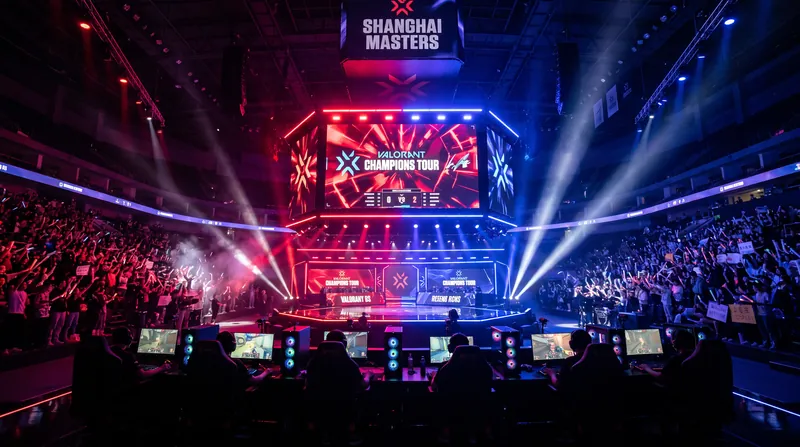
VALORANT Champions 2026 Kicks Off in Shanghai as Final Tournament of Franchised VCT Era
6 sources
Esports Business
Complexity Gaming Ceases Operations After 23 Years as Founder Jason Lake Cites Financial Strain
5 sources

Franchise Quarterbacks
Caleb Williams and Jayden Daniels Suffer Week 2 Injuries, Shaking Up NFL Landscape
3 sources
Comments
Every angle. Every day.
Get Gaming & Esports stories with full source coverage and perspective breakdowns, free every day.