
US Imposes Sweeping 10-12.5% Section 301 Tariffs on 99% of Imports from Top 60 Trading Partners
The U.S. Trade Representative has enacted new duties on 60 economies over forced labor concerns, replacing an expiring temporary surcharge and locking in higher costs for global supply chains.

The common misconception about the sweeping 10% to 12.5% import tariffs that took effect in late July is that they represent a sudden, unprecedented shock to the global supply chain. In reality, the market signal is one of continuity rather than disruption. Effective July 24, 2026, the Office of the U.S. Trade Representative enacted these duties on goods from 60 trading partners, covering 99.4% of all U.S. imports.
Rather than a new economic hurdle, this move was a statutory swap—a legal maneuver designed to maintain an existing tariff wall after the Supreme Court struck down its previous foundation. For businesses managing global supply chains and consumers facing higher retail prices, the practical stakes remain identical: elevated landed costs that must either be absorbed into profit margins or passed down to the final buyer.[2][3]
The mechanism behind this massive tax collection relies on Section 301 of the Trade Act of 1974. The administration invoked this statute by asserting that the 60 targeted economies failed to adequately prohibit or enforce bans on the importation of goods produced with forced labor.
This justification allowed the government to transition away from a temporary 10% import surcharge imposed under Section 122 of the Trade Act, which was strictly limited to a 150-day window. At 12:01 a.m. Eastern Time on July 24, the exact minute the Section 122 surcharge lapsed, the new Section 301 duties seamlessly took its place.[1][2][7]
To implement the policy, the USTR structured the tariffs into a two-tier system based on each country's labor enforcement record. Economies that have made documented commitments to ban forced labor imports—such as Canada, Mexico, the United Kingdom, and India—are subject to the baseline 10% tariff. Conversely, trading partners that the USTR determined lack meaningful prohibitions or enforcement mechanisms face the higher 12.5% rate. This tiered approach is designed to penalize inaction while offering a slight reprieve to nations that align with U.S. labor standards.[3][7]
The calculation of these duties involves complex interactions with existing trade agreements. For the European Union and Taiwan, the tariff is capped at 10% net of Most-Favored-Nation duties. This means that if a product already carries a 4% MFN duty, the new Section 301 tariff adds only 6%. Similarly, goods from Japan, South Korea, and Switzerland are capped at a combined rate of 12.5%. If an existing MFN duty already exceeds these caps, no additional Section 301 duty is applied to those specific products.[3][7]
Despite the broad 99.4% coverage figure, the tariffs do not apply uniformly to every imported item. Significant exemptions exist to prevent economy-wide disruptions and honor specific trade pacts. Goods that qualify under the United States-Mexico-Canada Agreement are entirely exempt from the new duties. Additionally, products already subject to Section 232 national security tariffs—such as specific categories of steel and aluminum—are excluded to prevent double taxation on those sensitive materials.[3][7]
However, for the vast majority of consumer and industrial goods, these new duties stack directly on top of existing Section 301 tariffs. An importer bringing in electronics or apparel that already faced a 25% penalty under previous trade actions must now pay an additional 10% to 12.5% at the border. This stacking effect fundamentally alters the landed cost of goods, forcing companies to recalculate their pricing models and reassess their sourcing footprints.[2][7]
The legal backstory of this tariff regime is a defining feature of the 2026 economic landscape. This is the third iteration of a global tariff strategy deployed by the administration this year. In February, the Supreme Court invalidated the sweeping "Liberation Day" tariffs that had been imposed under the International Emergency Economic Powers Act, ruling that the president had overstepped his authority. The government was ordered to refund roughly $160 billion in unlawfully collected revenue to hundreds of thousands of businesses.[1][2][5]
Following that judicial defeat, the administration immediately pivoted to the Section 122 temporary surcharge to stem the outflow of dollars and buy time. During that 150-day window, the USTR conducted the forced labor investigations that now serve as the legal bedrock for the current Section 301 duties. Trade lawyers note that Section 301 grants the executive branch broad authority to impose tariffs after a formal investigation, making this latest iteration significantly more durable against legal challenges than the previous emergency declarations.[1][2]
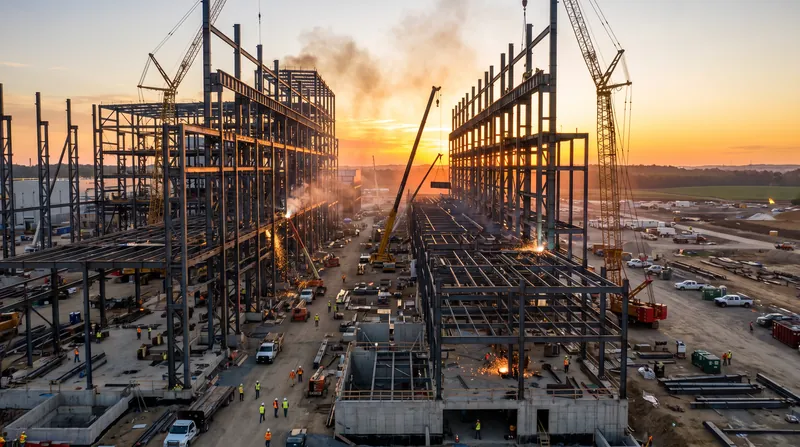
The practical impact on domestic industries is profound. The construction sector, for example, is navigating severe price fluctuations on essential materials like lumber, cement, and electrical components. Industry groups have warned that the duties tie up capital at the point of entry, complicating project bidding and inflating the cost of infrastructure development. Retailers face similar pressures, with many petitioning the USTR for product-specific exclusions to shield everyday consumer goods from the tax.[6]
Uncertainty remains a central theme as the policy faces immediate legal scrutiny. On the day the tariffs took effect, lawsuits were filed at the U.S. Court of International Trade. Plaintiffs argue that the forced labor investigation was a pretext for raising federal revenue and that the administration is stretching trade statutes beyond their intended scope. Critics contend that a dispute over labor practices should be resolved through the binding arbitration panels established in existing trade agreements, rather than through unilateral taxation.[2][5]
The administration defends the policy by pointing to tangible shifts in international trade behavior. Between the initial proposal in June and the final implementation in July, several economies proactively adopted forced labor import prohibitions or signed reciprocal trade agreements to lower their exposure from the 12.5% tier to the 10% tier. Officials argue this demonstrates that the threat of tariffs is an effective tool for compelling global compliance with human rights standards.[2]
Furthermore, the USTR designed the tariff schedule to be legally resilient. The official notice explicitly states that the action against each of the 60 economies is separate and intended to operate independently. If a court strikes down the tariff applied to one specific nation or product category, the duties on the remaining 59 economies will remain fully intact. This modular structure prevents a single judicial ruling from collapsing the entire tariff wall.[2]
Until the courts issue a definitive ruling, the business community must operate under the assumption that these elevated costs are permanent. Importers are aggressively screening their entries to ensure the correct harmonized tariff codes are applied and scrutinizing the extensive exemption lists to minimize their duty exposure. For the foreseeable future, the U.S. economy is adjusting to a high-tariff environment that reshapes the fundamental mathematics of international trade.[1][4]
Key points
- New Section 301 tariffs of 10% to 12.5% took effect on July 24, 2026, covering 99.4% of U.S. imports.
- The duties replace an expiring 150-day temporary surcharge and are justified by concerns over forced labor practices.
- The tariff structure uses a two-tier system, penalizing economies with no forced labor bans at 12.5% while capping others at 10%.
- The new duties stack on top of existing Section 301 tariffs, though exemptions exist for USMCA goods and Section 232 products.
What we don’t know
- Whether the U.S. Court of International Trade will issue an injunction halting the collection of the new Section 301 duties.
- How trading partners will respond, and whether they will implement retaliatory tariffs on U.S. exports.
- The exact degree to which the stacking effect of these tariffs will increase retail inflation for U.S. consumers.
How we got here
February 2026
The U.S. Supreme Court strikes down the administration's sweeping 'Liberation Day' tariffs imposed under the International Emergency Economic Powers Act.
February 24, 2026
The administration imposes a temporary 10% global import surcharge under Section 122 to maintain tariff levels for 150 days.
June 2, 2026
The USTR formally proposes new Section 301 tariffs of 10% to 12.5% on 60 economies over forced labor concerns.
July 24, 2026
The Section 122 surcharge expires and is immediately replaced by the finalized Section 301 tariffs, locking in the new duties.
- Trade Compliance Experts
- Focuses on the technical implementation, exemptions, and the legal durability of Section 301 compared to previous statutes.
- Supply Chain Operators
- Emphasizes the immediate financial burden, the stacking effect of duties, and the disruption to logistics and pricing models.
- Macroeconomic Analysts
- Analyzes the broader implications of a high-tariff environment, the impact on federal revenue, and the geopolitical risks of unilateral trade actions.
Perspectives this story doesn't cover
- Foreign Government Trade Ministries
- Consumer Advocacy Groups
Sources
Source coverage
7 outlets
3 viewpoints surfaced







- [1]Morgan LewisTrade Compliance Experts
A NEW STATUTORY BASIS FOR A CONTINUING TARIFF STRATEGY
Read on Morgan Lewis → - [2]FreightWavesSupply Chain Operators
Duties of 10% or 12.5% now cover economies accounting for 99.4% of US imports
Read on FreightWaves → - [3]Business StandardMacroeconomic Analysts
US imposes tariffs of 10-12.5% on imports from 60 trading partners
Read on Business Standard → - [4]Tax FoundationMacroeconomic Analysts
Tracking the Economic Impact of U.S. Tariffs
Read on Tax Foundation → - [5]CSISMacroeconomic Analysts
Section 301 Tariffs and China: A Risky Gambit
Read on CSIS → - [6]Fox RothschildTrade Compliance Experts
USTR Proposes Additional Section 301 Tariffs of 10-12.5% on Imports
Read on Fox Rothschild → - [7]Mohawk GlobalTrade Compliance Experts
New Section 301 Tariffs Effective July 24, 2026
Read on Mohawk Global →

More in Business
See all →Corporate Valuation
How a Tobin's Q Ratio Greater Than 1.0 Signals a Company's Incentive to Invest and Grow
8 sources
Portfolio Theory
The Boundary of Diversification: How Systematic and Unsystematic Risk Dictate Portfolio Construction
8 sources

Inventory Management
How the Economic Order Quantity Formula Determines the Optimal Inventory Batch Size
7 sources

Bank Capital
Why a 10-Day Horizon and 99% Confidence Level Dictate Trillions in Bank Capital Reserves
5 sources

Comments
Every angle. Every day.
Get Business stories with full source coverage and perspective breakdowns, free every day.