
UNCTAD Report Finds 3.7 Billion People Live in Nations Spending More on Debt Service Than Health
A new United Nations analysis reveals that 51 developing countries paid $1 trillion in net public debt interest in 2025. This rising cost of capital is forcing governments to divert funds away from essential public services to meet external obligations.

Exactly 3.7 billion people—nearly half the global population—now live in countries that spend more money servicing public debt than they do on healthcare or education. The United Nations Trade and Development (UNCTAD) agency published this finding in a comprehensive macroeconomic report released this week.[1][2][4]
The "A World of Debt 2026" report quantifies a growing sovereign finance crisis where developing nations paid $1 trillion in net interest on public debt in 2025. That figure represents nearly three times the interest burden those same nations carried in 2010.[2][8]
"Rising debt costs are stalling development," UNCTAD Secretary-General Rebeca Grynspan stated in the report's executive summary. She noted that the current financial architecture forces governments to choose between servicing external obligations and funding basic domestic services.[1][7]
The underlying data reveals that 51 developing countries currently allocate more of their national budgets to debt interest than to education or health. This structural squeeze directly threatens the 2030 Sustainable Development Goals, the UN's Second Committee warned during its recent macroeconomic policy debate.[3][6]
The Trillion-Dollar Interest Burden
The mechanics of this debt trap stem from a combination of higher global interest rates, currency depreciation against the US dollar, and the shifting composition of sovereign borrowing. Over the past decade, developing nations increasingly turned to private creditors and commercial bond markets.[2][5]
These private financial instruments carry shorter maturities and significantly higher yields than traditional multilateral concessional loans. As central banks in advanced economies aggressively raised benchmark rates to combat inflation, the floating-rate portions of this debt repriced sharply upward.[1][8]
Simultaneously, stronger advanced-economy currencies made dollar-denominated debt much more expensive to service using local tax revenues. Developing countries often pay borrowing rates two to three times higher than advanced economies, regardless of their underlying macroeconomic fundamentals.[1][2]
The resulting $1 trillion net interest bill for 2025 represents a massive capital outflow from the developing world to external creditors. Financial Nigeria highlights that this burden disproportionately restricts fiscal space in African nations, where borrowing costs routinely exceed domestic economic growth rates.[5][8]
Crowding Out Essential Services
The human cost of this financial dynamic is measured directly in diverted public spending. When sovereign bond payments come due, they take legal precedence over domestic budget allocations for schools, hospitals, and public infrastructure.[4][7]
In the 51 most affected nations, the ratio of debt service to public revenues has crossed critical sustainability thresholds. The Ritz Herald notes that this crowding-out effect leaves governments unable to invest in the human capital required to generate future economic growth.[3][4]
The UN's Second Committee emphasized that without fiscal space, developing countries cannot finance climate adaptation or transition to renewable energy grids. This creates a compounding vulnerability where nations remain exposed to climate shocks that further degrade their debt-carrying capacity.[6]
"The current international financial architecture is not fit for purpose," the UNCTAD report argues. The agency maintains that the global financial system structurally penalizes emerging markets, trapping them in a cycle of refinancing expensive debt rather than funding domestic development.[1][2]
Structural Reform Proposals
To reverse this trend, UNCTAD is proposing a comprehensive overhaul of the global sovereign debt framework. The agency argues that piecemeal restructuring efforts, such as the G20 Common Framework, have proven too slow and narrow to provide meaningful relief.[1][7]
A primary recommendation involves expanding the lending capacity of multilateral development banks. By injecting more concessional, long-term capital into the system, developing nations could refinance expensive private debt with sustainable public financing that aligns with their growth trajectories.[2][6]
The report also calls for the establishment of an independent sovereign debt workout mechanism. This would function similarly to a global bankruptcy court, forcing private creditors to accept timely haircuts rather than engaging in protracted holdout litigation against distressed nations.[1][2]
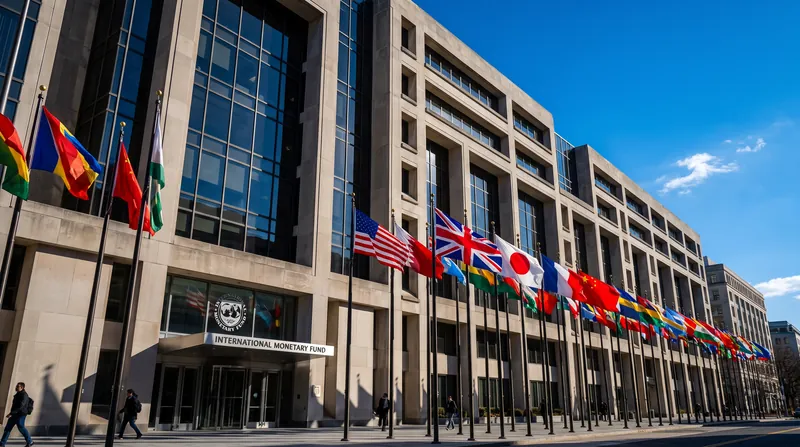
Anadolu Agency reports that UN officials are specifically urging advanced economies to support a new allocation of Special Drawing Rights through the International Monetary Fund. This mechanism would immediately boost the foreign exchange reserves of distressed nations without adding to their debt burdens.[3]
Market and Creditor Reactions
Private creditors and bondholders maintain a different perspective on the rising cost of capital. Industry groups argue that the higher yields demanded from developing nations accurately reflect the elevated default risks and political instability inherent in those specific markets.[5]
From the perspective of institutional investors, enforcing strict debt service discipline is necessary to maintain the viability of emerging market debt as an asset class. Forgiving debt or forcing haircuts, they argue, would ultimately freeze these nations out of international capital markets entirely.[4][5]
Furthermore, some financial analysts point out that a portion of the current debt stock was accumulated during the low-interest-rate era to fund projects that failed to generate promised economic returns. They argue that domestic governance and capital allocation efficiency must improve alongside any international debt relief.[5][8]
The debate now moves to the upcoming international financial meetings, where the UNCTAD findings will serve as a baseline for negotiations between debtor nations and their creditors. The UN Second Committee continues to push for macroeconomic policies that prioritize human development over debt service.[6][7]
Key points
- 3.7 billion people live in 51 developing countries that spend more on public debt interest than on healthcare or education.
- Developing nations paid $1 trillion in net interest on public debt in 2025, nearly triple the amount paid in 2010.
- The shift toward private creditors and commercial bond markets has exposed emerging economies to higher yields and shorter maturities.
- UNCTAD is calling for an independent sovereign debt workout mechanism and expanded concessional lending to prevent a widespread development crisis.
What we don’t know
- Whether advanced economies will support a new allocation of IMF Special Drawing Rights to provide immediate liquidity.
- How private institutional creditors will respond to UNCTAD's proposal for an independent sovereign debt workout mechanism.
- If the G20 Common Framework will be reformed to accelerate debt restructuring for the most heavily burdened nations.
- Multilateral Organizations
- Argue that the global financial architecture structurally penalizes developing nations and requires systemic reform.
- Developing Economy Advocates
- Emphasize that high capital costs crowd out essential domestic services and prevent climate adaptation.
- Private Capital Markets
- Maintain that sovereign yields accurately reflect default risk and that forced haircuts would destroy future market access.
Perspectives this story doesn't cover
- Private sovereign bondholders
- Commercial credit rating agencies
Sources
Source coverage
8 outlets
3 viewpoints surfaced






- [1]UN Trade and DevelopmentMultilateral Organizations
Rising debt costs are stalling development
Read on UN Trade and Development → - [2]UN Trade and DevelopmentMultilateral Organizations
A World of Debt 2026: Rising debt costs and stalling development
Read on UN Trade and Development → - [3]Anadolu AgencyDeveloping Economy Advocates
Debt interest exceeds health or education spending in 51 developing countries: UN
Read on Anadolu Agency → - [4]The Ritz HeraldDeveloping Economy Advocates
UNCTAD says 3.7 billion people live in countries that spend more on public-debt interest than on health or education
Read on The Ritz Herald → - [5]Financial NigeriaDeveloping Economy Advocates
Rising debt burden threatens development progress, UNCTAD warns
Read on Financial Nigeria → - [6]United NationsMultilateral Organizations
Sustainable Development Goals Still Threatened by Rising Debt Costs in Many States, Second Committee Warns in Macroeconomic Policy Debate
Read on United Nations → - [7]Big News NetworkDeveloping Economy Advocates
Rising debt costs are stalling development in developing countries: UNCTAD
Read on Big News Network → - [8]Fibre2FashionDeveloping Economy Advocates
Developing countries paid $1 trillion in net interest on public debt in 2025, nearly three times the 2010 level, as per the UNCTAD
Read on Fibre2Fashion →

More in Finance
See all →Debt Sustainability
IMF and World Bank Overhaul Debt Framework to Include Domestic Debt and Climate Risk
4 sources
Sovereign Debt
French-German 10-Year Bond Spread Reaches 14-Year High Following Austerity Budget Unveiling
5 sources

Sovereign Debt
How Debt-for-Nature Swaps Are Rewriting Global Finance
6 sources

Corporate Debt
Why Senior Holding Company Debt Ranks Below Operating Subsidiary Creditors in Insolvency
6 sources

Comments
Every angle. Every day.
Get Finance stories with full source coverage and perspective breakdowns, free every day.