
UK Mandates Strict New Accessibility Quotas for Major Streaming Platforms
Under new regulations, streaming giants like Netflix and Disney+ must subtitle 80% of their catalogs and provide audio descriptions and sign language, setting a new standard for inclusive entertainment.
By Tara Reddy

The UK government has officially mandated that major streaming platforms like Netflix, Disney+, and Amazon Prime Video must meet strict new accessibility quotas, fundamentally reshaping how global entertainment is delivered to viewers with disabilities. The sweeping regulatory change aims to level the playing field between traditional broadcasters and modern digital platforms, ensuring that the rapid shift toward on-demand viewing does not leave anyone behind.[1][3]
Under the newly implemented Media Act 2024, the UK's media regulator, Ofcom, is enforcing rules that require "Tier 1" streaming services—defined as those with over 500,000 UK users—to subtitle at least 80% of their total catalog. Furthermore, 10% of their content must feature audio descriptions, and 5% must include sign language interpretation. Regulators have explicitly noted that poor-quality access features will not count toward these mandatory quotas.[2][3][4][5]
Historically, traditional licensed television channels in the UK have been bound by strict accessibility and broadcasting codes, while streaming giants operated in a regulatory gray area. Because many streamers are headquartered outside the UK—such as Netflix, whose European operations are based in Amsterdam—they previously fell outside Ofcom's jurisdiction. This loophole left audiences with inconsistent protections and a highly fragmented landscape of accessibility features.[1][3][5]
The regulatory shift reflects a permanent change in consumer behavior. Government data indicates that two-thirds of UK households now subscribe to at least one major streaming service, with 85% of people using an on-demand platform every month, surpassing the 67% who still watch live television. Regulators argued that as audiences migrate away from traditional channels, the safety nets and inclusive standards governing television must migrate with them.[1][3]
For the estimated 18 million people in the UK with hearing or visual impairments, the mandate is a monumental victory. Accessibility advocates have long argued that inclusive features are not mere perks, but fundamental rights that allow disabled individuals to participate fully in modern cultural conversations. By legally requiring these features, the government is standardizing the baseline of digital entertainment.[2][4]
Beyond accessibility, the new Ofcom codes also require these Tier 1 platforms to adhere to strict content standards. Streaming services will now be subject to rules protecting audiences from harmful and offensive material, preserving the welfare of minors, and ensuring due impartiality and accuracy in news programming—mirroring the long-standing expectations placed on public service broadcasters like the BBC and ITV.[1][5]
For the streaming industry, retrofitting massive, decades-deep content libraries to meet these quotas presents an immense logistical hurdle. However, Ofcom's guidelines are intentionally "technology-neutral," focusing on the output quality rather than the specific tools used to create it. This flexibility is expected to trigger a boom in AI-driven localization workflows.[2]
The mandate opens the door for platforms to leverage emerging artificial intelligence solutions to process thousands of hours of backlog content. Streaming services are anticipated to utilize locally developed British Sign Language (BSL) avatar apps and advanced AI-generated captions, provided they meet Ofcom's strict accuracy and synchronization standards.[2]
Enforcement of the new rules will be robust. Ofcom will have the power to investigate viewer complaints and impose severe penalties for non-compliance, including fines of up to £250,000, or 5% of a platform's revenue generated in the UK, for each breach. The largest streaming platforms have a four-year window to fully comply with the accessibility code, with interim targets set for the two-year mark, setting a precedent that is widely expected to permanently elevate global streaming standards.[1][2]
Perspectives explored
Accessibility Advocates
Viewing the mandate as a long-overdue civil rights victory for inclusive entertainment.
Advocates argue that streaming platforms have historically lagged behind traditional broadcasters in serving disabled audiences, treating accessibility as an afterthought rather than a core feature. They view these strict quotas as a fundamental necessity that ensures equal participation in modern cultural conversations, emphasizing that high-quality subtitles and audio descriptions benefit all users, not just those with clinical impairments.
Regulators & Policymakers
Focused on modernizing broadcasting rules to match the reality of digital consumption.
With 85% of the public now using on-demand services monthly, regulators argue that the rules governing television must evolve to match modern viewing habits. By designating massive platforms as 'Tier 1' services, the government aims to eliminate the regulatory gray area that allowed international tech giants to bypass the stringent safety, impartiality, and accessibility standards long required of domestic public service broadcasters.
Streaming Industry & Technologists
Navigating the immense technical scale of retrofitting global content libraries.
While acknowledging the importance of the mandate, industry insiders point to the logistical hurdle of updating thousands of hours of backlog content. Technologists view the regulation as a massive catalyst for innovation, predicting that the need to meet these quotas will drive rapid advancements in AI-generated captions and automated sign language avatars, ultimately lowering the cost of localization worldwide.
Key points
- Major streaming platforms with over 500,000 UK users must now comply with strict new accessibility quotas.
- Platforms are required to subtitle 80% of their catalog, audio-describe 10%, and provide sign language for 5%.
- The mandate aims to level the regulatory playing field between traditional broadcasters and digital streaming giants.
- Ofcom's technology-neutral guidelines open the door for AI-driven localization tools to help platforms meet the targets.
Open questions
- It remains unclear exactly how streaming platforms will balance the use of human interpreters versus AI-generated avatars to meet the 5% sign language quota.
- While the mandate applies specifically to the UK, it is unknown if streaming giants will simply apply these newly generated accessibility tracks to their global catalogs by default.
Timeline
May 2024
The UK Parliament passes the Media Act 2024, granting Ofcom new powers to regulate video-on-demand services.
February 2026
The UK government lays secondary legislation to officially bring major streaming platforms under enhanced regulation.
August 2026
Ofcom's public consultation on the specific accessibility and content codes concludes, paving the way for final enforcement.
- Accessibility Advocates
- Viewing the mandate as a long-overdue civil rights victory for inclusive entertainment.
- Regulators & Policymakers
- Focused on modernizing broadcasting rules to match the reality of digital consumption.
- Streaming Industry
- Navigating the immense technical scale of retrofitting global content libraries.
Perspectives this story doesn't cover
- Independent Content Creators
- Non-UK Regulatory Bodies
Sources
Source coverage
5 outlets
3 viewpoints surfaced





- [1]The GuardianStreaming Industry
A&E patients with non-urgent ailments may be told to come back later under NHS plans
Read on The Guardian → - [2]SlatorAccessibility Advocates
UK Government Expands Language Accessibility Mandates to Streaming Giants
Read on Slator → - [3]GOV.UKRegulators & Policymakers
UK's video-on-demand services to have enhanced Ofcom regulation
Read on GOV.UK → - [4]OfcomRegulators & Policymakers
Stronger protections for UK audiences under new content and accessibility standards for streaming services
Read on Ofcom → - [5]Society for Computers & LawStreaming Industry
Ofcom consults on new content and accessibility standards for streaming services
Read on Society for Computers & Law →

More in Entertainment
See all →Live Sports Streaming
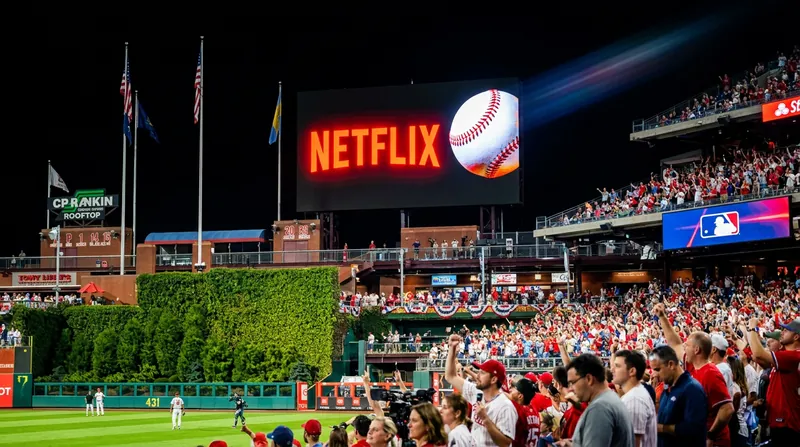
Netflix Secures Exclusive MLB Home Run Derby and Opening Night Rights in Major Live Sports Pivot
4 sources
Streaming Economics
Netflix Authorizes $25 Billion Stock Buyback, Eclipsing Content Spend in Major Industry Pivot
2 sources

Streaming Economics
Disney Agrees to $50 Million Antitrust Settlement Over ESPN Bundling, Must Consider Unbundling Networks
3 sources

Virtual Theater
The Global Stage: How Streaming Platforms Are Democratizing Access to Live Theater
6 sources
Comments
Every angle. Every day.
Get Entertainment stories with full source coverage and perspective breakdowns, free every day.