
Director Carl Rinsch Sentenced to 30 Months in Prison for $11 Million Netflix Fraud
The '47 Ronin' filmmaker will serve two and a half years in federal prison after diverting production funds for an unfinished sci-fi series into risky stock trades and luxury cars.
By Joao Marques
Share this story
Carl Erik Rinsch, the Hollywood director best known for the 2013 action film "47 Ronin," has been sentenced to 30 months in federal prison for defrauding Netflix out of $11 million. U.S. District Judge Jed S. Rakoff handed down the sentence in a Manhattan federal court on Monday, concluding a bizarre legal saga that exposed the extreme financial excesses of the streaming industry's peak spending era.
The conviction stems from a highly anticipated but never-finished science fiction series originally titled "White Horse" and later renamed "Conquest." The project, which was pitched as an ambitious epic about clone-like beings forming their own society, had the backing of major industry players and was seen as a massive swing for Netflix's original programming division.[1]
Netflix had already invested approximately $44 million into the production between 2018 and 2019. However, the project was plagued by missed milestones and erratic behavior. In March 2020, Rinsch approached executives claiming he needed an additional $11 million to complete the final stages of production for the series.[2]
Instead of utilizing the funds for the show, federal prosecutors proved that Rinsch orchestrated a deliberate scheme to siphon the money. Trial evidence revealed that he moved the $11 million through several different bank accounts to obscure its path before consolidating the funds into a personal brokerage account.[2]
Once the money was secured in his personal accounts, Rinsch embarked on a series of highly speculative investments. He lost more than half of the $11 million within weeks through risky stock options. He then pivoted, investing the remaining funds into the cryptocurrency market, where he netted a substantial profit that he subsequently transferred back to his own bank accounts.[1]
Flush with crypto gains, Rinsch began a lavish spending spree that stunned the court. Court documents detailed millions of dollars spent on luxury goods, including a red Ferrari, five Rolls-Royces, antique furniture, high-end clothing, and $638,000 on two handmade Hästens mattresses. He also used the misappropriated funds to pay off approximately $1.8 million in personal credit card debt.[1]
During the sentencing hearing, Rinsch's defense team argued that his actions were not driven by pure greed, but rather by a severe mental health crisis. They cited medication issues, immense career pressure, and a contentious divorce as catalysts for his erratic behavior. The defense also submitted letters of support from industry colleagues, including actor Keanu Reeves, who asked the court for leniency and noted Rinsch's tendency to self-sabotage.[1]
Judge Rakoff acknowledged the psychological factors at play, noting that purchasing five identical luxury cars "suggests someone who is not operating solely from greed, but also someone who's got a kind of manic state of mind." However, the judge firmly rejected the notion that mental health excused the underlying crime, emphasizing that Rinsch made a calculated choice to lie to Netflix and actively covered up his financial diversions for years.
The prosecution, which had requested a five-year sentence, pushed back hard against the mental health defense. Prosecutor David Markewitz argued that Rinsch had "every possible advantage," including an elite education, family wealth, and a high-flying career, yet chose to orchestrate a deliberate scheme. "His motive was naked greed," Markewitz told the court.
In addition to the 30-month prison term, Rinsch was sentenced to three years of supervised release and ordered to pay $11 million in direct restitution to Netflix. Rinsch addressed the court during the hearing, stating that the criminal justice process had forced him to confront his health and judgment, and his lawyers confirmed he is now receiving treatment from a new care provider.[2]
The criminal restitution is separate from a broader civil dispute between the director and the streaming giant. Netflix is currently seeking to recover more than $4.4 million in legal fees tied to related arbitration that Rinsch previously initiated and lost, further complicating the financial fallout of the abandoned series.[2]
For Hollywood insiders, the "Conquest" saga serves as a stark cautionary tale and marks a definitive end to the "blank check" era of streaming. The case highlights the extreme risks platforms took when they handed massive, loosely supervised budgets to creators in a frantic race for exclusive content, prompting a new era of strict milestone-based accounting across the industry.[2]
Key points
- Carl Rinsch was sentenced to 30 months in prison for defrauding Netflix of $11 million.
- The funds were intended to finish a sci-fi series originally titled 'White Horse.'
- Rinsch lost millions in stock trades before making a profit in cryptocurrency.
- He spent the proceeds on luxury items, including five Rolls-Royces and a Ferrari.
What we don’t know
- Whether Netflix will successfully recover the additional $4.4 million in legal fees it is seeking in a separate civil dispute.
- What will ultimately happen to the existing footage and assets from the abandoned $44 million production of 'Conquest.'
How we got here
2018–2019
Netflix invests approximately $44 million in Rinsch's sci-fi series 'Conquest.'
March 2020
Rinsch requests and receives an additional $11 million, claiming it is necessary to finish the show.
Late 2020
Rinsch diverts the funds into personal brokerage accounts, trading stocks and cryptocurrency.
2021
Netflix officially cancels the series after growing concerns over Rinsch's behavior and missed milestones.
December 2025
A Manhattan federal jury convicts Rinsch of wire fraud and money laundering.
June 29, 2026
Rinsch is sentenced to 30 months in federal prison and ordered to pay $11 million in restitution.
- Federal Prosecutors
- Argued that the fraud was a calculated, greed-driven scheme that required deliberate planning and deception.
- Defense & Supporters
- Attributed the erratic spending to a severe mental health crisis exacerbated by immense career pressure.
- Legal & Industry Observers
- View the case as a cautionary tale about the lack of financial oversight during the peak streaming boom.
Perspectives this story doesn't cover
- Below-the-line crew members who worked on the unfinished production.
- Netflix executives who originally greenlit the project.
Sources
Source coverage
2 outlets
3 viewpoints surfaced


- [1]The Straits TimesFederal Prosecutors
US director sentenced to 30 months for defrauding Netflix
Read on The Straits Times → - [2]Law CommentaryLegal & Industry Observers
47 Ronin Director Carl Rinsch Sentenced to Prison for $11 Million Netflix Fraud
Read on Law Commentary →
More in Entertainment
See all →Live Sports Streaming
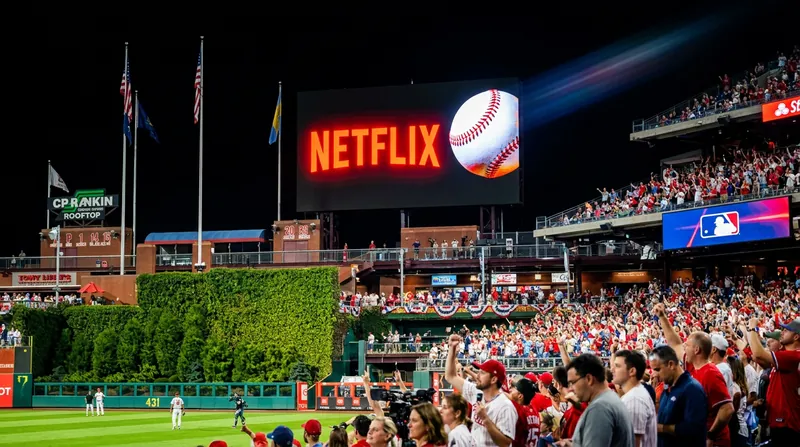
Netflix Secures Exclusive MLB Home Run Derby and Opening Night Rights in Major Live Sports Pivot
4 sources
Streaming Economics
Netflix Authorizes $25 Billion Stock Buyback, Eclipsing Content Spend in Major Industry Pivot
2 sources

Streaming Economics
Disney Agrees to $50 Million Antitrust Settlement Over ESPN Bundling, Must Consider Unbundling Networks
1 sources

Virtual Theater
The Global Stage: How Streaming Platforms Are Democratizing Access to Live Theater
6 sources

Comments
Every angle. Every day.
Get Entertainment stories with full source coverage and perspective breakdowns, free every day.