
U.S. and Iran Begin High-Stakes Peace Talks in Switzerland Amid Regional Fragility
U.S. Vice President JD Vance and Iranian negotiators have arrived in Switzerland to hammer out the technical details of a preliminary peace agreement. The 60-day negotiation window faces immediate threats from ongoing Israeli military operations in Lebanon and disputes over the Strait of Hormuz.
By Factlen Editorial Team
- U.S. Administration & Mediators
- Views the preliminary deal as a historic victory that ends a costly war, secures global energy markets, and provides leverage to dismantle Iran's nuclear ambitions.
- Israeli Security Establishment
- Views the U.S.-Iran deal as a dangerous capitulation that will enrich Iran without permanently destroying its nuclear program, refusing to halt operations in Lebanon.
- Iranian Leadership
- Views the agreement as a necessary step to relieve economic pressure, but insists the deal is contingent on a complete cessation of Israeli strikes in Lebanon.
What's not represented
- · Lebanese Civilians
- · European Allies
Why this matters
The outcome of these 60-day negotiations will determine whether the recent U.S.-Iran war ends in a lasting political settlement or reignites into a broader regional conflict. The reopening of the Strait of Hormuz directly impacts global oil prices, while the diplomatic rift between the U.S. and Israel could reshape Middle Eastern security alliances for decades.
Key points
- U.S. and Iranian delegations have arrived in Switzerland to negotiate the technical details of a preliminary peace agreement.
- The 14-point 'Islamabad Memorandum' establishes a 60-day window to reach a final settlement on Iran's nuclear program.
- The U.S. has agreed to lift its naval blockade in exchange for Iran keeping the Strait of Hormuz open toll-free.
- Israel is not a party to the deal and has refused to halt its military operations against Hezbollah in southern Lebanon.
- U.S. intelligence warns that Israeli Prime Minister Benjamin Netanyahu may deliberately undermine the peace effort due to domestic pressure.
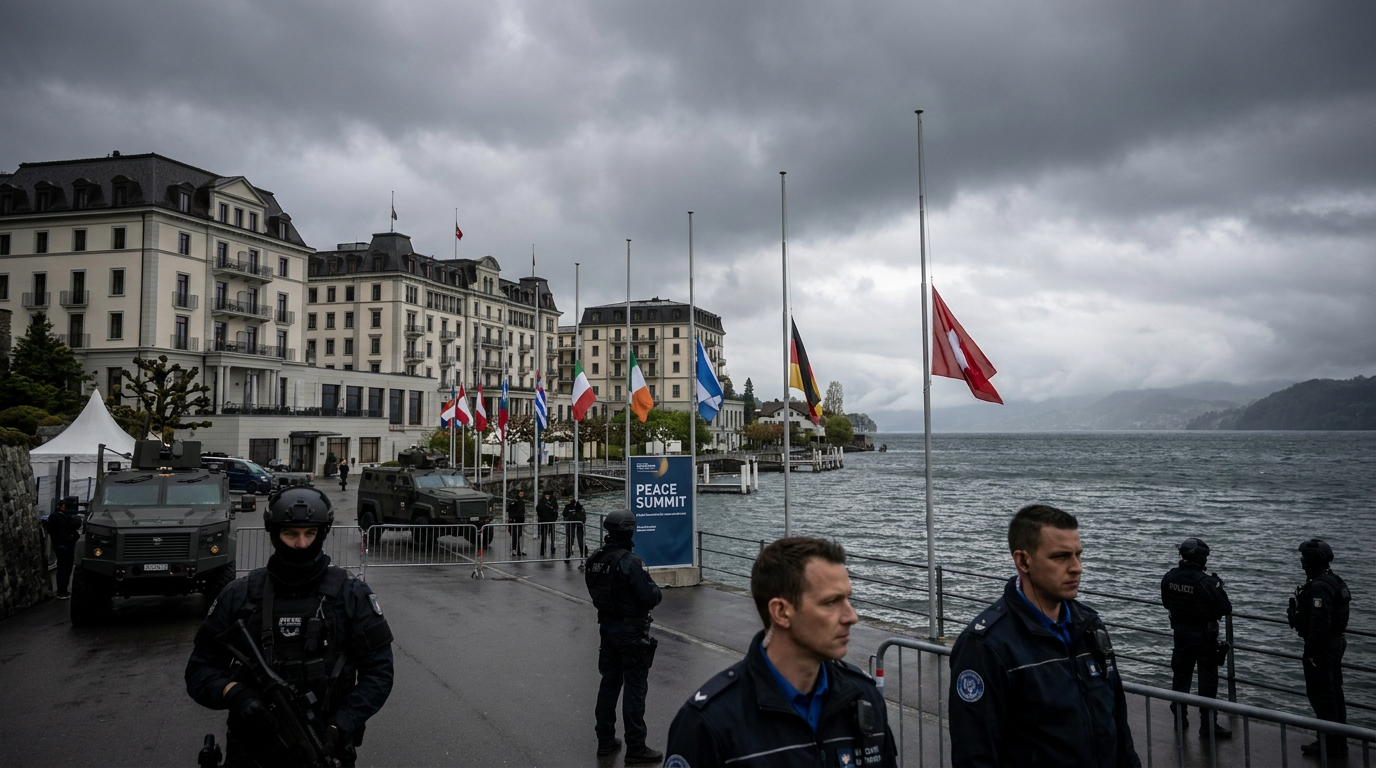
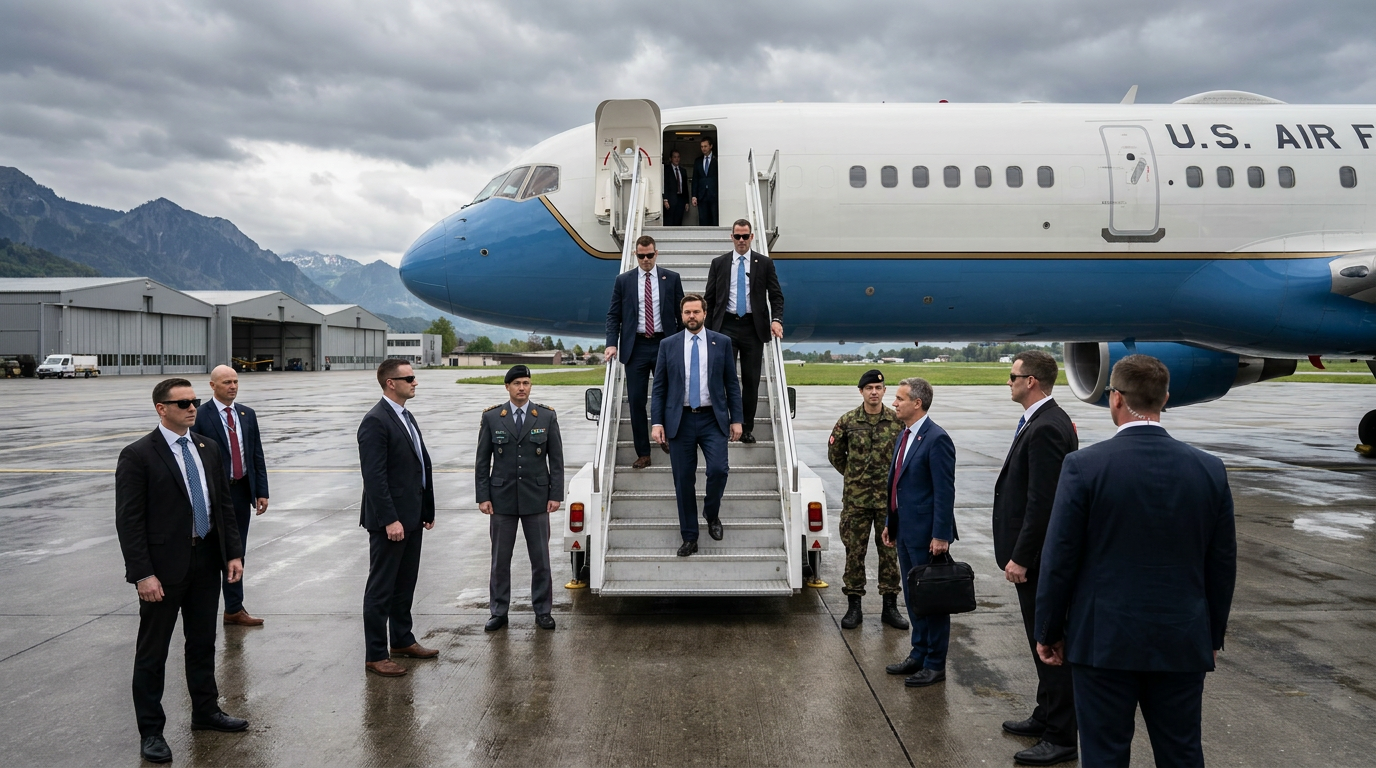
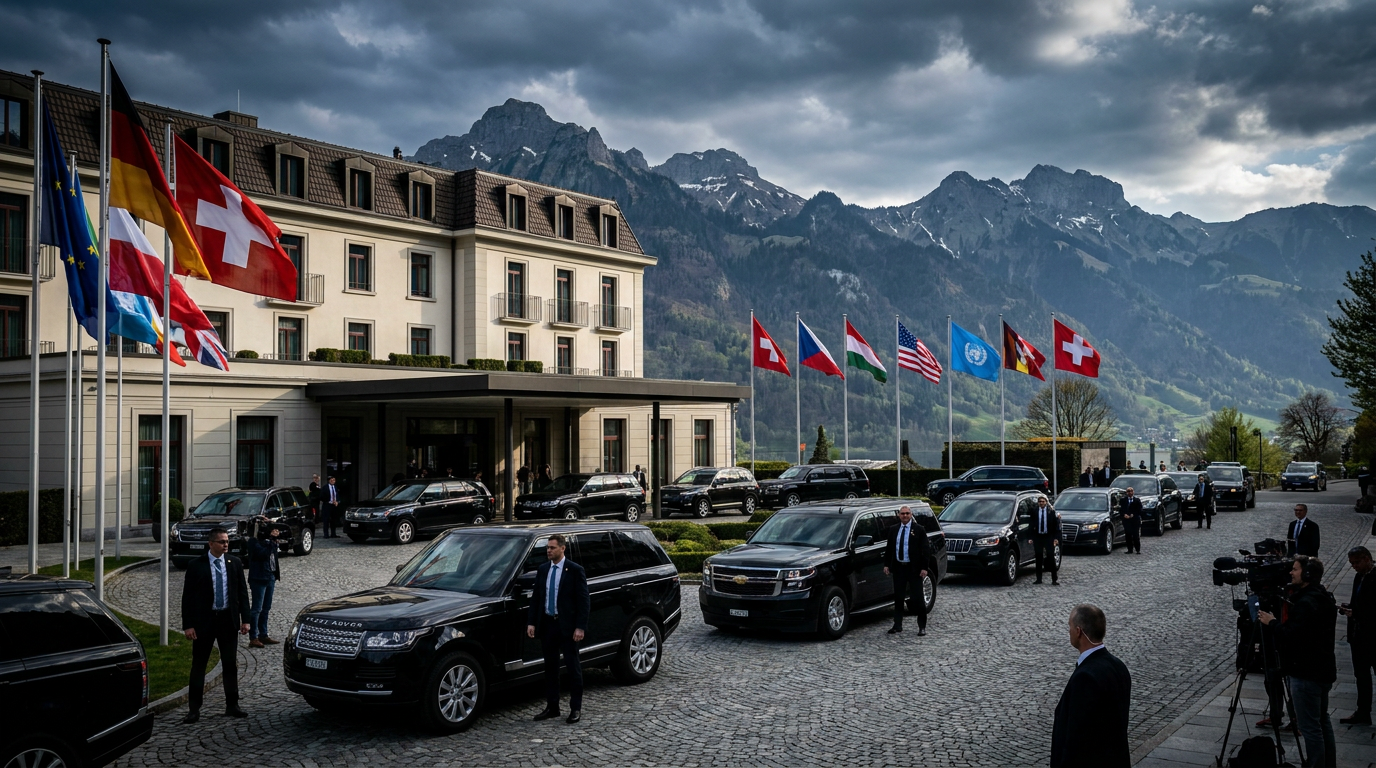
U.S. Vice President JD Vance and a high-level delegation of Iranian officials have converged on the Bürgenstock resort in the Swiss Alps, launching a critical 60-day diplomatic sprint to finalize a peace agreement between Washington and Tehran. The arrival of the delegations on Sunday marks the formal beginning of technical negotiations aimed at ending the recent U.S.-Iran war. Vance, who departed Joint Base Andrews over the weekend, indicated that he expects to remain in Switzerland for several days to kick off the talks before leaving technical teams to hammer out the granular details of the settlement.[1][6]
The primary objective of the Switzerland summit is to transform the "Islamabad Memorandum"—a 14-point preliminary ceasefire signed digitally last week by President Donald Trump and Iranian President Masoud Pezeshkian—into a permanent political and nuclear treaty. The memorandum serves as a fragile framework, establishing a two-month window for both nations to resolve deeply entrenched disputes over nuclear enrichment, economic sanctions, and regional security. Negotiators are acutely aware that the preliminary deal is merely a starting point, and the upcoming weeks will require unprecedented compromises from both sides.[2][6]
Mediated heavily by Pakistan, Qatar, and Switzerland, the negotiations represent the most significant diplomatic engagement between the United States and Iran since the outbreak of their recent military conflict. Pakistani Prime Minister Shehbaz Sharif and Qatari mediators have also traveled to the mountaintop resort to facilitate the dialogue, reflecting the immense international pressure to secure a lasting peace. The presence of these regional power brokers underscores the global economic stakes, particularly regarding the stabilization of Middle Eastern energy markets and the prevention of a wider regional conflagration.[1][7]
However, the diplomatic window is exceptionally fragile and fraught with immediate risks. The technical talks were briefly delayed on Friday following a severe flare-up of violence between Israel and Hezbollah in Lebanon, underscoring how deeply intertwined the U.S.-Iran track is with broader Middle Eastern conflicts. Iranian officials have repeatedly warned that they will walk away from the table if allied military operations continue, while U.S. negotiators are scrambling to compartmentalize the Lebanon crisis from the core nuclear and economic discussions taking place in Switzerland.[2][5]

At its core, the preliminary agreement trades immediate economic relief for maritime security and a temporary pause in direct hostilities. The framework is designed to de-escalate the immediate military threat while providing both nations with tangible, short-term victories to sell to their respective domestic audiences. For the United States, the priority is securing the free flow of global commerce; for Iran, the imperative is lifting the crushing economic restrictions that have paralyzed its economy during the conflict.[2][4]
Under the specific terms of the Islamabad Memorandum, the United States has agreed to immediately lift its naval blockade on Iran, a move that allows Tehran to freely export its oil to international markets for the first time since the war began. This concession is viewed as a critical lifeline for the Iranian economy, which has suffered immensely under the weight of U.S. military enforcement. The lifting of the blockade is contingent on Iran's strict adherence to the ceasefire and its willingness to engage in good-faith negotiations over its nuclear program.[2][4]
In exchange for the lifting of the naval blockade, Iran has committed to keeping the Strait of Hormuz—a vital maritime artery through which a massive portion of the world's oil supply passes—completely open and toll-free for commercial shipping during the 60-day negotiation period. This provision is essential for stabilizing global energy prices, which experienced severe volatility during the height of the conflict. However, Iranian officials have suggested they may introduce passage fees after the 60-day window expires, a threat that looms large over the current talks.[4][6]
Beyond maritime security, the technical talks in Switzerland will focus heavily on the future of Iran's nuclear program. U.S. negotiators are aggressively pushing for the immediate return of International Atomic Energy Agency (IAEA) inspectors to key Iranian nuclear sites, including the heavily fortified Fordow Fuel Enrichment Plant and the Natanz Nuclear Facility. These sites have been entirely unmonitored since the war began, raising profound concerns among Western intelligence agencies about the potential acceleration of Iran's nuclear weapons capabilities during the blackout period.[7]
The preliminary agreement also reportedly requires Iran to systematically dilute its existing stockpile of highly enriched uranium, which Western intelligence believes is buried deep underground beneath facilities that were targeted during recent U.S. airstrikes. Verifying the dilution of this material will be one of the most complex technical challenges facing the negotiators in Switzerland, requiring intrusive inspections and continuous monitoring that Tehran has historically resisted. The success of the nuclear track will largely dictate the viability of the broader peace settlement.[2]
The success of the nuclear track will largely dictate the viability of the broader peace settlement.
If these stringent technical benchmarks regarding nuclear inspections and uranium dilution are met, Washington is prepared to unfreeze billions of dollars in Iranian assets currently held in Qatar. These funds, which have been locked away under international sanctions, would be released strictly for humanitarian purchases, including food, medicine, and agricultural goods. The phased release of these assets is intended to provide Iran with a tangible incentive to comply with the IAEA mandates, though critics fear the influx of capital will indirectly subsidize Tehran's military apparatus.[5][7]

Despite the progress in Switzerland, the most immediate and potent threat to the U.S.-Iran negotiations comes from an allied nation that is entirely excluded from the agreement: Israel. The Israeli government was not a party to the Islamabad Memorandum and has consistently expressed deep skepticism about the viability of any diplomatic settlement with Tehran. As the talks commence, Israel's ongoing military operations against Iranian proxies present a constant risk of derailing the fragile ceasefire and plunging the region back into full-scale war.[3][5]
The text of the Islamabad Memorandum mandates an immediate and permanent cessation of military operations on all fronts, a clause which Iran interprets as requiring a complete and unconditional Israeli withdrawal from southern Lebanon. Tehran has explicitly tied its participation in the Switzerland talks to the cessation of Israeli strikes against Hezbollah, arguing that the U.S. is responsible for reining in its primary Middle Eastern ally. This interpretation places the Trump administration in the difficult position of enforcing a ceasefire on a partner that refuses to recognize it.[3][4]
Israeli Prime Minister Benjamin Netanyahu has fiercely rejected the premise that his country must halt its operations to facilitate the U.S.-Iran deal. Asserting that Israel is not bound by the Trump-Pezeshkian agreement, Netanyahu has vowed to maintain a robust military buffer zone in southern Lebanon to protect northern Israeli towns from relentless Hezbollah rocket and drone fire. He has publicly stated that Israel will not withdraw its troops, arguing that the security of Israeli citizens supersedes the diplomatic timeline established in Switzerland.[3][4]
Recent Israeli drone strikes in Beirut and across southern Lebanon have infuriated both Tehran and Washington, nearly causing the collapse of the preliminary deal before the ink was dry. U.S. intelligence agencies recently circulated a classified report warning the Trump administration that Netanyahu is facing intense domestic political pressure to continue the military campaign. The report concluded that the Israeli premier might deliberately take steps in Lebanon designed to undermine the U.S.-Iran peace effort, viewing the agreement as a strategic threat to Israel's long-term security.[2][8]
The escalating friction over the Lebanon campaign has exposed a rare, widening, and highly public rift between the Trump administration and the Israeli government. For years, the two administrations operated in lockstep regarding Middle Eastern policy, but the imperative to end the U.S.-Iran war has fundamentally altered Washington's strategic calculus. The White House is now actively pressuring Jerusalem to scale back its military objectives, creating unprecedented diplomatic tension between the historic allies at a critical juncture.[2][8]
President Trump has publicly urged Netanyahu to show restraint, attempting to downplay the severity of the disagreement while sending a clear warning to Jerusalem. Speaking to reporters, Trump stated that he has a minor dispute with the Israeli leader over Lebanon, but cautioned Israel against aggressive military tactics, remarking that they do not need to knock down a building every time a Hezbollah operative is suspected inside. Trump also emphasized that the U.S. fought hard alongside Israel but that it is now time to secure the peace.[2][8]

Vice President Vance was even more direct in his criticism before departing for the summit in Switzerland, taking aim at Israeli lawmakers who have vocally condemned the U.S.-Iran deal. Vance chastised the Israeli officials for their public rebukes, suggesting that if he were in the Israeli cabinet, he would think twice before attacking the only powerful ally Israel has left anywhere in the entire world. The stark comments underscore the Trump administration's frustration with Israel's refusal to align with the new diplomatic framework.[2]
Within Israel, the preliminary deal has sparked outrage across the political spectrum, uniting rival factions in their condemnation of the agreement. Critics argue that the U.S.-led war delayed but fundamentally failed to dismantle Iran's nuclear ambitions, and that the impending influx of unfrozen cash will only embolden Tehran to rearm its regional proxies. Many Israeli commentators view the 60-day negotiation window as a dangerous capitulation that allows Iran to rebuild its economy while leaving Israel to face a heavily armed Hezbollah on its northern border.[5]
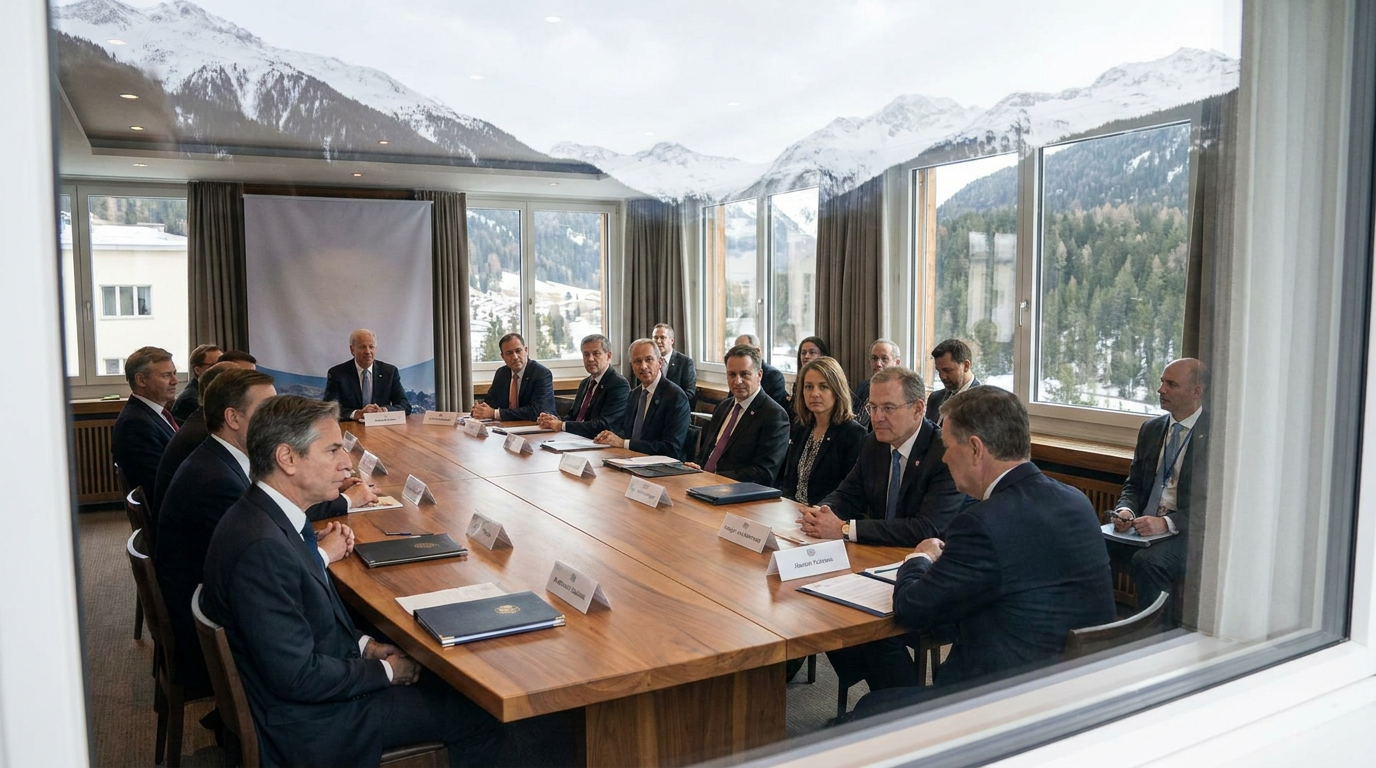
As the technical teams from the United States, Iran, Pakistan, and Qatar sit down at the negotiating tables in Bürgenstock, the clock is relentlessly ticking on the 60-day ceasefire. The negotiators face the monumental task of bridging massive geopolitical divides, translating vague preliminary commitments into binding, verifiable treaties. Every day of the negotiation window will be tested by events on the ground in the Middle East, where a single miscalculated strike could instantly shatter the diplomatic progress achieved thus far.[1][7]
Both sides have issued stark, uncompromising warnings about the catastrophic consequences of failure. President Trump has threatened to impose heavy U.S. tolls on all shipping through the Strait of Hormuz if a final nuclear deal is not reached within the 60-day timeframe, a move that would severely disrupt global trade. Conversely, Iranian officials have warned that they stand ready to shut the vital waterway entirely and resume hostilities if Israel continues its military strikes in Lebanon, leaving the fate of the global economy hanging in the balance.[3][6]
How we got here
February 2026
Joint U.S.-Israeli strikes on Iran mark the beginning of the war.
June 2026
The U.S. and Iran digitally sign the 14-point Islamabad Memorandum to halt hostilities.
June 19, 2026
Initial talks in Switzerland are postponed following a flare-up of violence between Israel and Hezbollah in Lebanon.
June 20, 2026
U.S. Vice President JD Vance and Iranian negotiators arrive in Switzerland to begin the 60-day technical negotiation sprint.
Viewpoints in depth
The U.S. Administration's View
Trump and Vance view the preliminary deal as a historic victory that ends a costly war and secures global energy markets.
The Trump administration argues that the 60-day window provides the necessary leverage to permanently dismantle Iran's nuclear ambitions while stabilizing the Strait of Hormuz. U.S. negotiators believe that by offering phased sanctions relief and unfreezing assets for humanitarian use, they can incentivize Tehran to allow IAEA inspectors back into critical facilities like Fordow and Natanz. They view Israel's ongoing operations in Lebanon as an unnecessary risk that threatens to unravel the broader strategic victory.
The Israeli Government's View
Netanyahu and his cabinet view the U.S.-Iran deal as a dangerous capitulation that enriches a hostile regime.
The Israeli security establishment argues that lifting the naval blockade and unfreezing billions of dollars in assets will only serve to enrich Iran without permanently destroying its nuclear program. Israeli leaders insist they are not bound by the Islamabad Memorandum and refuse to halt military operations in southern Lebanon until Hezbollah is fully neutralized. They fear the U.S. is prioritizing short-term economic stability over the long-term existential security of its closest Middle Eastern ally.
The Iranian Government's View
Tehran views the agreement as a necessary step to relieve crippling economic pressure, but demands an end to allied strikes.
Iranian leadership sees the lifting of the U.S. naval blockade as a critical victory that will allow the country to export oil and stabilize its economy. However, Tehran insists that the deal is entirely contingent on a complete cessation of Israeli strikes in Lebanon, interpreting the memorandum's call for an end to hostilities as applying to all U.S. allies. Iranian officials have threatened to close the Strait of Hormuz and walk away from the nuclear talks if Israel continues its military campaign.
What we don't know
- Whether Iran will actually allow IAEA inspectors back into the heavily fortified Fordow and Natanz nuclear facilities.
- How the U.S. will respond if Israel launches a major ground offensive into southern Lebanon during the 60-day window.
- Whether the unfreezing of Iranian assets in Qatar will be strictly limited to humanitarian purchases or diverted to regional proxies.
Key terms
- Islamabad Memorandum
- The 14-point preliminary ceasefire agreement signed by the U.S. and Iran, mediated by Pakistan.
- Strait of Hormuz
- A crucial waterway between the Persian Gulf and the Gulf of Oman through which a significant portion of the world's oil passes.
- IAEA
- The International Atomic Energy Agency, the UN watchdog responsible for monitoring global nuclear facilities.
- Highly Enriched Uranium
- Uranium that has been processed to a purity level that brings it closer to weapons-grade material.
Frequently asked
Why are the U.S. and Iran meeting in Switzerland?
U.S. and Iranian delegations are meeting to negotiate the technical details of the Islamabad Memorandum, a preliminary deal aimed at permanently ending their recent war.
What does the preliminary deal include?
The U.S. agreed to lift its naval blockade on Iran, while Iran agreed to keep the Strait of Hormuz open toll-free and enter 60 days of talks regarding its nuclear program.
Why is Israel unhappy with the agreement?
Israeli leaders argue the deal will enrich Iran without permanently destroying its nuclear capabilities, and they refuse to abide by the deal's mandate to cease military operations in Lebanon.
Will Iran's frozen assets be released?
If technical benchmarks regarding nuclear inspections are met, the U.S. is prepared to unfreeze billions of dollars in Iranian assets held in Qatar for humanitarian use.
Sources
Source coverage
8 outlets
3 viewpoints surfaced








[1]CBS NewsU.S. Administration & Mediators
Vice President JD Vance departs for Switzerland for US-Iran talks
Read on CBS News →[2]The Washington PostU.S. Administration & Mediators
U.S. intelligence warns Netanyahu may undermine Iran peace deal
Read on The Washington Post →[3]The Times of IsraelIsraeli Security Establishment
Heading to Iran talks, Vance says hoping for progress on Lebanon ceasefire and nuclear issue
Read on The Times of Israel →[4]The GuardianIranian Leadership
Trump declares US-Iran peace deal 'all signed' as G7 leaders battle to tie up loose ends
Read on The Guardian →[5]PBS NewsIsraeli Security Establishment
Israelis angry over U.S.-Iran peace deal lash out at Netanyahu
Read on PBS News →[6]Fox NewsU.S. Administration & Mediators
Vance travels to Switzerland for talks as Iran negotiators arrive
Read on Fox News →[7]Radio Free Europe / Radio LibertyU.S. Administration & Mediators
US-Iran Talks Revived As Vance Heads To Switzerland For High-Stakes Push
Read on Radio Free Europe / Radio Liberty →[8]AxiosU.S. Administration & Mediators
Trump to Axios: Netanyahu has 'no judgment' but Iran deal still on
Read on Axios →
More in news politics
See all 6 stories →US-Iran Negotiations
U.S. and Iranian Delegations Arrive in Switzerland to Finalize War-Ending Accord
8 sources
Vehicle Emissions
EPA Transmits California Emissions Waivers to Congress for Repeal Amid Sweeping Climate Lawsuits
8 sources
US-Iran Conflict
U.S. and Iranian Delegations Open High-Stakes Ceasefire Negotiations in Switzerland
7 sources
U.S.-Iran Relations
U.S. and Iran Open High-Stakes Peace Talks in Switzerland: What to Know
8 sources
Every angle. Every day.
Get news politics stories with full source coverage and perspective breakdowns delivered to your inbox.