
The 'Tony Effect': How Winning Best Musical Transforms a Broadway Show's Financial Trajectory
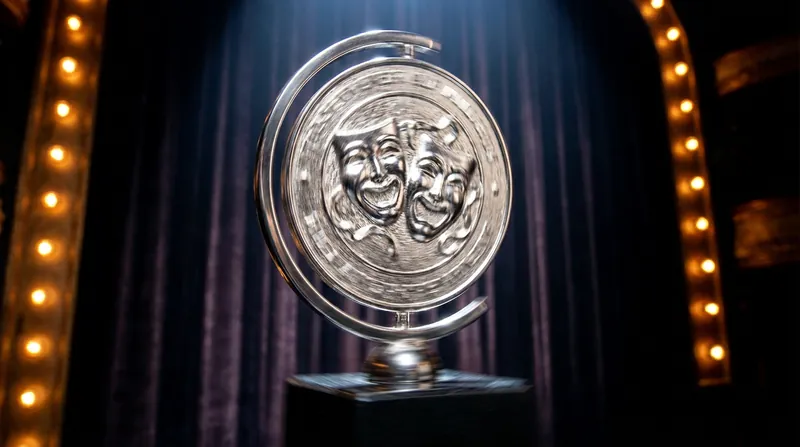
Beyond the prestige of the silver medallion, winning a Tony Award for Best Musical triggers a massive economic windfall, boosting box office grosses by an average of 35% and extending a production's lifespan by up to a year and a half.

The 79th Annual Tony Awards recently concluded at Radio City Music Hall, crowning the stage adaptation of Schmigadoon! as Best Musical and capping off a historic, record-breaking $1.91 billion season for Broadway. While the glamorous ceremony is celebrated globally as the absolute pinnacle of live theatrical achievement, the spinning silver medallions handed out to producers represent something far more tangible than mere artistic validation or industry prestige.
In the high-stakes ecosystem of commercial theater, a Tony Award—particularly the top prize for Best Musical—is a critical economic catalyst. It serves as the ultimate marketing engine, capable of transforming a struggling production into a sold-out sensation and turning a modest hit into a global, billion-dollar franchise. For the investors backing these shows, the award is often the difference between a total financial loss and a lucrative multi-year run.[3]
To truly understand the phenomenon known as the "Tony Effect," one must first examine the staggering costs associated with mounting a modern Broadway production. The initial capitalization required to bring a competitive new musical to the stage typically ranges between $12 million and $25 million. This massive upfront expenditure must be secured long before the first paying audience member ever takes their seat.
This capitalization is deployed across several critical vectors. It covers the fabrication of elaborate scenic designs, complex audio and lighting infrastructure, and intricate costume manufacturing. Furthermore, it pays for weeks of union-mandated rehearsal salaries for the cast, crew, and creative team, alongside high-visibility advance marketing campaigns designed to build brand awareness in a crowded entertainment market.
Once the curtain finally rises and the show enters its operational phase, the financial focus shifts entirely to a metric known as the Weekly Break-Even (WBE) point. The WBE represents the absolute minimum box office gross a production must earn every eight-performance week just to cover its ongoing running costs, which include theater rent, weekly salaries, and advertising minimums.
Because operating a Broadway theater is incredibly resource-intensive, a standard musical requires filling 70% to 80% of its seating capacity simply to satisfy its WBE. This leaves a razor-thin margin for profit, making productions highly sensitive to even minor fluctuations in consumer demand, negative critical reviews, or seasonal tourism dips.
This precarious financial architecture is exactly why the Best Musical Tony Award is so fiercely contested. The announcement of a win functions as an immediate macroeconomic shock to a production's ticketing ecosystem, fundamentally altering its demand curve and providing a vital lifeline to shows hovering near their break-even point.
According to recent box office data analysis, Best Musical winners have averaged a massive 35% increase in ticket sales in the six weeks following the ceremony. This represents a significant jump from the 27% post-Tony boost that winners typically enjoyed prior to the pandemic, illustrating how much more weight the award carries in today's theatrical economy.[1]
The immediate windfall is easily visible in the weekly grosses following the broadcast. In the week immediately after the 2026 ceremony, Schmigadoon! saw its box office take surge by $180,000, while the Best Musical Revival winner, Ragtime, enjoyed a similarly impressive $130,000 bump, providing both productions with a comfortable cushion above their weekly operating costs.
However, the true financial power of the Tony Effect lies not just in selling a higher volume of tickets, but in fundamentally shifting the production's price elasticity of demand. Because the winning show is suddenly perceived by the public as a scarce, must-see cultural event, consumers' willingness to pay increases dramatically.[2]
Armed with the prestigious title of Best Musical, producers can systematically scale back promotional discount codes and increase the allocation and pricing of premium-tier seating. This ability to charge top dollar can extend a show's operational runway by anywhere from six months to a year and a half, providing the crucial time needed to recoup the initial capitalization.
Interestingly, the economic spoils of awards season have become increasingly concentrated on the ultimate winners. While simply being nominated for Best Musical used to provide a reliable 10% bump in grosses pre-2020, that "nominee bump" has shrunk to just 5% in the post-pandemic era, suggesting that modern audiences are concentrating their premium spending almost exclusively on the certified winners.[1]
So, who holds the keys to this financial kingdom? The fate of these multi-million-dollar enterprises rests in the hands of approximately 830 eligible Tony voters. This voting body is a diverse cross-section of the industry, including members of The Broadway League, the American Theatre Wing, theatrical unions, casting directors, and select theater critics.
The evaluation process begins with the Tony Awards Nominating Committee—a rotating group of about 50 theater professionals who are required to see every new Broadway production during the season to determine the initial slate of nominees. Their selections set the stage for the wider voting body to make the final, highly consequential decisions.
Once the nominations are set, the wider pool of 830 voters takes over the monumental task of selecting the winners. Crucially, voters are expected to attend all nominated productions before casting their ballots, logging their attendance in a secure online portal to maintain the integrity of the awards.
If a voter fails to see a nominated show in a specific category, they are strictly barred from voting in that category. This honor-system-backed rigor ensures that the final decision—and the millions of dollars in box office revenue that inevitably follow—is based on a comprehensive, peer-reviewed evaluation of the theatrical work.
Key points
- The 2025-2026 Broadway season concluded with a record-breaking $1.91 billion in total grosses.
- Mounting a competitive Broadway musical requires an upfront capitalization of $12 million to $25 million.
- Best Musical winners see an average 35% increase in ticket sales post-pandemic, up from 27% pre-2020.
- A Tony win allows producers to scale back discounts and increase the price of premium-tier seating.
What we don’t know
- Whether the shrinking box office bump for non-winning nominees will discourage producers from mounting risky, unconventional shows in the future.
- How long the current post-pandemic trend of audiences concentrating their spending exclusively on Best Musical winners will last.
How we got here
1947
The first Antoinette Perry Awards for Excellence in Theatre (Tony Awards) are held to recognize Broadway achievements.
1954
Voting eligibility is expanded beyond the American Theatre Wing board to include a wider array of working theater professionals.
2000s
The rise of the 'megamusical' solidifies the Best Musical Tony as a multi-million-dollar economic catalyst capable of launching global tours.
2020
The COVID-19 pandemic shuts down Broadway, fundamentally altering the economics and consumer ticket-buying habits upon its return.
June 2026
The 79th Tony Awards cap off a record $1.91 billion season, demonstrating the heightened financial stakes of the post-pandemic era.
- Commercial Producers
- Viewing the Tony Award as a critical financial tool to extend a show's run and achieve profitability.
- Theater Economists
- Analyzing the data-driven divide between the financial spoils of winning versus merely being nominated.
- The Voting Body
- Emphasizing the rigorous, artistic evaluation required to determine the industry's highest honors.
Perspectives this story doesn't cover
- Regional theater operators who rely on Tony-winning tours
- Broadway actors whose salaries and contract lengths depend on a show's survival
Sources
Source coverage
3 outlets
3 viewpoints surfaced



- [1]BroadwayWorldTheater Economists
Industry Pro Newsletter: The Tony Effect: Analyzing Post-Awards Ticket Data
Read on BroadwayWorld → - [2]ForbesCommercial Producers
‘Ragtime’ And ‘Schmigadoon!’ See Big Bumps In Business After Tony Wins
Read on Forbes → - [3]Claremont McKenna CollegeTheater Economists
Art of the Present: How Winning a Tony Award Affects Economics Outcomes of a Broadway Musical
Read on Claremont McKenna College →

More in Entertainment
See all →Film Honors
George Clooney to Receive Golden Lion for Lifetime Achievement at Venice Film Festival
3 sources

Awards Mechanics
The Math Behind the Magic: How the Oscars' Preferential Ballot Actually Works
3 sources

Broadway Theatre
How the Tony Awards Are Decided: Inside Broadway's Complex Voting Process
3 sources
Awards Mechanics
Behind the Ballot: How the Tony Awards Actually Decide Broadway's Best
3 sources

Comments
Every angle. Every day.
Get Entertainment stories with full source coverage and perspective breakdowns, free every day.