
The Mechanics of the Esports Winter Recovery: How Teams Found Profitability Beyond the Prize Pool
After a period of severe market correction, global esports organizations are achieving financial stability by pivoting away from venture capital reliance toward diversified digital revenue, B2B services, and long-term media planning.
By Meera Iyer

In 2022 and 2023, the competitive gaming industry hit a severe market correction. Colloquially dubbed the "Esports Winter," a sudden contraction in venture capital and a pullback in endemic marketing spend exposed the fragility of the ecosystem. Organizations that had scaled rapidly on the promise of massive future valuations suddenly found themselves burning cash with no clear path to profitability.[6]
The crisis forced a fundamental reckoning. For years, the standard operating model relied heavily on two volatile income streams: tournament prize money and sponsorships from hardware manufacturers. When the macroeconomic environment tightened, that model collapsed, leading to widespread layoffs, team closures, and a drastic reevaluation of what it means to run a sustainable competitive gaming organization.[2][6]
Today, the landscape looks markedly different. The organizations surviving—and now thriving—have fundamentally restructured their financial foundations. The recovery is not being driven by a sudden influx of new venture capital, but by a pivot toward operational resilience, long-term planning, and radically diversified revenue streams.[7]
The shift begins with how teams view their own product. The most successful organizations no longer operate strictly as competitive rosters; they function as hybrid media conglomerates and tech service providers. This evolution allows them to monetize their brand equity even when their teams are not actively competing or winning championships.[2]
A primary driver of this new stability is the expansion into B2B (business-to-business) services. Organizations are leveraging their production capabilities, studio spaces, and deep understanding of digital audiences to create white-label content for other brands. For instance, London-based Guild Esports saw its creative agency division revenues jump by over 500% in a single six-month period, significantly offsetting broader market challenges and reducing overall cash burn.[3]
Similarly, the approach to sponsorships has matured. The industry is moving away from short-term, logo-slap deals with endemic hardware brands toward long-term, integrated partnerships with non-endemic financial, automotive, and lifestyle companies. These multi-year agreements provide the predictable recurring revenue necessary for sustainable long-term planning.[2]
Digital items and direct-to-consumer monetization represent the second major pillar of the recovery. Historically, publisher-run leagues captured the lion's share of in-game revenue. Now, revenue-sharing agreements and team-branded digital cosmetics are providing scalable, high-margin income.[1]
European powerhouse Fnatic demonstrated the viability of this model, generating millions in digital-item takings in recent years. Because the marginal cost of distributing a digital sticker or in-game skin is effectively zero, these revenue streams flow almost entirely to the bottom line, providing a crucial buffer against the high fixed costs of player salaries and facility maintenance.[1]
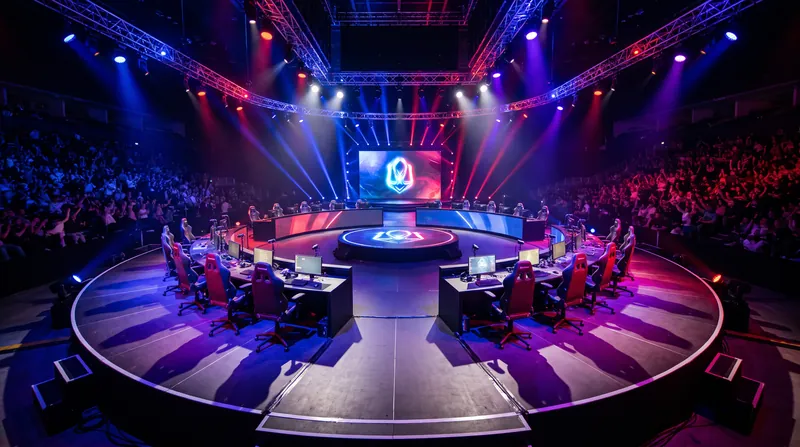
The physical footprint of esports is also evolving. Rather than relying solely on massive, publisher-funded arena events, organizations are investing in localized physical infrastructure. Multi-purpose esports facilities, LAN centers, and retail spaces serve as community hubs that generate year-round ticketing, merchandise, and food-and-beverage revenue independent of the global tournament circuit.[2]
This localized approach mirrors the multi-club models seen in traditional sports. By building physical districts and community epicenters, teams create tangible assets that sit outside traditional revenue-sharing models. It transforms fans from passive digital viewers into active, paying participants in a local ecosystem.[5]
Furthermore, organizations are adopting stricter financial governance. The era of inflated player salaries funded by speculative investment has given way to performance-based contracts and rigorous cost controls. Teams like ENCE have proven that it is possible to achieve record net profits and maintain top-tier competitive rosters without relying on external venture capital funding.[4]
The role of publishers is also shifting to support this new reality. Recognizing that a healthy ecosystem requires financially stable teams, publishers are granting league operators and organizations more autonomy to secure sponsorships and monetize their intellectual property. This collaborative approach is essential for reducing the friction that previously stifled team-level profitability.[6]
Despite these positive trends, significant challenges remain. The industry is still heavily dependent on the policies of a few major game publishers, and standard commissions on in-app purchases continue to erode margins for digital goods. Regulatory scrutiny around digital assets and international data privacy also presents ongoing hurdles for global monetization strategies.[1]
Yet, the overarching narrative is one of maturation. The Esports Winter acted as a necessary stress test, stripping away unsustainable business practices and forcing the industry to professionalize. The organizations that have emerged from this period are leaner, more diversified, and better equipped to navigate the complexities of the modern digital economy.[6]
Ultimately, the financial health of global esports in 2026 is defined not by the size of its prize pools, but by the durability of its business models. By embracing B2B services, digital goods, and long-term non-endemic partnerships, the industry has laid a foundation that prioritizes sustainable growth over speculative scale.[7]
How we did this
- Method
- Comparative revenue stream analysis
- What we found
- The primary driver of esports organizational profitability has definitively shifted away from prize pools and endemic sponsorships toward B2B production services and direct-to-consumer digital goods, proving that sustainable margins require operating as media and tech companies rather than traditional sports teams.
- What we worked from
- Guild Studios B2B revenue growth: 537% increase to £586,000 — Esports News UK
- ENCE net profit without VC funding: €0.9 million — HLTV
- Limits of this analysis
- This analysis relies on publicly disclosed financials from a subset of organizations; privately held teams may have different revenue distributions, and publisher revenue-sharing agreements remain subject to change.
Key points
- The 'Esports Winter' forced a market correction, ending the era of rapid expansion fueled by speculative venture capital.
- Organizations are achieving profitability by diversifying into B2B production services and white-label content creation.
- Revenue-sharing for digital in-game items has become a high-margin, scalable income stream for top-tier teams.
- Teams are investing in physical infrastructure, such as LAN centers and retail spaces, to generate year-round local revenue.
Open questions
- How upcoming regulations regarding digital assets and in-app purchase commissions will impact team revenue margins.
- Whether mid-tier and grassroots organizations can successfully replicate the diversified media models of top-tier teams.
- The long-term impact of publisher-mandated franchise fees on the financial flexibility of newly profitable organizations.
Timeline
2018–2021
Rapid industry expansion fueled by abundant venture capital and inflated team valuations.
2022–2023
The 'Esports Winter' begins, characterized by a pullback in marketing spend, massive layoffs, and team closures.
2024
Organizations begin restructuring, focusing on cost controls and diversifying revenue beyond prize money.
2025
Digital item revenue sharing and B2B production services emerge as primary drivers of organizational profitability.
2026
The industry achieves a new baseline of financial stability, marked by long-term non-endemic sponsorships and operational maturity.
- Esports Organization Executives
- Team leaders prioritizing sustainable business models over rapid, unprofitable expansion.
- Game Publishers
- The intellectual property owners balancing ecosystem health with their own profitability.
- Industry Analysts
- Financial observers tracking the shift toward diversified revenue and operational maturity.
Perspectives this story doesn't cover
- Professional Esports Athletes
- Grassroots Tournament Organizers
Sources
Source coverage
7 outlets
3 viewpoints surfaced







- [1]Mordor IntelligenceIndustry Analysts
Online Strategy Games Market Analysis
Read on Mordor Intelligence → - [2]Esports InsiderEsports Organization Executives
Diversifying esports revenue streams: how are teams making money?
Read on Esports Insider → - [3]Esports News UKEsports Organization Executives
Guild Esports financial results for six months ending March 2024
Read on Esports News UK → - [4]HLTVEsports Organization Executives
ENCE records best-ever year financially
Read on HLTV → - [5]DeloitteIndustry Analysts
Sports Investment Outlook
Read on Deloitte → - [6]ESG LawGame Publishers
The Esports Winter
Read on ESG Law → - [7]Factlen Editorial TeamIndustry Analysts
Synthesis by Factlen editorial team
Read on Factlen Editorial Team →
More in Gaming & Esports
See all →Esports Economics
Riot Games Overhauls VCT for 2027, Introducing Open Qualifiers and Up to $5 Million Partner Stipends
4 sources
RLCS 2026
Team Falcons Sweep Spacestation Gaming to Win 2026 Rocket League World Championship
5 sources
Sponsorship ROI
The Three-Factor Model: How Esports Sponsorship Valuation Is Calculated Using Reach, Engagement, and Sentiment
4 sources
Team Finances
The 80% to 120% Range: How Player Salaries Dictate the Operating Margin of a Franchised Esports Team
5 sources
Comments
Every angle. Every day.
Get Gaming & Esports stories with full source coverage and perspective breakdowns, free every day.