
The Mechanics of the All-In Price: How New York City's Hidden Fee Ban Reshapes Hotel Booking Transparency
New York City has enacted a sweeping ban on hidden hotel 'junk fees,' requiring properties to display the true, all-in price of a room upfront. The mandate aims to eliminate checkout surprises and restore consumer trust ahead of the 2026 World Cup.

In short
- New York City has officially banned hidden hotel 'junk fees,' requiring all properties to display the total cost of a stay upfront.
- The mandate covers notoriously deceptive charges like 'resort fees' and 'destination fees,' wrapping them into the initial advertised rate.
- Hotels must now clearly disclose any mandatory credit card holds or advance deposits before a traveler finalizes their booking.
Picture checking out of a boutique hotel in Manhattan after a flawless weekend of exploring museums and dining out. You slide your credit card across the polished front desk, expecting to pay the $300-a-night rate you carefully booked online weeks ago.
Instead, you are handed a receipt artificially inflated by a $45 daily "destination fee" and a $100 unexpected hold on your account. For years, that checkout-desk sting has been a bitter, frustrating final note for travelers visiting New York City. But a sweeping new regulation is finally rewriting the script on how we plan and pay for our stays.
The era of the hidden hotel "junk fee" is officially coming to a close across the five boroughs. New York City Mayor Zohran Mamdani and the Department of Consumer and Worker Protection have enacted a comprehensive ban on drip-pricing within the hospitality sector, fundamentally altering how rooms are sold. The new rule mandates that any hotel advertising to consumers must display the true, all-in price of a room upfront, wrapping those notorious extra charges directly into the initial advertised rate before a traveler ever clicks through to book.[1][2]
This legislation takes direct aim at the creative and often misleading vocabulary of modern hotel billing. Charges commonly labeled as "resort fees," "destination fees," or "hospitality service fees"—which frequently claim to cover basic amenities like standard Wi-Fi, gym access, or bottled water—can no longer be quietly tacked on at the final stage of an online checkout. Instead, if a fee is mandatory for the guest to pay, it must be baked into the very first number a traveler sees when comparing options across different booking platforms.[1]
Crucially, the New York mandate goes significantly further than recent federal guidelines by targeting the invisible mechanics of the reservation process. Properties are now legally required to clearly and prominently disclose any mandatory credit card holds or advance deposits before a traveler finalizes their booking. It is a practical move designed to protect guests from finding their vacation budgets suddenly frozen mid-trip by undisclosed bank authorizations, a practice that has historically left many travelers unexpectedly short on available funds while navigating the city.[1][2]
The timing of this transparency push is highly intentional and deeply tied to the city's upcoming tourism calendar. With the 2026 FIFA World Cup poised to bring well over a million visitors to the New York and New Jersey region this summer, city officials are moving aggressively to shield international and domestic tourists from predatory pricing. By forcing hotels to compete on actual, bottom-line costs, the city hopes to preserve its reputation as a welcoming, accessible destination during one of the largest sporting events in history.[2][3]
Surprisingly, the regulation has found vocal allies within the hospitality sector itself, rather than facing universal pushback. Major hotel associations and hospitality workers' unions have voiced strong support for the measure, noting that it effectively levels the playing field for all businesses. For years, honest operators who displayed their full prices upfront were unfairly penalized in online search results, appearing artificially more expensive than competitors who hid their true costs until the final checkout screen, creating a race to the bottom in pricing transparency.[3]
Surprisingly, the regulation has found vocal allies within the hospitality sector itself, rather than facing universal pushback.
The city is not relying on the honor system to ensure that these new standards are met. The Department of Consumer and Worker Protection has signaled a strict enforcement regime, treating undisclosed fees as a deceptive trade practice under the city's robust Consumer Protection Law. Hotels and third-party booking platforms that fail to adapt their digital storefronts to the new all-in pricing model face significant financial penalties, ensuring that the new standard of transparency has real regulatory teeth behind it.[1]
For the everyday traveler, this regulatory shift means a welcome return to confident, stress-free vacation planning. Whether you are booking a luxury suite overlooking Central Park or a modest, budget-friendly room in Queens, the price you see on your screen is the exact price you will actually pay at the desk. It is a fundamental restoration of consumer trust that transforms the often-anxious process of securing accommodations into a straightforward, transparent exchange, allowing visitors to budget accurately for their trips.[3]
As the rule takes root in one of the world's most visited cities, travel advocates expect the New York mandate to serve as a powerful blueprint for other major global destinations currently grappling with consumer frustration over hidden costs. For now, visitors to the city can pack their bags with one less worry on their minds, knowing with absolute certainty that their carefully planned travel budget will stretch exactly as far as they intended it to.[2]
Ultimately, the ban on hidden hotel fees is about much more than just saving a few dollars; it is about preserving the joy and quality of the travel experience itself. By removing the friction, anxiety, and deception from the booking process, New York is ensuring that the lasting memories travelers take home are of spectacular Broadway shows, world-class dining, and iconic skyline views—not a frustrating fight over a surprise bill at the front desk on their way to the airport.[3]
Viewpoints in depth
Consumer Protection Advocates
Advocates view the ban as a necessary correction to deceptive pricing practices that exploit travelers.
For consumer watchdogs and city officials, the hidden fee ban is a long-overdue victory against predatory drip-pricing. They argue that 'junk fees' intentionally obscure the true cost of travel, making it impossible for consumers to comparison-shop effectively. By mandating all-in pricing and requiring upfront disclosure of credit card holds, advocates believe the city is not only saving travelers an estimated $46 million annually but also setting a new national standard for economic fairness in the hospitality sector.
Compliant Hotel Operators
Honest hoteliers welcome the rule for leveling the competitive playing field on booking platforms.
While regulatory crackdowns often face industry pushback, many hotel operators and hospitality unions have actively championed this mandate. For years, hotels that chose to display their full, honest prices upfront were penalized by online travel agencies' search algorithms, appearing artificially more expensive than competitors who hid their fees until checkout. Compliant operators argue that this new rule eliminates that disadvantage, rewarding transparency and forcing all properties to compete fairly on actual room quality and true bottom-line pricing.
- Consumer Advocates
- Advocates view the ban as a necessary correction to deceptive pricing practices that exploit travelers.
- Hospitality Industry
- Honest hoteliers welcome the rule for leveling the competitive playing field on booking platforms.
- Travel Analysts
- Analysts see the move as a crucial step in restoring trust between destinations and visitors.
Perspectives this story doesn't cover
- Online Travel Agencies (OTAs)
- Budget Travelers
Sources
Source coverage
3 outlets
3 viewpoints surfaced



- [1]City of New YorkConsumer Advocates
Mayor Mamdani, DCWP Commissioner Levine Announce Final Rule Banning Hotel Junk Fees
Read on City of New York → - [2]Time OutConsumer Advocates
NYC is officially coming for hotel “junk fees” and the timing is no accident
Read on Time Out → - [3]Factlen Editorial TeamTravel Analysts
Synthesis by Factlen editorial team
Read on Factlen Editorial Team →
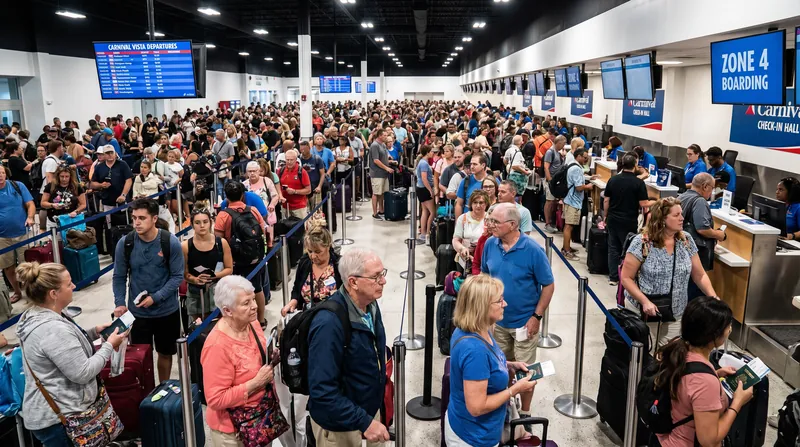
More in Travel
See all →O'Hare Capacity
The Mechanics of the Capacity Cut: How the FAA's Order to Slash 300 Daily Flights Reshapes Summer Travel at Chicago O'Hare
7 sources
Aviation Engineering
Why Airlines Cap Cabin Humidity Below 15 Percent to Prevent Fuselage Freezing
3 sources

Aviation Safety
The Biological Reason Airlines Dim Cabin Lights for the 90-Second Evacuation Window
3 sources

Border Policy
How the FinCEN 105 Form Dictates Currency Reporting Requirements at US Borders
6 sources
Comments
Every angle. Every day.
Get Travel stories with full source coverage and perspective breakdowns, free every day.