
The Mechanics of Geopolitical Shock: How the IMF's Global Growth Downgrade Reshapes the 2026 Economic Outlook
The IMF has revised its 2026 global growth forecast down to 3.1 percent following a severe energy supply disruption. Understanding the mechanics of this downgrade reveals how localized shocks transmit through global trade, and why a slower expansion still presents opportunities for resilient investors.

In short
- The IMF downgraded its 2026 global growth forecast from 3.4 percent to 3.1 percent due to geopolitical shocks.
- A 13 percent contraction in global oil supply is projected to drive energy commodity prices up by 19 percent.
- World trade volume growth is expected to slow to 2.8 percent as shipping routes face disruptions.
The global economy operates on a delicate equilibrium, where a disruption in one hemisphere can instantly rewrite the financial realities of another. In April 2026, the International Monetary Fund (IMF) delivered a stark reminder of this interconnectedness, issuing a comprehensive downgrade to its global growth forecast. The revision, detailed in the highly anticipated World Economic Outlook, lowered the projected 2026 global expansion rate from a robust 3.4 percent down to 3.1 percent.[1]
While a 0.3 percentage point reduction might appear modest on paper, in the context of a $100 trillion global economy, it represents hundreds of billions of dollars in lost output and delayed development. The catalyst for this recalibration was not a systemic financial failure or a sudden shift in consumer behavior, but a severe geopolitical shock. Escalating conflict in the Middle East effectively blocked critical transit routes and triggered a cascading economic event that forecasters are now rushing to quantify.[2][7]
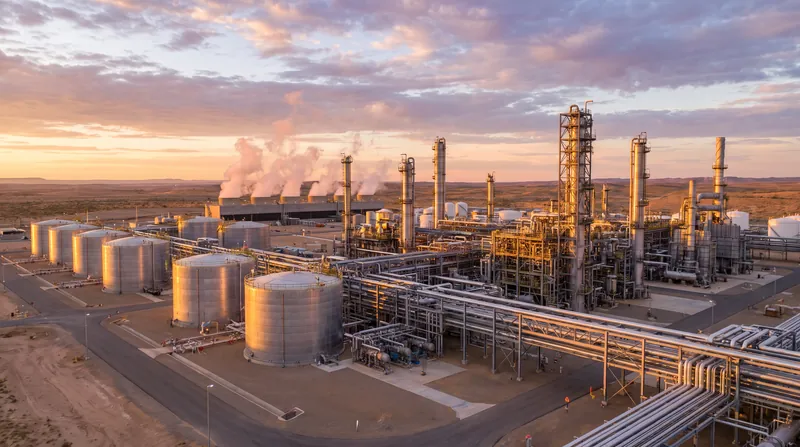
To understand how a regional conflict translates into a global economic downgrade, it is necessary to examine the mechanics of macroeconomic transmission. The IMF’s analysis reveals that the primary vector for this shock is the energy market. The hostilities effectively paralyzed the Strait of Hormuz, a vital maritime artery responsible for transiting roughly 20 percent of the world's oil and gas. This bottleneck resulted in an immediate 13 percent contraction in accessible global oil supplies.[1][4]
When the supply of a foundational commodity like crude oil contracts so violently, the effects are highly predictable but difficult to contain. The IMF projects that energy commodity prices will surge by 19 percent throughout 2026, with crude oil specifically jumping by 21.4 percent. This price spike acts as a universal tax on the global economy, draining capital away from productive investments and consumer discretionary spending, and redirecting it toward basic operational costs.[4]
This dynamic introduces the concept of an "asymmetric shock"—an event that strikes the global system but inflicts wildly uneven damage. Advanced economies with robust domestic energy production or significant strategic reserves can partially insulate themselves from the initial price surge. However, for net energy-importing nations, the shock is immediate and severe, instantly widening current account deficits and draining foreign exchange reserves as they are forced to pay a premium just to keep their electrical grids running.[6][7]
The secondary vector of the geopolitical shock is the disruption of global trade networks. As energy prices rise, the cost of maritime shipping and air freight increases in tandem. Furthermore, the physical risks associated with navigating conflict zones force commercial vessels to take longer, more expensive alternative routes around major continents. Consequently, the IMF expects world trade volume growth to plummet from 5.1 percent in 2025 to a sluggish 2.8 percent in 2026.[1][5]
This deceleration in trade is not merely a logistical headache; it is a primary driver of renewed inflationary pressure. Just as the global economy was beginning to celebrate the defeat of the post-pandemic inflation surge, the IMF now projects global headline inflation to reverse course and climb to 4.4 percent in 2026. This resurgence complicates the mandate of central banks worldwide, potentially forcing them to hold interest rates higher for longer than previously anticipated to prevent inflation from becoming entrenched.[1][2]
The transmission mechanism extends beyond energy and shipping, reaching directly onto the dinner plates of consumers worldwide. Modern agriculture is deeply intertwined with the energy sector, relying heavily on natural gas for the production of nitrogen-based fertilizers. As energy costs spike, fertilizer becomes more expensive, driving up the baseline cost of crop production before the harvest even begins.[3][7]
Combined with the increased cost of transporting harvested goods, this dynamic is expected to push global food prices significantly higher than the IMF had projected just months prior. The World Bank has echoed these concerns, warning that if the disruptions are prolonged, the resulting food inflation could push an additional 45 million people into acute food insecurity, transforming an economic modeling challenge into a tangible humanitarian crisis.[3][5]
The burden of this complex shock falls disproportionately on emerging market and developing economies. The World Bank revised its baseline growth estimate for these nations down to 3.65 percent for 2026, warning that a prolonged conflict scenario could drag that figure down to a mere 2.6 percent. These nations often lack the "fiscal space"—the budgetary flexibility—to subsidize energy and food costs for their citizens without triggering a sovereign debt crisis.[3][6]
Finance ministers from developing nations have emphasized that the combination of a strong US dollar, rising import costs, and tightening global financial conditions creates a perfect storm. Global financial institutions estimate that low-income and energy-importing countries may require between $20 billion and $50 billion in emergency liquidity support just to navigate the immediate fallout of the 2026 shock without defaulting on their international obligations.[1][3]
Faced with such a volatile and rapidly evolving situation, macroeconomic forecasting itself becomes an exercise in probability rather than certainty. The IMF acknowledged this reality by issuing a "reference forecast" for 2026, rather than its traditional baseline projection. This specialized modeling approach explicitly incorporates the impact of the war, operating under the assumption that the conflict will be limited in duration and intensity, with disruptions largely fading by mid-2026.[1]
IMF leadership has been transparent about the fragility of these assumptions, noting that the global economy has entered a world of elevated uncertainty. If the conflict proves protracted, or if it expands to encompass additional regional powers, the economic damage will deepen, requiring further downward revisions to growth and upward revisions to inflation. The models are highly sensitive to the duration of the Strait of Hormuz blockage.[1][2]
However, the mechanics of economic forecasting also require acknowledging upside risks. The IMF notes that if the geopolitical tensions resolve more rapidly than anticipated, the global economy could experience a swift rebound as supply chains normalize. Furthermore, the rapid integration of artificial intelligence and other technological advancements could generate unexpected productivity gains, potentially offsetting the drag created by higher energy and trade costs.[1][7]
Ultimately, understanding the mechanics of the IMF's downgrade is crucial for investors, policymakers, and consumers. A downgrade to 3.1 percent growth is not a declaration of a global recession; it is a recognition that the global economy is expanding against significant headwinds. It highlights the profound interconnectedness of modern supply chains and the enduring vulnerability of the global system to localized geopolitical shocks.[5][7]
By dissecting the transmission channels—from the Strait of Hormuz to the cost of fertilizer, and from shipping lanes to central bank interest rates—the abstract concept of a growth downgrade becomes a tangible sequence of cause and effect. This clarity empowers economic actors to navigate the uncertainty, adjusting portfolios, supply chains, and fiscal policies to build resilience against the inevitable shocks of a complex world.[6][7]
Definitions
- Reference Forecast
- A specialized economic projection based on specific assumptions about an ongoing, unpredictable event, used when a standard baseline model is impossible.
- Asymmetric Shock
- An unexpected disruption that affects different regions or sectors of the global economy unevenly, creating distinct winners and losers.
- Fiscal Space
- The room a government has in its budget to provide financial support or stimulus to its citizens without jeopardizing its long-term debt sustainability.
- Headline Inflation
- The raw, unadjusted inflation figure reported through a Consumer Price Index, which includes highly volatile components like food and energy prices.
Questions & answers
Does a global growth downgrade mean the world is entering a recession?
No. A downgrade to 3.1 percent means the global economy is still expanding and generating new wealth, just at a slightly slower pace than the previously projected 3.4 percent.
Why does a conflict in the Middle East affect global food prices?
Rising oil prices increase the cost of maritime shipping and the production of nitrogen-based fertilizers, which are heavily dependent on natural gas, directly driving up agricultural costs worldwide.
How long does the IMF expect this economic shock to last?
The IMF's current reference forecast assumes the disruptions will be limited in duration and scope, largely fading by mid-2026, though a prolonged conflict remains a significant downside risk.
What is an asymmetric economic shock?
It is an unexpected event that damages different regions unevenly. For example, an energy shock severely hurts nations that import all their oil, while countries with domestic energy production are partially insulated.
Analysis by camp
Macroeconomic Forecasters
Focuses on aggregate data models to project how localized disruptions alter the trajectory of the broader global economy.
Institutions like the IMF and the World Bank emphasize the mathematical ripple effects of the 13 percent oil supply contraction. They argue that while the global economy demonstrated remarkable resilience in 2025, the simultaneous shocks to energy markets, trade routes, and consumer confidence require a fundamental recalibration of expectations. By shifting from a standard baseline model to a scenario-driven 'reference forecast,' these forecasters prioritize mapping the structural transmission of the shock over predicting an exact endpoint.
Energy Market Analysts
Analyzes the physical bottlenecks in global commodities and their immediate pricing impact.
Energy analysts focus on the physical reality of the Strait of Hormuz disruption. They argue that the projected 21.4 percent increase in crude prices is not driven by speculative trading, but by a hard mathematical deficit in accessible supply. This camp emphasizes that until the physical flow of maritime energy is restored, no amount of central bank monetary policy can fully engineer a reduction in global headline inflation.
Structural Economists
Examines how asymmetric shocks expose underlying vulnerabilities in the global financial system.
Structural economists and researchers highlight the uneven distribution of the economic damage. They point out that a global average downgrade masks localized crises, particularly in emerging markets that lack the fiscal space to subsidize imported inflation. This perspective argues that the 2026 shock should serve as a catalyst for fundamentally restructuring global supply chains, pushing nations to build more resilient, localized energy and agricultural infrastructure to insulate against future geopolitical volatility.
- Macroeconomic Forecasters
- Focuses on aggregate data models to project how localized disruptions alter the trajectory of the broader global economy.
- Energy Market Analysts
- Analyzes the physical bottlenecks in global commodities and their immediate pricing impact.
- Structural Economists
- Examines how asymmetric shocks expose underlying vulnerabilities in the global financial system.
- Global Trade Observers
- Monitors the deceleration of maritime logistics and its effect on international commerce.
Perspectives this story doesn't cover
- Small business owners facing higher logistics costs
- Consumers in emerging markets experiencing acute food inflation
Sources
Source coverage
7 outlets
4 viewpoints surfaced



- [1]IMFMacroeconomic Forecasters
World Economic Outlook, April 2026: Global Economy in the Shadow of War
Read on IMF → - [2]Economy Middle EastEnergy Market Analysts
IMF warns of global growth downgrade following 13 percent oil supply contraction
Read on Economy Middle East → - [3]World BankMacroeconomic Forecasters
Global Economic Prospects: Heightened Tensions and Weakening Growth
Read on World Bank → - [4]U.S. Energy Information AdministrationEnergy Market Analysts
Short-Term Energy Outlook: Strait of Hormuz Disruptions
Read on U.S. Energy Information Administration → - [5]Bank for International SettlementsStructural Economists
Macroeconomic transmission of geopolitical shocks
Read on Bank for International Settlements → - [6]National Bureau of Economic ResearchStructural Economists
The Asymmetric Effects of Global Energy Shocks on Emerging Markets
Read on National Bureau of Economic Research → - [7]Factlen Editorial TeamStructural Economists
Synthesis by Factlen editorial team
Read on Factlen Editorial Team →

More in Finance
See all →Portfolio Mathematics
The Mathematical Mechanics of Volatility Drag on Compound Portfolio Growth
4 sources

Yen Intervention
US Pressure on Weak Yen Intensifies Intervention Threat After JPY Passes 158
5 sources

Quantitative Finance
How the Mathematical Constant 'e' Defines the Maximum Possible Effective Annual Rate
10 sources

Natural Gas
Expand Energy Closes $1.25 Billion Twin Eagle Acquisition, Creating Integrated Natural Gas Giant
7 sources
Comments
Every angle. Every day.
Get Finance stories with full source coverage and perspective breakdowns, free every day.