
Proposed 10 Percent Universal Tariffs and 60 Percent China Duties Alter Global Trade
As proposals for universal baseline tariffs and renegotiated defense pacts gain traction, economists and strategists are debating the long-term mechanics of a shift away from globalized free trade.

Share this story
The global economic order established in the aftermath of World War II is currently facing its most significant structural and philosophical challenge in decades. At the center of this geopolitical shift is a resurgent framework of economic nationalism, characterized by aggressive proposals for universal baseline tariffs and a fundamental reevaluation of international defense alliances.
Rather than viewing global integration as an inherent good, this emerging paradigm treats international trade and collective security as transactional arenas where national leverage must be maximized. As policymakers and markets brace for potential disruptions, economists and strategists are fiercely debating the long-term mechanics of a systemic pivot away from the free-trade consensus that has defined the last half-century.[1][2]
The most prominent and controversial mechanism driving this economic debate is the proposed implementation of a 10 percent universal baseline tariff on all imported goods entering the United States, coupled with a heavily targeted 60 percent tariff specifically aimed at imports from China. If enacted, this would represent the most dramatic escalation of protectionist trade policy since the Smoot-Hawley Tariff Act of 1930.
The sheer scale of these proposals has forced global supply chain managers to model unprecedented scenarios, as a universal baseline tariff would apply indiscriminately to allies and adversaries alike, fundamentally altering the cost calculus for virtually every manufactured product and raw material crossing the border.[1][3]
To fully grasp the stakes of this policy shift, it is necessary to examine the precise mechanics of how tariffs function in practice. A tariff is essentially a tax levied on foreign goods at the point of entry.
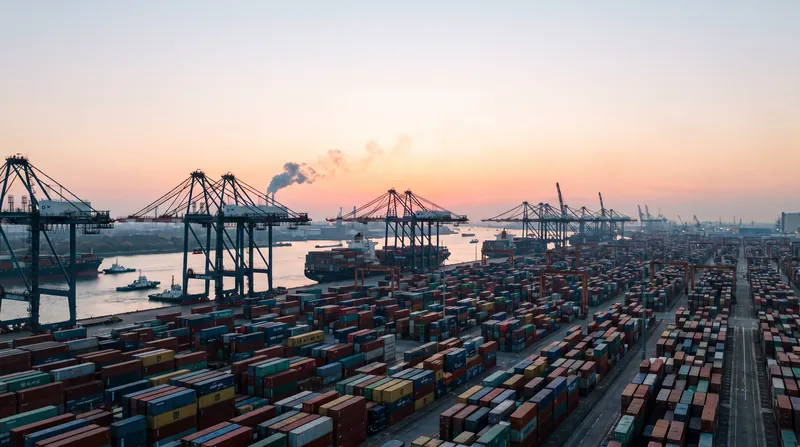
Contrary to common political rhetoric, which often implies that the exporting country's government pays these fees, tariffs are actually paid directly by the domestic importing companies to national customs authorities. When a shipment of electronics or automotive parts arrives at a port, the importing firm must pay the designated percentage of the cargo's assessed value before the goods can legally enter the domestic market.
Once the importer pays this border tax, the increased cost of acquiring the goods is almost universally passed down the supply chain. The importer charges the distributor more, the distributor charges the retailer more, and ultimately, the everyday consumer absorbs the price hike at the cash register.
The Peterson Institute for International Economics has calculated that a universal 10 percent tariff would function as a highly regressive consumption tax, disproportionately impacting lower- and middle-income households who spend a larger share of their earnings on basic imported goods like clothing, electronics, and food.
However, advocates of economic nationalism argue that this localized price friction is a necessary feature of the policy, rather than a bug. By artificially raising the cost of foreign goods, tariffs are explicitly designed to make domestically manufactured products more price-competitive by comparison. Proponents point to the steady erosion of the industrial base over the last forty years, arguing that the bipartisan pursuit of free trade prioritized cheap consumer goods and corporate profit margins at the direct expense of domestic manufacturing capacity, community stability, and wage growth for working-class citizens.[2][4]
From this nationalist perspective, relying on foreign nations—especially geopolitical rivals—for critical goods is a profound vulnerability that outweighs the benefits of lower prices. By erecting a tariff wall, the goal is to force multinational corporations to relocate their supply chains and manufacturing facilities back within national borders, thereby rebuilding the industrial commons and creating robust domestic employment. Supporters argue that the short-term inflationary pain is a worthwhile investment for long-term economic sovereignty and resilience against global supply shocks.[4]
Mainstream economists and free-trade advocates counter that the modern global economy is far too integrated for such a blunt instrument to succeed without causing severe collateral damage. Many domestic manufacturers rely heavily on imported raw materials, specialized components, and intermediate goods to produce their final products. If a domestic automaker has to pay 10 percent more for imported steel, microchips, or specialized machinery, the cost of manufacturing that vehicle domestically increases, potentially making American exports less competitive on the global market and leading to job losses in downstream industries.[3]
Beyond the immediate economic mechanics, the current iteration of economic nationalism explicitly links trade policy to geopolitical alliances, particularly the North Atlantic Treaty Organization (NATO). Historically, the United States treated its defense commitments and its trade policies on separate, parallel tracks. The new paradigm, however, treats them as deeply intertwined leverage points in a broader strategy of transactional diplomacy, where military protection is viewed less as a collective public good and more as a service that allies must adequately compensate.
This transactional approach involves explicitly threatening to withhold defense guarantees—or applying punitive trade measures—against allied nations that fail to meet the established NATO target of spending at least 2 percent of their Gross Domestic Product on their own defense. By leveraging the ultimate security guarantee, proponents of this strategy aim to force wealthy European nations to shoulder a larger burden of the alliance's costs, arguing that American taxpayers should not be subsidizing the defense of nations that run massive trade surpluses with the United States.[5]
Geopolitical strategists note that while this aggressive pressure tactic has successfully compelled several European nations to rapidly increase their military budgets over the past few years, it fundamentally alters the psychological nature of the alliance. The core of NATO is Article 5, the principle of collective defense which states that an attack on one member is an attack on all. When the credibility of that guarantee is made conditional on financial metrics or trade concessions, the deterrent effect against adversaries is potentially weakened, introducing dangerous ambiguity into global security calculations.[5]
In direct response to these intertwined trade and defense threats, European capitals are urgently accelerating discussions around "strategic autonomy." This concept posits that the European continent must develop the capability to defend itself, secure its own critical supply chains, and project power independently, without relying on the political whims of Washington. While achieving true strategic autonomy remains a distant and expensive goal, the mere pursuit of it signals a historic fracturing of the transatlantic consensus that has anchored Western foreign policy since 1945.
Simultaneously, trade ministries across the European Union, Asia, and the Americas are actively preparing contingency plans for retaliatory tariffs. If a universal baseline tariff is implemented, international trade law permits affected nations to levy reciprocal taxes on American exports. This dynamic threatens to ignite a cascading global trade war, where agricultural exports, technology services, and manufactured goods face escalating barriers worldwide, potentially depressing global economic growth and fracturing the world into isolated, competing economic blocs.[1][3]
The World Trade Organization (WTO), long the arbiter of international trade disputes, finds itself increasingly sidelined in this new era. As major powers prioritize national security exemptions and bilateral leverage over multilateral rule-making, the enforcement mechanisms of the WTO have been severely weakened. This shift away from a rules-based order means that future trade disputes are likely to be settled through raw economic power and retaliatory escalation, rather than through neutral arbitration and established legal frameworks.[2][5]
For emerging market economies, this transition is particularly perilous. Nations that built their development models on export-led growth and integration into global supply chains now face the prospect of being locked out of major consumer markets or forced to choose sides in a bifurcated global system. The disruption of established trade routes and the weaponization of tariffs threaten to stall poverty reduction efforts and destabilize economies that rely heavily on open access to international capital and consumer demand.[1]
Ultimately, the debate over economic nationalism and the disruption of alliances is a profound argument over the primary purpose of statecraft in the 21st century. While the post-Cold War consensus prioritized global economic integration, efficiency, and collective security architecture, the emerging nationalist framework prioritizes absolute national sovereignty, industrial self-reliance, and the aggressive use of bilateral leverage. As these two worldviews collide, the resulting policies will reshape the cost of living, the geography of manufacturing, and the balance of global power for generations to come.[2][4]
Open questions
- Whether a universal 10% tariff would be implemented via executive action or require congressional approval.
- Exactly how European and Asian allies would structure their retaliatory tariffs in response to a universal baseline tax.
- To what extent multinational corporations would actually relocate manufacturing to the US versus simply passing the tariff costs to consumers.
- How financial markets would price in the sudden disruption of established global supply chains.
- Whether the WTO has any remaining institutional power to mediate a trade dispute of this magnitude.
- Economic Nationalists
- Argue that tariffs are necessary to rebuild domestic manufacturing, protect wages, and reduce reliance on foreign adversaries.
- Free Trade Advocates
- Warn that universal tariffs act as a regressive tax on consumers, fuel inflation, and damage domestic industries that rely on imported materials.
- Geopolitical Strategists
- Focus on the diplomatic fallout, warning that linking trade to defense spending undermines the credibility of NATO's collective security guarantee.
Sources
Source coverage
5 outlets
3 viewpoints surfaced





- [1]ReutersFree Trade Advocates
Trump's universal tariff proposal: Mechanics and global reactions
Read on Reuters → - [2]BloombergEconomic Nationalists
Economic nationalism and the reshaping of US trade policy
Read on Bloomberg → - [3]The EconomistFree Trade Advocates
Protectionism's return: The cost of a 10% global tariff
Read on The Economist → - [4]Wall Street JournalEconomic Nationalists
Manufacturing advocates back tariff walls to rebuild industrial base
Read on Wall Street Journal → - [5]Financial TimesGeopolitical Strategists
NATO funding debates intertwine with global trade threats
Read on Financial Times →
More in Perspectives
See all →Trade Policy
Is the Suspension of the $800 De Minimis Rule the Quiet End of Affordable E-Commerce for American Shoppers?
2 sources
Data Privacy
Why the Commerce Department's Ban on Noise Infusion Will Halt Detailed Local Data
5 sources

Crime Statistics
Does the Historic 9.7% Plunge in Violent Crime Prove the Failure of 'Tough on Crime' Political Rhetoric?
4 sources

AI Policy
Is Banning Chinese Open-Source AI a National Security Imperative or a Self-Inflicted Wound on American Innovation?
7 sources

Comments
Every angle. Every day.
Get Perspectives stories with full source coverage and perspective breakdowns, free every day.