
The End of the 15-Page Federal Resume: How the New Two-Page Limit and Essay Mandate Work
The Office of Personnel Management has strictly capped federal resumes at two pages and introduced mandatory essay questions, fundamentally altering how candidates apply for government jobs.

For decades, applying for a job with the United States federal government meant submitting a document that looked less like a resume and more like a legal dossier. It was not uncommon for federal resumes to stretch to 10, 15, or even 20 pages, packed with exhaustive lists of duties, training certificates, and granular operational details.[2][4]
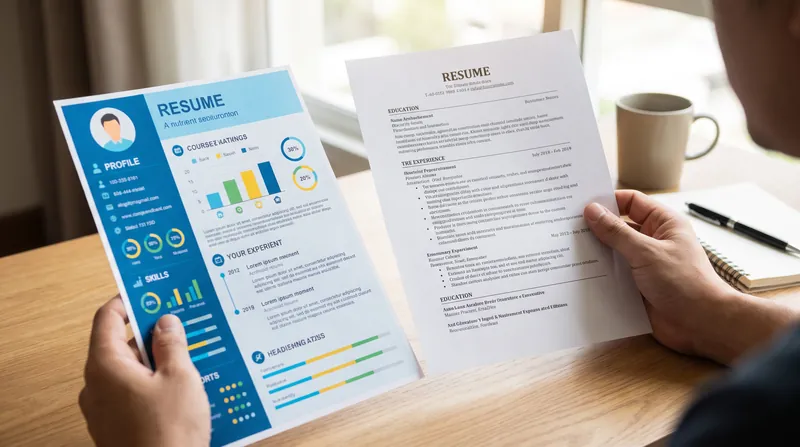
That era is officially over. Under the Office of Personnel Management's (OPM) Merit Hiring Plan—stemming from Executive Order 14170—the federal government has implemented a strict two-page limit for resumes submitted through USAJOBS.[1][5]
The mandate, which took full effect in late 2025 and is now strictly enforced across 2026 hiring campaigns, represents the most significant overhaul of federal recruiting in a generation. It is designed to modernize a sluggish hiring apparatus, reduce the average 101-day time-to-hire, and make federal service more accessible to private-sector professionals accustomed to brief applications.[1][4]
But the shift is not merely a formatting change; it is a structural reimagining of how candidates prove their worth. To compensate for the lost resume space, OPM has introduced a new requirement for all positions at the GS-05 level and above: four mandatory 200-word essay questions.[1][8]
Understanding the mechanics of this new system is now the single most critical factor for anyone seeking federal employment. The two-page limit is not a suggestion or a preference—it is a hard system constraint.[3][5]
USAJOBS has been reprogrammed to block the upload or creation of resumes that exceed the two-page threshold. Furthermore, OPM guidance explicitly instructs agency human resources specialists that if a longer resume somehow bypasses the system, the applicant must be immediately removed from consideration.[1][3]
There is no human review of page three. Anything beyond the second page is legally invisible to the hiring manager, meaning critical qualifications listed at the end of a traditional long-form resume will result in an automatic disqualification for failing to meet minimum requirements.[3][7]
This hard cap forces a radical change in how applicants present their Knowledge, Skills, and Abilities (KSAs). Historically, federal job seekers were advised to copy and paste extensive lists of duties directly from the job announcement to ensure they hit every required keyword.[3][6]
With only two pages available, that strategy is now structurally impossible. Career coaches and federal resume writers emphasize that every line must now serve a dual purpose. Applicants must use precise, measurable language that embeds KSAs into impact-driven accomplishment statements rather than generic task lists.[3][6]
The focus has shifted entirely from responsibilities to results. Hiring managers are looking for quantifiable metrics—how much money was saved, how much efficiency was gained, and what specific projects were delivered—condensed into a format that mirrors private-sector executive resumes.[6][8]
To ensure formatting tricks are not used to circumvent the limit, agencies require standard readability. Shrinking fonts to 8-point or pushing margins to the edge of the paper will likely result in the resume being flagged as illegible and discarded. The standard remains a minimum of 10-point font with half-inch margins.[5][6]
While the resume has shrunk, the application process has expanded in a new direction. The introduction of the four mandatory essay questions for GS-05 and above is designed to capture the narrative context that was previously buried in 15-page resumes.[2][8]
These 200-word essays focus on four specific themes: the applicant's commitment to the U.S. Constitution, their ideas for improving government efficiency, their alignment with significant Executive Orders, and how their work ethic has driven their achievements.[1][8]
According to OPM, these essays are not formally scored or rated in the same way technical KSAs are evaluated. Instead, they function similarly to a highly structured cover letter, providing hiring managers with insight into a candidate's motivations, communication skills, and dedication to public service.[2][8]
The dual reform—shrinking the resume while adding targeted essays—aims to level the playing field. For years, the complexity of the federal resume acted as a barrier to entry for talented private-sector workers who simply did not know the unwritten rules of federal formatting.[1][2]
By aligning the resume requirement with private-sector norms, the government hopes to attract a broader pool of talent, particularly in high-demand fields like technology, cybersecurity, and engineering. However, the transition has proven challenging for veterans and long-time civil servants who must now distill decades of complex, specialized experience into a fraction of the space.[4][7]
Key points
- The Office of Personnel Management now strictly limits all federal resumes submitted through USAJOBS to a maximum of two pages.
- Resumes exceeding the two-page limit are automatically blocked by the system or discarded by human resources, resulting in disqualification.
- Applicants for positions at GS-05 and above must now complete four 200-word essay questions covering constitutional values and work ethic.
- The reforms aim to reduce the government's 101-day average time-to-hire and attract private-sector talent deterred by complex applications.
What we don’t know
- It remains unclear if the two-page limit will provide hiring managers with enough technical detail to make informed interview decisions for highly specialized scientific or engineering roles.
- The long-term impact of the essay questions on candidate screening is still unknown, particularly regarding how agencies will weigh these responses against technical qualifications.
How we got here
January 2025
Executive Order 14170 is signed, mandating sweeping reforms to modernize the federal hiring process.
May 2025
OPM releases the Merit Hiring Plan, officially outlining the upcoming two-page resume limit and essay requirements.
September 2025
USAJOBS implements the hard two-page restriction system-wide, blocking longer uploads.
2026
Federal agencies fully enforce the new standards, routinely disqualifying applicants who fail to adhere to the strict page limits.
- Federal Policymakers
- Argue the two-page limit modernizes hiring, reduces delays, and attracts private-sector talent.
- Career Strategists
- Emphasize the technical challenge of embedding mandatory keywords into a highly compressed format.
- Veterans & Job Seekers
- Welcome the end of exhaustive applications but express anxiety over translating complex careers into two pages.
Perspectives this story doesn't cover
- Private-Sector Recruiters
- Federal Hiring Managers
Sources
Source coverage
8 outlets
3 viewpoints surfaced








- [1]Office of Personnel ManagementFederal Policymakers
OPM Implements Two-Page Resume Standard to Streamline Federal Hiring
Read on Office of Personnel Management → - [2]ClearanceJobsVeterans & Job Seekers
Federal Hiring Reform: The End of the 10-Page Resume
Read on ClearanceJobs → - [3]ResumeYourWayCareer Strategists
The OPM Two-Page Rule: What It Means for Your KSAs
Read on ResumeYourWay → - [4]BestMilitaryResumeVeterans & Job Seekers
USAJobs Resume Length Limit in 2026
Read on BestMilitaryResume → - [5]FedAgentVeterans & Job Seekers
Two-Page Resume Requirement for Federal Jobs Starts September 27, 2025
Read on FedAgent → - [6]USDAFederal Policymakers
Tips for Preparing Your Two-Page Federal Resume
Read on USDA → - [7]Traverse JobsCareer Strategists
Navigating the New OPM Resume Rule
Read on Traverse Jobs → - [8]Links TechnologyCareer Strategists
Federal Hiring Changes! OPM's Plain Language Reform Means 2-Page Resumes & Essays
Read on Links Technology →
More in Careers & Work
See all →Hiring Algorithms
The Mechanics of Applicant Tracking Systems: How ATS Software Parses Resumes and What the Evidence Says About Optimization
7 sources

Hiring Trends
The Science of Resume Length: What the Evidence Says About One Page vs. Two Pages for Different Career Stages
5 sources

Hiring Trends
AI-Driven Resume Inflation Forces 81% of Employers to Shift to Skills-First Hiring
4 sources

Youth Labor Laws
Nebraska Law Allows $13.50 Youth Minimum Wage for 14- and 15-Year-Olds
6 sources

Comments
Every angle. Every day.
Get Careers & Work stories with full source coverage and perspective breakdowns, free every day.