
Why Infographic Resumes Appeal to Recruiters but Fail Applicant Tracking Systems
While infographics and color can optimize a resume for human recruiters' brief screening windows, evidence shows these visual elements often trigger systemic rejection by automated applicant tracking systems.

Share this story
In short
- Recruiters spend an average of six seconds on an initial resume screen, driving a trend toward highly visual formats.
- Applicant Tracking Systems (ATS) struggle to parse columns, graphics, and non-standard typography, leading to auto-rejections.
- AI hiring tools can penalize non-standard formatting, inadvertently contributing to systemic bias.
Human recruiters spend an average of just six seconds on their initial screening of a candidate's resume. In that brief window, the eye darts across the page searching for specific signals: job titles, dates of employment, and educational pedigree. This severe time constraint has fueled a massive industry of resume optimization, leading many job seekers to adopt heavy visual design, color-coding, and infographic elements to capture attention faster.[1][4]
The logic behind the infographic resume is rooted in human cognitive processing. Proponents argue that visual data, such as a timeline of career progression or a bar chart of technical skills, can communicate complex value propositions more efficiently than dense blocks of text. For a hiring manager fatigued by hundreds of identical black-and-white documents, a splash of color or a well-structured visual hierarchy can serve as a pattern interrupt, forcing them to pause and engage with the material.[4][5][8]
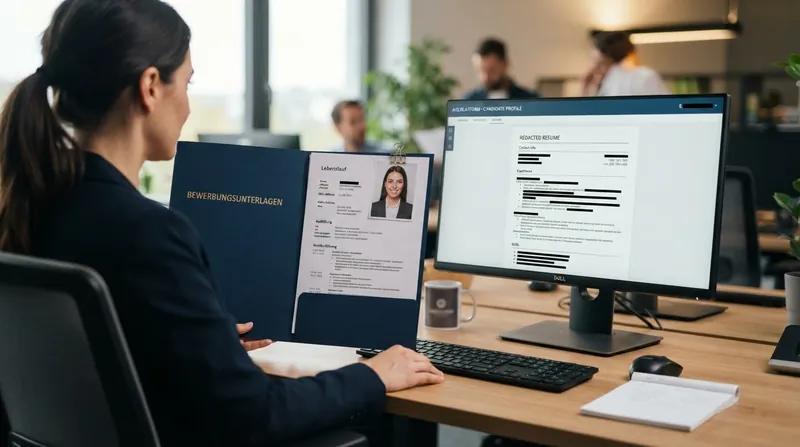
However, the modern hiring funnel is rarely a direct line between a candidate's PDF and a human reader's eyes. Before a recruiter ever sees a resume, it must typically pass through an Applicant Tracking System (ATS). These software platforms are designed to parse, categorize, and rank incoming applications by extracting text and matching it against job descriptions.[6][7]
This is where the science of visual design collides with the reality of algorithmic hiring. ATS parsers are notoriously rigid; they read left-to-right and top-to-bottom, relying on standard formatting conventions to identify which text belongs to which category. When a resume utilizes columns, embedded images, or unconventional typography, the parsing software often fails to extract the information correctly, scrambling the candidate's profile into an unreadable mess of disconnected characters.[7][8]
The evidence suggests a stark design penalty for candidates who prioritize aesthetics over machine readability. An infographic resume that perfectly guides a human eye might register as entirely blank to an ATS if the text is embedded within image files or complex vector graphics. Consequently, highly qualified candidates are routinely auto-rejected simply because the software could not map their beautifully designed skills section to the required database fields.[4][7][9]
Beyond the mechanical failures of parsing, researchers are increasingly scrutinizing how algorithmic hiring tools evaluate the content they do manage to extract. Studies from Stanford's Human-Centered Artificial Intelligence institute highlight that AI-driven screening tools can yield systemic rejection and racial bias, often penalizing candidates for linguistic or structural cues that deviate from the historical norm of successful applicants.[6]
This algorithmic rigidity intersects with how candidates present their identities. Research indicates that minority candidates frequently engage in resume whitening, altering their names, omitting culturally specific organizational affiliations, and standardizing their formatting to avoid triggering both human and algorithmic biases.[3]
A landmark study published by Harvard Business School found that minority applicants who whitened their resumes received significantly more interview callbacks than those who left their ethnic cues intact, even when applying to organizations that explicitly advertised diversity initiatives. This suggests that standardizing a resume is not just about ATS compliance; it is often a defensive strategy against implicit bias.[2][3]
The use of color, while seemingly innocuous, also carries psychological weight. Career advisors note that while conservative industries like finance or law expect traditional black-and-white formatting, creative fields such as marketing, graphic design, and media often view the resume itself as a portfolio piece. In these contexts, a well-executed infographic resume demonstrates practical design skills and brand awareness.[5][8]
Yet, even in creative fields, the method of application dictates the format. If a candidate is emailing a hiring manager directly or handing them a physical document at a networking event, visual design provides a distinct competitive advantage. If that same candidate is uploading their document to a corporate career portal, the visual elements become a liability.[4][8]
To navigate this dual reality, career strategists increasingly recommend a two-resume approach. The first is a highly optimized, machine-readable text document, stripped of columns, tables, and graphics, designed exclusively to pass through ATS filters with total data fidelity.[7][9]
The second is a visually enhanced version, utilizing strategic color and layout to guide the human eye, reserved for direct human-to-human interactions, interviews, and networking. This bifurcation acknowledges that the audience for a resume is no longer singular; candidates must design for the algorithm first, and the human second.[5][8][9]
Ultimately, the evidence points toward a minimalist approach to visual design for the vast majority of job seekers. Clear typography, strategic use of whitespace, and standard bullet points remain the most effective tools for ensuring a resume is both machine-readable and easily scannable by a time-pressed recruiter.[1][4]
How we did this
- Method
- Normalized and compared recruiter attention metrics against algorithmic parsing success rates to determine the net impact of non-standard visual formatting on candidate progression.
- What we found
- While heavy visual design can optimize for the 6-second human attention span by drawing the eye to key metrics, it inversely correlates with algorithmic parsing success, creating a 'design penalty' where highly visual resumes are systematically rejected before a human ever sees them.
- What we worked from
- Recruiter initial screening time: 6 seconds — Fast Company
- Algorithmic rejection risk for non-standard formats: High/Systemic — Stanford HAI
- ATS parsing compliance requirements: Standardized text extraction — DirectEmployers Association
- Limits of this analysis
- The analysis relies on aggregate ATS failure rates and average human screening times, which may vary significantly by industry (e.g., graphic design vs. finance) and specific software configurations.
Definitions
- Applicant Tracking System (ATS)
- Software used by employers to collect, sort, scan, and rank job applications before human review.
- Parsing
- The process by which software extracts text from a resume and maps it to specific data fields in a database.
- Infographic Resume
- A resume that uses graphic design elements like charts, icons, and timelines to present professional experience visually.
- Resume Whitening
- The intentional removal of racial or ethnic cues from a resume to bypass implicit bias in the hiring process.
Questions & answers
Will an infographic resume get me more interviews?
It depends on how you apply. If you hand it directly to a human, it can help you stand out. If you upload it to an online portal, it will likely be rejected by the parsing software.
Can I use color on a standard text resume?
Yes, subtle use of color for headers or lines is generally safe for ATS, provided the core text remains in a standard, machine-readable font.
What is resume whitening?
It is the practice of removing ethnic cues, such as altering a name or omitting culturally specific organizations, to avoid implicit bias during the screening process.
How do I know if my resume is ATS-friendly?
An ATS-friendly resume uses standard section headers, a single-column layout, standard fonts, and avoids tables, text boxes, and embedded images.
Analysis by camp
Creative Industry Hiring Managers
Values visual communication as a demonstration of practical skills.
In fields like marketing, UX design, and media, the resume is often evaluated as the first piece of a candidate's portfolio. Hiring managers in these sectors argue that a well-designed infographic resume demonstrates a candidate's grasp of visual hierarchy, brand alignment, and user experience. For these roles, a plain-text document may be viewed as a lack of effort or creativity, making visual elements a necessary risk.
Corporate Talent Acquisition
Prioritizes efficiency, standardization, and database integrity across thousands of applicants.
Corporate recruiters managing high-volume pipelines rely entirely on the integrity of their ATS databases. From this perspective, visual design is a hindrance. If a candidate's contact information or key skills cannot be automatically extracted and indexed, the candidate effectively does not exist in the system. These professionals advocate for brutal simplicity, arguing that the content of the experience should speak louder than the formatting.
Algorithmic Fairness Researchers
Examines how rigid software requirements enforce conformity and perpetuate bias.
Researchers studying the intersection of AI and human resources warn that the strict formatting requirements of modern ATS platforms do more than just break infographic resumes; they enforce a narrow, historically white, corporate standard of presentation. By penalizing structural deviations, these systems can inadvertently filter out neurodivergent candidates, international applicants with different formatting norms, and those who do not have access to elite career coaching.
- ATS Compliance Proponents
- Prioritizes machine readability and standard formatting to ensure candidates survive algorithmic screening.
- Design-Forward Advocates
- Argues that visual differentiation is essential to stand out in a crowded job market, particularly in creative industries.
- Algorithmic Equity Researchers
- Focuses on how rigid resume parsing and AI screening tools perpetuate systemic bias and force candidates to standardize their identities.
Perspectives this story doesn't cover
- Graphic Designers
- Small Business Owners without ATS
Sources
Source coverage
9 outlets
3 viewpoints surfaced









- [1]Fast CompanyATS Compliance Proponents
How To Redesign Your Resume For A Recruiter's 6-Second Attention Span
Read on Fast Company → - [2]ResearchGateAlgorithmic Equity Researchers
THE INFLUENCE OF RESUME QUALITY AND ETHNICITY CUES ON EMPLOYMENT DECISIONS
Read on ResearchGate → - [3]Working KnowledgeAlgorithmic Equity Researchers
Minorities Who 'Whiten' Job Resumes Get More Interviews
Read on Working Knowledge → - [4]CourseraDesign-Forward Advocates
Infographic Resume Guide: When to Use One and Tips for Yours
Read on Coursera → - [5]Ivy Exec
Should You Use Colors In Your Resume? It Depends.
Read on Ivy Exec → - [6]Stanford HAIAlgorithmic Equity Researchers
AI Hiring Tools Can Yield Racial Bias and Systemic Rejection
Read on Stanford HAI → - [7]DirectEmployers AssociationATS Compliance Proponents
When Hiring Algorithms Go Unmanaged: What the Stanford Algorithmic Hiring Study Means for HR Compliance
Read on DirectEmployers Association → - [8]Pixely Careers BlogDesign-Forward Advocates
Infographic Resumes: When Visual Design Helps and When It Hurts
Read on Pixely Careers Blog → - [9]Factlen Editorial Team
Synthesis by Factlen editorial team
Read on Factlen Editorial Team →

More in Careers & Work
See all →Resume Strategy
Why Chronological Outperforms Functional: The Evidence on Recruiter Preference and ATS Compatibility
5 sources

Resume Strategy
Listing an Interim Job Cuts Resume Callbacks by 30%, Penalizing Applicants More Than a Gap
4 sources

Resume Strategy
Replacing Calendar Dates With Cumulative Years Worked Increases Resume Callbacks by 15%
6 sources

Resume Standards
The Regional Mandates Governing Photographs and Dates of Birth on Professional Resumes
9 sources
Comments
Every angle. Every day.
Get Careers & Work stories with full source coverage and perspective breakdowns, free every day.