
The Biological Reason Locals Can Drink Tap Water That Sickens Travelers
Endemic populations develop specific mucosal antibodies that block local bacterial colonization factors. Without this secretory IgA, travelers lack the intestinal defense to prevent waterborne bacteria from attaching and releasing toxins.

In short
- Local residents possess a specific library of secretory IgA antibodies that physically block endemic bacteria from attaching to their intestinal walls.
- Travelers lack these targeted antibodies, allowing foreign bacteria like ETEC to colonize the gut and release diarrhea-inducing enterotoxins.
- This mucosal immunity is highly strain-specific, meaning a local resident can still fall ill if they travel to a different endemic region.
The human immune system sets the rules of engagement at the intestinal wall, deploying targeted antibodies to neutralize local bacteria before they can attach. For a resident drinking from their home tap, this defense is already fully briefed and active. For a newly arrived traveler, the system is flying blind until the first exposure.[1][4]
The disparity is not a matter of a generally stronger stomach, but a highly specific biological library. When a traveler visits a developing region and consumes local water, they often encounter enterotoxigenic Escherichia coli (ETEC). This pathogen accounts for approximately 80 percent of bacterial traveler's diarrhea cases worldwide, causing rapid dehydration and severe abdominal cramps.[2][3]
ETEC does not invade the intestinal cells directly. Instead, it relies on specialized surface structures called colonization factors to anchor itself to the gut lining. Once attached, the bacteria begin pumping out heat-labile and heat-stable enterotoxins, which force the intestinal cells to secrete massive amounts of water and electrolytes.[2]
For a local resident, this process is stopped before it can begin. Their immune system continuously produces secretory immunoglobulin A (sIgA), the predominant antibody type in the gut mucosa. These antibodies are custom-built to recognize the specific colonization factors of the endemic ETEC strains circulating in their immediate environment.[1][4]
The Mucosal Defense Network
Secretory IgA operates as a biological interceptor within the outer mucus layer of the intestine. When endemic bacteria enter the digestive tract, these antibodies bind directly to the pathogens' colonization factors. This physical blockade prevents the bacteria from adhering to the epithelial cells, rendering them unable to establish a foothold.[1][2]
Because the bacteria cannot attach, they are simply flushed out of the gastrointestinal tract during normal digestion. Furthermore, any enterotoxins that the bacteria manage to release are neutralized by the same sIgA antibodies. The local resident experiences no symptoms, entirely unaware that their immune system just defeated a pathogen.[1]
Travelers lack this specific immunological blueprint. While their bodies produce ample sIgA, those antibodies are calibrated to the microbial environment of their home country. When confronted with a foreign ETEC strain, the traveler's antibodies fail to recognize the novel colonization factors, allowing the bacteria to dock and multiply unopposed.[1][4]
The resulting infection triggers a rapid immune response, but building a new specific antibody takes time. During the three to five days it takes for the traveler's immune system to manufacture targeted sIgA, the bacteria freely release enterotoxins. The result is the acute, watery diarrhea that ruins countless vacations.[1][3]
The Mechanics of Enterotoxins
Once ETEC successfully anchors to the intestinal wall, the bacteria deploy their primary weapons. The heat-labile enterotoxin is a high-molecular-weight 84-kilodalton protein, while the heat-stable variant is a tiny peptide of just 18 to 19 amino acids. Both toxins interfere with the cellular machinery that regulates fluid balance, forcing the cells to expel chloride ions.[2]
Water rapidly follows the chloride ions into the intestinal lumen through osmosis. This sudden influx of fluid overwhelms the absorptive capacity of the large intestine. The resulting biological reaction is acute, secretory diarrhea, leading to rapid dehydration and severe prostration within just a few hours of the initial bacterial colonization.[2][3]
Secretory IgA intercepts this process at two distinct stages. First, by binding to the colonization factors, the antibodies keep the bacteria physically distant from the epithelial cells. Second, specific sIgA antibodies can bind directly to the enterotoxins themselves, neutralizing their toxic effects before they can alter the cells' fluid regulation.[1][2]
This dual-layered defense is what makes endemic immunity so robust. Even if a few bacteria manage to slip past the initial blockade and attach to the gut lining, the secondary anti-toxin antibodies prevent the severe fluid loss. The local resident maintains normal intestinal function while the traveler's system is entirely hijacked.[1][4]
Building the Antibody Library
Developing this localized immunity requires repeated, natural exposure to the specific pathogens in the environment. Community studies in endemic regions show that ETEC infections peak in early childhood, driving an estimated 100 million diarrhea episodes annually. By the time local children reach five to ten years of age, their infection rates drop significantly as their sIgA libraries become comprehensive.[1][2]
This protection is highly localized and strain-specific. If a resident of one endemic region travels to another continent, they may still fall ill from the local water. Their sIgA antibodies are perfectly tuned to the colonization factors of their home strains, but they remain vulnerable to the unique ETEC phenotypes found in the new destination.[1][4]
The protective effect of sIgA also explains why traveler's diarrhea is usually a self-limiting condition. As the traveler endures the illness, their immune system is actively analyzing the foreign bacteria. Within a few days, the gut mucosa begins secreting massive amounts of new, specific sIgA to clear the infection.[1][3]
"ETEC-infected diarrheal patients develop robust mucosal IgA antibodies specific to LT and CFs," notes a September 2026 immunological review published by MDPI. The review confirms that these locally produced antibodies inhibit bacterial adhesion and neutralize enterotoxins, eventually clearing the bacteria from the system within 14 to 21 days.[1][3]
The Limits of Local Immunity
While secretory IgA provides a powerful shield against familiar bacterial strains, it is not an impenetrable armor against all waterborne threats. The mucosal immune system relies on recognizing specific protein structures. If a water supply becomes contaminated with a completely novel pathogen, such as a new viral strain, both locals and travelers will fall ill.[4]
Furthermore, sIgA offers no protection against non-biological contaminants. Heavy metals, agricultural runoff, and industrial chemicals do not possess colonization factors for antibodies to bind. In areas where tap water is compromised by chemical pollution, the local population suffers from long-term health consequences, even if they never experience acute diarrhea.[4]
Parasitic infections also present a different challenge for the mucosal immune system. Pathogens like Giardia and Cryptosporidium have complex life cycles and robust outer shells that can evade simple antibody neutralization. While sIgA plays a role in managing these infections, it is often less effective than it is against bacterial colonization factors.[4]
The sheer volume of bacteria can also overwhelm the mucosal defenses. If a local resident consumes water with an exceptionally high bacterial load—perhaps following a flood or a failure at a treatment plant—the sheer number of pathogens can outpace the available sIgA. In these scenarios, the physical blockade fails, and infection takes hold.[4]
Implications for Travel and Medicine
Understanding the sIgA mechanism has shifted how medical researchers approach the prevention of traveler's diarrhea. Because the illness is driven by colonization factors rather than cellular invasion, developing a traditional systemic vaccine has proven difficult. A successful vaccine must stimulate the mucosal immune system to produce sIgA directly in the gut.[1][4]
Current clinical trials are focusing on oral vaccines designed to mimic natural ETEC exposure. By introducing harmless versions of the colonization factors to the intestinal lining, researchers hope to trick the traveler's immune system into building the necessary sIgA library before they ever board an airplane.[1]
Until such a vaccine becomes widely available, travelers must rely on behavioral interventions. Avoiding untreated tap water, ice cubes, and raw vegetables remains the most effective way to prevent ETEC exposure. The goal is to keep the bacteria out of the gastrointestinal tract entirely, bypassing the need for a mucosal defense.[3][4]
For the local resident, the daily glass of tap water is a testament to the adaptability of the human body. Their immune system performs a silent, continuous surveillance operation, deploying targeted antibodies to neutralize threats in real time. It is a biological privilege earned through a lifetime of environmental exposure.[4]
How we did this
- Method
- Synthesis of immunological mechanisms (secretory IgA binding) with epidemiological data (ETEC prevalence and traveler vs. local infection rates) to explain the biological disparity in waterborne illness susceptibility.
- What we found
- The 'iron stomach' of locals is not a generalized tolerance to dirty water, but a highly specific, continuously updated library of secretory IgA antibodies targeting the exact colonization factors of endemic bacterial strains—a library travelers fundamentally lack until after infection.
- What we worked from
- ETEC colonization factors (CFs) and enterotoxins mechanism: ETEC colonizes intestinal epithelial cells via CFs, and produces heat-labile (LT) and/or heat-stable (ST) enterotoxins. — NIH
- Mucosal IgA antibody response to ETEC: Locally produced SIgA antibodies on the mucosal surface inhibit bacterial adhesion, neutralize enterotoxins, and prevent colonization. — MDPI
- Limits of this analysis
- This analysis focuses on ETEC and secretory IgA; it does not account for other pathogens like Giardia, norovirus, or heavy metal contamination, which can sicken both locals and travelers regardless of mucosal immunity.
Key terms
- Secretory IgA (sIgA)
- The predominant antibody type found in mucosal secretions, such as the gut lining, which serves as the first line of defense against pathogens.
- Colonization Factors
- Specialized protein structures on the surface of bacteria that allow them to anchor to the intestinal wall.
- Enterotoxins
- Toxic proteins released by bacteria in the gut that force intestinal cells to secrete massive amounts of water and electrolytes.
- Enterotoxigenic Escherichia coli (ETEC)
- A specific type of E. coli bacteria that causes watery diarrhea by attaching to the gut lining and releasing enterotoxins.
Reader questions
Can a traveler eventually develop local immunity?
Yes, but it requires repeated natural exposure over a long period. Expatriates who move to endemic regions eventually build the necessary secretory IgA library, though they often endure several bouts of illness during the transition.
Does boiling the tap water make it safe for travelers?
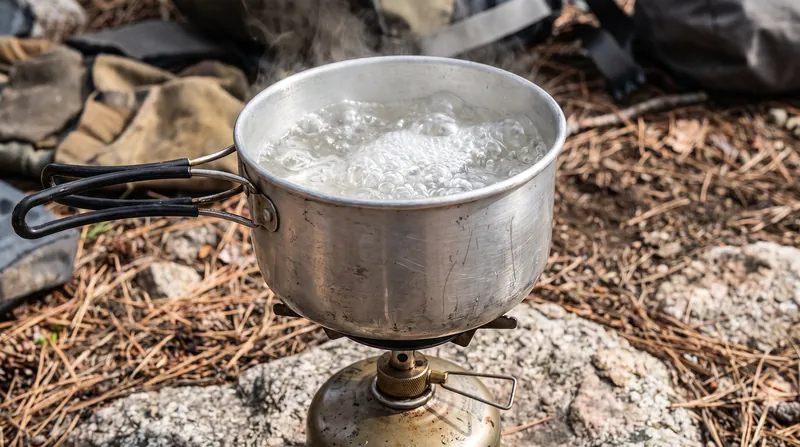
Yes. Boiling water kills the ETEC bacteria and denatures their colonization factors and enterotoxins, making the water safe to drink regardless of the traveler's mucosal immunity.
Why don't stomach acids kill the bacteria before they reach the gut?
While stomach acid neutralizes many pathogens, ETEC bacteria have evolved mechanisms to survive the acidic environment of the stomach long enough to reach the more hospitable small intestine where they colonize.
Where opinion splits
Immunologists' View
Focuses on the highly specific nature of mucosal antibodies and the mechanics of bacterial colonization.
Immunologists emphasize that the gut is not a passive tube, but an active immunological battlefield. They point to the precise binding action of secretory IgA as evidence that local immunity is not a generalized tolerance, but a highly targeted defense system. From this perspective, traveler's diarrhea is simply the biological consequence of a temporary mismatch between a person's antibody library and their immediate microbial environment.
Public Health Officials' View
Highlights the broader infrastructural challenges and the limits of biological immunity.
Public health experts caution against romanticizing the 'iron stomach' of local populations. They argue that relying on mucosal immunity masks severe infrastructural deficits in water sanitation. While sIgA protects locals from acute ETEC diarrhea, it offers no defense against heavy metals, industrial pollutants, or novel viral pathogens that often contaminate the same untreated water supplies.
Vaccine Researchers' View
Focuses on replicating the natural sIgA response through targeted oral vaccines.
Vaccine developers view the natural immunity of local residents as a biological blueprint. Because traditional injected vaccines fail to stimulate the mucosal immune system effectively, researchers are prioritizing oral vaccines that deliver harmless colonization factors directly to the gut. Their goal is to artificially induce the same robust sIgA production in travelers that locals acquire through years of natural exposure.
- Immunologists
- Focuses on the highly specific nature of mucosal antibodies and the mechanics of bacterial colonization.
- Public Health Officials
- Highlights the broader infrastructural challenges and the limits of biological immunity.
- Vaccine Researchers
- Focuses on replicating the natural sIgA response through targeted oral vaccines.
Perspectives this story doesn't cover
- Local residents suffering from non-bacterial water contamination
- Expatriates navigating the transition to local immunity
Sources
Source coverage
4 outlets
3 viewpoints surfaced




- [1]MDPIImmunologists
Immune Responses Against Natural ETEC Infection
Read on MDPI → - [2]NIHPublic Health Officials
Characteristics of the ETEC infection
Read on NIH → - [3]Cleveland ClinicPublic Health Officials
E. coli Infection
Read on Cleveland Clinic → - [4]Factlen Editorial TeamVaccine Researchers
Synthesis by Factlen editorial team
Read on Factlen Editorial Team →
More in Travel
See all →Aviation Traffic
Global Air Passenger Growth Stalls in Early 2026 as Middle East Traffic Drops 21%
4 sources

Scuba Physiology
The 1.4 ATA Limit and the 130-Foot Threshold: How Oxygen Toxicity and Nitrogen Narcosis Define Recreational Scuba Depth
9 sources

Food Authenticity
The 100% Sourcing and Processing Rule: How the EU's Protected Designation of Origin Actually Guarantees a Food's Geographical Authenticity
8 sources

Espresso Standards
The 9-Bar Standard: How the Italian Espresso Institute Actually Defines a Certified Espresso
4 sources

Comments
Every angle. Every day.
Get Travel stories with full source coverage and perspective breakdowns, free every day.