
Supreme Court Upholds Birthright Citizenship, Rejecting Challenge to 14th Amendment
In a 6-3 decision, the Supreme Court struck down a presidential executive order that sought to end automatic citizenship for children born in the U.S. to undocumented or temporary residents. The ruling reaffirms the long-standing interpretation of the 14th Amendment's Citizenship Clause.
By Factlen Editorial Team
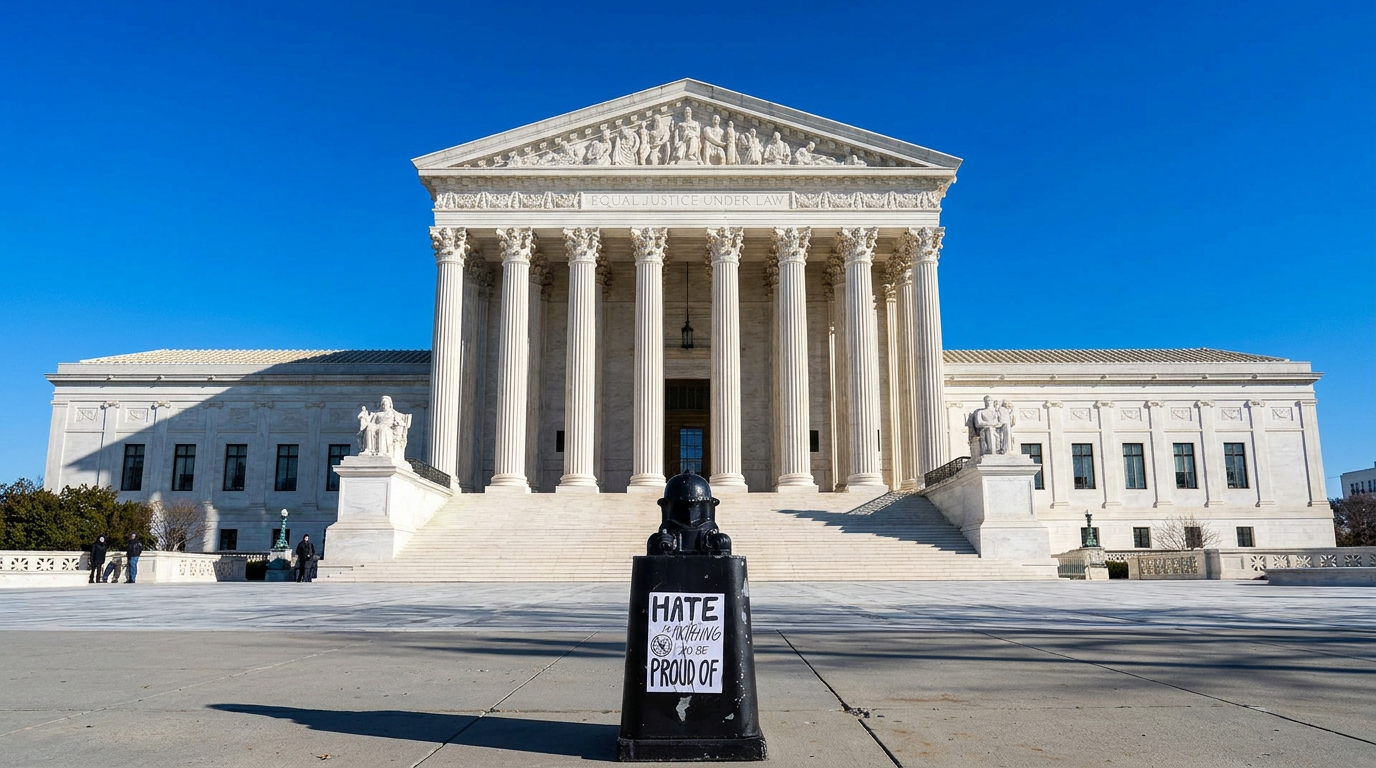
- Constitutional Textualists
- Focus on the 1868 public meaning and common law, concluding physical birth on US soil guarantees citizenship.
- Political Allegiance Proponents
- Argue the framers intended citizenship only for those legally domiciled and fully subject to US political jurisdiction.
- Statutory Interpreters
- Emphasize the role of Congress and the Immigration and Nationality Act rather than pure constitutional mandates.
What's not represented
- · Immigration Enforcement Agencies
- · Undocumented Families Directly Affected by the Order
Why this matters
This ruling provides definitive legal clarity for millions of families, ensuring that the 150-year-old constitutional guarantee of automatic citizenship for anyone born on U.S. soil remains intact regardless of their parents' immigration status.
Key points
- The Supreme Court struck down Executive Order 14,160 in a 6-3 decision.
- The ruling guarantees that children born in the U.S. to undocumented or temporary residents remain automatic citizens.
- Chief Justice John Roberts wrote the majority opinion, heavily citing the 1898 Wong Kim Ark precedent.
- Dissenting justices argued the 14th Amendment was not intended to cover the children of those unlawfully present.
- The decision provides legal stability for millions and maintains a 150-year-old constitutional standard.
On June 30, 2026, the Supreme Court delivered a landmark 6-3 decision in Trump v. Barbara, striking down Executive Order 14,160.[1]
The executive order, signed in early 2025, sought to fundamentally alter American immigration law by denying automatic citizenship to children born in the U.S. if their parents were undocumented or held temporary visas.[2]
Chief Justice John Roberts authored the majority opinion, joined by Justices Elena Kagan, Sonia Sotomayor, Amy Coney Barrett, and Ketanji Brown Jackson. They concluded that the executive branch cannot unilaterally rewrite the 14th Amendment's Citizenship Clause.[1]
The legal mechanism at the heart of the case hinges on a single phrase in the 14th Amendment: "subject to the jurisdiction thereof."

The Trump administration argued that "jurisdiction" implies political allegiance and legal domicile. Under this theory, foreign nationals who are in the country unlawfully or temporarily remain subject to the jurisdiction of their home countries, not the United States.
However, the Court's majority rejected this interpretation. Roberts exhaustively detailed the text and history of the clause, noting that the framers of the 14th Amendment intended to adopt the English common law principle of territorial jurisdiction.
Under this territorial framework, anyone physically present on U.S. soil is subject to its laws and jurisdiction, with very narrow historical exceptions such as the children of accredited foreign diplomats or hostile occupying armies.[1]
The ruling heavily relied on the 1898 precedent set in United States v. Wong Kim Ark. In that foundational case, the Court ruled that a child born in San Francisco to Chinese citizens who were legally barred from naturalizing was nonetheless a U.S. citizen by birth.[1]
The ruling heavily relied on the 1898 precedent set in United States v.
Roberts noted that the 14th Amendment was originally drafted to overturn the infamous Dred Scott decision and guarantee citizenship to formerly enslaved Black Americans, establishing a broad baseline for national belonging.[1]
The historical record played a crucial role in the decision. Justice Jackson's concurring opinion extensively cited original research from historians detailing how decades of advocacy by free Black Americans shaped the inclusive language of the Citizenship Clause.
The dissenting justices—Clarence Thomas, Samuel Alito, and Neil Gorsuch—offered a sharply different view of constitutional history and modern demographics.

Justice Alito argued that the framers of the 14th Amendment could not have anticipated modern illegal immigration, suggesting that birthright citizenship provides a "powerful incentive" to cross the border unlawfully.
Justice Thomas focused on the concept of domicile, arguing that citizenship should be inherited through parents who have established permanent legal residence, rather than merely through the geographic coordinates of a child's birth.
Meanwhile, Justice Brett Kavanaugh took a middle path. While he concurred in striking down the executive order, he argued that the order violated the federal Immigration and Nationality Act rather than the Constitution itself.
Kavanaugh's narrower statutory view suggested that Congress might theoretically have the power to amend the law to restrict birthright citizenship, though the broader constitutional ruling by the five-justice majority makes such legislative efforts highly vulnerable to future legal challenges.

In the wake of the ruling, civil rights organizations celebrated the decision as a vital protection of the American promise of equality, ensuring that the U.S. avoids creating a permanent underclass of stateless residents.
Conversely, former President Trump criticized the Court's decision and immediately called on Congress to pass new legislation affirming his restrictive view of birthright citizenship.[2]
Despite the political friction, the immediate practical effect of Trump v. Barbara is profound stability. Hospitals, state agencies, and the State Department will continue to issue birth certificates and passports under the same rules that have governed the nation for over a century.
How we got here
1868
The 14th Amendment is ratified, guaranteeing citizenship to all persons born in the U.S. and subject to its jurisdiction.
1898
The Supreme Court rules in Wong Kim Ark that children of foreign nationals born on U.S. soil are citizens.
Jan 2025
President Trump signs Executive Order 14,160, attempting to end birthright citizenship for children of undocumented immigrants.
April 2026
The Supreme Court hears oral arguments in Trump v. Barbara.
June 30, 2026
The Supreme Court strikes down the executive order in a 6-3 decision.
Viewpoints in depth
Territorial Jurisdiction Advocates
Argue that physical birth on U.S. soil automatically confers citizenship under the 14th Amendment.
This camp, which includes the Court's majority and numerous civil rights organizations, points to English common law and the post-Civil War context of the 14th Amendment. They argue that 'subject to the jurisdiction' simply means being required to obey U.S. laws while physically present in the country. From this perspective, attempting to carve out exceptions for the children of undocumented immigrants violates the fundamental constitutional guarantee of equal protection and risks creating a stateless underclass.
Domicile Requirement Proponents
Believe citizenship requires political allegiance and legal permanent residence.
Echoed by the dissenting justices and conservative legal scholars, this viewpoint argues that the framers of the 14th Amendment did not intend to grant citizenship to the children of foreign nationals who are in the country unlawfully. They contend that 'jurisdiction' implies a mutual political allegiance that temporary or undocumented residents do not possess. This camp frequently highlights that the modern scale of illegal immigration was entirely unanticipated in 1868.
Statutory Deference Camp
Argue that Congress, not the executive branch or the courts, should define the edges of citizenship.
Represented by Justice Kavanaugh's concurring opinion, this perspective focuses on the Immigration and Nationality Act rather than pure constitutional interpretation. They argue that while a president cannot unilaterally alter citizenship rules via executive order, the Constitution might leave enough ambiguity for Congress to legislate exceptions. This view prioritizes the legislative branch's authority over immigration policy.
What we don't know
- Whether Congress will attempt to pass legislation restricting birthright citizenship, as suggested by Justice Kavanaugh's concurrence.
- How future legal challenges might navigate the tension between the constitutional majority opinion and statutory immigration law.
Key terms
- Birthright Citizenship
- The legal principle that anyone born within the territory of a country automatically acquires its citizenship.
- 14th Amendment
- A post-Civil War constitutional amendment that guarantees equal protection under the law and defines national citizenship.
- Subject to the Jurisdiction
- The constitutional phrase debated in the case, interpreted by the majority as being physically present and subject to U.S. laws.
- Domicile
- A person's fixed, permanent, and principal home for legal purposes.
- Executive Order
- A directive issued by the President of the United States that manages operations of the federal government.
Frequently asked
Does this ruling change who is considered a U.S. citizen?
No. The ruling preserves the status quo, ensuring that anyone born on U.S. soil automatically becomes a citizen, regardless of their parents' immigration status.
Can the President appeal this decision?
No. The Supreme Court is the highest court in the land, and its constitutional rulings cannot be appealed.
Are there any exceptions to birthright citizenship?
Yes, but they are extremely narrow. The main exceptions are children born to accredited foreign diplomats or to hostile occupying forces.
Could Congress pass a law to end birthright citizenship?
While Justice Kavanaugh suggested Congress might have some statutory authority, the five-justice majority ruled that birthright citizenship is a constitutional right, making any such law highly vulnerable to being struck down.
Sources
Source coverage
2 outlets
3 viewpoints surfaced


[1]PBS NewsHourConstitutional Textualists
Supreme Court upholds broad conception of birthright citizenship
Read on PBS NewsHour →[2]WKYCPolitical Allegiance Proponents
Supreme Court strikes down attempt to limit birthright citizenship
Read on WKYC →
Every angle. Every day.
Get law justice stories with full source coverage and perspective breakdowns delivered to your inbox.