
Miwa Harimoto Becomes Youngest-Ever WTT Champions Winner With Seven-Game Thriller in Chongqing
Seventeen-year-old Japanese sensation Miwa Harimoto made history by defeating China's Kuai Man 4-3 to capture the WTT Champions title in Chongqing. The grueling victory signals a major youth movement challenging traditional table tennis dominance.
By Meera Iyer

Share this story
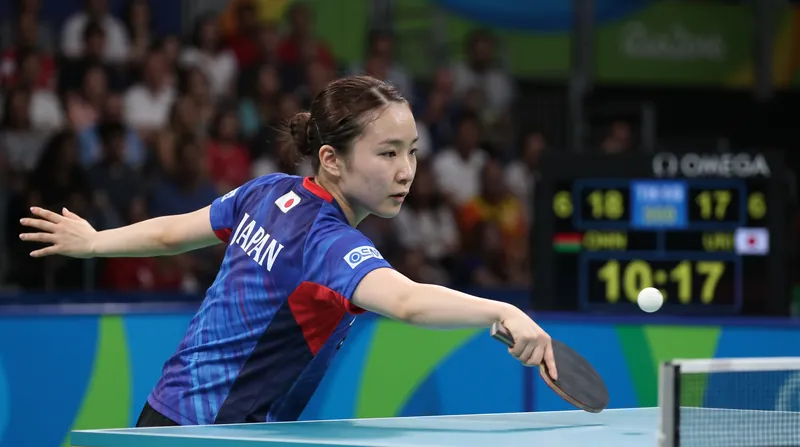
In the high-stakes cauldron of the Infinity Arena in Chongqing, history was rewritten by a teenager. Seventeen-year-old Japanese sensation Miwa Harimoto captured the WTT Champions women’s singles title, defeating China’s Kuai Man in a grueling seven-game thriller. The victory not only secured her first trophy at this elite tier but also etched her name into the record books as the youngest player ever to win a WTT Champions event.[1][2][6]
The sheer magnitude of the achievement was amplified by the hostile environment. Playing on Chinese soil against a formidable home favorite, Harimoto faced a partisan crowd that lived and breathed every point. Yet, the young star displayed a level of poise and tactical maturity that belied her years, navigating the immense pressure of the sport's biggest stage with remarkable calm.[1][2][3]
To understand the weight of this victory, one must look at the structure of modern table tennis. The WTT Champions tier is reserved for the absolute elite, featuring only the top 32 players in the world with no qualifying rounds. Winning here requires surviving a gauntlet of the globe's most lethal competitors, making Harimoto's triumph on just her third attempt at this level a staggering statistical anomaly.[1][6]
The final itself was a masterclass in momentum shifts and tactical adjustments. The match swung wildly, with the final scoreline reading 11-6, 9-11, 7-11, 11-9, 11-6, 9-11, 11-5 in Harimoto's favor. Every game presented a new puzzle, as both players constantly re-evaluated their spin, placement, and pacing to gain the upper hand in a contest defined by razor-thin margins.[1][3][4][5]
The rivalry between Harimoto and Kuai Man had already been simmering. Kuai had previously suffered a crushing 4-0 defeat to Harimoto at the Champions Incheon event, only to exact revenge with a 4-1 victory at the Asian Cup earlier in February. This Chongqing final was the ultimate rubber match, carrying the psychological baggage of their previous high-stakes encounters.[3][4]
Tactically, the match hinged on the battle over the table's center line. Kuai Man’s strategy initially focused on pinning Harimoto to her backhand corner, attempting to neutralize the Japanese player's lethal forehand pivots. For a time, this approach worked flawlessly, allowing the Chinese star to take a 2-1 lead in games and putting Harimoto firmly on the defensive.[3][4]
However, the hallmark of a champion is adaptation. Facing a deficit, Harimoto subtly shifted her receiving position, stepping slightly wider to open up her forehand angles. This mechanical adjustment allowed her to dictate the rallies earlier in the point, turning defensive blocks into aggressive counter-topspins that caught Kuai off guard and shifted the momentum back to Japan.[1][3][5]
The physical toll of the match became evident as it stretched into the later games. Table tennis at this level is an explosive anaerobic exercise, requiring rapid lateral movement and immense core rotational power. By the time the match reached the deciding seventh game, the question was no longer just about technique, but about endurance, lactic acid tolerance, and sheer willpower.[7]
In that final game, Harimoto found another gear. She surged to a quick 3-0 lead, relying heavily on devastating forehand attacks that pierced Kuai's defense. The Chinese player, who had fought valiantly to force the decider, appeared to lose her offensive firepower in the closing stretch, unable to match the relentless pace and depth of Harimoto's shots.[3][4]
Harimoto closed out the match 11-5, unleashing a final killing shot that left the arena in stunned silence before erupting into applause for the sheer quality of the contest. Her reaction—a mix of disbelief and overwhelming joy—highlighted the emotional weight of a journey that has seen her transition from a highly-touted child prodigy to a reigning senior champion.[1][2][3]
This victory is not an isolated incident but part of a broader paradigm shift in global table tennis. For decades, China has maintained an iron grip on the sport's major titles, relying on a deep, systematic development pipeline. Harimoto’s rise, alongside other young international stars, signals a growing democratization of elite talent, proving that the Chinese juggernaut can be challenged.[2][7]
The youth movement was fully on display in Chongqing. On the same day Harimoto made history, 19-year-old Frenchman Felix Lebrun captured the men's singles title, defeating Chinese wildcard Wen Ruibo. The dual crowning of teenage champions from outside the traditional Chinese powerhouse structure sent shockwaves through the sport's establishment.[2][6]
For the Harimoto family, table tennis is a dynasty in the making. Miwa’s older brother, Tomokazu Harimoto, has long been a fixture in the men's elite ranks and also competed in Chongqing, though he was upset by Wen Ruibo in a dramatic six-game semifinal. Miwa’s historic win steps out of her brother's shadow, establishing her own distinct legacy on the world stage.[1][2]
Looking ahead, the implications of this result are profound. As the sport begins its long march toward the LA 2028 Olympics, Harimoto has firmly planted her flag as a primary gold medal contender. The psychological barrier of beating a top Chinese player in a major final on their home soil has been shattered, providing a blueprint for her contemporaries.[2][7]
Yet, the path forward is fraught with uncertainty. The challenge in table tennis is rarely reaching the top; it is staying there. The Chinese national team is renowned for its rigorous video analysis and tactical deconstruction of foreign threats. Kuai Man and her coaches will undoubtedly dissect this seven-game tape to find new vulnerabilities in Harimoto's armor.[3][7]
For now, however, the table tennis world belongs to its youngest champion. Miwa Harimoto’s triumph in Chongqing is a testament to technical brilliance, tactical flexibility, and an unbreakable competitive spirit. It is a victory that not only redefines her career but also injects a thrilling dose of unpredictability into the future of the sport.[1][2][7]
The essentials
- 17-year-old Miwa Harimoto defeated China's Kuai Man 4-3 to win the WTT Champions Chongqing title.
- The victory makes Harimoto the youngest-ever player to win a singles title at the elite WTT Champions tier.
- Harimoto overcame a 2-1 deficit by adjusting her receiving position to unleash powerful forehand attacks.
- The win avenged her previous 4-1 loss to Kuai Man at the Asian Cup earlier in the year.
- The tournament highlighted a global youth movement, with 19-year-old Felix Lebrun winning the men's title.
Timeline
February 2026
Kuai Man defeats Miwa Harimoto 4-1 at the Asian Cup, setting the stage for their rivalry.
March 2026
Harimoto enters the WTT Champions Chongqing event as a rising contender on her third attempt at this tier.
March 15, 2026
Harimoto defeats Kuai Man 4-3 in the final to become the youngest-ever WTT Champions winner.
- Japanese Table Tennis Advocates
- Celebrating the rise of their young star and the challenge to China's dominance.
- Chinese Table Tennis Establishment
- Acknowledging the threat while analyzing the tactical breakdown of their home player.
- Global Sport Analysts
- Focusing on the youth movement disrupting the sport's old guard.
Perspectives this story doesn't cover
- Kuai Man's Coaching Staff
- Veteran Table Tennis Players
Sources
Source coverage
7 outlets
3 viewpoints surfaced







- [1]World Table TennisJapanese Table Tennis Advocates
Dreamland: Miwa Harimoto Becomes Youngest Person To Win A WTT Champions Title
- [2]OlympicsJapanese Table Tennis Advocates
WTT Champions Chongqing 2026: Lebrun, Harimoto claim singles titles
Read on Olympics → - [3]XinhuaChinese Table Tennis Establishment
Japan's Harimoto wins women's title at WTT Champions Chongqing
- [4]China.org.cnChinese Table Tennis Establishment
Japan's teen star Miwa Harimoto beat China's Kuai Man 4-3 to win the women's title
- [5]Butterfly OnlineGlobal Sport Analysts
Miwa Harimoto wins 4-3
- [6]Sports 24 GhanaGlobal Sport Analysts
WTT Champions Chongqing 2026: Miwa Harimoto becomes the youngest-ever WTT Champions winner
- [7]Factlen Editorial TeamGlobal Sport Analysts
Synthesis by Factlen editorial team
Read on Factlen Editorial Team →
More in Sports
See all →Standings
Historic Heights: Indian Doubles Pairs Surge to Record ITTF Standings Ahead of Asian Games
6 sources
Injury
WTT Injury Report: Sun Yingsha Rests Ankle as Hugo Calderano Returns for Europe Smash
7 sources
Standings
European Stars Surge in August ITTF Rankings as Moregard and Lebrun Challenge Chinese Dominance
5 sources
Injury
Global Table Tennis Injury Report: Zhu Yuling's Historic Post-Surgery Comeback and Aruna Quadri's Strategic Rehab
6 sources
Comments
Every angle. Every day.
Get Sports stories with full source coverage and perspective breakdowns, free every day.