
Global Table Tennis Injury Report: Shoulder and Knee Setbacks Sideline Rising Stars Lin Shidong and Sreeja Akula
A wave of upper-body and joint injuries has forced several top young table tennis players, including China's Lin Shidong and India's Sreeja Akula, to withdraw from major 2026 WTT tournaments.

Share this story
As the 2026 World Table Tennis (WTT) season pushes past its midpoint, the physical toll of a packed international calendar is becoming impossible to ignore. A wave of upper-body and lower-body injuries has sidelined several of the sport's brightest young stars, forcing high-profile withdrawals across multiple continents and disrupting the rhythm of the tour.[3]
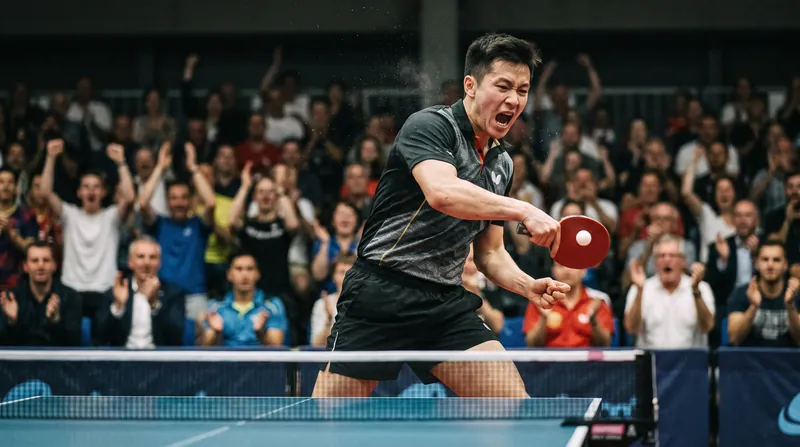
While table tennis is often perceived by casual observers as a low-impact sport, the biomechanics of the modern game tell a violently different story. Elite players generate smash speeds exceeding 100 km/h, relying almost entirely on rapid, repetitive acceleration and deceleration of the arm. This extreme torque, combined with the constant lateral lunging required to cover the table, places immense cumulative strain on the shoulders, wrists, and knees.
Perhaps the most significant casualty of this grueling schedule is Chinese prodigy Lin Shidong. The young star, who previously captured the Singapore Smash title and reached the World Number One ranking, was forced to abruptly withdraw from the WTT Champions Chongqing event earlier this year. Official reports cited severe fatigue and a lingering shoulder injury that had begun to visibly affect his mechanics.[2]
Medical evaluations revealed that Lin was suffering from rotator cuff tendinopathy, accompanied by a small fibril tear. For a player whose dominant offensive weapon is a devastatingly powerful backhand loop, a compromised shoulder is essentially a ticking time bomb. The supraspinatus and infraspinatus tendons bear the brunt of the force during these rapid swings, and playing through the pain only exacerbates the micro-tears.[2]
Lin's absence sent ripples through the Chinese national team, highlighting the dangers of an inhuman competition schedule. Prior to his withdrawal, he had traversed over 20,000 kilometers competing in singles, doubles, and mixed doubles events, leaving his body with inadequate time to recover between high-stakes matches.[2]
The injury bug has not been confined to the Chinese roster. In India, the national team suffered a major blow when Sreeja Akula, the country's top-ranked women's singles player at World No. 42, was forced to sit out the WTT Star Contender Chennai 2026. Akula cited a severe shoulder injury, depriving local fans of the chance to see their premier athlete compete on home soil.[1]
Akula's withdrawal shifted the spotlight to emerging Indian prospects like Yashaswini Ghorpade and Diya Chitale, but it also underscored a growing concern among national federations. The pressure to accumulate world ranking points often pushes players to compete through minor discomfort, which can quickly escalate into tournament-ending injuries if left unaddressed.[1][3]
The Chennai tournament proved particularly brutal for international competitors as well. South Korean rising star Oh Junsung suffered an acute injury mid-tournament, leading to a dramatic and painful exit. Competing in the mixed doubles semifinal alongside Japanese partner Miku Nagasaki, Oh was forced to concede the match while trailing 1-2, unable to push through the physical barrier.
The cascading effect of Oh's injury was immediate. He was scheduled to compete in the men's doubles final, but his physical condition made it impossible to take the court. As a result, the unseeded French combination of Flavien Coton and Thibault Poret were crowned champions via walkover, securing the title without playing a single point in the final match.
Lower-body injuries are also taking their toll on the international circuit. Iranian prospect Benyamin Faraji was forced to withdraw from his national team's selection process ahead of the 2026 World Team Table Tennis Championships in London. Faraji suffered a debilitating knee injury, prompting head coach Jamil Lotfollah Nasabi to replace him with Mehdi Keshavarz for the prestigious event.
Knee injuries are uniquely problematic in table tennis due to the sport's asymmetric stance. The ready position requires sustained knee flexion, while rallies demand rapid lateral shuffles that place a heavy load on the patellofemoral joint and the medial collateral ligament (MCL). Without adequate rest, this constant flexion frequently leads to chronic overuse injuries.
As the 2026 season progresses, the sheer volume of medical timeouts and withdrawals is forcing a reckoning within the sport. Players and coaches are increasingly prioritizing longevity over short-term ranking gains, recognizing that surviving the modern WTT calendar requires as much focus on biomechanical recovery as it does on tactical preparation.[3]
The essentials
- Chinese star Lin Shidong withdrew from WTT Champions Chongqing due to rotator cuff tendinopathy.
- India's Sreeja Akula missed the WTT Star Contender Chennai with a severe shoulder injury.
- South Korea's Oh Junsung conceded two matches in Chennai after suffering an acute mid-tournament injury.
- Iranian prospect Benyamin Faraji missed World Championship selection due to a knee injury.
- Medical experts warn that the modern WTT schedule is leading to a surge in overuse injuries.
Timeline
January 2026
Benyamin Faraji withdraws from Iran's national team selection for the World Championships due to a knee injury.
February 2026
Sreeja Akula misses the WTT Star Contender Chennai with a shoulder injury; Oh Junsung suffers an acute injury mid-tournament at the same event.
March 2026
Lin Shidong withdraws from WTT Champions Chongqing citing fatigue and rotator cuff tendinopathy.
- Sports Medicine Professionals
- Emphasize that the modern game's biomechanics create severe overuse risks that require strict load management.
- National Federations
- Focused on fielding the strongest possible teams for major events while scrambling to replace injured stars.
- Players & Coaches
- Balancing the pressure to maintain world ranking points with the physical reality of playing through pain and fatigue.
Perspectives this story doesn't cover
- Tournament Organizers
- Equipment Manufacturers
Sources
Source coverage
3 outlets
3 viewpoints surfaced



- [1]Olympics.comNational Federations
WTT Star Contender Chennai 2026: Manav Thakkar to spearhead Indian challenge
Read on Olympics.com → - [2]Table Tennis MediaPlayers & Coaches
The Shocking Decline of Lin Shidong: Injury and Fatigue
- [3]World Table TennisPlayers & Coaches
WTT Official Updates and Withdrawals
More in Sports
See all →Injury
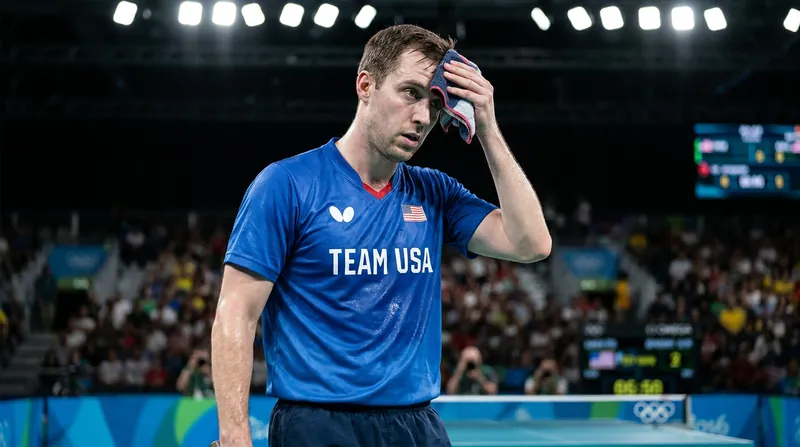
Global Table Tennis Injury Report: Sathiyan Gnanasekaran Returns as Kristian Karlsson Battles Groin Setback
2 sources
WTT Tour
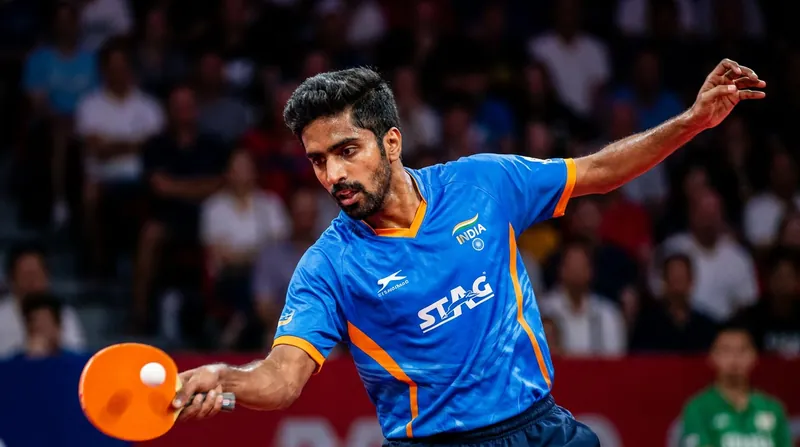
Sora Matsushima Outlasts Vladimir Sidorenko 4-2 in Ontario Table Tennis Thriller
3 sources
Injury
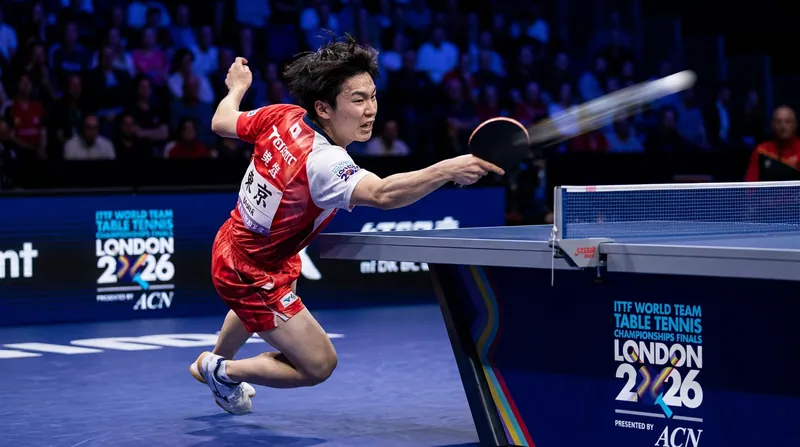
Global Table Tennis Injury Report: Alexis Lebrun's Hand Recovery Highlights a New Era of Medical Caution on Tour
2 sources
Standings
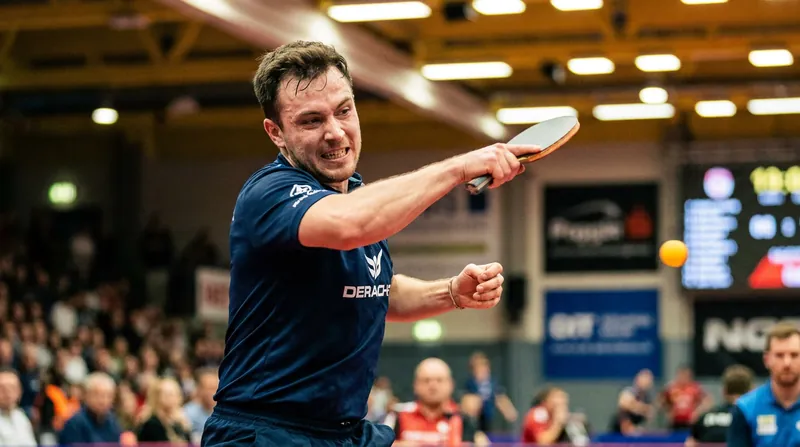
The Race to WTT Finals Hong Kong: Matsushima and Lebrun Shake Up the Top 10 Ahead of Yokohama
6 sources
Comments
Every angle. Every day.
Get Sports stories with full source coverage and perspective breakdowns, free every day.