
Supreme Court Denies Emergency Request for Religious Exemption to New York School Vaccine Mandate
The justices rejected a New York mother's bid to enroll her 5-year-old son in kindergarten without state-required immunizations, leaving the state's 2019 ban on religious exemptions intact.
Share this story
The US Supreme Court has denied an emergency request from a New York mother seeking to bypass state vaccine mandates so her 5-year-old son could attend kindergarten. The unsigned order, issued Tuesday, leaves the child barred from the classroom while the family pursues a broader First Amendment challenge in lower federal courts. The mother, identified in court filings as Jane Doe, argued that New York’s strict vaccination requirements violate her Catholic faith and force an unconstitutional choice between her religious convictions and her child's education.[2][3][4]
Doe sought a temporary injunction against Section 2164 of the New York Public Health Law, which mandates standard childhood immunizations for school attendance. The statute contains a blanket denial of religious exemptions, a provision that has become the focal point of intense legal scrutiny. In an April statement submitted to the Waverly School in Eastchester, Doe articulated her specific theological objection to the mandated shots. "Vaccination injects biological material derived from unclean sources directly into the bloodstream," she wrote to the district. "My faith forbids this."[2][3][4]
State and local officials urged the Supreme Court to reject the injunction, arguing that granting a religious carve-out would severely undermine public health efforts to prevent the spread of communicable diseases among students. New York lawmakers repealed the state's longstanding religious exemption to school vaccine rules in June 2019. That legislative action followed the largest measles outbreak the state had experienced in three decades, which health officials attributed to falling vaccination rates in specific communities. While the religious waiver was eliminated, the state's medical exemptions remain intact.[2][3]
The emergency application was initially presented to Justice Sonia Sotomayor, who oversees emergency matters arising from the 2nd Circuit Court of Appeals. Sotomayor referred the petition to the full Court, which ultimately denied the request without addressing the underlying merits of the constitutional claims. The ruling was not unanimous; Justices Samuel Alito and Neil Gorsuch noted publicly in the order that they would have granted the mother's application, signaling a continued appetite among the Court's conservative wing to scrutinize state public health mandates that intersect with religious practice.[3]
The decision aligns with the Court’s recent posture on emergency interventions regarding state vaccine laws, even as it expands religious liberties elsewhere. In October 2025, the justices declined a similar request from a California woman seeking to opt her son out of student vaccine requirements for religious reasons. During the height of the coronavirus pandemic, the Court similarly left in place mandates for healthcare workers who argued the requirements violated their constitutional right to freely exercise their religion.[2]
Despite Tuesday's denial, legal scholars anticipate the Supreme Court will eventually take up the broader question of religious exemptions to state vaccine mandates. The Court has steadily expanded free exercise rights under the First Amendment in recent terms. This includes a recent 6-3 ruling in Mahmoud v. Taylor, which sided with a multi-faith group of parents in Maryland who argued the First Amendment accorded them the religious freedom to opt their children out of English language curricula based on books featuring LGBTQ+ characters.[1]
A separate challenge to New York’s 2019 repeal, Miller v. McDonald, is currently working its way through the federal appellate docket and may present a stronger test case for the justices. That lawsuit was brought by Amish parents whose children attend private schools in Upstate New York, claiming their faith prohibits vaccination. The Supreme Court recently remanded Miller back to the 2nd Circuit Court of Appeals, instructing the lower court to reconsider the Amish parents' claims specifically in light of the new precedent established by the Mahmoud decision.[1]
For now, Doe’s underlying appeal remains pending before a three-judge panel of the 2nd Circuit, which previously denied her request for a temporary injunction, as did a federal district judge in New York.
The Vatican's Congregation for the Doctrine of the Faith issued a note in 2020 stating that vaccination is not a moral obligation and must be voluntary, though it added that those who refuse for reasons of conscience must take other steps to avoid spreading disease. Doe has agreed to keep her son home during active outbreaks if granted an exemption.[3]
Without the Supreme Court's intervention, Doe and parents in similar positions face a stark set of options as the academic year begins. Under New York law, children who remain unvaccinated without a valid medical exemption cannot attend public or private schools, and schools face steep fines for admitting them. Families seeking to maintain their religious objections to the mandated schedule must choose between compliance, transitioning to full-time homeschooling, or relocating to one of the states that still permits religious waivers for student immunizations.[3][4]
Where opinion splits
Public Health Officials
State and local authorities argue that religious exemptions compromise herd immunity and facilitate outbreaks of preventable diseases.
Public health departments and state lawmakers maintain that mandatory vaccination schedules are a cornerstone of modern disease prevention. In New York, the 2019 repeal of the religious exemption was a direct legislative response to a severe measles outbreak that threatened vulnerable populations. Officials argue that when exemption rates climb in specific communities, herd immunity drops below the threshold required to protect infants and immunocompromised individuals who cannot be vaccinated for legitimate medical reasons.
Religious Liberty Advocates
Parents and legal groups contend that forcing families to choose between their faith and access to education violates the First Amendment.
Advocates for religious freedom argue that the government cannot condition a public benefit—such as access to education—on a citizen's willingness to violate their deeply held theological beliefs. They point out that while the state repealed religious exemptions, it left medical exemptions intact, which they argue demonstrates that the state can accommodate unvaccinated children without categorically banning them. Legal groups representing these families are pushing the courts to recognize that the First Amendment's free exercise clause should shield parents from state mandates that conflict with their conscience.
Key points
- The Supreme Court denied an emergency request from a New York mother seeking a religious exemption to the state's school vaccine mandate.
- Justices Samuel Alito and Neil Gorsuch noted they would have granted the injunction.
- New York repealed its religious exemption for school vaccines in 2019 following a severe measles outbreak.
- The mother's underlying lawsuit remains pending before the 2nd Circuit Court of Appeals.
- Public Health Advocates
- Argue that eliminating religious exemptions is necessary to maintain herd immunity and protect vulnerable populations from preventable disease outbreaks.
- Religious Liberty Advocates
- Contend that forcing parents to violate deeply held religious beliefs as a condition for their children's education violates the First Amendment.
Perspectives this story doesn't cover
- School district administrators
- Families of immunocompromised students
Sources
Source coverage
4 outlets
2 viewpoints surfaced



- [1]CIDRAPPublic Health Advocates
As SCOTUS rejects emergency appeal for religious exemption to vaccines, thorny First Amendment issues persist
Read on CIDRAP → - [2]KFF Health NewsPublic Health Advocates
In Vaccine Mandate Vs. Religious Freedom Case, High Court Rejects Mom's Plea For Exemption
Read on KFF Health News → - [3]RealClearReligionReligious Liberty Advocates
SCOTUS Declines Catholic Mother's Bid For Son's Vaccine Exemption
Read on RealClearReligion → - [4]Washington ExaminerReligious Liberty Advocates
Mother urges Supreme Court to let her kindergartener remain enrolled during religious vaccination fight
Read on Washington Examiner →
More in Law & Justice
See all →Labor Law
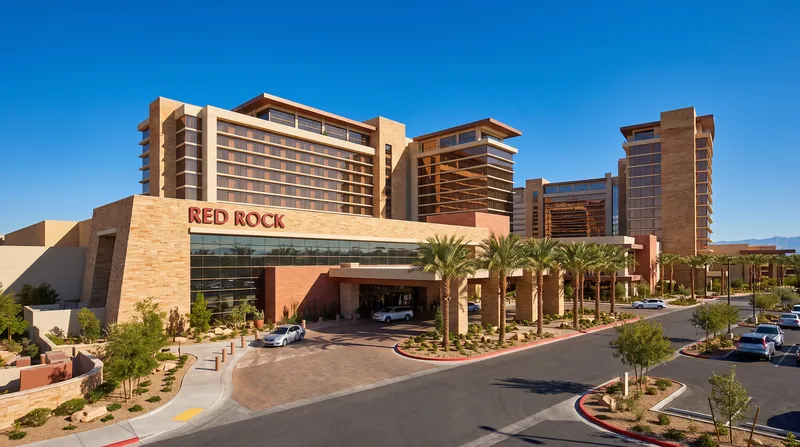
Chief Justice Roberts Denies Casino's Emergency Appeal, Forcing Recognition of Culinary Union
6 sources
Second Amendment
Supreme Court Receives First Volley of Briefs in Major AR-15 Ban Challenge
5 sources
Second Amendment
DOJ Office of Legal Counsel Finds Federal Handgun Sales Ban for Adults Under 21 Unconstitutional
4 sources
Ballot Measure
Voters in 12 States to Decide Constitutional Amendments on Voter ID and Citizenship
5 sources
Comments
Every angle. Every day.
Get Law & Justice stories with full source coverage and perspective breakdowns, free every day.