
Semiconductor and Memory Stocks Plunge 21-32% in July, Signaling Major AI Trade Rotation
A historic unwinding of the artificial intelligence momentum trade sent chipmakers plummeting in July, as institutional capital rapidly rotated into financials, industrials, and small-cap value stocks.
By Madison Lane

The artificial intelligence trade that dominated the first half of 2026 hit a sudden and violent wall in July. Over the course of a few brutal trading sessions, the market’s most crowded momentum trade unwound at a historic pace, sending semiconductor and memory stocks plunging between 21% and 32%. But this was not a broad market collapse. Instead, it was a textbook style rotation.
As capital fled the high-flying hardware makers that power the AI boom, it immediately found a home in long-neglected sectors like financials, industrials, and small-cap value stocks. The shift signals a fundamental change in how Wall Street is pricing the artificial intelligence revolution: investors are no longer blindly rewarding revenue growth, but are instead demanding to know how much capital expenditure will be required to sustain it, and when those massive investments will actually translate into bottom-line profits.[4][5]
The spark that ignited the rotation came from the very foundation of the global chip supply chain: Taiwan Semiconductor Manufacturing Company (TSMC). When the foundry giant delivered its earnings report, the headline numbers were undeniably strong, with both revenue and earnings exceeding Wall Street’s expectations. In a typical momentum market, such a beat would have sent the stock soaring. Instead, TSMC shares fell roughly 5% in early trading, dragging the entire semiconductor sector down with them.
The market was not reacting to the previous quarter’s profits; it was reacting to the company’s forward guidance. TSMC announced it was increasing its projected capital expenditures from roughly $56 billion to a staggering range of $60 billion to $64 billion. While that scale of spending is necessary to meet future AI demand, it simultaneously reduces free cash flow and drastically raises the amount of growth required to justify current valuations.[3]
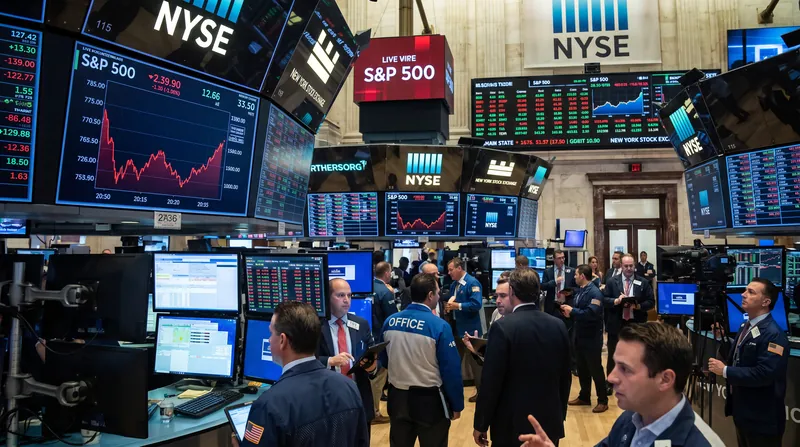
The reaction across the broader chip sector was immediate and severe. The Invesco PHLX Semiconductor ETF tumbled 11.4% over just the first two trading days of July, underscoring a desperate rush by institutional investors to lock in profits. By mid-month, the Philadelphia Semiconductor Index had posted its steepest weekly loss in over a year, dropping nearly 18% for July alone.
Heavyweights that had previously seemed invincible suddenly found themselves under intense pressure. Advanced Micro Devices fell 11% in the first two days of the month, while Intel pulled back 15% from its recent all-time high. The speed of the sell-off caught many off guard, but analysts noted that the momentum factor historically performs poorly in July, having declined in this month for each of the past five years.[4][5]
While logic chips suffered, the memory sector bore the absolute brunt of the devastation. Memory chipmakers, which had enjoyed parabolic bullish runs over the previous year due to insatiable data center demand, faced severe technical breakdowns. Sector leader Micron Technology plummeted 22% from its all-time high, including an 18% drop over just two sessions.
Western Digital pulled back 32% from its record highs, and Seagate fell 28%. The Roundhill Memory ETF, which tracks U.S. and Korean memory giants, cratered 25% over a two-week period. The sell-off even triggered a circuit breaker in Seoul, halting trading on the KOSPI as South Korean memory giants like SK Hynix dragged the benchmark down 8% in morning trade.[1][5][6]
The severity of the memory plunge exposes the cyclical risk that had been temporarily masked by the AI boom. Semiconductor stocks, and memory makers in particular, are notoriously cyclical businesses. During the expansion phase, a breakneck pace of data center buildouts drives incredible demand, leading to component shortages and price hikes.
However, peak profitability often creates the illusion that these stocks are cheap right before earnings begin to normalize. A low price-to-earnings ratio near the top of a cycle does not necessarily mean a semiconductor stock is a value play; it often means earnings are temporarily elevated. As investors stopped extrapolating peak conditions indefinitely, the market rapidly reassessed the cyclical vulnerability of companies like Micron and SK Hynix.[3]
Behind the scenes, the rotation forced a historic unwinding of institutional leverage that left many professional money managers deeply underwater. According to prime brokerage data and research from Goldman Sachs, hedge funds suffered their worst single-month underperformance relative to the S&P 500 in more than two decades.
The artificial intelligence trade had become dangerously crowded; entering the second quarter, hedge funds had gone "all-in" on AI, with portfolio turnover hitting its highest level since 2021. Technology stocks accounted for 14 of the 20 most popular "Rising Stars" among institutional portfolios, pushing crowding in widely held positions to absolute record highs. When the momentum broke in July, that concentration became a fatal liability.[2][7]
The sudden reversal triggered one of the most aggressive hedge fund deleveraging episodes of the past ten years. Managers were forced to rapidly slash their AI-related holdings, dumping semiconductor stocks and mega-cap tech leaders in a desperate bid to reduce risk. Global hedge funds pulled out of U.S. technology stocks at the fastest pace on record over a two-month period, with related holdings shrinking by a cumulative 10%.
While gross leverage, net leverage, and overall AI exposure have pulled back significantly from their second-quarter peaks, prime brokerage data indicates they remain above their long-term historical averages. This suggests that while the "all-in" positioning has unwound, institutional investors have not completely abandoned risk-taking; they have simply shifted their targets.[2][7]
Crucially, the capital fleeing the semiconductor sector did not exit the equity market entirely—it rotated with remarkable precision. As the tech-heavy Nasdaq-100 fell 3.1% to start July, investors aggressively reallocated their funds into sectors that had largely missed out on the AI-driven rally.
Financials, industrials, and healthcare saw massive inflows. The KBW Bank Index posted its best week since November 2024, driven by renewed optimism around traditional banking revenues. Similarly, industrial giants saw historic single-day performances as capital sought refuge in companies with tangible, near-term cash flows rather than decade-long infrastructure promises.[1][4][5]
This massive reallocation of capital resulted in a dramatic improvement in overall market breadth, a metric that had been flashing warning signs for months. Throughout the first half of 2026, the S&P 500's gains were almost entirely driven by a handful of mega-cap technology stocks, leaving the average stock languishing. The July rotation inverted that dynamic.
The Russell 2000 index of small-cap stocks surged, marking three consecutive weeks of gains by mid-July. Furthermore, equal-weight indices began to significantly outperform their market-cap-weighted counterparts. This broadening of the rally suggests that investors are not bracing for a recession, but are instead normalizing valuations across a wider swath of the economy.[4][5]
The fundamental question driving this rotation is whether the massive capital expenditure in AI infrastructure will generate sufficient returns. A recent analysis highlighted that top technology companies have accumulated trillions in off-balance-sheet commitments related to AI, obligations that are growing significantly faster than traditional capital expenditures.
Investors are no longer evaluating AI demand in isolation; they are weighing that demand against the staggering cost of expanding capacity and the time required for those investments to produce actual returns. The market is shifting its reward mechanism from companies that are simply building AI infrastructure to those that can demonstrate a clear path to monetizing it.[3][5]
Adding to the sector's headwinds are growing concerns about margins and security vulnerabilities. As hyperscalers and cloud providers race to build out their compute farms, the competition threatens to compress the unusually strong profitability the semiconductor sector has enjoyed.
Furthermore, some analysts have begun pricing in the risks associated with "YOLO mode" AI development, where probabilistic agent behaviors are deployed in environments that may lack sufficient security guardrails. These underlying structural risks, combined with the sheer scale of required investment, have prompted institutional investors to demand a higher risk premium for holding semiconductor equities at peak valuations.[3]
Despite the brutality of the July sell-off, many market strategists view the rotation as a constructive development for the long-term health of the bull market. The AI buildout remains a genuine macroeconomic force, and the underlying demand for advanced compute and memory components has not evaporated. However, the current market structure—built on heavy institutional leverage and extreme concentration in a handful of names—was unsustainable.
By forcing a diversification of capital into value stocks, defensive assets, and dividend-paying industrials, the July rotation has reduced the market's vulnerability to a single point of failure. The next phase of the AI trade will likely belong not to the most visible hardware makers, but to the enterprises that can successfully integrate that hardware to drive real margin expansion.[2][4][5]
Key points
- The artificial intelligence trade experienced a historic unwinding in July 2026, sending semiconductor and memory stocks plunging by up to 32%.
- Capital rapidly rotated out of mega-cap technology and into previously lagging sectors, including financials, industrials, and small-cap value stocks.
- The sell-off was catalyzed by TSMC raising its capital expenditure guidance to over $60 billion, sparking fears about the true cost of sustaining AI growth.
- Hedge funds suffered their worst single-month underperformance relative to the S&P 500 in over two decades as they aggressively deleveraged their tech holdings.
What we don’t know
- Whether the massive capital expenditures by hyperscalers will ultimately generate the profit margins required to justify their investments.
- How long the rotation into value and small-cap stocks will last before institutional capital flows back into the technology sector.
- The extent to which emerging security vulnerabilities in AI deployment will impact future enterprise adoption rates.
How we got here
Q1 - Q2 2026
Hedge funds go 'all-in' on the artificial intelligence trade, pushing portfolio turnover to multi-year highs and driving semiconductor stocks to record valuations.
Late June 2026
The semiconductor sector reaches its peak, with memory chipmakers like Micron and Western Digital hitting all-time highs.
Early July 2026
The momentum factor breaks; the PHLX Semiconductor Sector Index plunges 11.4% in just two trading days.
Mid-July 2026
TSMC reports strong earnings but announces a massive CapEx hike to $60-$64 billion, accelerating the tech sell-off.
Late July 2026
Capital rotation takes full effect, pushing the Russell 2000 and KBW Bank Index to multi-week highs as market breadth improves.
- Fundamental Value Investors
- Argues that the extreme concentration in tech was unsustainable and welcomes the return of capital to reasonably priced cyclical sectors.
- Semiconductor Industry Bulls
- Views the massive CapEx spending as a necessary moat-building exercise that guarantees future dominance, dismissing the sell-off as short-term noise.
- Momentum & Quant Funds
- Focused on algorithmic trends, this group was forced to aggressively de-risk and sell semiconductors as technical support levels broke.
Perspectives this story doesn't cover
- Retail investors caught in the rapid tech drawdown
- Corporate treasurers managing the actual CapEx budgets
Sources
Source coverage
7 outlets
3 viewpoints surfaced






- [1]Credence WireFundamental Value Investors
AI Trade Rotation Hammers Memory Stocks as Financials Lead July Rally
Read on Credence Wire → - [2]BigGo FinanceMomentum & Quant Funds
AI Frenzy Cools: Goldman Sachs Says Hedge Funds Suffered Worst Monthly Underperformance vs. S&P 500 in Over 20 Years in July
Read on BigGo Finance → - [3]Verified InvestingSemiconductor Industry Bulls
Taiwan Semi's Selloff Exposes the Cycle Risk Beneath the AI Boom
Read on Verified Investing → - [4]BigGo FinanceMomentum & Quant Funds
US Stocks Face Brutal July Rotation: Semiconductor Momentum Freezes as Capital Flees to Value
Read on BigGo Finance → - [5]Schwab NetworkFundamental Value Investors
Chip stocks suffered a dramatic sell-off, with the PHLX Semiconductor Sector Index (SOX) plunging 11.4%
Read on Schwab Network → - [6]ChosunSemiconductor Industry Bulls
Semiconductor stocks on the U.S. market tumbled for a second consecutive day
Read on Chosun → - [7]HedgeweekMomentum & Quant Funds
Hedge funds endured their sharpest monthly underperformance against the S&P 500 in more than two decades in July
Read on Hedgeweek →
More in Finance
See all →Bond Valuation
The Iterative Process That Solves the Bond Price Formula for Yield-to-Maturity
6 sources
Sanctions Enforcement
US Treasury Sanctions Iranian Crypto Exchange BitBank Over Hormuz Transit Payments
6 sources

Market Mechanics
How Market Depth and Price-Time Priority Dictate the Execution Price of a Large Market Order
6 sources
Portfolio Theory
How the Efficient Frontier and the Capital Allocation Line Optimize Portfolio Risk and Return
4 sources
Comments
Every angle. Every day.
Get Finance stories with full source coverage and perspective breakdowns, free every day.