
Landmark Nutrition Study Finds Diet Quality Trumps Processing Level in Ultra-Processed Foods
A massive new study of over 200,000 adults reveals that the nutritional density of your diet protects against chronic disease regardless of whether the food is ultra-processed or made from scratch. The findings challenge the prevailing wisdom that all industrial food processing is inherently harmful.
By Kabir Mehra

We have been trained to treat the grocery store aisles like a minefield. The prevailing wellness wisdom of the last decade has handed down a strict, anxiety-inducing rule: scan every label for unpronounceable ingredients, banish anything in a crinkly wrapper, and assume that industrial processing is the ultimate enemy of health. For the busy home cook trying to get dinner on the table, this has meant feeling a twinge of guilt every time they reach for a shortcut.[1][2]
But a landmark study presented at the NUTRITION 2026 conference is fundamentally flipping that script. It turns out that the overall nutritional quality of what you eat—the fiber, the vitamins, the healthy fats—matters far more than how much the food was processed in a factory before it reached your kitchen.[1]
Researchers from the Harvard T.H. Chan School of Public Health tracked the diets and health outcomes of over 200,000 adults across several decades. Instead of just looking at processing, they mapped participants' diets on a four-quadrant grid: healthy versus unhealthy, and ultra-processed versus minimally processed.[1][2]
The results were unambiguous and deeply liberating. People who ate high-quality, plant-rich diets had significantly lower risks of heart disease, type 2 diabetes, and mortality. Crucially, those protective benefits remained almost identical regardless of whether their diet was heavily processed or made entirely from scratch.[1][3]
To understand why this happens, you have to look at how we categorize food. The widely used NOVA classification system groups foods strictly by their level of industrial processing. However, it is completely blind to actual nutritional density.[2][5]
Under the NOVA system, a sugary soda and a fortified, unsweetened soy milk are both labeled "ultra-processed" because they are made in factories using industrial methods and additives. Yet one delivers empty calories, while the other provides essential protein, calcium, and vitamins that actively support your body.[1][3]
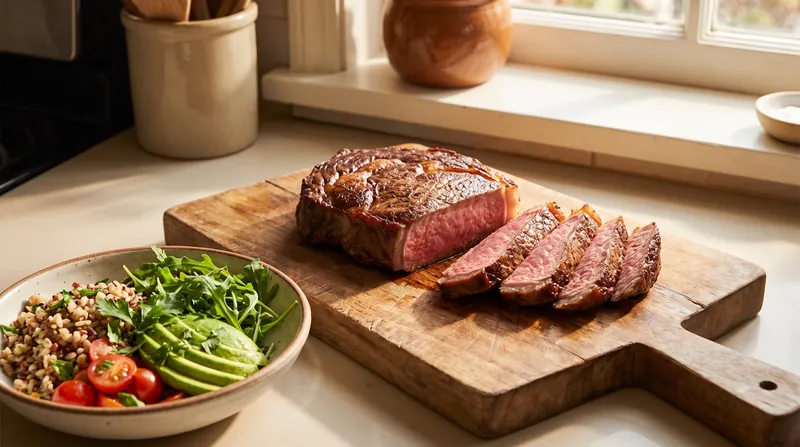
Conversely, it is entirely possible to eat a "minimally processed" diet that is terrible for your long-term health. A plate loaded with butter, fatty cuts of red meat, and refined white rice cooked at home involves very little industrial processing, but it lacks the fiber and micronutrients your cardiovascular system needs to thrive.[1][4]
This nuance is reshaping how public health experts talk about the pantry. Advising people to universally avoid ultra-processed foods can actually lead to worse diets if it means they skip healthy, convenient options. Fortified whole-grain cereals, canned beans, and pre-packaged high-fiber breads are technically ultra-processed, but they are vital tools for building a sustainable, healthy routine.[1][3]
A massive 30-year study published in the BMJ supports this shift in perspective. Researchers found that while certain ultra-processed foods—specifically ready-to-eat meats and sugary beverages—are major drivers of mortality, the broader category of processed food does not universally shorten lifespans, provided the person's overall diet is rich in whole foods.[4][7]
However, the debate is not entirely settled in the scientific community. While the nutritional profile is clearly the dominant factor, some researchers argue that we shouldn't completely ignore the factory floor.[6]
A recent analysis from the Food is Medicine Institute at Tufts University suggests that industrial processing might still play an independent, albeit smaller, role in health outcomes. They point out that extreme processing alters the cellular structure of food, strips away beneficial chemical compounds, and introduces packaging chemicals that traditional nutrition metrics don't measure.[6]
Even with those caveats, the overwhelming consensus is moving toward a more pragmatic, additive approach to eating. The sensory reality of cooking should be joyful, not fearful. If a pre-made simmer sauce helps you eat three cups of vegetables on a Tuesday night, that processing is serving your health, not harming it.[3][5]
For anyone planning their weekly meals, this research is an invitation to release the pursuit of absolute purity. You do not have to soak your own legumes, bake your own sourdough, or churn your own oat milk to protect your heart and metabolism.[1][4]
The focus can finally shift back to what you are putting into your body, rather than how it was made. A high-quality diet is built on a foundation of fiber, colorful plants, and healthy oils—and whether those ingredients come straight from the farm or out of a convenient package, your body knows exactly how to use them.[1][2]
Key points
- A study of 200,000 adults found diet quality drives health outcomes, regardless of processing level.
- High-quality diets lower the risk of heart disease and diabetes even if they include ultra-processed foods.
- The NOVA classification system categorizes foods by processing, ignoring their actual nutritional density.
- Healthy convenience foods like canned beans and fortified plant milks are technically ultra-processed but highly beneficial.
What we don’t know
- Whether specific industrial additives, like certain emulsifiers or artificial sweeteners, carry long-term risks that are masked when looking at overall diet quality.
- How the physical breakdown of the food matrix during extreme processing affects the gut microbiome over decades.
- Whether the health outcomes of ultra-processed foods differ significantly across different age groups or metabolic profiles.
How we got here
2009
The NOVA classification system is introduced, categorizing foods strictly by their level of industrial processing rather than nutritional content.
2019
A landmark NIH study links ultra-processed diets to increased calorie consumption and weight gain, sparking widespread public concern.
May 2024
A 30-year study published in the BMJ reveals that while processed meats and sugary drinks increase mortality, overall diet quality is the stronger predictor of health.
July 2026
Harvard researchers present data on 200,000 adults showing that high-quality diets protect against chronic disease regardless of processing levels.
- Nutritional Quality Advocates
- Researchers who argue that the actual nutrients in food matter far more than the manufacturing process.
- Processing-Risk Researchers
- Scientists who believe industrial manufacturing introduces unique health risks independent of basic nutrition.
- Public Health Pragmatists
- Dietitians and public health experts focused on the practical realities of how people actually eat and shop.
Perspectives this story doesn't cover
- Food manufacturing industry representatives defending their fortification practices
- Low-income consumers who rely exclusively on affordable ultra-processed foods
Sources
Source coverage
7 outlets
3 viewpoints surfaced






- [1]EurekAlertNutritional Quality Advocates
Harvard study finds healthy diets lower risks while unhealthy diets raise them, regardless of the level of food processing
Read on EurekAlert → - [2]Nutrition InsightNutritional Quality Advocates
A research abstract linked a plant-based diet's quality, not processing levels
Read on Nutrition Insight → - [3]Science Media CentrePublic Health Pragmatists
expert reaction to unpublished study suggesting that diet quality matters more than food processing level
Read on Science Media Centre → - [4]Medical News TodayPublic Health Pragmatists
Overall diet quality may be more important than how much ultra-processed foods you eat
Read on Medical News Today → - [5]American Journal of Public HealthPublic Health Pragmatists
Consumption of ultra-processed foods and diet quality Among US children and adults
Read on American Journal of Public Health → - [6]Tufts UniversityProcessing-Risk Researchers
Concerns about the health effects of ultra-processed foods are growing
Read on Tufts University → - [7]BMJNutritional Quality Advocates
Association between consumption of ultra-processed foods and all cause mortality
Read on BMJ →

More in Lifestyle
See all →Food Science
The 3-Millimeter Myth: Why Your 24-Hour Marinade Isn't Penetrating the Meat
2 sources

Culinary Science
The 110-Gram Daily Target: How the 'Proteinmaxxing' Trend is Changing Home Cooking
10 sources
Food Chemistry
The 140°F to 165°F Range: How Gelatinization and Retrogradation Control the Texture of Cooked Pasta and Rice
7 sources

Culinary Science
The Science of Salt: Comparing the Chemical Composition, Flavor Profile, and Usage of Kosher, Sea, Table, and Finishing Salts
5 sources

Comments
Every angle. Every day.
Get Lifestyle stories with full source coverage and perspective breakdowns, free every day.