
How the Dalai Lama Is Bypassing Traditional Search to Secure His Succession
By vesting succession authority in a secure trust rather than a vulnerable geographic search, the 14th Dalai Lama is preempting Chinese state interference in Tibetan Buddhism's highest office.

In short
- The 14th Dalai Lama has affirmed that the 600-year-old institution will continue after his death.
- The traditional geographic search for his reincarnation will be bypassed to prevent state interference.
- Sole authority to recognize the 15th Dalai Lama now rests with the Gaden Phodrang Trust.
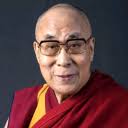
For centuries, the passing of a Dalai Lama triggered a mystical search across the Himalayas—a quest guided by visions, oracles, and the recognition of a predecessor's belongings. But as the 14th Dalai Lama, Tenzin Gyatso, enters his nineties, the future of Tibetan Buddhism's highest office is no longer just a spiritual transition. It has become a high-stakes geopolitical chess match. By fundamentally altering how his successor will be chosen, the Dalai Lama is attempting to outmaneuver an authoritarian state and secure the cultural survival of the Tibetan people.
The shift was formalized in a landmark declaration affirming that the 600-year-old institution will indeed continue after his death. Ending years of speculation that he might be the last of his line, the Dalai Lama announced that the traditional, decentralized search process will be bypassed.
Instead, the sole authority to identify and recognize the 15th Dalai Lama will rest exclusively with the Gaden Phodrang Trust, his personal office and non-profit organization. This structural pivot transforms a vulnerable spiritual quest into a protected institutional mandate, shielding the lineage from external state capture.[2][3]
"I hereby reiterate that the Gaden Phodrang Trust has sole authority to recognize the future reincarnation," the Dalai Lama stated, adding a pointed warning that "no one else has any such authority to interfere in this matter." The move is a direct preemptive strike against the Chinese government, which has repeatedly asserted that it alone holds the legal right to approve the reincarnation of senior Tibetan religious figures.[1][2]
To understand the gravity of this shift, one must look at how the system traditionally operates. In Tibetan Buddhism, a tulku is an enlightened master who consciously chooses to be reborn to continue serving humanity. When a Dalai Lama passes away, senior monks typically consult the Nechung Oracle, interpret astrological signs, and seek visions in sacred lakes to locate the child. The candidate is then subjected to rigorous tests, such as identifying the previous Dalai Lama's personal ritual items from a lineup of identical objects.[1][4]
However, this decentralized, multi-year search process presents a massive vulnerability in the modern political landscape. The Chinese Communist Party has spent decades laying the groundwork to control the succession. In 2007, Beijing implemented Order No. 5, a law mandating that all "Living Buddhas" must be approved by the state. China insists that the next Dalai Lama must be selected using the "Golden Urn"—a Qing dynasty lottery ritual—and must be born within Chinese-controlled territory.[1]
The Tibetan exile community has already witnessed what happens when Beijing intercepts a traditional search. In 1995, the Dalai Lama recognized a six-year-old boy in Tibet as the 11th Panchen Lama, the second-highest figure in the faith. Within days, Chinese authorities abducted the child and his family, who have not been seen since. Beijing then installed its own state-approved Panchen Lama, a figure widely rejected by the Tibetan diaspora.[1]
By vesting authority in the Gaden Phodrang Trust, the Dalai Lama is closing the door on a repeat of the 1995 abduction. The Trust, operating safely in exile, will consult with the heads of the various Tibetan Buddhist traditions and oath-bound Dharma Protectors, but the final recognition will be an institutional decision rather than a vulnerable geographic search. This ensures the successor will be born in the "free world"—likely India or within the broader Tibetan diaspora—far from Beijing's jurisdiction.[2][5]
The Chinese government's response to the Trust's empowerment has been swift and uncompromising. Foreign Ministry officials immediately reiterated that the reincarnation must comply with Chinese laws and historical conventions, explicitly demanding the use of the Golden Urn. Beijing views the Dalai Lama as a separatist and has made it clear that any successor chosen outside of its state-sanctioned framework will be deemed illegitimate. By legally codifying the reincarnation process, the Chinese state aims to absorb Tibetan Buddhism's highest office into its broader apparatus of regional control.[1][5]
This irreconcilable conflict sets the stage for an inevitable and historic schism: the emergence of two rival Dalai Lamas. One will be recognized by the Gaden Phodrang Trust, operating in the free world, and embraced by the Tibetan exile community as well as millions of international followers.
The other will be appointed by the Chinese Communist Party, selected through the Golden Urn lottery, and installed in the Potala Palace in Lhasa to serve as a state-backed figurehead. This dual-succession mirrors the current reality of the Panchen Lama, but on a much larger geopolitical scale.[1]
For the Tibetan people, the Trust-appointed successor will carry the true spiritual lineage. The Dalai Lama has spent years preparing his followers for this reality, emphasizing that the purpose of reincarnation is to carry on the predecessor's work. "Since the purpose of a reincarnation is to carry on the work of the predecessor, the new Dalai Lama will be born in the free world," he wrote in his recent book, Voice for the Voiceless.[5]
For the Tibetan people, the Trust-appointed successor will carry the true spiritual lineage.
The diplomatic fallout of this dual-succession will force the international community to take a stand. Democratic nations, particularly India, which has hosted the Tibetan government-in-exile since 1959, will face immense pressure from Beijing to recognize the state-appointed Dalai Lama. Conversely, international religious freedom advocates are already urging governments to categorically reject any Chinese interference in the spiritual process.[3][5]
Ultimately, the Dalai Lama's decision to bypass the traditional search is an act of institutional survival. By modernizing the succession mechanism and anchoring it in a legally secure trust, he has ensured that the spiritual leadership of Tibetan Buddhism will outlive his physical body. The 15th Dalai Lama may not be found through the ancient visions of a sacred lake, but they will be found on their own terms—preserving the autonomy of a culture that refuses to be erased.[6]
Jargon, explained
- Tulku
- A reincarnated Tibetan Buddhist master who consciously chooses to be reborn to continue their spiritual work.
- Gaden Phodrang Trust
- The independent office and non-profit organization of the 14th Dalai Lama, now holding sole authority over his succession.
- Golden Urn
- A lottery system introduced by the Qing dynasty in the 18th century, which the Chinese government mandates for selecting high-ranking lamas.
- Panchen Lama
- The second-highest spiritual figure in Tibetan Buddhism, whose state-backed abduction in 1995 serves as a cautionary precedent for the Dalai Lama's succession.
Common questions
What is the Gaden Phodrang Trust?
It is the independent office and non-profit organization of the 14th Dalai Lama, which has now been granted the sole authority to recognize his eventual successor.
Why is the traditional search process being bypassed?
The Dalai Lama is preempting the Chinese government from using the traditional geographic search process to intercept and replace his successor, as they did with the Panchen Lama in 1995.
What is the Golden Urn method?
It is an 18th-century Qing dynasty lottery ritual that the Chinese government insists must be used to select the next Dalai Lama, ensuring the state controls the outcome.
Could the next Dalai Lama be a woman?
Yes. The 14th Dalai Lama has previously stated that his reincarnation could be a woman if she is deemed the most qualified individual to carry on the spiritual lineage.
Competing readings
The Tibetan Exile View
Protecting the spiritual lineage from state capture.
For the Tibetan diaspora and the Central Tibetan Administration, the Gaden Phodrang Trust's new authority is a necessary evolution of a centuries-old tradition. By moving the recognition process out of the vulnerable geographic search phase and into a legally secure institutional framework, the Dalai Lama is ensuring that the Chinese government cannot hijack the lineage. Advocates argue that reincarnation is fundamentally a religious matter, and any state interference is a violation of the Tibetan people's right to cultural and spiritual self-determination.
Beijing's Stance
Enforcing state sovereignty over religious institutions.
The Chinese Communist Party views the Dalai Lama's succession through the lens of territorial integrity and state security. Under Order No. 5, Beijing mandates that all reincarnated 'Living Buddhas' must be approved by the central government and selected using the Qing dynasty Golden Urn method. From this perspective, the Dalai Lama's attempt to bypass domestic law and appoint a successor from exile is an illegal, separatist maneuver designed to undermine China's sovereignty over the Tibet Autonomous Region.
The Global Diplomatic Stakes
Navigating the inevitable emergence of two rival Dalai Lamas.
International observers and geopolitical analysts warn that the succession will force democratic nations into a diplomatic corner. When the 14th Dalai Lama passes, the world will likely see a Trust-appointed successor in the free world and a state-appointed successor in Beijing. Countries like India, which hosts the Tibetan government-in-exile, and the United States will face intense economic and political pressure from China to recognize the state-sanctioned figure. The succession is widely viewed as a defining test case for how the international community defends religious freedom against authoritarian overreach.
- Tibetan Exile Community
- Argues that the reincarnation process is a purely religious matter that belongs exclusively to the Tibetan people and the Dalai Lama's office.
- Chinese Central Government
- Asserts that the selection of all senior Tibetan religious leaders must follow domestic law and receive state approval to maintain sovereignty.
- International Observers
- Views the succession as a crucial geopolitical flashpoint and a test case for global religious freedom and cultural autonomy.
Perspectives this story doesn't cover
- Tibetan Buddhists living inside Chinese-controlled Tibet
- The Indian government's official diplomatic stance
Sources
Source coverage
6 outlets
3 viewpoints surfaced





- [1]WikipediaInternational Observers
Succession of the 14th Dalai Lama
Read on Wikipedia → - [2]The Office of His Holiness the Dalai LamaTibetan Exile Community
Statement Affirming the Continuation of the Institution of Dalai Lama
Read on The Office of His Holiness the Dalai Lama → - [3]International Campaign for TibetTibetan Exile Community
Dalai Lama affirms continuation of institution of Dalai Lama
Read on International Campaign for Tibet → - [4]Encyclopedia BritannicaInternational Observers
Lama | Tibetan Buddhism
Read on Encyclopedia Britannica → - [5]Hindustan TimesInternational Observers
Dalai Lama says his successor to be born outside China
Read on Hindustan Times → - [6]Factlen Editorial TeamInternational Observers
Synthesis by Factlen editorial team
Read on Factlen Editorial Team →
More in Culture
See all →Viking Archaeology
The Bullion Standard: Why the 18.5-Kilogram Rebild Hoard Was Weighed, Not Counted
6 sources
Cultural Heritage Law
How the EU's New Geographical Indication Rules Are Transforming Cultural Crafts into Protected Economic Assets
6 sources

Folklore Studies
Belief, Time, and Character: The Three Criteria That Distinguish Myth, Legend, and Folktale
5 sources
Cultural IP
The Mechanics of Cultural Appropriation vs. Appreciation: Defining the Sociological and Legal Boundaries
5 sources

Comments
Every angle. Every day.
Get Culture stories with full source coverage and perspective breakdowns, free every day.