
Global Volleyball Injury Report: Hakas Returns for Hawai'i as Wisconsin's Lopez Faces Setback
As the 2026 volleyball season approaches, teams worldwide are navigating a mix of triumphant injury returns and sudden roster setbacks. Hawai'i celebrates the return of Tali Hakas, while Wisconsin's Grace Lopez vows resilience after a heartbreaking preseason ACL tear.
By Jackson Reed

August marks a critical transition period in the global volleyball calendar, bringing the start of preseason camps for collegiate programs and a wave of crucial medical updates for international clubs. For some athletes, this month represents the triumphant end of a grueling rehabilitation journey, allowing them to finally rejoin their teammates on the hardwood.
For others, it brings sudden, unforeseen adversity that tests both their mental fortitude and physical resilience. Tracking these injury reports provides a realistic picture of roster depth and the immense physical toll exacted by year-round competitive volleyball. As teams worldwide finalize their lineups for the 2026-2027 season, the focus shifts heavily toward load management, medical clearance, and the emotional highs and lows of the recovery process.[1][4]
In Madison, the Wisconsin Badgers experienced the cruel unpredictability of sports injuries firsthand, underscoring how quickly a team's fortunes can shift. Just a day prior, head coach Kelly Sheffield had spoken glowingly about the recovery of transfer opposite hitter Grace Lopez during Big Ten Media Days. Sheffield praised the "pop" in her attacks and her impressive defensive efforts, noting that she was finally back in six-on-six scrimmages after being sidelined for over a year.
Lopez, a highly-rated prospect who transferred from the University of Miami, had received a medical redshirt for the 2025 season and was widely expected to be a cornerstone of Wisconsin's offense this fall. The optimism surrounding her return was palpable, with teammates and coaches eager to see her impact on the court.[1]
Tragically, that optimism was shattered on August 4 when the program confirmed devastating news: Lopez had suffered a re-tear of her ACL. Despite the profound heartbreak of losing another entire season just as she was fully cleared to play, Lopez immediately demonstrated remarkable emotional maturity. Addressing the setback publicly, the Puerto Rican native refused to let the injury dictate her narrative.
"I was beyond excited and fully prepared for this season, but sometimes life takes unexpected turns," Lopez stated in her announcement. "I refuse to let it define me. Instead, I see it as another challenge, one that I will face with unwavering determination and resilience." Her absence creates a significant void on the right side, forcing the Badgers to rely heavily on their returning depth and incoming freshman class to navigate the grueling Big Ten schedule.[2]
Conversely, the Hawai'i Rainbow Wahine celebrated a major milestone of resilience as they opened their first official practice under new head coach Joshua Walker. The biggest storyline emerging from the Manoa campus was the triumphant return of outside hitter Tali Hakas, who is officially back on the court after missing nearly all of the 2025 season.
The Israeli standout had opened her previous campaign with a dominant 17-kill performance against Marquette before a severe shoulder injury abruptly ended her sophomore year. Following months of intensive rehabilitation and careful recovery—including time spent training overseas during the summer—Hakas has been fully cleared to resume volleyball activities, restoring a critical two-way player to the Rainbow Wahine lineup.[3]
Stepping back onto the court, Hakas emphasized the importance of a measured, intelligent approach to her return, prioritizing long-term health over immediate intensity. "I'm getting that confidence back, but I want to make sure that I'm doing it in the right and smart way," Hakas explained to local media. She praised the careful monitoring by the coaching and medical staff, noting that they are working collaboratively to ensure she does not rush the process.
Her return is a massive boost for Hawai'i; prior to her injury, Hakas had earned All-Big West honorable mention honors, ranking third on the team in total kills and second in digs. Her veteran presence and dynamic scoring ability will be instrumental as the team navigates a new era under Coach Walker.[3]
The Indiana Hoosiers are experiencing their own wave of positive medical news, welcoming back an entire unit of rehabilitated players to fortify their front line. During the historic 2025 season, the team's middle blocker position was decimated by a string of severe injuries, forcing the coaching staff to constantly shuffle their rotation.
Then-junior Ava Vickers was sidelined for all but two matches due to a complex shoulder injury, while then-sophomore Ella Boersema suffered a season-ending lower leg injury in mid-October. The sheer volume of injuries meant that true freshman Victoria Gray was often the sole healthy middle blocker available for the majority of the Hoosiers' matches. Now, with both Vickers and Boersema fully cleared for the 2026 campaign, Indiana's depth at the net has been completely revitalized.[4]
Adding to Indiana's newly restored depth is the arrival of Kiki Granberry, a graduate transfer from the University of Tennessee who is also completing her own comeback journey. Granberry missed nearly all of the 2025 season after enduring a season-ending injury just three matches into the year.
However, her track record speaks volumes; during her junior season in the SEC, she recorded 240.5 total points and led the conference with a formidable .455 hitting percentage. By successfully rehabilitating and integrating into the Hoosiers' system, Granberry provides head coach Steve Aird with a seasoned, high-efficiency attacker. The collective return of these three middle blockers transforms what was once a glaring vulnerability into one of Indiana's most formidable strengths heading into the new season.[4]
On the international stage, the recovery process is equally demanding, as evidenced by the ongoing rehabilitation of Canadian men's national team libero Landon Currie. The Coldstream, British Columbia native sustained an undisclosed but severe injury during a Volleyball Nations League (VNL) match against Turkiye in June. The injury occurred late in the second set, forcing Currie out of the lineup and dealing a significant blow to Canada's defensive stability during the preliminary phase of the tournament.
Despite the disappointment of missing crucial international fixtures, Currie immediately focused on his recovery protocols. He publicly expressed his gratitude for the outpouring of support from fans and medical staff, noting that while the setback is painful, he is fully committed to returning to the court stronger than before.[5]
Meanwhile, in the Turkish Sultanlar Ligi, European powerhouse VakifBank Istanbul has received welcome news regarding the health of outside hitter Derya Cebecioglu. In May, Cebecioglu underwent emergency abdominal surgery after doctors discovered a bleeding cyst, an unexpected health scare that temporarily sidelined the talented attacker. Following a successful procedure and a carefully managed four-to-six-week recovery period, she has regained her fitness and is cleared to rejoin the squad.
Meanwhile, in the Turkish Sultanlar Ligi, European powerhouse VakifBank Istanbul has received welcome news regarding the health of outside hitter Derya Cebecioglu.
Her return provides a crucial offensive weapon for VakifBank as they prepare to defend their domestic and CEV Champions League titles. Across the globe, from collegiate arenas in the United States to the premier professional leagues of Europe, these athletes highlight the undeniable physical demands of modern volleyball. Their respective journeys underscore the immense grit, patience, and medical support required to compete at the sport's highest levels.[6]
Key points
- Wisconsin transfer Grace Lopez suffered a heartbreaking ACL re-tear just as she was cleared to play.
- Hawai'i outside hitter Tali Hakas has successfully returned to practice following a 2025 shoulder injury.
- Indiana welcomes back three middle blockers from season-ending injuries, completely revamping their front line.
- Canadian libero Landon Currie continues rehab for an injury sustained during the Volleyball Nations League.
- VakifBank's Derya Cebecioglu is cleared for the upcoming season after emergency abdominal surgery in May.
How we got here
May 2026
VakifBank's Derya Cebecioglu undergoes emergency abdominal surgery.
June 2026
Canadian libero Landon Currie sustains a severe injury during VNL play.
July 31, 2026
Tali Hakas officially returns to practice for Hawai'i after a 2025 shoulder injury.
August 3, 2026
Wisconsin coach Kelly Sheffield praises Grace Lopez's recovery progress.
August 4, 2026
Grace Lopez announces a heartbreaking re-tear of her ACL, ending her 2026 season.
- Rehabilitating Athletes
- Focus on the mental resilience required to overcome season-ending injuries and the patience needed for a safe return.
- Coaching & Medical Staff
- Prioritize long-term athlete health, load management, and integrating returning players safely into the lineup.
- Team Roster Strategy
- View injuries as variables that test team depth, requiring younger players or transfers to step up.
Perspectives this story doesn't cover
- Sports Psychologists
- Orthopedic Surgeons
Sources
Source coverage
6 outlets
3 viewpoints surfaced






- [1]Badger of HonorCoaching & Medical Staff
Kelly Sheffield shares final injury update for Grace Lopez ahead of big junior season
Read on Badger of Honor → - [2]Wisconsin VolleyballRehabilitating Athletes
Wisconsin Volleyball just got some tough news — Grace Lopez tore her ACL
Read on Wisconsin Volleyball → - [3]Hawai'i Athletics MediaCoaching & Medical Staff
Tali Hakas returns to practice for Hawai'i women's volleyball
Read on Hawai'i Athletics Media → - [4]Indiana Daily StudentTeam Roster Strategy
2026 Indiana volleyball roster position preview
Read on Indiana Daily Student → - [5]Vernon Morning StarRehabilitating Athletes
Injury setback hampers Coldstream volleyball player on Canadian team
Read on Vernon Morning Star → - [6]WorldofVolleyTeam Roster Strategy
VakifBank Confirm Surgery for Cebecioğlu
Read on WorldofVolley →
More in Sports
See all →Injury
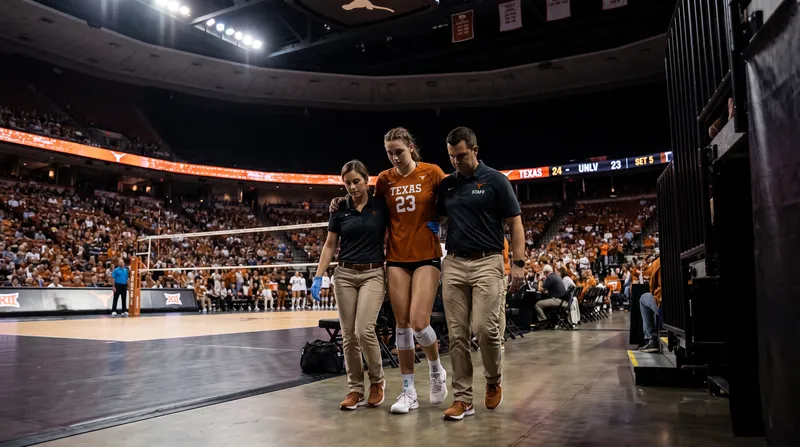
Greece's Historic EuroVolley Run Ends in Heartbreak as Angelopoulou Suffers Severe Knee Injury
5 sources
Recap
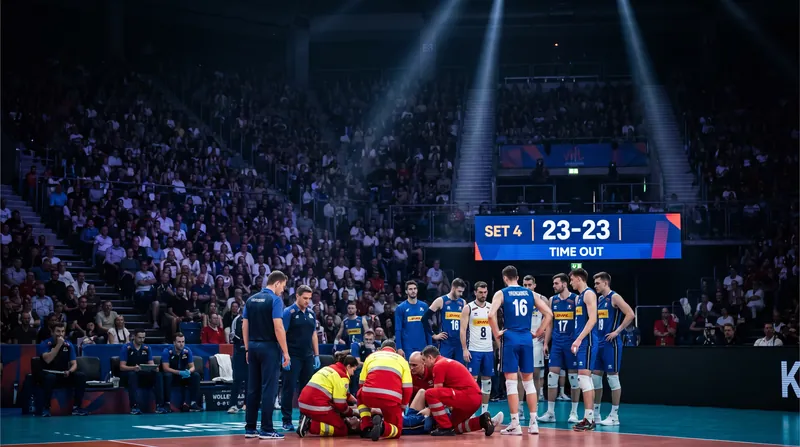
Italy Survives Swedish Scare to Reach EuroVolley 2026 Semifinals as Haak Makes History
7 sources
Trade
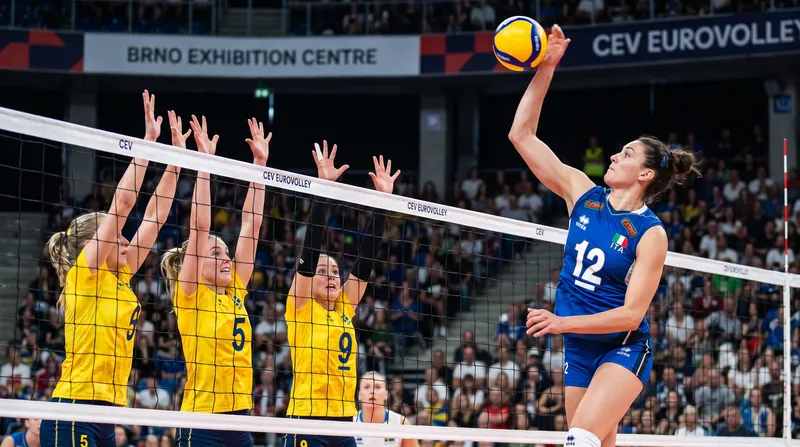
The Great Setter Shuffle: Dilfer-Stringer Returns to NorCal as Stucky and Starck Flip the NCAA Power Map
7 sources
Preview
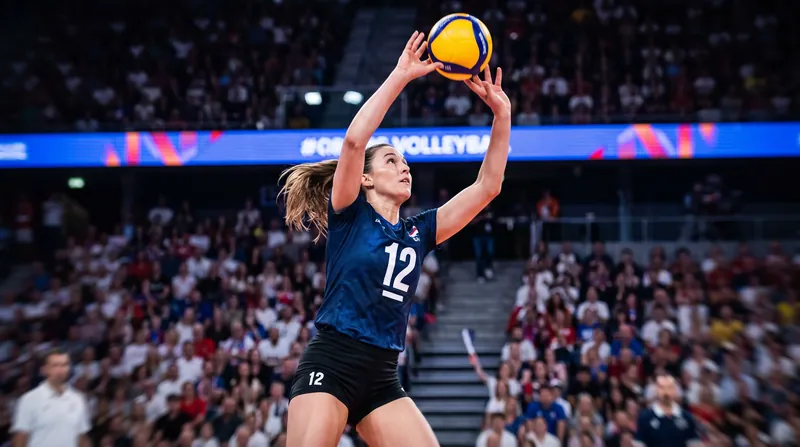
Asian Games 2026 Women's Volleyball Preview: China's Dynasty Faces Host Japan and a Rising Southeast Asian Threat
2 sources

Comments
Every angle. Every day.
Get Sports stories with full source coverage and perspective breakdowns, free every day.