
Former Division I Libero Naya Dong Opens Up About Overcoming Two ACL Injuries and the Mental Toll of Rehab
In a candid new interview, former Utah and UC San Diego volleyball standout Naya Dong shared her journey of surviving back-to-back ACL tears in high school and using those setbacks to fuel a Division I career and a future in physical therapy.
By Xia Wu
Share this story
In the high-stakes world of collegiate athletic recruiting, a major joint injury is often viewed as a devastating setback. For former Division I libero Naya Dong, it was a gauntlet she had to run twice.
Growing up immersed in Hawai’i’s fiercely competitive year-round volleyball culture, Dong recently opened up on the HNL Movement Podcast about her grueling journey of surviving back-to-back anterior cruciate ligament (ACL) tears. Her candid reflections offer a rare, unvarnished look at the intersection of physical trauma and mental resilience, providing a vital blueprint for young athletes navigating the darkest days of long-term sports rehabilitation.
The timing of Dong’s injuries represented a recruiter's ultimate nightmare. She suffered her first ACL tear during her sophomore year at Iolani School—a critical window when collegiate scouts begin finalizing their prospect boards. Rather than withdrawing from the sport, she used the forced hiatus to shadow her coaches, studying defensive schemes from the sidelines to elevate her volleyball IQ. Her blue-collar work ethic allowed her to return to the court ahead of schedule, where she quickly re-established herself as one of the state's premier defensive specialists.[1]
Just as she regained her elite form and began cementing her collegiate future, disaster struck a second time. During her senior season, Dong suffered another catastrophic ACL tear, this time to her opposite knee.
The psychological weight of facing another eight to twelve months of grueling physical therapy—knowing exactly how much pain, repetition, and isolation awaited her—threatened to derail her Division I aspirations entirely. For a high school senior on the cusp of graduation, the injury felt like a cruel twist of fate that could easily justify walking away from the sport for good.
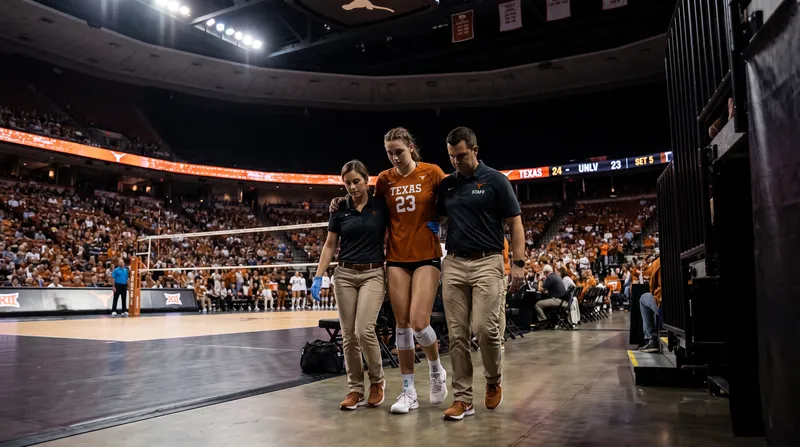
For athletes in high-impact sports like volleyball, the anterior cruciate ligament is exceptionally vulnerable. The fast-paced nature of the game requires constant jumping, sudden stops, and violent directional changes at the net. When a player lands awkwardly after an aggressive block attempt or pivots sharply in the backcourt to dig a high-speed spike, the knee joint can easily buckle under the immense torque. This sudden stress frequently results in the dreaded "pop" that signals a ruptured ligament, instantly altering the trajectory of an athlete's season and requiring immediate medical intervention.[2]
Medical data underscores the severity of the issue, particularly for young women. Teenage female athletes face a disproportionately high risk for ACL tears compared to their male counterparts, driven by a complex mix of biomechanics, anatomical differences, and landing techniques.
Orthopedic surgeons and sports medicine experts note that the standard recovery timeline demands nearly a year of intensive, daily rehabilitation. This extended period is necessary to reduce swelling, restore full range of motion, and rebuild the surrounding musculature before an athlete can even consider returning to the unpredictable environment of competitive play.
Beyond the physical agony of surgery and the repetitive strain of physical therapy, Dong emphasized the profound psychological toll of the recovery process. She spoke candidly about the inherent isolation of rehab, where an athlete is suddenly stripped of their daily routine, their locker room camaraderie, and their primary source of identity.
Sitting on the sidelines while teammates celebrate victories can breed deep resentment and depression. Furthermore, the fear of losing hard-earned scholarship offers and being forgotten by the competitive volleyball ecosystem can easily overwhelm the physical healing process if left unaddressed.
To combat this mental fatigue and maintain her forward momentum, Dong focused relentlessly on the specific variables she could control. She maintained strict sleep schedules, optimized her daily nutrition, and approached her mundane physical therapy exercises with the exact same intensity she once reserved for championship matches.
More importantly, she kept the lines of communication wide open with college recruiters. By maintaining total transparency about her surgical outcomes and sharing her daily rehab milestones, she proved her unwavering commitment to the sport, demonstrating a level of maturity that college coaches highly value.
The physical return to the court requires overcoming a massive, invisible hurdle: trusting the surgically repaired joint. Sports medicine professionals frequently observe that rebuilding confidence in the body's stability is the final, and often the most difficult, phase of the entire recovery journey.
Protective gear, such as specialized knee braces and compression sleeves, can offer temporary reassurance during early practices. However, true readiness only arrives when an athlete can instinctively dive for a loose ball or leap for a block without a second thought, fully trusting that their knee will hold firm.
Dong’s relentless patience and psychological resilience ultimately paid massive dividends. She successfully transitioned to the collegiate level, bringing her elite defensive talents and hard-won perspective to the University of Utah before concluding her NCAA career at UC San Diego. Her ability to compete at the grueling Division I level with two surgically repaired knees stands as a powerful testament to both the remarkable advancements in modern orthopedic care and her own refusal to let a medical chart dictate her athletic ceiling.
Her journey also highlights a crucial shift in modern sports medicine: the growing emphasis on proactive neuromuscular training. Because athletes face an approximate 10 percent risk of re-tearing an ACL after returning to their sport, physical therapists now focus heavily on retraining the nervous system. By teaching athletes safer landing mechanics and proper deceleration techniques, specialists ensure that the leg muscles absorb the violent shock of a jump, rather than transferring that destructive force directly into the fragile ligaments of the knee.
Today, Dong is channeling her dual experiences as an elite collegiate athlete and a two-time surgical patient into a dedicated career in physical therapy. By stepping into the healthcare field, she aims to guide the next generation of injured athletes through the exact same physical and emotional gauntlet she once conquered. Her story serves as living proof that a devastating injury doesn't have to be the end of a dream; with the right mindset, it can become the foundation of an entirely new calling.[3]
Key points
- Former Division I libero Naya Dong survived two ACL tears before beginning her college career.
- She recently detailed the profound mental and emotional toll of her recovery on the HNL Movement Podcast.
- The standard recovery timeline for an ACL reconstruction spans eight to twelve months.
- Dong maintained her collegiate recruiting prospects through transparent communication and a relentless work ethic.
- She is now pursuing a career in physical therapy to help future athletes navigate similar injuries.
How we got here
Sophomore Year
Dong suffers her first ACL tear during a high school match, beginning her first grueling rehab process.
Junior Year
She returns to the court ahead of schedule, establishing herself as a premier defensive specialist in Hawai'i.
Senior Year
Disaster strikes with a second ACL tear to her opposite knee, threatening her collegiate prospects.
College Career
Dong successfully transitions to Division I, competing for the University of Utah and UC San Diego.
June 2026
Dong shares her comprehensive recovery journey on the HNL Movement Podcast, aiming to inspire other injured athletes.
- Recovering Athletes
- Focuses on the psychological isolation and mental hurdles of long-term rehabilitation.
- Sports Medicine Experts
- Emphasizes the necessity of proper biomechanics and patience in the return-to-play timeline.
- Return-to-Play Specialists
- Highlights the importance of rebuilding confidence and utilizing proper support gear during the transition back to the court.
Perspectives this story doesn't cover
- High School Coaches
- Parents of Injured Athletes
Sources
Source coverage
3 outlets
3 viewpoints surfaced



- [1]ScoringLiveRecovering Athletes
Female Athlete of the Week: Naya Dong, Iolani volleyball
- [2]Bumrungrad International HospitalSports Medicine Experts
ACL Injuries in Athletes: Symptoms, Treatment, and Recovery
Read on Bumrungrad International Hospital → - [3]Factlen Editorial TeamReturn-to-Play Specialists
Synthesis by Factlen editorial team
Read on Factlen Editorial Team →
More in Sports
See all →Standings
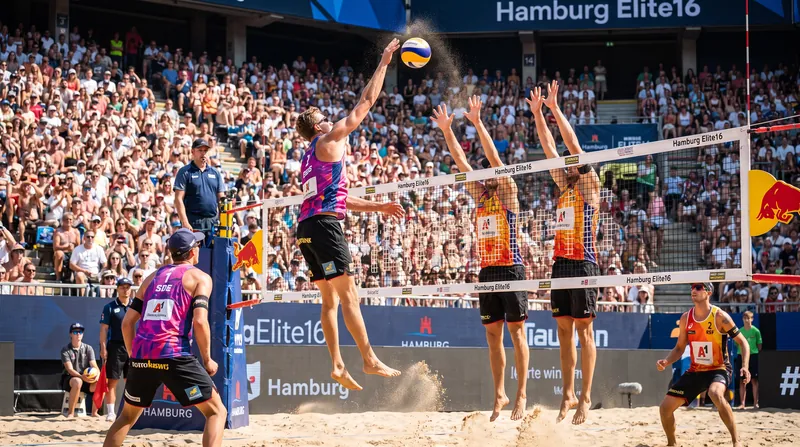
Ehlers and Wust Disrupt Beach Pro Tour Standings With Historic Gold at Hamburg Elite16
5 sources
Standings
The Race to LA28 Begins: Beach Volleyball Continental Championships Open Olympic Qualification
4 sources
Standings
New World Order: Slovenia and Japan Disrupt Traditional Hierarchy in Latest FIVB Men's Rankings
5 sources
Standings
USA and China Dominate Early as Philippines Secures Historic Win at Expanded U17 World Championship
6 sources
Comments
Every angle. Every day.
Get Sports stories with full source coverage and perspective breakdowns, free every day.