
Global Triathlon Injury Report: Langridge Conquers Demons at Roth as Graf and Reid Navigate WTCS Comebacks
Fenella Langridge returns to Challenge Roth following terrifying artery surgery, while Henry Graf secures a historic WTCS Hamburg podium just weeks after a severe crash. Meanwhile, New Zealand's Tayler Reid battles ranking drops stemming from an early-season rib injury.
By Factlen Editorial Team
- Athlete Mental Health Advocates
- Focuses on the psychological toll of high-speed crashes and the bravery required to return.
- High-Performance Directors
- Emphasizes the tactical and administrative management of injured athletes.
- Triathlon Fanbase
- Celebrates the dramatic, unpredictable nature of home-soil comebacks.
What's not represented
- · Sports Psychologists
- · Race Medical Directors
Why this matters
Injuries in professional triathlon don't just cause physical pain; they trigger massive ranking drops and psychological hurdles that can end careers. Watching athletes overcome these setbacks provides a masterclass in resilience and highlights the hidden tactical battles of the sport.
Key points
- Fenella Langridge successfully returned to Challenge Roth after overcoming terrifying vascular surgery and a confidence-shattering bike crash.
- Germany's Henry Graf bounced back from a severe crash in Alghero to claim a historic bronze medal at WTCS Hamburg.
- New Zealand's Tayler Reid missed the WTCS Hamburg individual start due to a ranking drop caused by an early-season rib injury.
- Reid pivoted his focus to the Mixed Relay, highlighting the harsh realities of the WTCS points system for injured athletes.
The mid-summer triathlon calendar is notoriously unforgiving, demanding peak physical condition and unshakeable mental fortitude. Yet, as the 2026 season pushes through July, the defining narrative across both the World Triathlon Championship Series (WTCS) and the long-course circuit is one of remarkable resilience.
Across the globe, elite triathletes are returning from severe physical and mental setbacks to reclaim their spots at the top of the sport. From terrifying vascular surgeries to high-speed tarmac crashes and bone fractures, the latest injury report highlights the grueling reality of professional triathlon—and the extraordinary grit required to bounce back.
For British long-distance star Fenella Langridge, merely standing on the start line at Challenge Roth in early July was a profound victory. Earlier this year, Langridge was diagnosed with external iliac artery endofibrosis, a rare but severe condition that restricts blood flow to the legs during intense exertion.[1][5]
The diagnosis required what Langridge openly described as "scary" vascular surgery. While the physical recovery followed a strict medical timeline, her comeback was abruptly derailed by a secondary incident: a high-speed training crash while riding in Australia.[1]

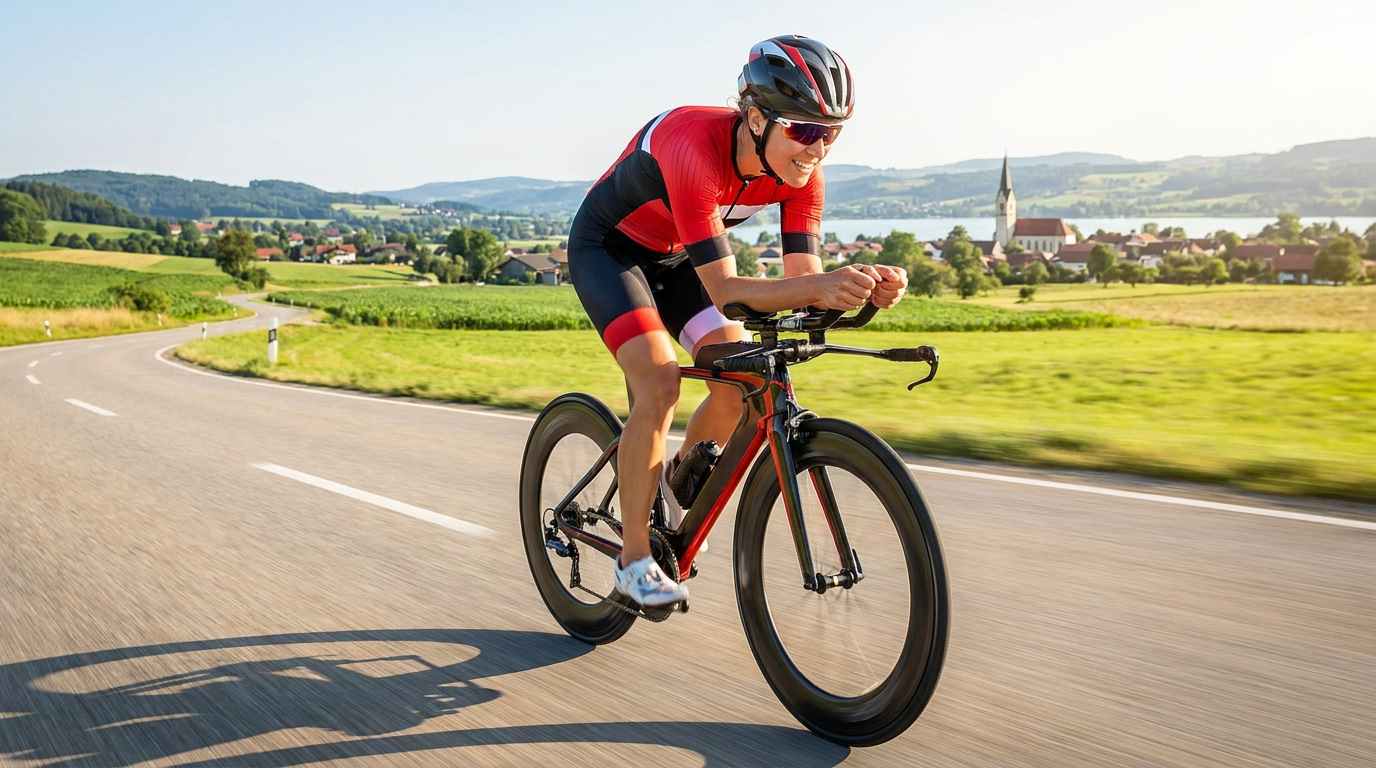
Though she avoided major bone fractures in the fall, the crash shattered her confidence on the bike. Returning to the aggressive, forward-leaning time-trial position is notoriously difficult after a wreck, and Langridge admitted the mental scars lingered far longer than the road rash.[1][5]
She openly discussed feeling "embarrassed" at IRONMAN New Zealand earlier in the season, noting she spent barely any time in her aero bars due to lingering anxiety. "The surgery was extremely scary... Then I had the crash, which threw another curveball into the situation," Langridge explained to reporters ahead of Roth.[1]
Arriving at the iconic Challenge Roth venue, Langridge declared herself "90% there" and successfully navigated the 180-kilometer bike course. By banishing her mental demons on one of the sport's biggest stages, she proved she remains a formidable force in the long-course arena.[1][5]
Arriving at the iconic Challenge Roth venue, Langridge declared herself "90% there" and successfully navigated the 180-kilometer bike course.
On the short-course WTCS circuit, Germany's Henry Graf delivered his own masterclass in rapid recovery. Just weeks prior to the July WTCS stop in Hamburg, Graf was involved in a brutal, multi-rider bike pile-up at the WTCS event in Alghero, Italy.[2][6]

With his bike in a state of complete disrepair and nursing a battered, injured hand, Graf was forced to abandon the Italian race. For a young athlete trying to secure his position in the elite ranks, the crash could easily have derailed his entire summer campaign.[6]
Instead, Graf channeled his frustration into the WTCS Hamburg event on July 12. Racing in front of a raucous home crowd, he navigated the technical, tight-cornered city course with absolute precision, showing no hesitation in the dense draft-legal packs.[2][4]
Graf surged to a stunning bronze medal finish, becoming the first German male athlete to reach the Hamburg podium in five years. His ability to rebound from a race-ending crash to a career-defining podium in a matter of weeks stands as one of the season's most impressive turnarounds.[2][4]
Meanwhile, New Zealand's Tayler Reid is navigating the frustrating administrative consequences of an injury. An early-season rib injury sidelined the Kiwi powerhouse, forcing him out of crucial points-scoring events during a vital Olympic qualification window.[3]

Because of his prolonged absence, Reid's world ranking plummeted. This drop relegated him to third on the waitlist for the individual WTCS Hamburg sprint race, denying him the chance to chase the individual ranking points he desperately needs.[3][4]
Forced to pivot, Reid channeled his pent-up energy entirely into the World Triathlon Mixed Relay Championships. His situation highlights the unforgiving nature of the WTCS points system, where a single mid-season injury can lock an athlete out of top-tier individual starts.[3][4]
From Langridge's vascular surgery to Graf's tarmac-scraping crashes and Reid's rib fractures, the July injury report underscores the hidden battles fought far away from the blue carpet. Their successful returns inject fresh, inspiring momentum into the back half of the 2026 global triathlon season.
How we got here
Early 2026
Fenella Langridge undergoes surgery for external iliac artery endofibrosis, followed by a confidence-shattering bike crash in Australia.
May 2026
Tayler Reid suffers a rib injury, forcing him to miss crucial early-season WTCS events and dropping his world ranking.
June 2026
Henry Graf is involved in a severe bike crash at the WTCS Alghero event, forcing him to abandon the race with a damaged hand and bike.
July 2026
Graf podiums at WTCS Hamburg, Langridge completes Challenge Roth, and Reid pivots to the Mixed Relay.
Viewpoints in depth
Athlete Mental Health Advocates
Focuses on the psychological toll of high-speed crashes and the bravery required to return.
For advocates of athlete mental health, Langridge’s candid admission about her fear of the aero bars is a watershed moment. Triathlon culture has historically demanded stoicism, often pushing athletes to ignore the psychological trauma of high-speed wrecks. By openly discussing her 'embarrassment' and anxiety, Langridge normalizes the mental rehabilitation required alongside physical therapy. This camp argues that true recovery isn't just about bone density or artery clearance, but about rebuilding the neurological trust required to descend at 60 kilometers per hour.
High-Performance Directors
Emphasizes the tactical and administrative management of injured athletes.
From a federation standpoint, injuries are logistical nightmares. High-performance directors view situations like Tayler Reid's through the lens of points math and Olympic qualification. When an athlete misses early-season races, the subsequent ranking drop can lock them out of the very events they need to climb back up. This camp focuses on strategic pivots—such as deploying a fresh, angry Reid in the Mixed Relay—to salvage federation points and keep the athlete engaged while they wait for individual start lists to open up.
Triathlon Fanbase
Celebrates the dramatic, unpredictable nature of home-soil comebacks.
For the fans lining the barricades, injury comebacks inject pure drama into the sport. Henry Graf’s journey from a mangled bike in Alghero to a historic bronze medal in Hamburg is exactly the kind of narrative that fuels the triathlon community. Fans thrive on the unpredictability of the WTCS circuit, where a battered athlete can heal just enough to deliver a career-defining performance on home soil, proving that momentum in endurance sports can shift in a matter of weeks.
What we don't know
- Whether Fenella Langridge will return to 100% confidence in her aero position for the remainder of the long-course season.
- If Tayler Reid will be able to secure enough individual starts later in the year to rebuild his world ranking.
- How Henry Graf's breakthrough Hamburg podium will alter his race calendar and Olympic prospects moving forward.
Key terms
- External iliac artery endofibrosis
- A vascular condition where the artery supplying the legs narrows, often affecting elite cyclists and requiring surgery to restore blood flow.
- Aero bars
- Handlebar extensions used in triathlons to allow the rider to maintain a highly aerodynamic, tucked position.
- WTCS
- World Triathlon Championship Series, the top-tier annual circuit for short-course elite triathletes.
- Mixed Relay
- A fast-paced team event where two men and two women each complete a super-sprint triathlon before tagging the next teammate.
Frequently asked
What is external iliac artery endofibrosis?
It is a vascular condition common in high-performance cyclists and triathletes where the artery supplying blood to the leg becomes thickened and narrowed, often requiring surgical intervention.
Why couldn't Tayler Reid race the individual event at WTCS Hamburg?
His early-season rib injury caused him to miss races, which dropped his world ranking and left him stuck in third place on the waitlist for the individual start.
How did Henry Graf perform at WTCS Hamburg?
He won the bronze medal, becoming the first German man to podium at the event in five years, just weeks after a severe crash in Alghero.
Sources
Source coverage
6 outlets
3 viewpoints surfaced






[1]TRI247Athlete Mental Health Advocates
Challenge Roth 2026: How Fenella Langridge was finally able to banish her mental demons
Read on TRI247 →[2]World TriathlonTriathlon Fanbase
Five major headlines from WTCS Hamburg: Slupek returns and Graf makes history
Read on World Triathlon →[3]SBR-TriHigh-Performance Directors
Tayler Reid's WTCS Hamburg waitlist battle after rib injury
Read on SBR-Tri →[4]Triathlon MagazineHigh-Performance Directors
WTCS Hamburg 2026: Henry Graf secures home podium; Reid focuses on Mixed Relay
Read on Triathlon Magazine →[5]SlowtwitchAthlete Mental Health Advocates
Fenella Langridge Returns to Roth Following Artery Surgery
Read on Slowtwitch →[6]Tri TodayTriathlon Fanbase
From Alghero Crash to Hamburg Podium: Henry Graf's Rapid Rebound
Read on Tri Today →

More in sports
See all 16 stories →UFL Pipeline
NFL Training Camps Open With Record 57 UFL Alumni, Cementing Spring League's Talent Pipeline
7 sources

Downhill Skateboarding
Frenchman Adrien Paynel Conquers Iconic TT Mountain Course to Win World Downhill Skateboarding Championship Round
5 sources
WTT Champions
Miwa Harimoto Becomes Youngest-Ever WTT Champions Winner With Seven-Game Thriller in Chongqing
7 sources
F1 Driver Market
Red Bull Secures Hadjar Amid Escalating Uncertainty Over Max Verstappen's Future
8 sources
Every angle. Every day.
Get sports stories with full source coverage and perspective breakdowns delivered to your inbox.