
Ferrari Unveils the Luce: Inside the Engineering of Maranello's First EV
Ferrari has revealed its first fully electric vehicle, the 1,035-horsepower Luce, featuring a polarizing five-seat design and a structural battery pack.

Share this story
For over seven decades, the Ferrari mystique has been inextricably linked to the visceral scream of internal combustion. But in May 2026, the Maranello-based automaker crossed the Rubicon, unveiling the "Luce"—its first fully electric production vehicle. Meaning "light" in Italian, the Luce is a radical departure from the brand's mid-engined sports car lineage, presenting as a five-door liftback saloon that seats five passengers.[1][5]
The reveal at the Vela di Calatrava sports complex near Rome immediately ignited a firestorm of debate. Priced at an eye-watering €550,000 (roughly $640,000), the Luce abandons the traditional low-slung supercar silhouette for a higher-riding, aerodynamic "monobox" shape. While some automotive purists decried the loss of Ferrari's signature styling and V12 engines, the vehicle represents a calculated, necessary leap into the electric era for a brand navigating strict global emissions mandates.[2][3][5]
To execute this pivot, Ferrari looked outside its historic design houses, partnering with LoveFrom, the creative collective founded by former Apple design chief Jony Ive and industrial designer Marc Newson. The resulting aesthetic is highly polarizing. The Luce is 198 inches long—two inches longer than Ferrari's Purosangue SUV—and features centre-opening coach doors, a rear liftgate, and a forward-set cabin. The design prioritizes aerodynamic efficiency and interior volume over aggressive, muscular haunches.[2][5]
The unconventional shape is largely dictated by the vehicle's underlying architecture. The Luce is built on a dedicated 800-volt electric platform that utilizes a 122-kilowatt-hour battery pack from SK On. Rather than simply dropping a battery into an existing frame, Ferrari engineered the pack as a structural element of the chassis. This integration increases the vehicle's torsional rigidity by 35 percent compared to previous four-door models, effectively turning the heavy battery into a foundational strength rather than a dynamic liability.[4][5]
Despite weighing 4,982 pounds (2,260 kilograms)—making it the heaviest production Ferrari ever built—the Luce's performance metrics remain firmly in hypercar territory. The powertrain consists of four radial-flow permanent-synchronous electric motors, one dedicated to each wheel. Together, they produce a staggering 1,035 horsepower and 5,900 pound-feet of torque at the rear wheels.[2][5]
This quad-motor setup allows the Luce to accelerate from zero to 62 mph in just 2.5 seconds, with a top speed exceeding 193 mph. But the true engineering breakthrough lies in how that power is managed. A new Vehicle Control Unit (VCU) updates traction and power targets 200 times per second, delivering unprecedented independent control over each wheel. The system is heavily rear-biased, with the rear motors generating 831 horsepower while the front motors contribute 282 horsepower, allowing drivers to induce controlled oversteer akin to a traditional rear-wheel-drive Ferrari.[3][5]
The most contentious challenge of electrifying a Ferrari, however, is the absence of engine noise. Rather than piping artificial, synthesized spaceship hums through the cabin speakers, Ferrari engineers opted for a mechanical solution. The Luce utilizes a precision accelerometer mounted on the rear axle to capture the actual physical vibrations of the electric motors and rotating components.[4]
This raw mechanical frequency is then equalized and amplified—a process Ferrari likens to an electric guitar pickup—producing an authentic, functional sound that rises in pitch and intensity with the motors' RPM. It is a distinctly different acoustic profile than a V12, but it provides the driver with genuine auditory feedback tied directly to the car's physical exertion.[2][4]
Inside the cabin, the LoveFrom collaboration yields what some reviewers are calling the most tactile and considered interior in Ferrari's history. Moving away from the industry trend of slapping massive touchscreens onto the dashboard, the Luce features a moving instrument binnacle that adjusts with the steering wheel, ensuring perfect visibility for drivers of any height. The physical controls, including the iconic Manettino dial, are crafted from anodized aluminum, and the vehicle utilizes a world-first E-Ink display embedded in a scratch-resistant glass key.
Sustainability was also a primary engineering target. The Luce's chassis and body shell are constructed from 75 percent recycled aluminum, a move that Ferrari claims reduces production-related carbon emissions by approximately 70 percent. To manage the immense weight of the battery and maintain ride quality, the vehicle employs a separate subframe connected by elastomeric bushes—high-viscosity polymers that isolate the cabin from harsh road vibrations.[4]
Despite the impressive engineering, significant uncertainties remain regarding the Luce's real-world efficiency. Ferrari claims a range of 329 miles (529 km) on the European WLTP cycle, but US EPA estimates are expected to land closer to 280 miles. For a vehicle with a massive 122-kWh battery and a highly aerodynamic shape, some industry analysts have expressed disappointment in these efficiency figures, noting that competitors extract more range from smaller packs.[1][3][5]
The market's ultimate verdict on the Luce will test the elasticity of the Ferrari brand. While internet commentators have harshly criticized the saloon styling, early sales indicators suggest strong demand among ultra-wealthy early adopters. When the Luce launched in China in late June 2026, the initial allocation of 88 units sold out immediately.[3][5]
Ferrari executives are quick to reassure traditionalists that the Luce is not an act of heresy, nor does it signal the immediate death of internal combustion. The company will continue to develop and sell six-, eight-, and twelve-cylinder engines for as long as regulations permit. Instead, the Luce serves as an additive expansion of the lineup—a high-stakes technological flagship proving that Maranello can engineer a compelling driving experience without a drop of gasoline.[2]
Key points
- The Luce is Ferrari's first fully electric vehicle, featuring a polarizing five-seat, five-door liftback design.
- Four electric motors produce a combined 1,035 horsepower, enabling a 0-62 mph sprint in 2.5 seconds.
- The 122-kWh battery pack is integrated directly into the chassis, increasing the vehicle's torsional rigidity by 35 percent.
- To replace the iconic V12 sound, Ferrari developed a system that amplifies the authentic mechanical vibrations of the electric motors.
What we don’t know
- The official US EPA range has not been certified, though estimates suggest it will fall short of the 329-mile European WLTP rating.
- It remains to be seen how traditional Ferrari collectors in Western markets will respond to the vehicle's divisive 'monobox' styling.
- Ferrari has not confirmed the exact aerodynamic drag coefficient, only stating it is the slipperiest car they have ever produced.
How we got here
October 2025
Ferrari previews its upcoming electric vehicle architecture under the development name 'Elettrica' during its Capital Markets Day.
May 25, 2026
The Ferrari Luce is officially unveiled to the press at the Vela di Calatrava sports complex near Rome.
June 27, 2026
The Luce goes on sale in China, with the initial allocation of 88 units selling out immediately.
Late 2026
First customer deliveries of the €550,000 electric vehicle are scheduled to begin in Europe.
- Automotive Traditionalists
- Skeptics who feel the heavy EV platform and divisive styling dilute the brand's heritage.
- Tech-Forward Adopters
- Enthusiasts who praise the bold design collaboration and extreme electric performance.
- Engineering & Manufacturing
- Observers focused on the structural battery integration and mechanical sound amplification.
Perspectives this story doesn't cover
- Rival EV Hypercar Manufacturers
- Environmental Regulators
Sources
Source coverage
5 outlets
3 viewpoints surfaced




- [1]Car and DriverAutomotive Traditionalists
2027 Ferrari Luce
Read on Car and Driver → - [2]EdmundsTech-Forward Adopters
Ferrari's First EV Is Here! Meet the Polarizing, Powerful and Seriously Expensive Luce
Read on Edmunds → - [3]ElectrifyingAutomotive Traditionalists
2026 Ferrari Luce Preview
Read on Electrifying → - [4]ThomasNetEngineering & Manufacturing
Ferrari Unveils Luce All-Electric Five-Seat Sedan
Read on ThomasNet → - [5]WikipediaTech-Forward Adopters
Ferrari Luce
Read on Wikipedia →
More in Automotive & Transportation
See all →Luxury Market
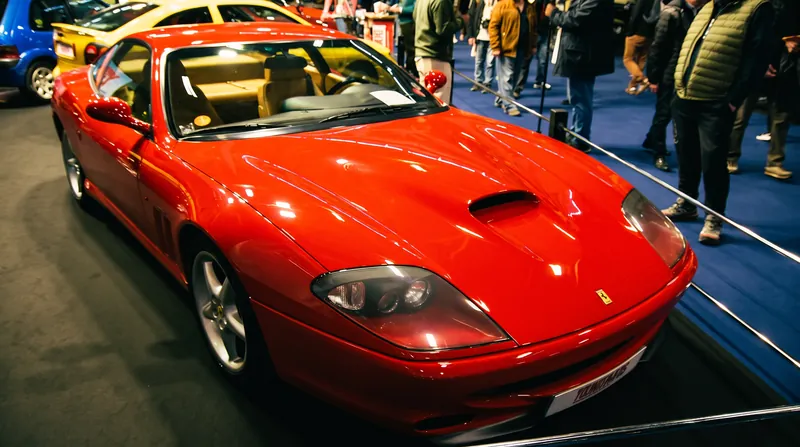
Global Supercar Sales Plunge 21% as Capital Shifts to Stock Market, Hitting Ferrari and Porsche Hard
7 sources
Supercar Economics
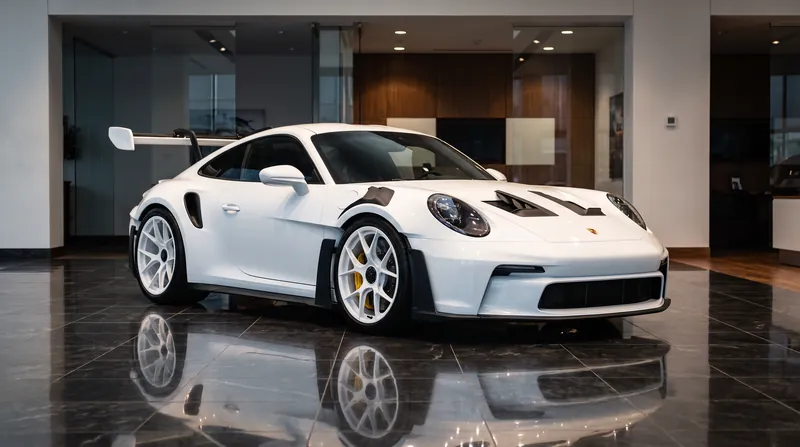
Lamborghini Posts Record H1 Revenue as US Tariffs and Market Shifts Squeeze Operating Profit
7 sources
Luxury Auto
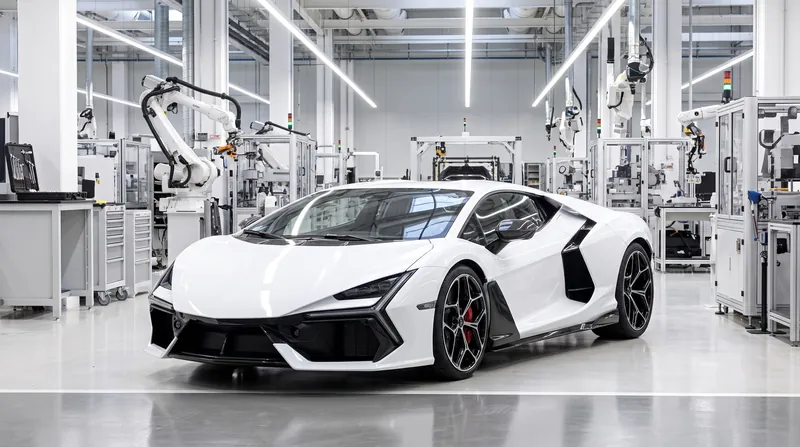
Ferrari Raises 2026 Guidance as 'AI Wealth' and Bespoke Personalization Drive Record Margins
2 sources
Hypercar Engineering
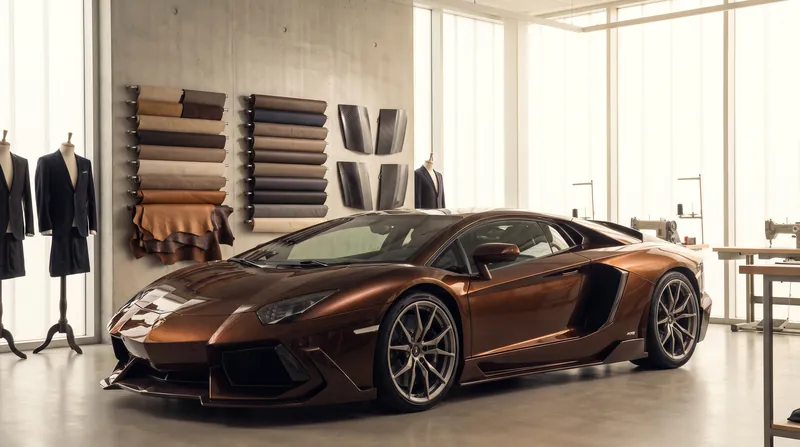
Bugatti Tourbillon Revealed: 1,800 HP V16 Hybrid Hypercar Starts at $4.6 Million
7 sources
Comments
Every angle. Every day.
Get Automotive & Transportation stories with full source coverage and perspective breakdowns, free every day.