
Fed Stress Test: Banks Pass Severe Scenario, Clearing Way for Billions in Capital Payouts
All 32 major U.S. banks successfully cleared the Federal Reserve's 2026 stress test, proving their resilience against a hypothetical $708 billion economic shock. The clean bill of health, combined with a regulatory freeze on capital buffers, has triggered a wave of massive dividend hikes and share buybacks across Wall Street.
By Factlen Editorial Team
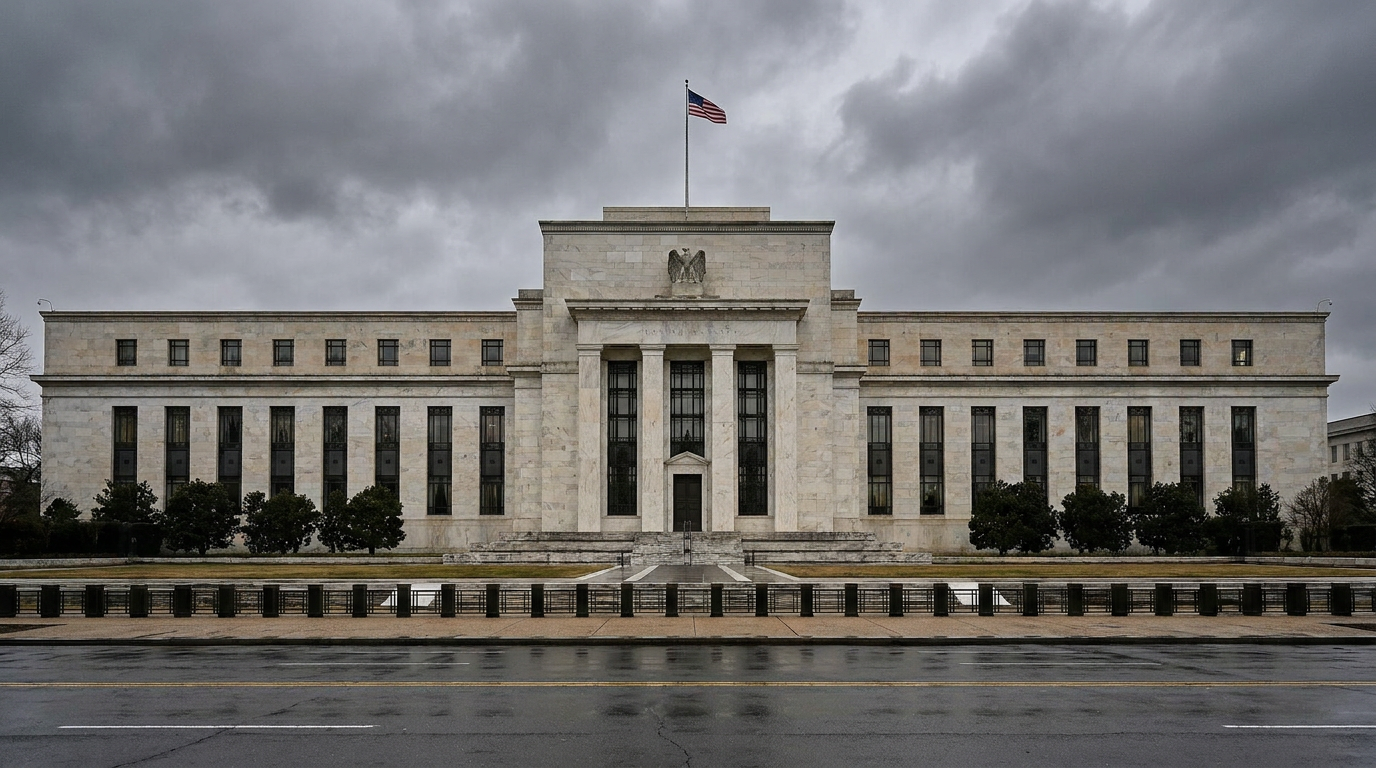
- Regulators & Central Bankers
- Focus on the aggregate resilience of the banking system and the success of post-2008 capital requirements.
- Banking Industry Advocates
- Emphasize the sector's strength, predictability in regulation, and the ability to return excess capital to shareholders.
- Systemic Risk Skeptics
- Warn that passing a test designed around 2008-era risks does not guarantee safety against modern, unmodeled threats like cyberattacks.
What's not represented
- · Mid-sized and community banks not subject to the test
- · Borrowers facing tighter credit standards despite bank resilience
Why this matters
The stress test results confirm that the U.S. banking system is fundamentally secure enough to withstand a severe recession without requiring taxpayer bailouts. For investors, the passing grades unlock billions of dollars in wealth generation through increased dividends and massive share repurchase programs.
Key points
- All 32 major U.S. banks passed the Federal Reserve's 2026 annual stress test.
- The banking sector maintained capital above regulatory minimums despite a simulated $708 billion in loan losses.
- The Fed froze Stress Capital Buffer requirements through 2027, providing banks with regulatory certainty.
- Major lenders immediately announced billions in shareholder payouts, including a $50 billion buyback from JPMorgan Chase.
The Federal Reserve has given the United States banking system a clean bill of health, unlocking billions of dollars in shareholder payouts. On June 24, the central bank released the results of its 2026 annual stress test, an exhaustive financial war game designed to measure whether the nation's largest lenders can survive a catastrophic economic collapse. All 32 participating institutions comfortably passed the exam, maintaining capital levels well above regulatory minimums despite absorbing massive hypothetical losses. The sweeping victory immediately cleared the way for Wall Street giants to reward investors, triggering a wave of dividend hikes and massive share repurchase authorizations.[4][5]
To understand the significance of the results, it is essential to understand the mechanism of the test itself. Born out of the 2008 Global Financial Crisis, the Dodd-Frank Act Stress Test (DFAST) forces banks to prove they have enough of a financial cushion to keep lending during a severe recession. The primary metric the Fed watches is the Common Equity Tier 1 (CET1) capital ratio, which compares a bank's core equity capital against its total risk-weighted assets. Essentially, it measures the bedrock money a bank holds that cannot be withdrawn by depositors or claimed by creditors. The regulatory floor is 4.5 percent; anything below that triggers severe restrictions on a bank's operations.[1]
Every year, the Federal Reserve invents a new "severely adverse scenario"—a hypothetical doomsday tailored to probe the system's current vulnerabilities. For 2026, the central bank simulated a brutal real estate Armageddon. The scenario assumed that commercial real estate (CRE) prices would plunge by 39 percent, while residential housing prices would collapse by 30 percent. Simultaneously, the model projected the U.S. unemployment rate spiking to 10 percent, accompanied by a commensurate drop in gross domestic product and severe disruptions in corporate debt markets.[1][5]

Under these punishing conditions, the math gets ugly fast. The Fed projected that the 32 banks would suffer a combined $708 billion in total loan losses over a nine-quarter horizon. Credit card defaults drove the largest share of the damage, accounting for roughly $200 billion in projected losses. Commercial and industrial loans added another $160 billion to the tally, while the heavily scrutinized commercial real estate sector contributed $75 billion in losses.[2][4]
Yet, despite absorbing nearly three-quarters of a trillion dollars in hypothetical damage, the banking sector barely flinched. The aggregate CET1 capital ratio for the 32 banks declined by only 1.6 percentage points—dropping from a starting point of 12.8 percent to a minimum of 11.2 percent. This marked the smallest aggregate capital decline in seven years. Every single institution remained comfortably above the 4.5 percent regulatory minimum, proving that the post-2008 capital requirements have successfully fortified the system's balance sheets.[1][2]

Yet, despite absorbing nearly three-quarters of a trillion dollars in hypothetical damage, the banking sector barely flinched.
The 2026 test also featured a unique regulatory twist that acted as a massive catalyst for the stock market. In previous years, a bank's stress test performance directly dictated its Stress Capital Buffer (SCB)—an extra layer of capital it must hold above the minimum. However, the Federal Reserve announced earlier in the year that it would freeze all existing SCB requirements through 2027 while it overhauls its testing methodology to incorporate public feedback.[7]
This freeze fundamentally changed the stakes of the 2026 exam. Instead of worrying that a poor showing might trigger a surprise increase in capital requirements, bank executives knew exactly where the goalposts were. The test transformed from a potential regulatory threat into a pure green light for capital distribution. With their capital buffers locked in and their balance sheets proven resilient, the largest lenders wasted no time opening their vaults to shareholders.[6][7]
JPMorgan Chase led the charge, announcing a staggering $50 billion share repurchase program and declaring its intention to raise its quarterly dividend by 10 percent to $1.65 per share. Morgan Stanley followed suit, authorizing a new $20 billion multi-year buyback plan and hiking its dividend by 15 percent. Goldman Sachs boosted its dividend by 11 percent to $5.00 per share, while Citigroup raised its payout by 12 percent while maintaining its existing $30 billion repurchase program.[4][7]

While the results and subsequent payouts are a clear victory for the industry, risk analysts and systemic skeptics caution against declaring the financial system invincible. The primary critique of the Fed's stress test is that it is inherently backward-looking. The models are exquisitely tuned to simulate the credit defaults and real estate crashes of the last crisis, but they do not account for emerging, unmodeled threats.[3]
Critics point out that the 2026 scenario ignores the devastating potential of a coordinated cyberattack on financial infrastructure, the rapid proliferation of AI-driven vulnerabilities, or a sudden contagion event originating in the lightly regulated, multi-trillion-dollar private credit sector. Capital serves as the ultimate insurance policy against the unknown. While the banks have proven they can survive the Fed's modeled disasters, some experts warn that reducing capital requirements based on these tests could leave the system exposed to tomorrow's unscripted shocks.[3]
How we got here
2008-2010
The Global Financial Crisis prompts the creation of the Dodd-Frank Act and mandatory annual stress testing for large banks.
February 2026
The Federal Reserve announces a freeze on Stress Capital Buffer (SCB) requirements through 2027 to revamp the testing framework.
June 24, 2026
The Fed releases the 2026 stress test results, showing all 32 participating banks passed the severely adverse scenario.
July 2026
Major U.S. banks initiate billions in new share buybacks and dividend increases following the test results.
Viewpoints in depth
The Regulatory View
The Federal Reserve sees the results as validation of post-2008 capital requirements.
Regulators, led by Fed Vice Chair for Supervision Michelle Bowman, view the 2026 stress test as definitive proof that the U.S. banking system is fortified against severe economic shocks. By absorbing over $700 billion in hypothetical losses without breaching minimum capital thresholds, the banks demonstrated that the stringent capital requirements implemented after the Global Financial Crisis are working exactly as intended. The Fed argues this resilience protects taxpayers from future bailouts while ensuring banks can continue lending during a downturn.
The Industry View
Bank executives emphasize their excess capital and the need for regulatory predictability.
For the banking industry, the stress test results are a green light to reward shareholders. Industry groups like the American Bankers Association highlight that the sector is holding significantly more capital than required. They strongly support the Fed's decision to freeze the Stress Capital Buffer through 2027, arguing that regulatory certainty allows banks to plan their capital distributions—like JPMorgan's $50 billion buyback—more efficiently. The industry maintains that overly punitive capital rules would unnecessarily restrict lending and economic growth.
The Systemic Skeptics
Risk analysts warn that the test ignores modern, unmodeled financial threats.
Systemic risk analysts and financial skeptics argue that the Fed's stress test is fighting the last war. While the models accurately simulate 2008-style credit defaults and real estate crashes, they fail to account for 21st-century threats. Critics point out that the test ignores the potential for coordinated cyberattacks, AI-driven market flash crashes, or contagion from the rapidly expanding, lightly regulated private credit sector. From this perspective, reducing capital requirements based on a backward-looking test leaves the financial system dangerously exposed to unscripted shocks.
What we don't know
- How the Federal Reserve will alter its stress-testing models when the framework is revamped in 2027.
- Whether the banking system could withstand an unmodeled shock, such as a major cyberattack or private credit crisis.
- How the influx of share buybacks will impact the broader stock market's performance through the remainder of the year.
Key terms
- CET1 Capital
- Common Equity Tier 1 capital; the highest quality of regulatory capital a bank holds, consisting mostly of common stock and retained earnings, acting as a buffer against financial losses.
- Stress Capital Buffer (SCB)
- An additional layer of capital the Federal Reserve requires large banks to hold above the regulatory minimum, sized according to their individual stress test performance.
- Share Buyback
- When a company buys its own outstanding shares from the open market, reducing the number of shares available and typically boosting the value of remaining shares.
- Commercial Real Estate (CRE)
- Properties used exclusively for business purposes, such as office buildings, retail spaces, and hotels, which are highly sensitive to economic downturns.
Frequently asked
Did any banks fail the 2026 stress test?
No. All 32 participating large U.S. banks successfully stayed above their minimum capital requirements, even under the severely adverse scenario.
Why are banks raising dividends now?
Because the Fed froze capital buffer requirements and the banks passed the stress test, they have regulatory certainty and excess capital, which they are returning to shareholders.
What was the 'doomsday' scenario this year?
The Fed simulated a severe global recession featuring 10% unemployment, a 39% plunge in commercial real estate prices, and a 30% drop in housing prices.
Sources
Source coverage
7 outlets
3 viewpoints surfaced







[1]Federal Reserve BoardRegulators & Central Bankers
Federal Reserve Board releases results of annual bank stress test
Read on Federal Reserve Board →[2]Fitch RatingsSystemic Risk Skeptics
US Banks Easily Pass 2026 DFAST; Increase Capital Payouts
Read on Fitch Ratings →[3]ForbesSystemic Risk Skeptics
Fed Stress Tests Show Bank Resilience, But Miss Tomorrow's Risks
Read on Forbes →[4]Banking ExchangeBanking Industry Advocates
US Banks Raise Shareholder Payouts After Passing Fed Stress Tests
Read on Banking Exchange →[5]Global Finance Magazine
Fed Stress Test 2026: US Banks Pass Worst-Case Simulation
Read on Global Finance Magazine →[6]Seeking AlphaSystemic Risk Skeptics
The Stress Test Was Clean, But Not Soft
Read on Seeking Alpha →[7]TheStreetBanking Industry Advocates
Frozen capital buffers gave banks the confidence to act quickly
Read on TheStreet →
Every angle. Every day.
Get finance stories with full source coverage and perspective breakdowns delivered to your inbox.