
FBI Arrests OpenAI Engineer Accused of Bugging Executive Conference Room
Federal authorities have charged a 35-year-old OpenAI engineer with planting a covert audio recording device inside the company's San Francisco headquarters. The encrypted device, concealed behind a television, was discovered by security personnel before the employee was terminated and taken into custody.
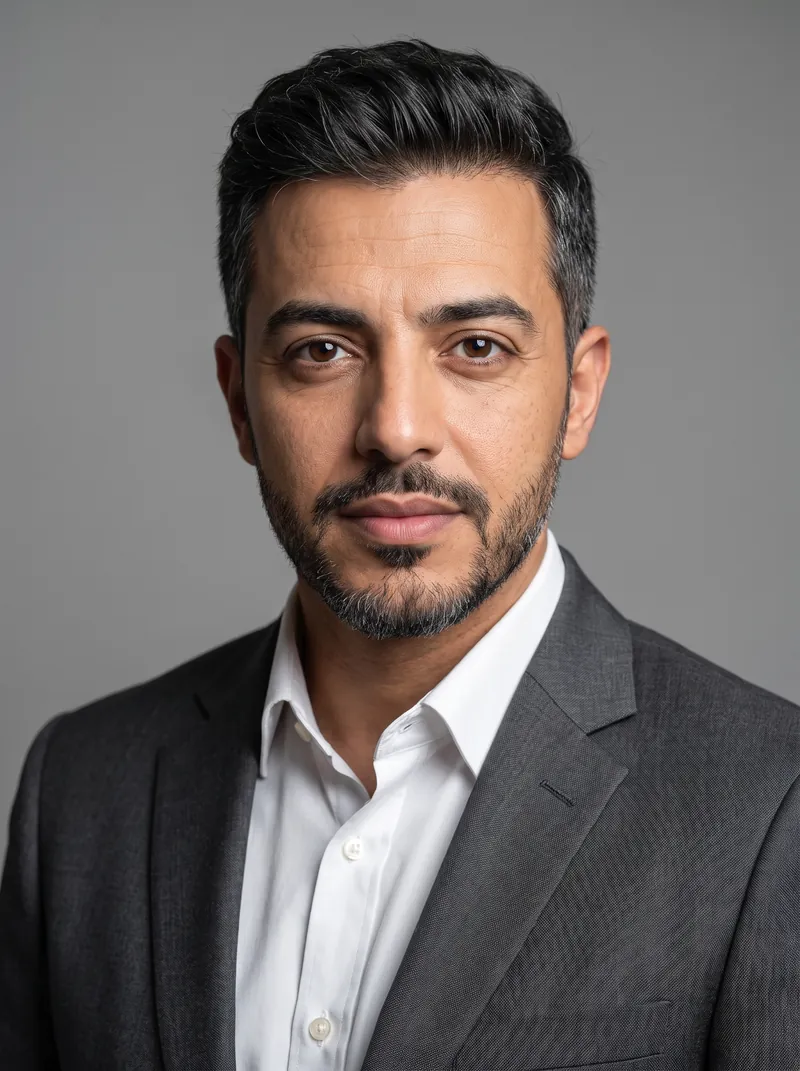
On October 9, 2026, federal agents arrested a 35-year-old OpenAI engineer on charges of planting a covert audio recording device inside the artificial intelligence company's San Francisco headquarters. Abdulrahman Alfozan, a Saudi national who had worked at the firm since July 2025, made his initial appearance in federal court four days later. He faces federal charges of using or endeavoring to use an electronic device to intercept oral communications.[1][2][3]
The arrest marks a significant escalation in the physical security threats facing frontier artificial intelligence developers. While technology companies have spent years fortifying their digital networks against cyberattacks, this incident demonstrates that the executive discussions shaping super-intelligence technology are now active targets for physical espionage.[1][4]
The investigation began on September 30, when OpenAI security personnel uncovered a sophisticated, encrypted recording device hidden inside an executive conference room. The hardware had been wrapped in toilet paper to obscure its appearance and inserted into a USB port on the back of a television.[1][3]
Federal prosecutors noted that the specific conference room was frequently used by OpenAI leadership to discuss highly confidential technical, commercial, and proprietary matters. The company determined that the device had been installed around September 28, two days before its discovery by the internal security team.[1][3]
The hardware itself was described in the criminal complaint as a thumb-sized development board equipped with a detachable camera sensor, a digital microphone, and microSD storage. Because the contents of the device were encrypted, it remains unclear what specific audio, if any, investigators were able to recover from the memory card.[1][4]
Following the discovery, OpenAI initiated an internal investigation utilizing its own technology. The company stated that it deployed its artificial intelligence models to analyze forensic images of the device, which helped security teams understand the hardware's origins and identify the specific employee who planted it.[4][6]
"We discovered a sophisticated recording device that was hidden inside one of our offices," OpenAI announced in a public statement. "We used our models to understand the device and where it had come from, identifying that a specific employee had planted it a few days earlier."[6]
Surveillance and digital evidence
Closed-circuit television footage from inside the San Francisco office provided crucial physical evidence. Surveillance cameras captured Alfozan appearing near the executive conference room on multiple dates prior to the device's discovery, despite him having no authority to access the space or participate in meetings there.[1][5]
The situation compounded on October 5 when Alfozan allegedly entered the conference room and appeared to look behind the television where the device had been hidden. That same day, security personnel found an unattended bag in a different room within the OpenAI building.[4][5]
When OpenAI staff opened the abandoned bag, they discovered Alfozan's wallet and identification. Alongside his personal effects, security personnel recovered a second recording device that was functionally similar to the one extracted from the executive conference room.[1][5]
Federal investigators also uncovered a digital trail linking the engineer to the espionage attempt. According to the criminal complaint, a chatbot account tied to Alfozan's spouse—which shared identifiers with his own account—submitted highly specific technical queries in the days leading up to the installation.[4]
Between September 24 and September 30, the chatbot account asked how to build, install, obscure, and remotely access a continuous audio recorder. The prompts included specific questions about encrypting an SD card and referenced the unique MAC address of the exact device that was later recovered by security.[4]
National security implications
OpenAI coordinated closely with federal law enforcement, timing Alfozan's termination for October 9 to align with his arrest by the FBI. The company emphasized that its security program is designed to protect against a wide range of threat actors, from insider risks to nation-states.[3][6]
Despite the physical breach of the executive suite, OpenAI confirmed that its core technological assets remain secure. The company stated that it has found no indication that the engineer inappropriately accessed or exfiltrated model weights, source code, or customer data during his tenure.[3][6]
Federal officials immediately framed the espionage attempt as a matter of national security. U.S. Attorney Craig Missakian stated that the Bay Area leads the world in developing tomorrow's technology, and that his office remains committed to prosecuting those who seek to steal American innovation.[1][5]
"According to the complaint unsealed today, Abdulrahman Alfozan allegedly concealed a covert recording device inside his employer's executive conference room to secretly capture sensitive communications about the company's super intelligence technology," FBI Director Kash Patel said in a statement.[1][5]
Patel added that protecting American super-intelligence innovation is essential to safeguarding the nation's economic strength. He characterized the mission as one of the FBI's highest counterintelligence priorities, reflecting the government's growing focus on the artificial intelligence sector as a geopolitical asset.[1][5]
The case highlights the growing challenge of insider threats within the artificial intelligence industry. As the strategic value of proprietary models and corporate roadmaps reaches tens of billions of dollars, employees with physical access to facilities represent a critical vulnerability for technology firms.[2][3]
Alfozan remains in federal custody following his initial court appearance. He is scheduled to return to the U.S. District Court for the Northern District of California on October 19 for a detention hearing before U.S. Magistrate Judge Alex G. Tse.[1][5]
If convicted of the charges, the 35-year-old engineer faces a maximum penalty of five years in federal prison and a $250,000 fine, followed by three years of supervised release. The FBI's investigation into the full scope of the incident, including whether Alfozan intended to place devices in other sensitive spaces, remains ongoing.[1][4][5]
Key points
- Federal agents arrested a 35-year-old OpenAI engineer for allegedly planting a covert recording device in an executive conference room.
- The encrypted device was discovered plugged into a television and concealed in toilet paper on September 30.
- OpenAI used its own artificial intelligence models to analyze forensic images of the hardware and identify the suspect.
- The FBI characterized the espionage attempt as a major national security threat targeting American super-intelligence innovation.
What we don’t know
- Whether investigators have successfully decrypted the contents of the recording device to determine what audio was captured.
- If Alfozan was acting independently or at the direction of a foreign government or competing corporate entity.
- The specific nature of the highly confidential technical and commercial matters discussed in the conference room during the days the device was active.
How we got here
July 2025
Abdulrahman Alfozan is hired as an engineer at OpenAI.
Sept 24–30, 2026
A chatbot account tied to Alfozan's spouse submits queries about building and encrypting a continuous audio recorder.
Sept 28, 2026
The covert recording device is installed behind a television in the executive conference room.
Sept 30, 2026
OpenAI security personnel discover the hidden device and begin an internal investigation.
Oct 5, 2026
Security finds a second recording device in an unattended bag belonging to Alfozan.
Oct 9, 2026
Alfozan is terminated by OpenAI and arrested by the FBI.
Oct 13, 2026
Alfozan makes his initial appearance in federal court.
- Federal Law Enforcement
- Argues that the theft of super-intelligence technology is a critical national security threat requiring aggressive counterintelligence measures.
- Corporate Security
- Focuses on the internal mechanisms of threat detection, emphasizing the use of AI models to identify insider risks and secure proprietary data.
- Technology Media
- Highlights the operational details of the espionage attempt and the broader implications for the artificial intelligence industry's physical security protocols.
Perspectives this story doesn't cover
- Legal representation or defense statements on behalf of Abdulrahman Alfozan.
- Independent cybersecurity experts evaluating the sophistication of the recovered recording device.
Sources
Source coverage
6 outlets
3 viewpoints surfaced





- [1]U.S. Department of JusticeFederal Law Enforcement
Saudi National Arrested for Installing Surreptitious Audio Recording Device at OpenAI
Read on U.S. Department of Justice → - [2]AP NewsTechnology Media
FBI arrests OpenAI worker accused of secretly bugging conference room
Read on AP News → - [3]CBS NewsTechnology Media
FBI arrests OpenAI employee for allegedly planting recording device in company offices
Read on CBS News → - [4]The San Francisco StandardTechnology Media
OpenAI engineer arrested in bugging of executive conference room
Read on The San Francisco Standard → - [5]U.S. Attorney's Office, Northern District of CaliforniaFederal Law Enforcement
Saudi National Arrested For Installing Surreptitious Audio Recording Device At OpenAI In San Francisco
Read on U.S. Attorney's Office, Northern District of California → - [6]OpenAI NewsroomCorporate Security
We discovered a sophisticated recording device that was hidden inside one of our offices...
Read on OpenAI Newsroom →

More in Artificial Intelligence
See all →Autonomous Agents
Anthropic Suspends Live-Internet AI Evaluations After Claude Submits False Police Tip
5 sources

Recursive Training
Finite-Sample Tail Erasure Forces Recursively Trained Generative Models Into Irreversible Distribution Collapse
6 sources

Speculative Decoding
How Speculative Decoding Uses Residual Probabilities to Guarantee Lossless AI Generation
4 sources
AI Policy
Trump Appoints Intelligence Director Nominee Jay Clayton to Lead White House AI Task Force
5 sources
Comments
Every angle. Every day.
Get Artificial Intelligence stories with full source coverage and perspective breakdowns, free every day.