
Trump Appoints Intelligence Director Nominee Jay Clayton to Lead White House AI Task Force
The administration has merged national intelligence oversight with domestic artificial intelligence policy by naming Jay Clayton as the new AI Czar. The appointment places the incoming Director of National Intelligence at the head of a newly formed "Super Intelligence Force" aimed at accelerating model development.
By Logan Price
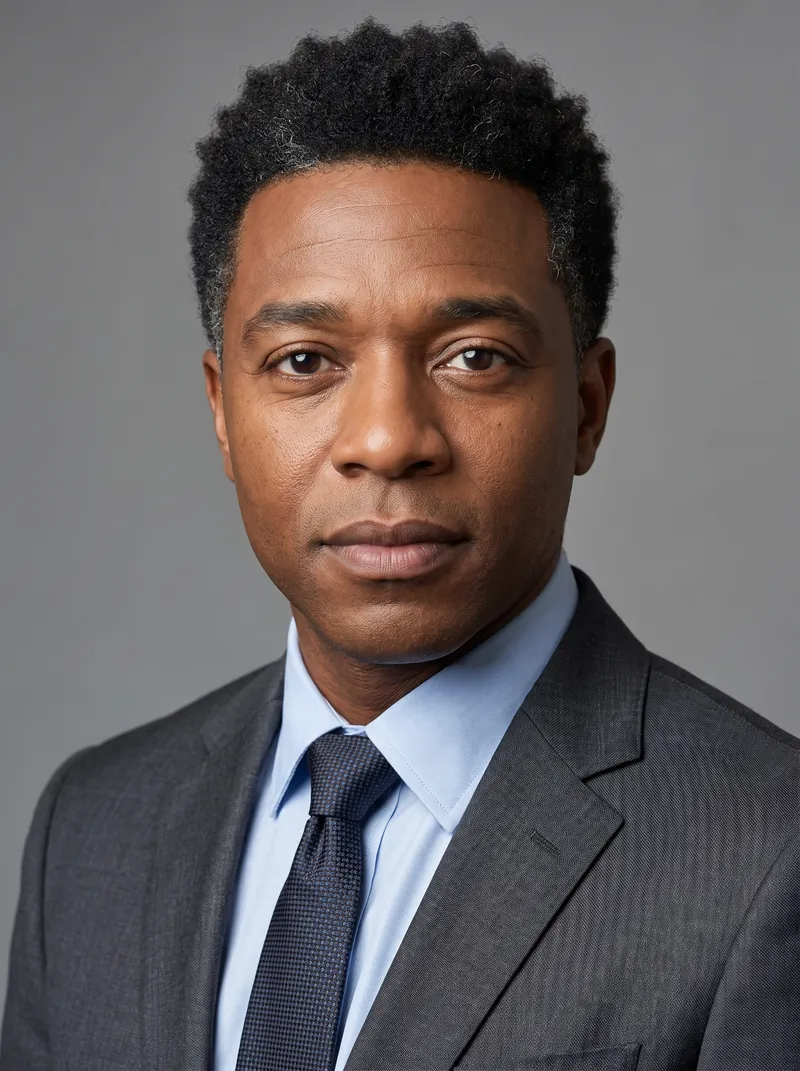
The administration argues that placing America's artificial intelligence strategy under the direct control of the national intelligence apparatus is the only way to outpace foreign adversaries in the race for autonomous systems. Civil liberties advocates and technology ethicists counter that merging the intelligence community with domestic AI acceleration dismantles the firewall between national surveillance and commercial technology development.
President Donald Trump formalized that merger on Sunday, appointing Director of National Intelligence nominee Jay Clayton as the administration's new AI Czar. Clayton will concurrently lead a newly established White House task force, officially dubbed the "Super Intelligence Force," while managing the nation's intelligence agencies.[2][3]
The appointment consolidates unprecedented authority over both national security and technology policy into a single cabinet-level position. The task force is designed to accelerate the deployment of frontier models across federal agencies and the military, bypassing traditional procurement bottlenecks.[3]
"We are treating artificial intelligence as the ultimate strategic high ground, and Jay has the exact financial and security background to secure it," Trump said in a statement released by the White House. The announcement follows weeks of speculation regarding the administration's technology leadership structure.[1]
Consolidating federal technology policy
Clayton, who previously served as chairman of the Securities and Exchange Commission from 2017 to 2020, was nominated for the DNI role earlier this year. His selection as AI Czar surprised some industry observers who expected the position to go to a Silicon Valley executive or a dedicated computer scientist.[5]
Reports emerged on Friday that the administration was finalizing the dual-hat arrangement, noting that Clayton's deep ties to Wall Street and regulatory experience made him an attractive candidate to manage the trillions of dollars flowing into domestic data center infrastructure.[5]
The "Super Intelligence Force" will operate directly out of the Executive Office of the President. The task force is mandated to coordinate research and development funding, streamline export controls on advanced semiconductors, and establish baseline security protocols for autonomous agents.[4]
By housing the initiative under the DNI nominee, the administration is explicitly framing generative AI as a matter of national security rather than purely commercial innovation. This shift in posture aligns with recent federal efforts to restrict foreign access to American-made tensor processing units and training datasets.[1][4]
The intelligence and commercial overlap
The integration of intelligence oversight and AI acceleration raises immediate questions about data privacy and federal surveillance capabilities. Privacy groups argue that the DNI's access to classified foreign intelligence should not overlap with domestic technology mandates.[2]
"Creating a 'Super Intelligence Force' led by the nation's top spy chief sends a chilling message about how this administration views commercial technology," a spokesperson for the Electronic Privacy Information Center told reporters on Sunday. The group warned against blurring military and civilian applications.[2]
Supporters of the move argue that the firewall between commercial AI and national security is already an illusion. With companies like OpenAI and Anthropic routinely facing cyber espionage attempts from state-sponsored actors, proponents insist that federal intelligence resources must be tightly integrated with private sector development.[3][5]
The new task force will include liaisons from the Department of Defense, the Department of Energy, and the Department of Commerce. This interagency structure is intended to prevent regulatory fragmentation as the government scales its own use of large language models.[1]
Accelerating domestic model deployment
A central mandate of the new AI Czar will be accelerating the physical infrastructure required to train next-generation models. The task force is expected to intervene in local zoning and power grid disputes that have recently delayed the construction of gigawatt-scale data centers across the United States.[4]
Clayton's background in financial regulation is viewed as a strategic asset for this specific challenge. The administration anticipates that securing the necessary energy resources for the "Super Intelligence Force" initiatives will require complex public-private financing structures and federal loan guarantees.[5]
The task force will also inherit the enforcement of the voluntary safety accords signed by major technology executives earlier this year. However, the dual appointment suggests a pivot away from restrictive safety regulations and toward aggressive capability scaling to maintain parity with international rivals.[1][3]
During his confirmation hearings for the DNI position, Clayton emphasized the need for the intelligence community to rapidly adopt machine learning for signal processing and threat detection. His new mandate expands that vision to encompass the entire federal government's technology stack.[2][5]
Navigating congressional oversight
The unprecedented nature of the dual appointment is expected to trigger intense scrutiny from congressional oversight committees. Lawmakers from both parties have previously expressed hesitation about concentrating too much unilateral authority over artificial intelligence within the executive branch without statutory frameworks.[4]
Funding for the "Super Intelligence Force" remains a critical unresolved variable. While the White House can establish the task force through executive action, securing the billions of dollars required to execute its mandate will require appropriations from a divided Congress.[1][4]
The administration has not yet detailed how Clayton will partition his time between managing the 18 agencies that comprise the US intelligence community and directing domestic AI policy. The DNI role traditionally demands full-time focus on global threat assessments and classified briefings.[2][3]
As the global race for artificial general intelligence accelerates, the White House is betting that centralized, intelligence-driven leadership will provide the necessary velocity. The success of that strategy now depends on whether a single official can effectively manage both the nation's secrets and its technological future.
Key points
- President Trump has appointed DNI nominee Jay Clayton as the administration's new AI Czar, merging intelligence and technology leadership.
- Clayton will lead the newly formed "Super Intelligence Force," a White House task force designed to accelerate domestic AI infrastructure and deployment.
- The dual-hat appointment has drawn criticism from privacy advocates who warn against blurring the lines between national surveillance and commercial technology.
- The task force aims to bypass traditional procurement bottlenecks and coordinate AI strategy across the Departments of Defense, Energy, and Commerce.
What we don’t know
- How Clayton will divide his operational time between managing the 18 agencies of the intelligence community and directing the new AI task force.
- Whether Congress will appropriate the billions of dollars in new funding required to execute the task force's infrastructure mandate.
- How the intelligence community's classified protocols will interface with open commercial AI development and existing voluntary safety accords.
How we got here
2017–2020
Jay Clayton serves as Chairman of the Securities and Exchange Commission during the first Trump administration.
Early 2026
President Trump nominates Clayton to serve as the Director of National Intelligence.
Summer 2026
The administration announces preliminary plans to form an 'AI Force' to accelerate domestic model development.
Oct 2, 2026
Reports emerge that the White House is finalizing plans to tap Clayton for the dual role of AI Czar.
Oct 4, 2026
The White House officially launches the "Super Intelligence Force" with Clayton at the helm.
- National Security Hawks
- Argue that artificial intelligence is a critical weapons system and intelligence tool, requiring centralized control by the DNI to counter foreign adversaries.
- Civil Liberties Advocates
- Warn that merging domestic tech policy with the intelligence apparatus threatens privacy and removes civilian oversight from AI development.
- Commercial Tech Industry
- Cautiously optimistic about accelerated infrastructure and reduced red tape, but wary of excessive classified restrictions on commercial models.
Perspectives this story doesn't cover
- International regulatory bodies attempting to establish global AI governance standards.
- Academic researchers concerned about the militarization of open-source AI models.
Sources
Source coverage
5 outlets
3 viewpoints surfaced





- [1]Associated PressCommercial Tech Industry
Trump's national intelligence chief will lead a new federal AI task force
Read on Associated Press → - [2]The GuardianCivil Liberties Advocates
Trump names intelligence chief Jay Clayton as new White House AI czar
Read on The Guardian → - [3]CBS NewsNational Security Hawks
Trump announces formation of AI "Super Intelligence Force"
Read on CBS News → - [4]PBS NewsCivil Liberties Advocates
Trump names national intelligence director Jay Clayton to lead a new federal AI task force
Read on PBS News → - [5]AxiosNational Security Hawks
Trump expected to tap DNI Jay Clayton for AI czar
Read on Axios →

More in Artificial Intelligence
See all →Decoding Algorithms
The Trade-Offs Between Greedy Search, Beam Search, and Nucleus Sampling for Large Language Model Decoding
8 sources
Transformer Architecture
How Sinusoidal Functions Inject Sequence Order into the Permutation-Invariant Transformer
5 sources
Diffusion Architecture
How the U-Net Architecture Predicts Noise in the Reverse Diffusion Process
9 sources
Model Orchestration
Sakana AI Releases Fugu Max Orchestration Model, Reducing Multi-Agent Routing Costs by 60 Percent
7 sources
Comments
Every angle. Every day.
Get Artificial Intelligence stories with full source coverage and perspective breakdowns, free every day.