
Cyprien Sarrazin Reclaims the Slopes: French Speed Specialist Targets 2026–27 Return Following Near-Fatal Brain Injury
Eighteen months after a devastating crash on Bormio's Stelvio course left him in a neurological intensive care unit, French alpine star Cyprien Sarrazin has resumed structured on-snow training. The 31-year-old speed specialist is now targeting a full competitive comeback for the 2026–27 World Cup season.
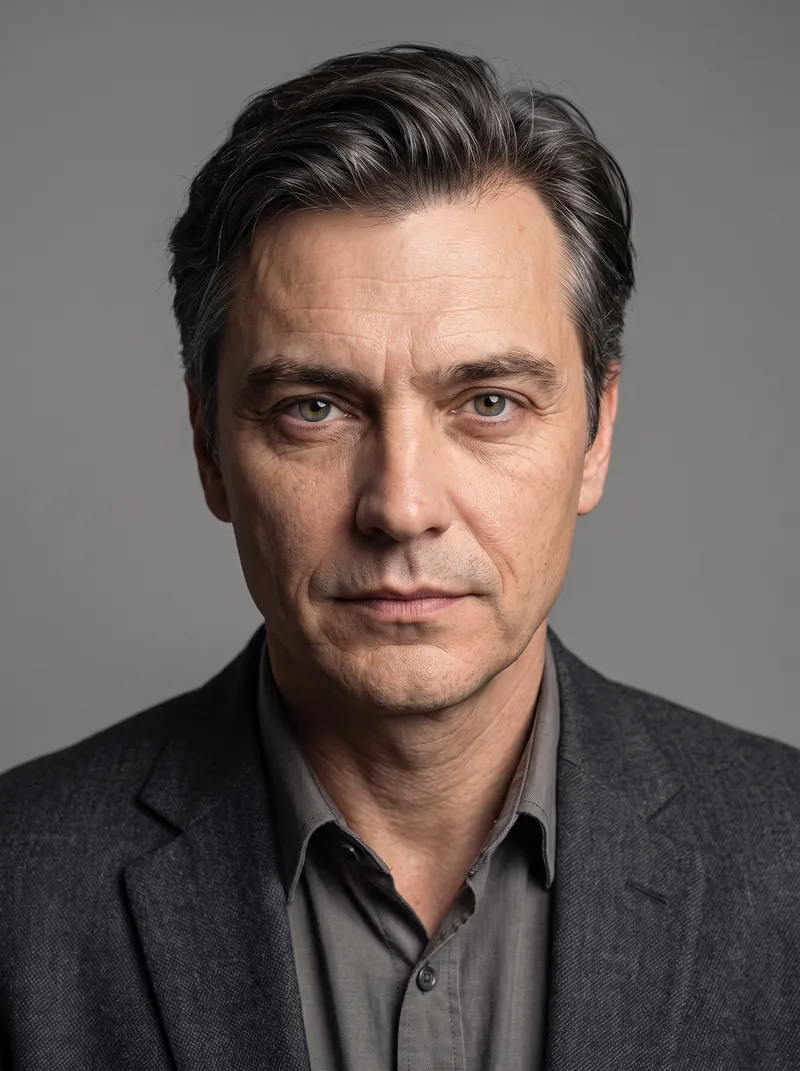
Eighteen months after a devastating crash left him fighting for his life in a neurological intensive care unit, French alpine star Cyprien Sarrazin is officially back on the clock. The 31-year-old speed specialist has spent the early summer of 2026 ramping up his off-season regimen, marking a definitive shift from medical rehabilitation to athletic preparation.
Sarrazin recently progressed to structured on-snow training, navigating technical courses and rebuilding the foundational mechanics that once made him the most feared downhill skier on the planet. For a man who openly admits he narrowly escaped death, the mere act of carving through a training gate represents a monumental victory.[1]
The trajectory of Sarrazin’s career was violently interrupted on December 27, 2024. During a training run on the notoriously unforgiving Stelvio course in Bormio, Italy—a track renowned for its punishing steepness and relentless ice—he launched off a final jump at an awkward angle. Flying sideways through the frigid air, he nearly landed backward on the hard-packed surface.
The French star spun violently out of control, striking his head against the ice with immense force before sliding motionless into the layered safety netting below. The silence that fell over the venue was immediate and chilling, as medical teams rushed onto the slope.[2][3]
Medical personnel airlifted the unconscious skier to a nearby hospital, where emergency neurological scans revealed a subdural hematoma—a highly dangerous accumulation of blood on the surface of the brain. Surgeons operated late into the night to decompress the intracranial pressure and halt the bleeding.
For days, the global alpine skiing community held its collective breath as Sarrazin remained under heavy sedation in the intensive care unit. "I almost died," he would later tell reporters with blunt, sobering clarity, acknowledging that his survival was nothing short of miraculous and heavily dependent on the rapid response of the on-site medical staff.[2][3]
Remarkably, the severe physical trauma of the event did not leave a lasting psychological scar, largely because the impact completely erased his memory of the incident. Sarrazin has openly stated that he remembers absolutely nothing of the 20 meters leading up to the catastrophic fall, nor does he have any recollection of the five days he spent recovering from the initial surgery.
He views this profound amnesia as a protective neurological blessing, noting that the absence of memory spared him the debilitating post-traumatic stress disorder that frequently plagues athletes attempting to return to the scene of a high-speed crash.[1]
His physical recovery required an agonizingly slow and deliberate pace, demanding a level of patience foreign to most elite speed skiers. For the first half of 2025, his focus was entirely on basic neurological healing—managing lingering double vision, regaining his equilibrium, and allowing his brain to fully stabilize without the stress of elevated heart rates.
It wasn't until December 2025, a full year after the crash, that Sarrazin finally clicked back into his bindings for a gentle free-skiing session. Posting a video of those emotional first turns, he wrote, "The vibes were good… nothing can beat this! I did well for taking my time."[1]
That initial return to the slopes was widely celebrated as a triumph of survival rather than an athletic comeback. But by the spring of 2026, Sarrazin’s deeply ingrained competitive instincts had fully reawakened. In April, he shared highly encouraging updates showing him aggressively weaving through a "stubbies" course—a specific training setup utilizing short, 20-to-40-inch flexible slalom gates.
While Sarrazin is inherently a speed specialist who thrives in the terrifying velocities of downhill and super-G, stubbies serve as a critical developmental tool for rebuilding rapid footwork, torso stability, and precise ankle articulation without exposing him to the high-impact risks of full-length gates.[1]
“Resuming imposed trajectories to put back into place the technique and benchmarks,” Sarrazin noted during his intensive spring training block. This deliberate pivot from simply feeling the snow beneath his skis to executing specific, measured technical movements signaled to the ski racing world that he was no longer just a recovering patient; he was an elite athlete actively preparing for a comeback.
Coaches and industry analysts quickly noted that his form looked remarkably fluid and confident, hinting that his world-class muscle memory remained entirely intact despite the prolonged absence from the sport.[1]
The prospect of Sarrazin officially returning to the World Cup circuit for the upcoming 2026–27 season provides a tantalizing narrative for the sport. Prior to his devastating crash, the Frenchman was in the midst of a spectacular career breakout that had captivated fans worldwide.
During the 2023–24 season, he captured four World Cup victories, including a historic, breathtaking double-win at the legendary Hahnenkamm downhill in Kitzbühel, Austria. He had entered the fateful Bormio race as the undisputed favorite, riding a massive wave of momentum that seemed destined to culminate in an Olympic medal at the Milano-Cortina Games.[1]
While his severe injury ultimately forced him to miss the 2026 Winter Games entirely, his prolonged absence sparked intense, ongoing conversations about the absolute limits of downhill course preparation. Immediately following the Bormio crash, French teammate Nils Allègre openly criticized the race organizers, arguing that the excessively icy, high-risk conditions crossed the line from challenging to outright reckless. The near-fatal incident quickly became a major flashpoint for safety advocates, who continue to demand better risk mitigation, improved netting, and more sensible course setting on the increasingly dangerous World Cup tour.[2]
Today, Sarrazin remains largely insulated from the swirling politics of course safety, focusing his energy entirely on the snow directly in front of him. He has repeatedly emphasized to his supporters that he will not artificially rush his timeline, operating with the profound understanding that he has “already used a joker” and has absolutely no intention of burning another.
As the 2026 off-season progresses toward the winter, the global skiing community watches with bated breath, witnessing an athlete who has already won his greatest battle simply by finding his way back to the mountain.[1]
Key points
- French alpine skier Cyprien Sarrazin has resumed structured on-snow training 18 months after a near-fatal brain injury.
- The 31-year-old speed specialist suffered a subdural hematoma during a December 2024 training crash on Bormio's Stelvio course.
- Sarrazin has no memory of the crash itself, a neurological blank slate he credits with preventing post-traumatic stress disorder.
- He is currently utilizing short "stubbies" gates to rebuild his rapid footwork and technical benchmarks without high-impact risks.
- While he missed the 2026 Winter Olympics, Sarrazin is methodically preparing for a potential return to the World Cup circuit in the 2026–27 season.
How we got here
Dec 2024
Sarrazin suffers a near-fatal head injury during downhill training in Bormio, Italy, requiring emergency brain surgery.
Dec 2025
Exactly one year after the crash, he returns to the snow for a gentle free-skiing session.
Apr 2026
Sarrazin resumes structured technical training on a stubbies course, signaling a shift toward athletic preparation.
Jun 2026
He continues his off-season progression, targeting a full competitive return for the 2026–27 World Cup season.
- Athlete & Support Camp
- Emphasize patience, reclaiming the joy of skiing, and avoiding the pressure of a rushed timeline, viewing any competitive return as a bonus to his survival.
- Medical & Rehabilitation Teams
- Focus on the miraculous nature of his survival and the careful, step-by-step neurological recovery required before clearing him for high-speed impacts.
- Alpine Safety Advocates
- Point to the crash as a stark warning about the increasing dangers of modern downhill courses, demanding better preparation and safety protocols.
Perspectives this story doesn't cover
- Event Organizers (FIS)
- Current World Cup Competitors
Sources
Source coverage
3 outlets
3 viewpoints surfaced



- [1]SnowBrainsAthlete & Support Camp
French Ski Racer Cyprien Sarrazin Returns to Race Training 16 Months After Near-Fatal Crash
Read on SnowBrains → - [2]The GuardianMedical & Rehabilitation Teams
Steve Clarke resigns as Scotland head coach after elimination from World Cup 2026
Read on The Guardian → - [3]WSLSAlpine Safety Advocates
Sarrazin to undergo surgery after head injury in crash in downhill training on 2026 Olympics slope
Read on WSLS →
More in Sports
See all →Standings
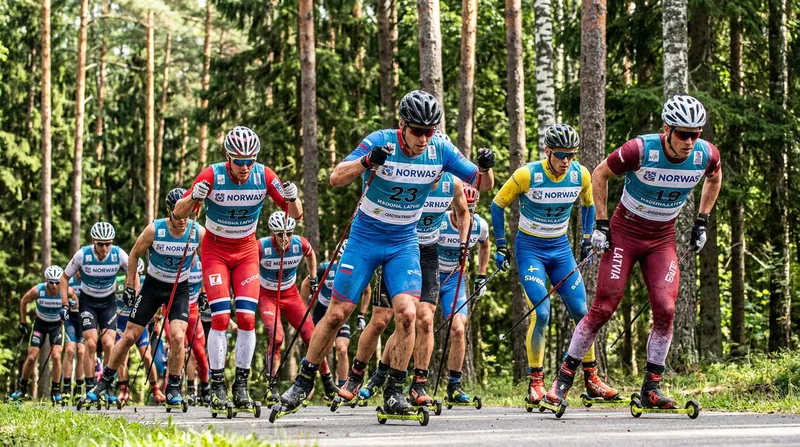
FIS Roller Skiing World Cup Standings: Tanel and Sömskar Take Early Lead as 2026 Circuit Opens in Latvia
5 sources
Injury
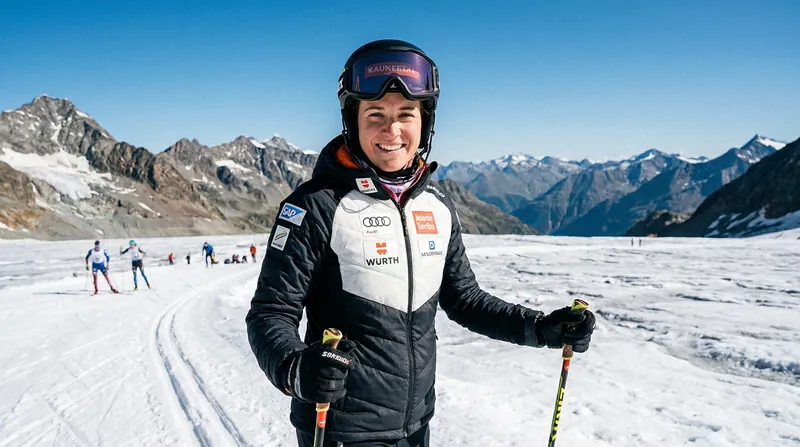
Ester Ledecká Returns to Alpine Skiing Following Complex Collarbone Injury and Snowboard Comeback
4 sources
Standings
FIS Freeski and Snowboard ANC Standings: Park & Pipe Stars Battle for Early-Season Dominance Down Under
2 sources
Injury
Petra Vlhová Targets Full World Cup Return After Two-Year Injury Layoff
7 sources
Comments
Every angle. Every day.
Get Sports stories with full source coverage and perspective breakdowns, free every day.