
Colombia Requests U.S. Tariff Suspension to Aid $6.4 Billion Earthquake Reconstruction
Following a devastating 7.4-magnitude earthquake, Colombian President Abelardo de la Espriella has asked the U.S. to temporarily lift recent tariffs to ease the economic strain of rebuilding. The request highlights the intersection of international trade policy and disaster recovery.
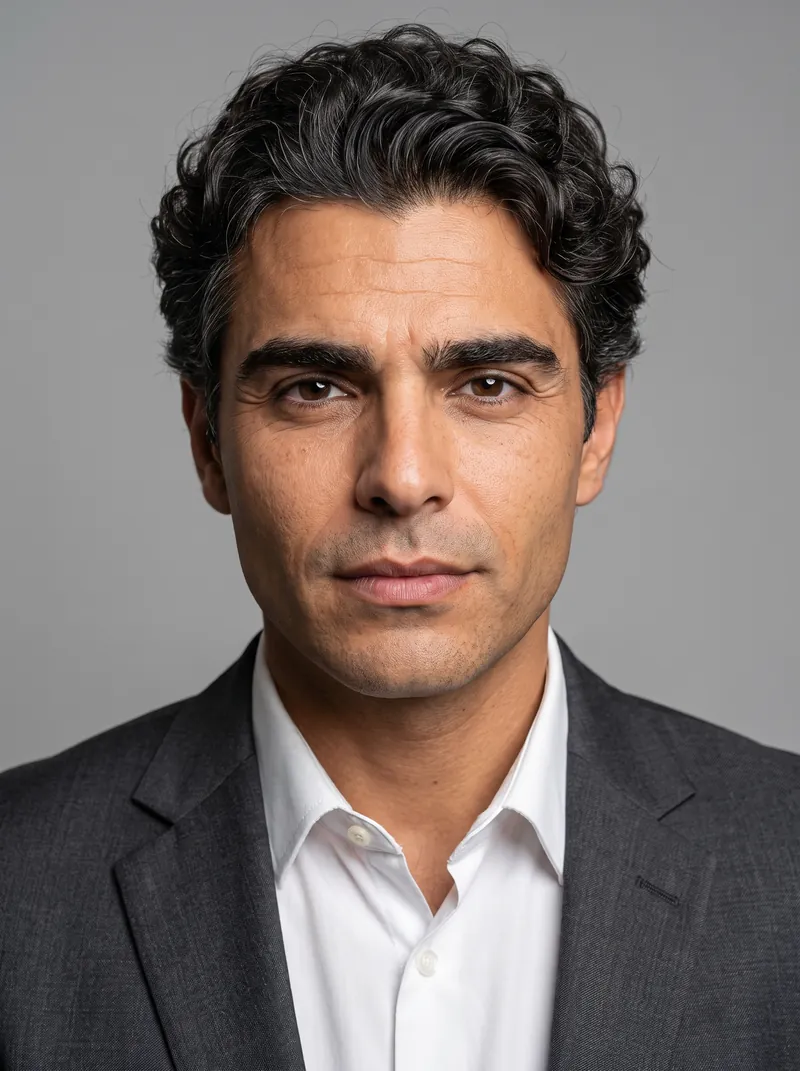
Colombia's newly inaugurated President Abelardo de la Espriella has formally requested that the United States temporarily suspend its recently increased tariffs on Colombian goods. The request follows a 7.4-magnitude earthquake that struck the country's western regions on August 10, leaving nearly 300 people dead and causing an estimated $6.4 billion in infrastructural damage.[1][4][5]
The diplomatic appeal highlights the immediate tension between international trade policy and disaster recovery. De la Espriella, who took office just days before the tremor, described the economic situation he inherited from his predecessor, Gustavo Petro, as "apocalyptic," noting that the tariffs place an additional burden on businesses attempting to rebuild.[3][8]
In late July, the U.S. administration raised duties on a wide range of Colombian products from 10 percent to 12.5 percent. This increase replaced an expiring global duty and was implemented under Section 301 of the Trade Act of 1974, citing concerns over forced labor enforcement.[1][4]
While key Colombian exports such as coffee and oil are exempt from the levy, the tariffs affect a broad spectrum of manufactured and agricultural goods. For Colombian enterprises whose supply chains and facilities were disrupted by the earthquake, the added export costs reduce the capital available for domestic reconstruction.[2][4]
The scale of the disaster necessitates immense fiscal resources. The earthquake devastated the cities of Cali and Pereira, destroying nearly 13,000 homes and displacing tens of thousands of residents. The Colombian government continues to coordinate rescue and clearing operations in the hardest-hit areas, though the window for finding survivors has largely closed.[1][3]
Financing the recovery presents a structural challenge. Finance Minister Miguel Gomez has stated that the government is not currently considering tax increases to fund the estimated $6.4 billion reconstruction effort. This leaves the administration reliant on international aid, debt restructuring, and trade relief to bridge the fiscal gap.[4][7]
The U.S. response so far has focused on direct humanitarian assistance. Washington deployed rescue teams to the affected regions and announced $26.5 million in emergency aid. However, altering trade policy requires a different mechanism of political will, moving from logistical support to economic concessions.[2][7]
De la Espriella's approach to Washington reflects his broader geopolitical alignment. During a ten-minute telephone conversation with U.S. President Donald Trump, the Colombian leader emphasized their cordial relationship and his commitment to the "Shield of the Americas," a regional security and anti-cartel alliance.[7][8]
This alignment creates a complex dynamic. Colombia is strengthening its security partnership with the United States while simultaneously seeking relief from the very economic pressures Washington uses as leverage in the region. The tariff suspension request tests whether security cooperation translates into trade flexibility during a domestic crisis.[2][8]
Market analysts note that the economic impact of the tariffs compounds the sovereign risk pricing associated with the disaster. The fiscal strain of reconstruction, combined with elevated trade costs, places downward pressure on the Colombian peso and raises the cost of refinancing national debt.[6]
The domestic political landscape further complicates the recovery effort. De la Espriella's administration has faced scrutiny over its disaster response, particularly regarding the distribution of aid between relatively prosperous coffee-growing regions and the poorer, heavily affected Pacific region, which includes leftist strongholds.[2]
Critics argue that the state's limited presence in marginalized areas exacerbates the earthquake's impact. The disaster has highlighted long-standing infrastructural deficits in regions where prolonged communication blackouts and difficult terrain have hampered rescue operations.[2]
The uncertainty surrounding the tariff request remains high. Tariff suspensions from the U.S. executive branch are rarely granted swiftly, as they require navigating domestic trade priorities and established legal frameworks. The White House has not yet issued a formal response to the Colombian president's appeal.[1][6]
Ultimately, the situation illustrates how global trade mechanisms intersect with local vulnerabilities. As Colombia faces one of its most significant rebuilding efforts in decades, the outcome of the tariff request will signal how international economic policies adapt—or fail to adapt—to sudden humanitarian crises.[6][7]
Key points
- Colombian President Abelardo de la Espriella has requested a temporary suspension of U.S. tariffs to aid in earthquake recovery.
- The 7.4-magnitude earthquake caused an estimated $6.4 billion in damage and destroyed nearly 13,000 homes.
- U.S. tariffs on various Colombian goods were recently increased from 10 percent to 12.5 percent.
- The Colombian government is seeking trade relief to avoid raising domestic taxes to fund the reconstruction effort.
What we don’t know
- Whether the U.S. administration will formally respond to or grant the tariff suspension request.
- The final total cost of the reconstruction effort, as damage assessments in remote regions like Chocó are still ongoing.
- How the Colombian government will finance the recovery if trade relief is denied and tax increases remain off the table.
How we got here
Late July 2026
The U.S. increases tariffs on a range of Colombian products from 10 percent to 12.5 percent.
August 7, 2026
Abelardo de la Espriella is inaugurated as the new President of Colombia.
August 10, 2026
A 7.4-magnitude earthquake strikes western Colombia, causing widespread devastation.
August 15, 2026
President de la Espriella formally requests a temporary tariff suspension during a call with the U.S. President.
- Colombian Administration
- Argues that suspending tariffs is a necessary humanitarian and economic measure to allow domestic businesses to fund reconstruction.
- U.S. Trade Policy Advocates
- Maintains that tariffs are structural tools for enforcing labor and trade standards, distinct from emergency disaster relief.
- Market Analysts
- Focuses on the compounding fiscal strain, noting that reconstruction costs and trade friction increase sovereign risk.
- Domestic Critics
- Emphasizes that the focus on international trade relief obscures the unequal distribution of domestic aid to marginalized regions.
Perspectives this story doesn't cover
- Colombian small business owners directly affected by the tariffs
- U.S. domestic producers competing with Colombian imports
Sources
Source coverage
8 outlets
4 viewpoints surfaced







- [1]CBS NewsU.S. Trade Policy Advocates
Colombian president says he asked Trump to suspend tariffs after devastating earthquake
Read on CBS News → - [2]RANEDomestic Critics
Colombia Requests U.S. Tariff Reprieve Amid Earthquake Fallout
Read on RANE → - [3]Al Mayadeen
Colombia asks Trump to ease tariffs as quake leaves nearly 300 dead
Read on Al Mayadeen → - [4]The StatesmanColombian Administration
Colombia president asks 'friendly' Trump to pause tariffs days after earthquake kills nearly 300 people
Read on The Statesman → - [5]TelesurColombian Administration
President Abelardo de la Espriella asks Donald Trump to suspend tariffs as Colombia faces nearly 300 earthquake deaths and major reconstruction needs
Read on Telesur → - [6]VarskoMarket Analysts
Colombia requested a US tariff suspension following an earthquake with reconstruction costs estimated at $6.4bn
Read on Varsko → - [7]Eastern Herald
A devastating earthquake, a $6.4 billion reconstruction bill, and a 'friendly and cordial' call to Trump
Read on Eastern Herald → - [8]Ground News
Colombian president says he asked Trump to suspend tariffs after devastating earthquake
Read on Ground News →
More in World
See all →Digital Trade
Brazil Enacts Mercosur Electronic Commerce Agreement, Eliminating Digital Customs Duties Across Bloc
5 sources
Grid Storage
How Molten Salt Thermal Storage Decouples Solar Power From Daylight
3 sources

Falklands Dispute
How International Law Weighs Argentina's Territorial Integrity Against Falkland Islanders' Right to Self-Determination
8 sources
Remittance Economics
The 20 Percent Threshold: How Remittances Structure the Economies of El Salvador, Honduras, and Guatemala
7 sources
Comments
Every angle. Every day.
Get World stories with full source coverage and perspective breakdowns, free every day.