
Cities Worldwide Push Back on AI Data Centers Over Resource Strain and Community Costs
As artificial intelligence drives a surge in hyperscale data center construction, local governments and residents globally are enacting moratoriums to protect water supplies and electrical grids.
By Kavya Nair

The physical footprint of the artificial intelligence revolution is increasingly colliding with the hard limits of local infrastructure. Across the globe, the rapid proliferation of hyperscale data centers has ignited a fierce and escalating debate over resource allocation, pitting some of the world's largest technology developers against the communities asked to host their facilities. For years, "the cloud" was treated as an abstract, weightless concept by most consumers.
But as generative AI models demand unprecedented computational power to train and operate, the cloud has materialized into massive, warehouse-sized industrial facilities that require staggering amounts of electricity, water, and land. This sudden physical manifestation of the AI boom is forcing municipalities to reckon with the true environmental and infrastructural costs of the digital age.[1][2]
This realization has triggered a massive wave of grassroots opposition that is beginning to reshape the tech industry's expansion plans. In the first quarter of 2026 alone, community pushback delayed or blocked at least 75 data center projects worth approximately $130 billion, according to a comprehensive report by Data Center Watch.
The sheer scale of disrupted projects in those three months roughly matched the entirety of the opposition seen in 2025, signaling a sharp escalation in local resistance. Residents are organizing at zoning board meetings, launching petition drives, and pressuring local lawmakers to halt construction until the long-term impacts on their neighborhoods can be fully assessed.[2]
The core of the conflict lies in the fundamental architecture of artificial intelligence and how it differs from previous iterations of digital infrastructure. Traditional cloud computing servers, which handle everyday tasks like email hosting and web traffic, typically utilize chips that draw between 150 and 300 watts of power.
In stark contrast, the advanced graphics processing units (GPUs) required to train and run complex AI models consume between 700 and 1,000 watts each. When these high-performance chips are clustered together by the tens of thousands inside a single facility, the energy requirements become truly astronomical, fundamentally altering the energy landscape of the host region.[4]
A single, modern AI data center can require enough electricity to power 100,000 homes, placing severe and immediate strain on regional electrical grids. In some jurisdictions that have welcomed multiple hyperscale facilities, residents have reported their utility bills doubling as power companies scramble to upgrade transmission lines and generation capacity to meet the sudden industrial demand.
Furthermore, the immense heat generated by these high-density servers requires aggressive, continuous cooling to prevent catastrophic hardware failures. An average AI data center can consume up to five million gallons of water per day, a figure that rivals the daily usage of an entire small town.[4]
In regions already grappling with climate-driven droughts and seasonal water shortages, the prospect of diverting municipal water supplies to cool computer servers has become a primary catalyst for public outrage.
"Communities are questioning whether large-scale digital infrastructure should be prioritized over residential, agricultural, or ecological water needs," notes a 2026 report from Sustainalytics, which categorizes data center water usage as a financially material risk for the broader technology sector. The report highlights that opposition tends to emerge late in the project lifecycle, turning water risk into a significant execution hurdle that can strand billions of dollars in capital.
In response to these mounting pressures, local governments are increasingly pulling the emergency brake on new developments. As of June 2026, lawmakers in 14 U.S. states have considered or enacted moratoriums on new data center construction.
These legislative pauses are explicitly designed to give municipalities the breathing room needed to study the environmental impacts, upgrade their utility infrastructure, and draft comprehensive zoning regulations that can adequately govern hyperscale facilities. The National Conference of State Legislatures reports that these bills frequently target facilities over a certain megawatt threshold, aiming to regulate the largest industrial consumers without stifling smaller, traditional IT operations.[6]
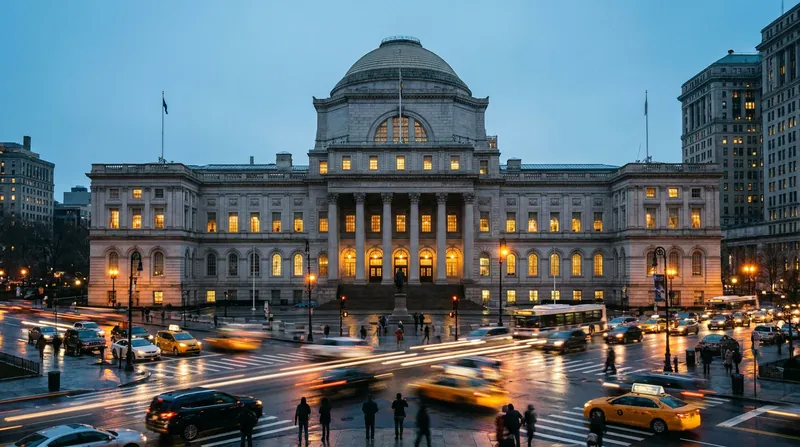
The municipal pushback is unfolding rapidly across both urban centers and rural counties. On June 9, 2026, the Seattle City Council unanimously passed an emergency moratorium on new data center siting, citing the urgent need to protect local utility rates and preserve grid capacity for residential use.
Similar freezes have been enacted in Denver, Colorado, and Asheville, North Carolina, where city councils are demanding strict limits on noise pollution—a frequent complaint from residents living near the constant hum of server cooling fans—and resource extraction. Local leaders argue that their cities were not designed to serve as warehouse districts for artificial intelligence.[5][6]
The resistance is by no means confined to the United States; it has rapidly evolved into a global phenomenon. In the densely populated suburbs of Tokyo, residents have filed civil lawsuits attempting to revoke building permits for towering data centers, comparing the facilities to unwanted waste incinerators and expressing deep concern over the storage of heavy oil for backup generators.
In Australia, rising water demand from data centers has delayed residential housing projects, while in Europe, protests have erupted over the destruction of agricultural farmland and the looming threat of rolling blackouts caused by grid instability.[3]
Recognizing the inherently global nature of the infrastructure crisis, a coalition of 40 mayors—organized through the C40 Cities climate network—launched a unified regulatory pact in late June 2026. The landmark agreement establishes a shared framework demanding that urban data centers adhere to strict sustainability standards. Under the pact, mayors are pushing for requirements that new facilities run entirely on renewable energy, utilize advanced battery storage, sharply reduce their reliance on municipal water, and capture waste heat to warm local residential and commercial buildings.[1]
Data center developers and major technology companies offer a starkly different perspective on the infrastructure boom. They argue that these facilities are critical national infrastructure, absolutely essential for maintaining global leadership in artificial intelligence and ensuring long-term digital sovereignty. From their viewpoint, artificial intelligence is the foundational technology of the next century, and slowing down the construction of the physical infrastructure required to support it will inevitably cede ground in the global economic arms race, leaving nations vulnerable and technologically dependent.
Industry advocates also frequently point to the massive economic windfalls that data centers can deliver to local tax bases, arguing that the financial benefits far outweigh the infrastructural burdens.
In Loudoun County, Virginia—a region often dubbed the data center capital of the world due to its massive concentration of cloud infrastructure—tax revenues from the facilities funded nearly 95 percent of the entire county budget in 2025. Developers argue that these revenues can be used to build new schools, pave roads, and modernize the very water and power grids that the data centers rely upon.[4]
However, community organizers and economic critics counter that the benefits of data centers are heavily skewed and often fail to materialize for the average resident. While data centers require billions of dollars in upfront capital and create a temporary boom in specialized construction jobs, they are highly automated facilities. Once operational, a massive hyperscale campus may employ only a few dozen permanent technicians, maintenance workers, and security personnel, offering very little in the way of long-term, broad-based job creation for the surrounding community.[4]
As the AI arms race continues to accelerate, the data center industry is being forced to adapt its engineering practices to secure public approval. Developers are increasingly exploring closed-loop liquid cooling systems that recycle the same water, drastically reducing the need to draw from municipal supplies. Additionally, tech giants are beginning to co-locate their new facilities near dedicated, zero-carbon energy sources, such as advanced nuclear small modular reactors or geothermal plants, in an effort to decouple their operations from the public electrical grid and alleviate community concerns.
As the AI arms race continues to accelerate, the data center industry is being forced to adapt its engineering practices to secure public approval.
Ultimately, the era of building massive data centers quietly and without intense public scrutiny has definitively ended. Moving forward, the expansion of the physical internet will require a new, explicitly negotiated social license to operate. Technology companies will no longer be able to rely solely on the promise of innovation; they will have to prove to the neighborhoods providing the power, the water, and the land that the benefits of hosting the AI revolution are truly mutual.[2]
Key points
- Community opposition blocked or delayed 75 data center projects worth $130 billion in the first quarter of 2026.
- AI data centers require significantly more power and water than traditional cloud facilities, straining local utilities.
- At least 14 U.S. states and dozens of municipalities have considered or passed moratoriums on new data center construction.
- A coalition of 40 global mayors recently launched a pact to establish strict resource and zoning standards for urban data centers.
What we don’t know
- Whether state-level legislation will ultimately override local municipal moratoriums on data center construction.
- How quickly the tech industry can transition to advanced cooling methods that do not rely heavily on municipal water supplies.
- The long-term impact of the AI infrastructure buildout on consumer electricity rates in heavily developed regions.
How we got here
Late 2025
Early adopters like Prince George's County, Maryland, enact temporary moratoriums on data center construction.
Q1 2026
Community opposition surges globally, delaying or blocking 75 data center projects worth an estimated $130 billion.
June 9, 2026
The Seattle City Council unanimously passes an emergency moratorium on new data center siting to conduct comprehensive impact studies.
June 23, 2026
C40 Cities launches a global pact signed by 40 mayors to regulate urban data centers and protect municipal resources.
- Local Residents & Municipalities
- Prioritizes resource conservation, grid stability, and quality of life over rapid industrial expansion.
- Tech Developers
- Argues that data centers are critical national infrastructure essential for technological leadership and local tax revenue.
- Environmental Advocates
- Focuses on the climate impact, demanding that data centers run on renewable energy and utilize closed-loop water systems.
Perspectives this story doesn't cover
- Utility company grid operators managing the sudden load increases.
- Small business owners who might benefit from localized infrastructure upgrades.
Sources
Source coverage
6 outlets
3 viewpoints surfaced






- [1]NewsweekEnvironmental Advocates
Maps Show 40 Cities Taking Stand Against AI Data Centers Draining Resources
Read on Newsweek → - [2]Broadband BreakfastTech Developers
Data Center Pushback Hit Record Levels in Early 2026, Report Says
Read on Broadband Breakfast → - [3]The Japan TimesLocal Residents & Municipalities
AI data center boom triggers global disputes over power and water
Read on The Japan Times → - [4]CCG ConsultingTech Developers
The Growing Pushback Against Data Centers
Read on CCG Consulting → - [5]Seattle City CouncilLocal Residents & Municipalities
City Council passes emergency data center moratorium and policy framework
Read on Seattle City Council → - [6]National Conference of State LegislaturesLocal Residents & Municipalities
Which States Are Banning Data Centers?
Read on National Conference of State Legislatures →

More in Community
See all →Municipal Finance
US Cities Face $1.48 Trillion Pension Crisis, Forcing Debate on Benefit Cuts and New Local Taxes
8 sources
Drug Policy
US Cities and States Reverse Drug Decriminalization, Pivoting to 'Deflection' Programs
2 sources

Meeting Facilitation
Silent Idea Generation and Round-Robin Recording Neutralize Dominant Voices in Group Decisions
5 sources

Judgment Aggregation
Premise-by-Premise Balloting Flips Committee Decisions Against the Majority's Final Preference
4 sources

Comments
Every angle. Every day.
Get Community stories with full source coverage and perspective breakdowns, free every day.